Workplace performance is not about getting people to work harder. It is about aligning how people work with what the business actually needs. In a company with 50 or more employees, you are no longer managing a handful of star performers. You are managing systems, expectations, culture, and the way teams make decisions every day.
If you want to know how to improve workplace performance in a way that lasts, you have to look beyond individual work performance. You need to connect employee performance and team performance to business goals, customer satisfaction, and the health of the entire organization. That means clear expectations, effective communication, constructive feedback, healthy work life balance, and data that explains why some people thrive and others struggle in the same environment.
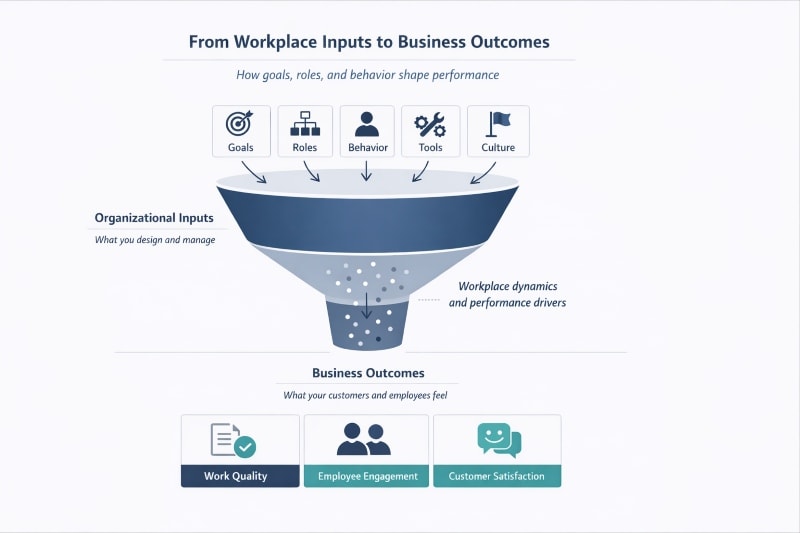
This guide focuses on what actually works for mid-sized organizations that want high performance without burning out their best people.
From individual performance to team and business impact
In smaller teams, it is easy to equate workplace performance with one or two strong individuals. In a 50+ employee company, that logic breaks. You can have many high-performing individuals and still miss targets because work does not fit together.
Real workplace performance combines:
- Individual job performance
- Team performance and collaboration
- Alignment with business goals
Employees need to understand not just their tasks, but why those tasks matter. When people see the link between their work quality and outcomes like customer satisfaction or revenue, they focus better on high value tasks instead of simply completing one task after another.
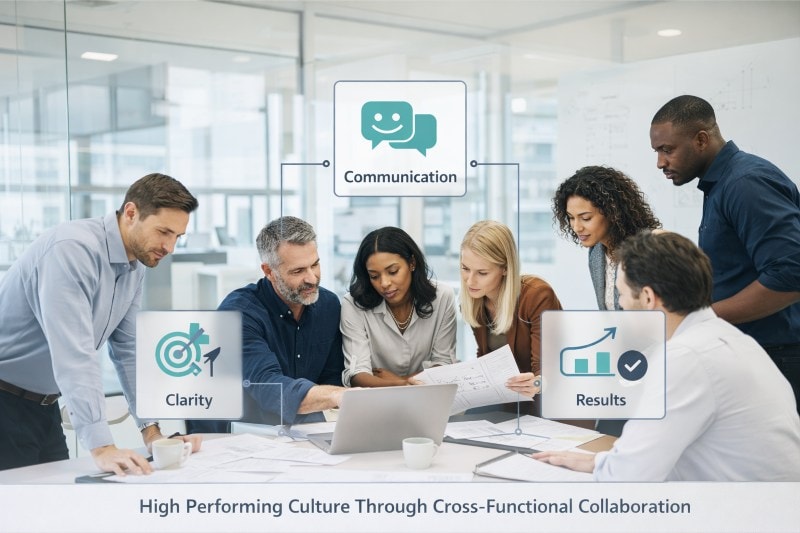
What high performing cultures look like in practice
High performing cultures are not about constant pressure or heroic overtime. They are defined by:
- Clear expectations and achievable goals
- Fewer mistakes because people know what “good” looks like
- Consistent communication between leaders and team members
- A norm of useful feedback rather than vague criticism
In these environments, employees feel heard, understand how to improve work performance, and have access to the right tools and development opportunities that help them improve.
Measuring Workplace Performance: Metrics, Data, and Signals
Performance metrics that actually help you improve
You cannot improve workplace performance if you cannot see it clearly. For mid-sized companies, performance metrics should connect day-to-day activities with strategic outcomes. Useful metrics include:
- Work quality and error rates
- Time to complete key processes
- Customer satisfaction and retention
- Employee engagement and employee satisfaction
- Team performance indicators such as cycle time or project delivery rates
The aim is not to track everything. It is to track progress in a way that helps leaders have targeted conversations, provide constructive feedback, and solve problems at the process level.
Using behavioral data, not just output statistics
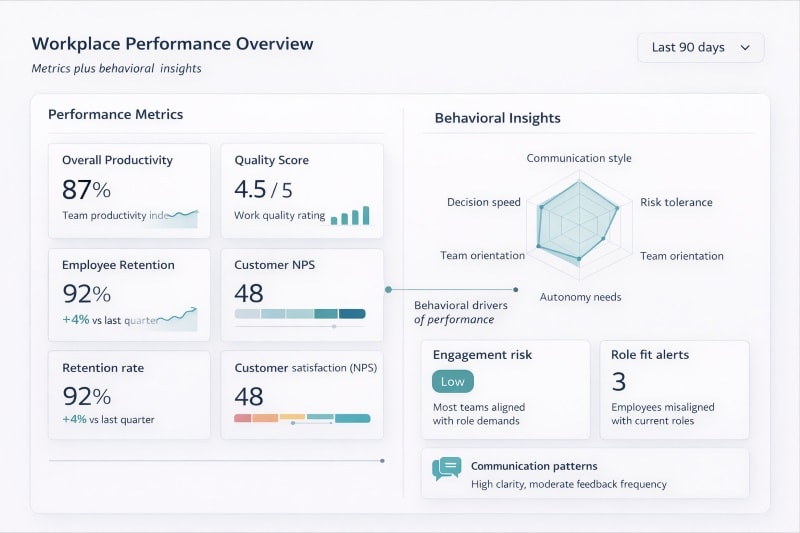
Traditional performance metrics tell you what happened. Behavioral and personality data help explain why it happened. Two employees can have the same technical skills and very different job performance because their behavioral profiles fit the role differently.
When you combine performance metrics with behavioral insights, you can:
- See which roles fit which profiles
- Understand why some employees focus naturally and others struggle
- Tailor coaching to individual communication styles and motivation needs
This is where tools like OAD add value. They move you beyond gut feel and give leaders valuable insights into how to improve employee performance at the individual and team level.
Set the Foundation: Clear Expectations, SMART Goals, and Role Clarity
Clear expectations and SMART goals
If employees are unclear about what success looks like, no amount of training or time management tips will fix performance. Clear expectations are the foundation of better performance.
Leaders need to define:
- What outcomes matter most
- How work quality is judged
- Which tasks are high value tasks vs. nice-to-have
SMART goals help turn vague demands into achievable goals. When goals are specific, measurable, achievable, relevant, and time-bound, employees work with more focus, make fewer mistakes, and can prioritize tasks without constant supervision.
Role clarity and reducing avoidable mistakes
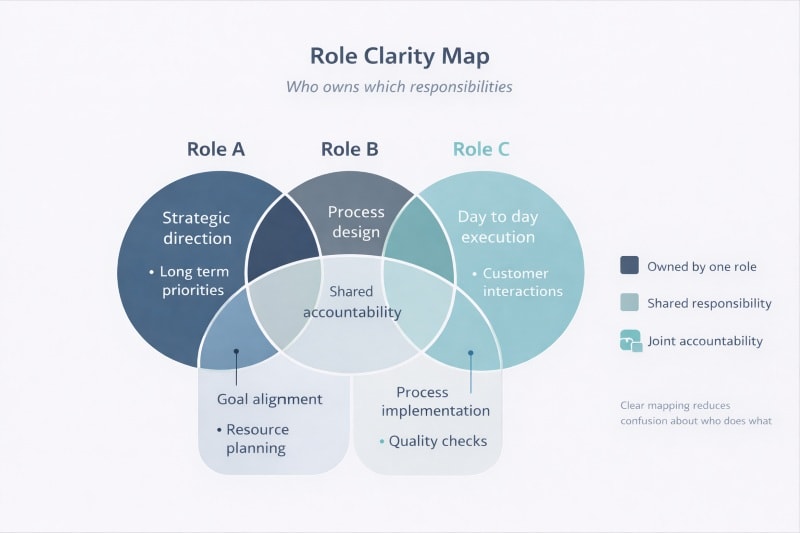
In a 50+ employee organization, unclear roles lead to duplicated work, gaps, and conflict. Employees work more effectively when they know:
- Their responsibilities and decision rights
- How their role supports team performance
- Where handoffs happen and what “done” means
Clear expectations reduce friction and rework. They also make performance conversations more objective. Instead of debating opinions, leaders can refer to explicit expectations and SMART goals when giving feedback.
Communication Skills That Directly Improve Work Performance
Communication skills that move performance, not just information
Effective communication is a performance tool, not a soft extra. Poor communication leads to delays, repeated work, and low employee morale. Strong communication skills help leaders and team members:
- Give clear instructions that reduce ambiguity
- Share priorities so employees focus on the right work
- Coordinate across teams without constant escalation
Writing skills matter here. Clear written communication such as task descriptions, emails, and documentation prevents confusion. When expectations are written well, overall performance improves quietly in the background.
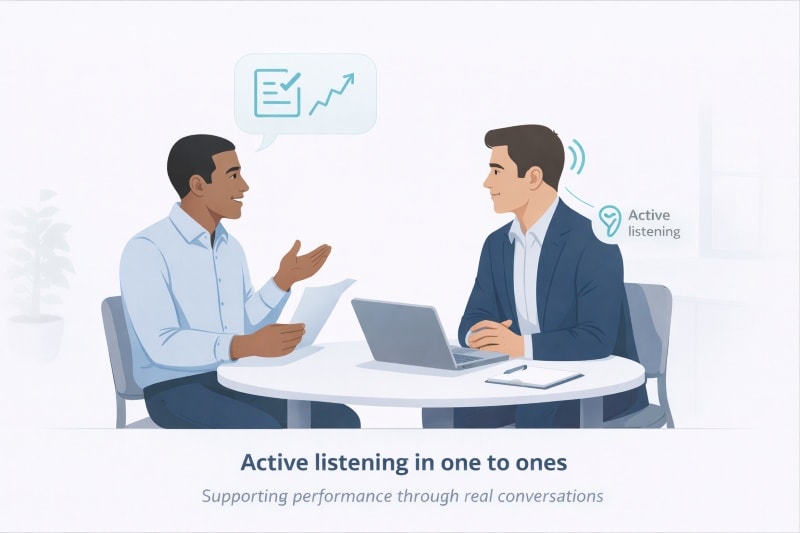
Active listening and making employees feel heard
Leaders often underestimate how much listening skills influence performance. Active listening and emotional intelligence help managers:
- Understand obstacles before they show up in performance metrics
- Adapt their communication style to different team members
- Spot early signs of burnout or low engagement
When employees feel heard, they are more willing to give employee feedback, share ideas, and accept constructive criticism. This creates a feedback loop where effective communication leads to more openness, which leads to better problem solving and improved teamwork.
Feedback, Coaching, and Positive Reinforcement
Consistent, constructive feedback instead of annual surprises
Performance does not improve through one annual review. It improves through providing consistent feedback in real time. Leaders should:
- Give specific, timely feedback tied to expectations and metrics
- Use constructive feedback instead of vague criticism
- Help employees see patterns, not just isolated incidents
Useful feedback focuses on behaviors and outcomes, not personality. It points to concrete examples, offers alternatives, and gives employees a path to better performance. When employees understand what to adjust, they can improve employee performance without guessing.
Positive reinforcement and stronger team morale
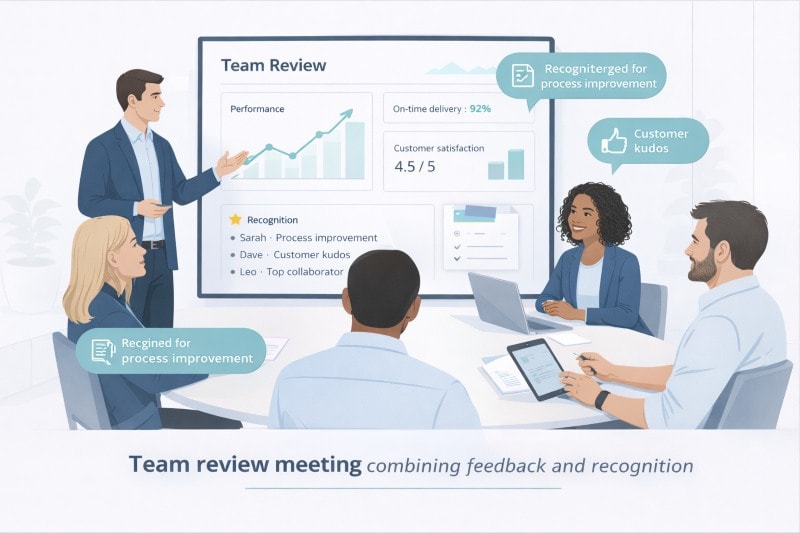
Feedback is not only about what went wrong. Positive reinforcement and celebrating achievements are essential to sustain high performance. Leaders can:
- Acknowledge high work quality and improved performance
- Highlight progress, not only perfection
- Recognize team building efforts and collaboration, not just individual wins
This builds stronger team morale and signals what the organization values. Over time, positive reinforcement supports high performing cultures where people are motivated to keep improving, rather than working in fear of criticism.
Leadership Skills That Drive Better Performance Across Teams
Leadership behaviors that drive performance
Leadership skills shape how performance plays out across the organization. High performing teams tend to share the same leadership patterns:
- Leaders set clear expectations and follow through
- They align priorities with business goals
- They remove barriers instead of adding noise
Leaders who model the right behaviors make it easier for employees to focus, manage time, and solve problems. Leaders who send mixed signals create confusion and wasted effort.
Emotional intelligence and trust
Emotional intelligence helps leaders read the room, respond appropriately, and develop relationships that support performance. Trust is not a soft concept. It directly influences:
- How honest employees are in performance conversations
- Whether employees accept feedback or become defensive
- How quickly teams recover from setbacks
When leaders combine clarity with emotional intelligence, employees are more willing to take responsibility, accept feedback, and work through challenges instead of hiding problems.
Time Management, Focus, and Daily Workflow Design
Time management as a team habit
Time management is often treated as an individual weakness. In reality, poor time management is usually a system problem. Constant interruptions, unclear priorities, and too many parallel projects make it hard for employees to focus on high value tasks.
Teams improve work performance when they:
- Limit work in progress
- Agree on response time norms
- Protect blocks of focus time for deep work
This allows employees to complete one task at a time, reach higher work quality, and reduce errors caused by constant context switching.
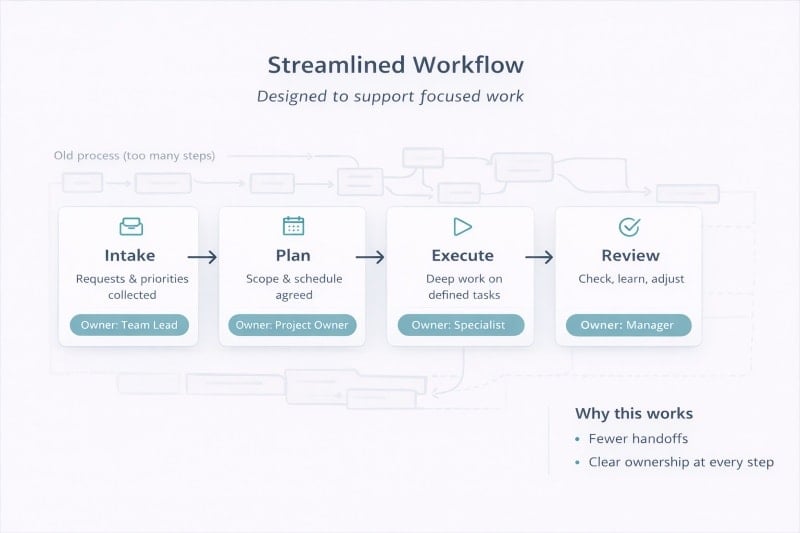
Designing workflows that support focus
A healthy daily schedule is not about squeezing more work into each hour. It is about structuring work so employees can perform at a high level without burning out. That involves:
- Using the right tools, not just more tools
- Simplifying approvals and handoffs
- Removing low value steps that add little to performance
When leaders treat time management and workflow design as organizational responsibilities, employees can use their skills more effectively and deliver better performance with less friction.
Training, Professional Development, and Continuous Learning
Targeted training that actually improves performance metrics
Employee training should not exist to tick a box. To enhance performance, training needs to be targeted at real gaps identified through performance metrics and feedback. Useful training investments often focus on:
- Technical skills that drive work quality and fewer mistakes
- Soft skills such as communication, time management, and problem solving
- Leadership skills for new and experienced managers
When training is aligned with measurable needs, employees improve in ways that show up in outcomes like reduced error rates, faster delivery, and higher customer satisfaction.
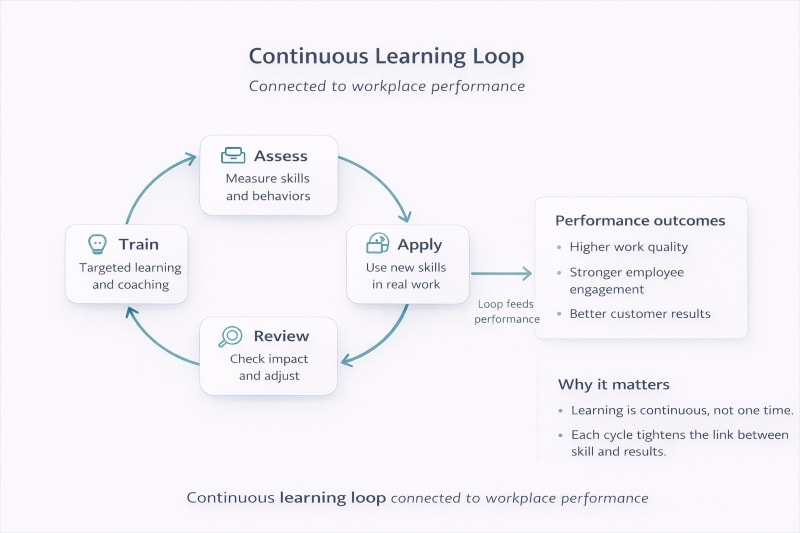
Building a culture of continuous learning
Continuous learning supports continuous improvement. Employees are more likely to engage with new tools, adopt better practices, and develop new skills when the organization:
- Treats learning as part of the job, not a side activity
- Provides development opportunities that match career paths
- Uses coaching and feedback to reinforce new behaviors
Professional development is strongly linked to job satisfaction and retention. When employees see a future in the organization, they invest more energy in improving performance today.
Work Life Balance, Well Being, and Sustainable High Performance
Work life balance as a performance driver
Healthy work life balance is not a perk. It is a performance strategy. Chronic overwork reduces cognitive capacity, increases mistakes, and damages employee morale. If you want high performance, you need sustainable energy and mental health, not constant exhaustion.
Supporting work life balance can include:
- Clear boundaries on availability
- Realistic workload planning
- Respecting time off and recovery
When employees feel their well being is taken seriously, they are more engaged, more loyal, and more willing to give discretionary effort when it truly matters.
Protecting wellbeing and retention
Ignoring mental health has a cost. Turnover, absenteeism, and quiet quitting all show up as performance issues. A company that wants to know how to improve workplace performance must be honest about workload, stress, and the real conditions under which employees work.
Simple practices like regular check ins, access to support resources, and open conversations about capacity help leaders solve problems before they become crises. Over time, this supports improved performance and more stable high performing team cultures.
Building High Performing Teams, Not Just High Performing Individuals
Beyond team building activities
Team building activities have their place, but they do not fix structural issues on their own. High performing teams are built on:
- Clear shared goals
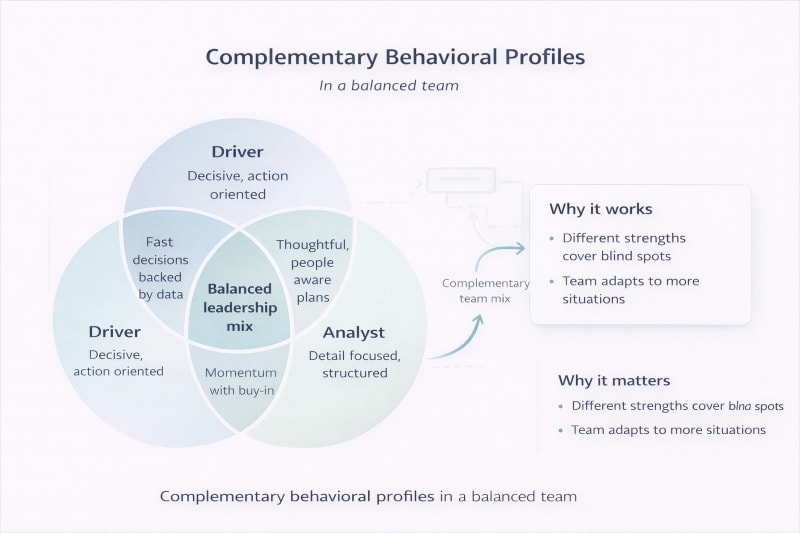
- Complementary strengths and behavioral profiles
- Consistent communication routines
If you want to improve teamwork, look at how work is structured, how decisions are made, and whether responsibilities are clear. Social activities support trust, but they cannot replace sound team design.
Using behavioral data to build balanced teams
Behavioral assessments help you see how people prefer to work, communicate, and solve problems. When you use this data in team building, you can:
- Balance analytical and action oriented profiles
- Combine detail focused and big picture thinkers
- Anticipate friction points and address them early
The result is a high performing team with fewer hidden conflicts and more productive collaboration.
Turning Insights into Action: Practical Steps to Improve Workplace Performance
From data to decisions
Collecting data is not the goal. Using it to improve performance is. To move from insight to action:
- Start with one or two critical performance metrics
- Use employee feedback and manager observations to understand causes
- Prioritize changes that remove friction and clarify expectations
Focus on solving specific problems rather than launching broad initiatives that affect everything and change nothing.
Start small and prioritize the next 90 days
Improving workplace performance in a 50+ employee company does not require a complete transformation. It requires consistent steps. For the next 90 days, you can:
- Clarify expectations and SMART goals in critical roles
- Improve feedback quality in one business unit
- Adjust workflows where delays or errors are most frequent
Small, visible improvements create momentum. They also help employees see that leadership is serious about continuous improvement, not just slogans.
Where Talent Assessments Fit In: Using OAD to Improve Performance
Why skills data alone is not enough
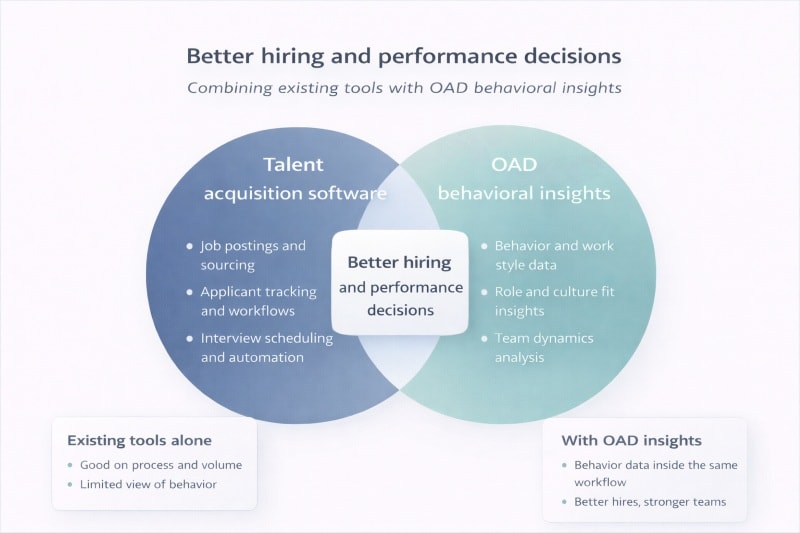
Resumes and technical tests tell you what people can do. They do not tell you how they will behave under pressure, how they prefer to communicate, or what kind of work environment helps them perform. That is where scientifically validated behavioral assessments matter.
By understanding behavioral tendencies, you can:
- Place people in roles that fit how they naturally work
- Tailor communication and feedback to each person
- Identify future leadership potential before you promote
This reduces mis-hires, improves employee performance, and supports high performing cultures.
Design teams with data, not gut feel.
Most org-design decisions come down to role fit, leadership style, and team dynamics. OAD reads those signals from a 7-minute behavioral survey, so you can reconfigure roles and teams with evidence instead of guesswork.
How OAD supports performance at scale
OAD gives you a structured way to link behavior and performance. You can:
- See patterns across teams and the entire organization
- Coach managers on how to adjust their leadership style
- Design roles, teams, and development opportunities based on real data
If you want to move beyond guesswork and see how OAD works with your own people, you can start with the free Top Performer Profile and connect behavioral insights with your existing performance metrics. This lets you improve workplace performance using data instead of intuition alone.
Key Takeaways and Next Steps
Summary: key levers to improve workplace performance
If you want to know how to improve workplace performance in a mid-sized company, focus on the controllable levers:
- Clear expectations, SMART goals, and role clarity
- Effective communication and active listening
- Consistent, constructive feedback and positive reinforcement
- Targeted training and continuous learning
- Work life balance and well being as performance drivers
- Team design and leadership behaviors that support high performance
These elements reinforce each other. When they are aligned, you get improved performance, stronger employee engagement, and better business outcomes.
Practical next steps for HR and leaders
For HR professionals, hiring managers, and executives, the path forward is practical:
- Audit where expectations are unclear or inconsistent
- Strengthen feedback and coaching skills for managers
- Use performance metrics and employee feedback to identify friction points
- Introduce or deepen the use of behavioral assessments such as OAD to support hiring, development, and team building
If you take these steps consistently, you build a high performing culture where people know what is expected, have the tools and support to deliver, and can sustain high performance without sacrificing their health or their lives outside of work.