Effective communication can make or break a hire yet it’s one of the most overlooked skills in the interview process. This guide shows you how to assess it clearly, confidently, and before it’s too late.
In today’s fast-moving business landscape, communication is more than just a “soft skill.” It’s one of the most crucial skills any team member can bring to the table.
Clear, effective communication enhances productivity, drives stronger team collaboration, and reduces the risk of misunderstandings that can derail entire projects. The ability to actively listen is a key part of effective communication, ensuring mutual understanding and better collaboration. On the other hand, poor communication skills lead to missed deadlines, unnecessary conflict, and siloed thinking — outcomes no organization can afford.
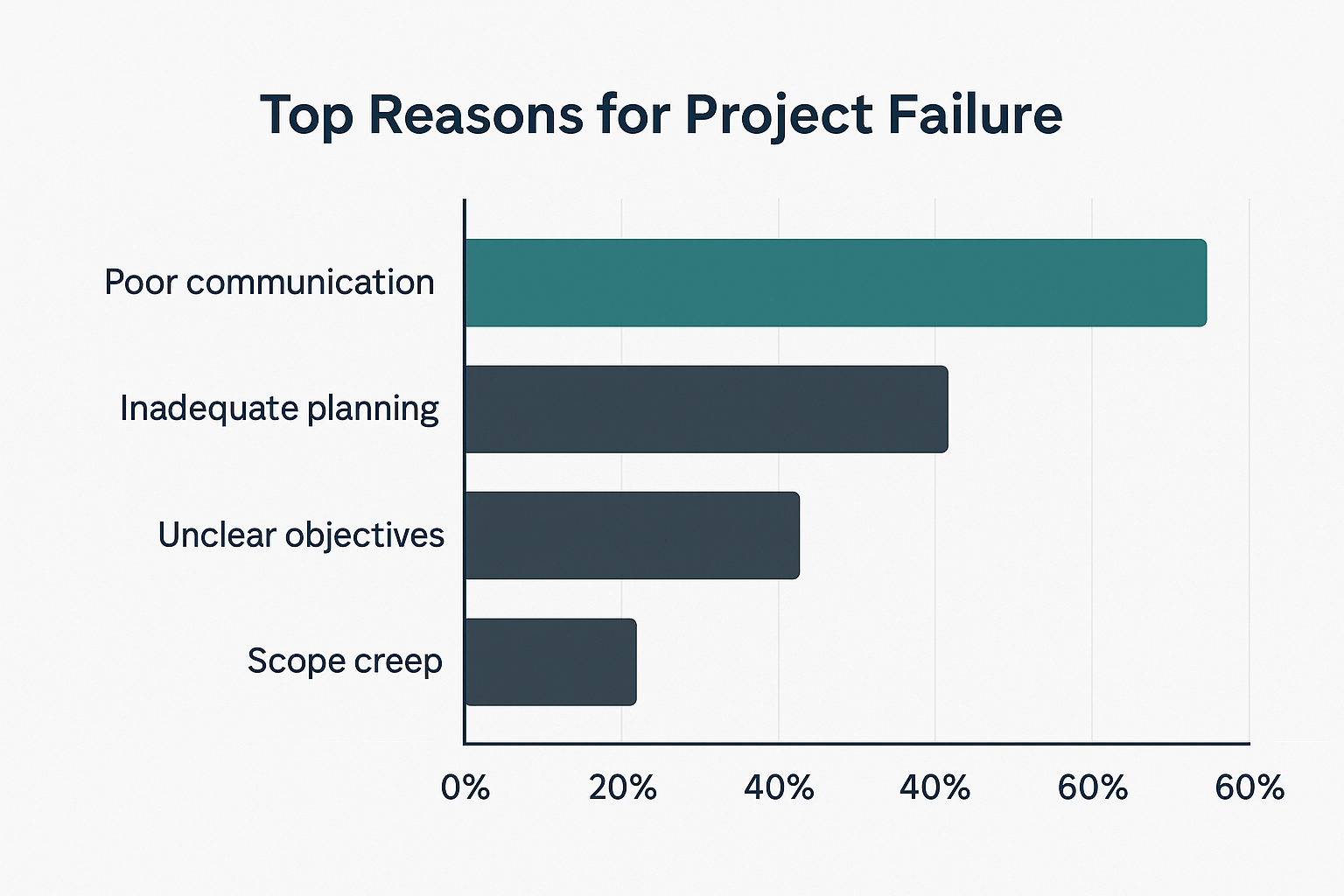
Whether you’re hiring for a leadership role or a junior position, the ability to communicate critical information, align with key stakeholders, and collaborate effectively across departments is essential. In fact, many hiring managers report that communication breakdowns — not technical gaps — are the root cause of underperformance.
If your hiring process doesn’t assess communication directly, you’re taking a gamble on whether a new hire can integrate into your team, build positive relationships, and navigate the communication channels that keep your organization running. It is essential to assess communication skills and assess candidates’ communication skills as a core part of the interview process to ensure team collaboration and productivity. Interviewing candidates should include evaluating the candidate’s communication skills, including their ability to actively listen and adapt to different workplace scenarios.
Bottom line? Communication is not just a competency — it’s a predictor of long-term success.
Strong communicators aren’t just good talkers — they know how to convey ideas across multiple formats and channels, and understand the importance of choosing the right communication channel for the message and audience. That’s why assessing communication skills during an interview should go beyond casual conversation, and include evaluating how candidates approach communicating in different scenarios.
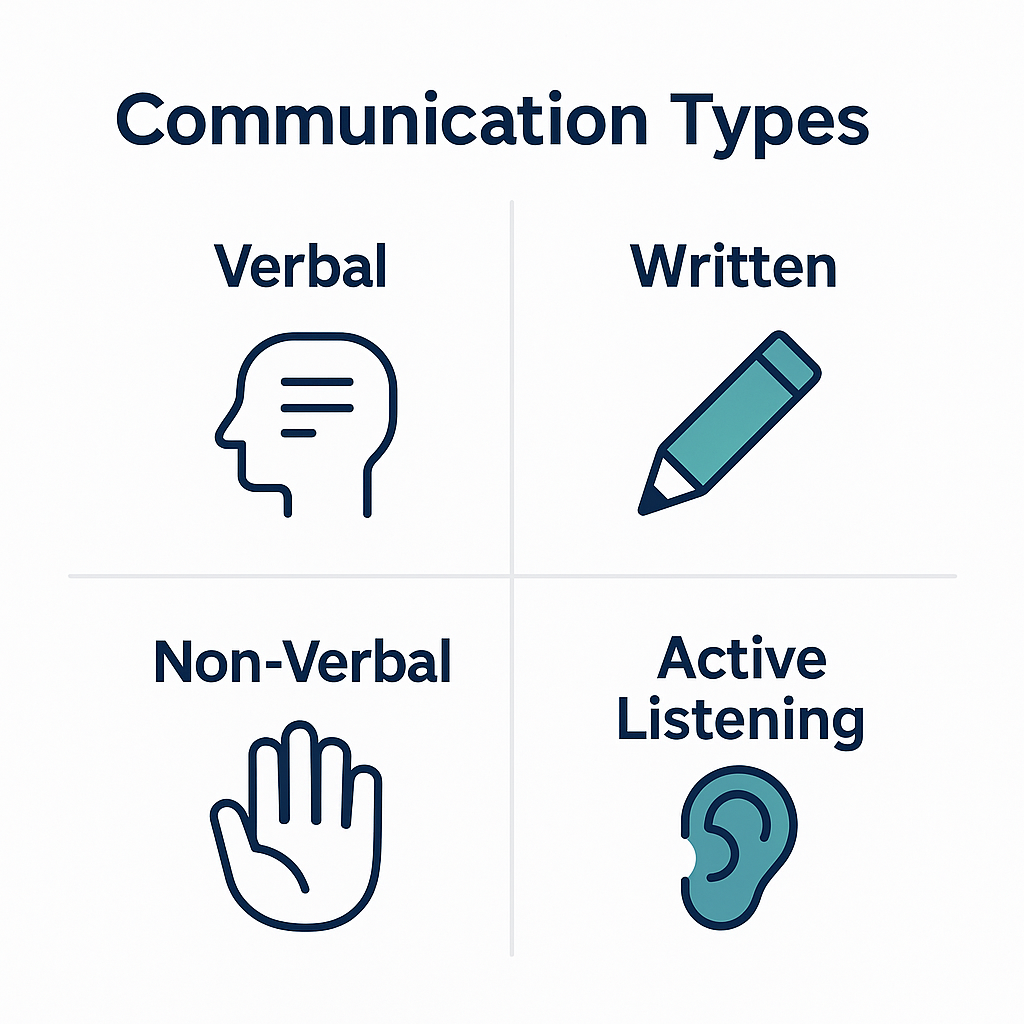
To get a clear picture of how a candidate will operate in your organization, you need to evaluate four core communication methods:
Verbal Communication
This includes everything from tone and clarity to pacing and word choice. Candidates with strong verbal communication can express complex ideas clearly and convey complex ideas to different audiences, adapt their language to different audiences, and stay calm under pressure — all while keeping conversations on track.
They can explain a complex idea in a way that is accessible to all listeners.
Written Communication
From email updates to project summaries, written communication is often the glue that holds modern teams together. Assessing how well a candidate can structure ideas, convey key points, maintain a professional tone, and clearly explain complex information is critical — especially in remote or hybrid work environments.
Writing samples are a valuable tool to assess a candidate’s written communication skills.
Non-Verbal Communication
Body language, eye contact, maintaining eye contact, posture, and even facial expressions play a huge role in how someone is perceived. These cues can reveal confidence, empathy, and engagement — or a lack thereof.
Additionally, visual aids such as charts and graphs can support non-verbal communication and help clarify messages, especially when explaining complex ideas.
Active Listening
Great communicators don’t just speak well — they listen actively. Do candidates ask clarifying questions? Do they paraphrase ideas to confirm understanding, and do they demonstrate empathy during the conversation? These behaviors indicate respect, attention to detail, and emotional intelligence.
When you evaluate these dimensions together, you’ll gain a well-rounded view of a candidate’s communication style — and avoid hiring someone who only performs well in one area. Active listening also encourages open dialogue and deeper understanding.
If you want to assess a candidate’s communication skills effectively, you need more than just the right questions — you need the right interview structure. Incorporating communication skills interview questions allows you to evaluate a candidate’s verbal, written, and overall communication abilities during the hiring process.
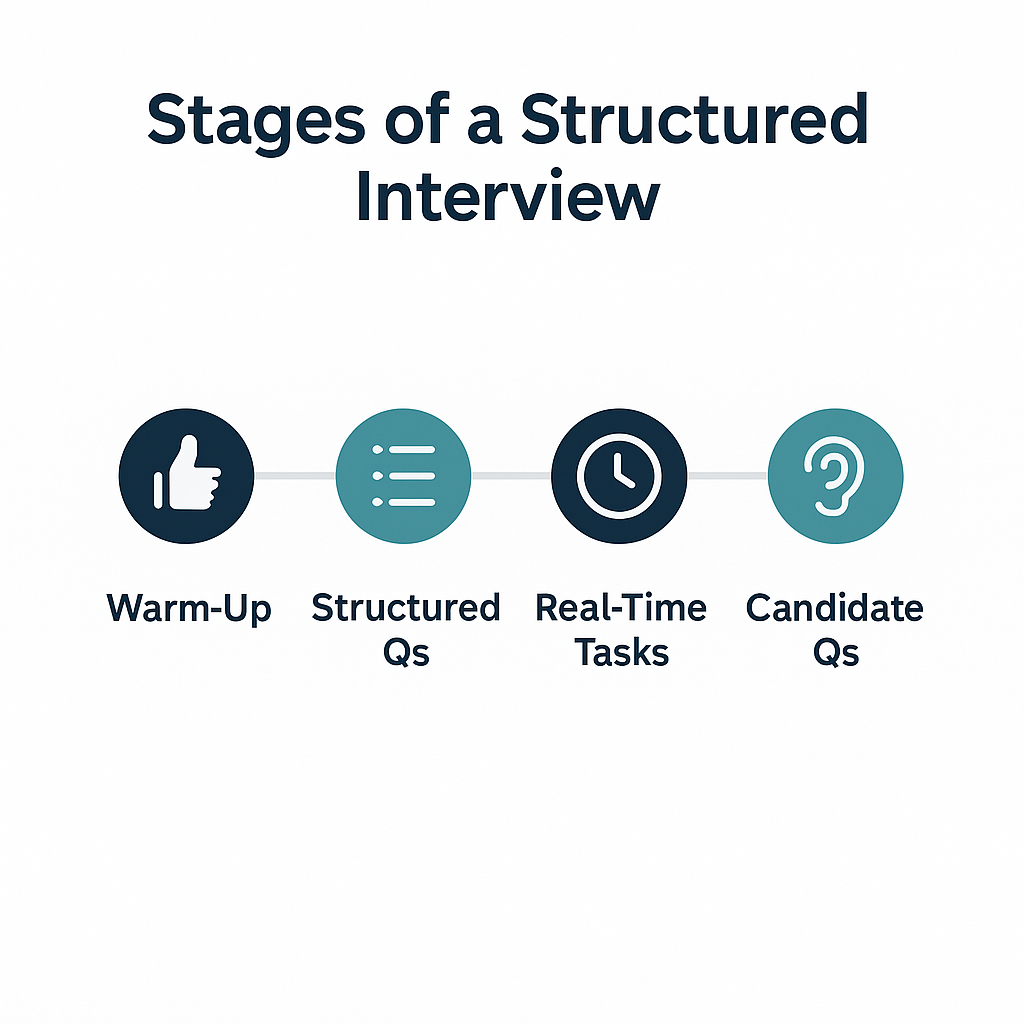
Too many interviews follow a rigid script, missing the opportunity to evaluate how candidates actually communicate in real-life scenarios. A better approach is to build your interview process with intentional checkpoints that test multiple aspects of communication. A good candidate will demonstrate strong communication skills throughout the structured interview process.
Start With a Conversational Warm-Up
A brief, informal conversation at the beginning helps lower stress and gives you a baseline of the candidate’s natural communication style, setting the stage for open communication during the interview. This also reveals how quickly they build rapport — a critical skill in client-facing or cross-functional roles.
Move Into Open-Ended, Structured Questions
Next, transition into deeper interview questions designed to test clarity, depth, and organization, using communication interview questions to assess verbal, non-verbal, and written communication skills across different roles. Avoid yes/no formats and instead focus on prompts that require detailed storytelling, problem-solving, and adaptability.
Incorporate Real-Time Assessments
Want to go beyond rehearsed answers? Introduce real-time tasks like role-play or a short writing challenge. This is where you’ll see how candidates think, structure, and communicate under pressure.
Providing suggested answers for these real-time tasks can help interviewers evaluate candidate responses more objectively.
Leave Room for Candidate Questions
Pay close attention to the questions your candidate asks. Are they thoughtful? Do they reflect curiosity, strategic thinking, or a desire to understand team dynamics? Good communication is often revealed by how someone listens and responds — not just how they present themselves; thoughtful questions can also help establish common ground between interviewer and candidate.
Building in these layers ensures that you’re evaluating the full range of communication behaviors — not just a polished surface.
Strong interview questions don’t just fill time — they uncover how candidates think, express themselves, and interact with others. Below are 10 carefully chosen interview questions, each designed to assess the candidate’s ability to communicate effectively in various scenarios, including handling complex ideas and challenging personalities.
For each question, we’ll explain what it reveals and what to listen for.
1. Describe a time you had to explain a complex concept to someone unfamiliar with the topic.
What it reveals: The candidate’s ability to simplify complex ideas for different audiences.
What to listen for: Clear structure, relatable examples, signs of empathy for the other person’s learning curve, and whether the candidate considered the needs of other team members when explaining the complex concept.
2. Tell me about a time you had to resolve a miscommunication at work.
What it reveals: Conflict resolution skills and communication accountability.
What to listen for: Do they take ownership? Did they follow up? Look for emotional intelligence and a desire to clarify, not just defend. Did they consider the perspectives and roles of the people involved in the miscommunication?
3. How do you tailor your communication style depending on who you’re speaking to?
What it reveals: Adaptability and audience awareness.
What to listen for: Can they shift tone, depth, or medium based on the stakeholder — from C-suite to junior staff? Do they adapt their communication style when working with different team members?
4. Give an example of a time when you had to deliver negative feedback.
What it reveals: Emotional regulation, clarity under pressure, and the ability to handle difficult conversations.
What to listen for: Direct but tactful language, use of constructive feedback, and ability to preserve the relationship.
5. Walk me through how you’d prepare for a team meeting where you’re leading the discussion.
What it reveals: Planning, clarity, and leadership in group settings.
What to listen for: Do they organize their talking points? Do they think about how to keep others engaged?
6. What do you do when you notice someone on your team isn’t understanding your instructions?
What it reveals: Active listening and collaborative problem-solving.
What to listen for: Efforts to clarify, offer alternate explanations, or check for understanding — not just repeat louder. Look for how the candidate adapts their communicating style to ensure understanding across different situations.
7. How do you handle remote communication (e.g., video calls, Slack, emails)?
What it reveals: Fluency in digital communication channels.
What to listen for: Do they mention tone awareness, response time, or formatting for clarity?
8. Describe a time when you had to communicate with a difficult stakeholder.
What it reveals: Patience, persuasion, and clarity in high-stress situations.
What to listen for: Were they respectful but firm? Did they stay on message?
9. Tell me about a time when your communication style helped resolve a conflict.
What it reveals: Cultural alignment and self-awareness.
What to listen for: Did they adapt, empathize, and drive a solution — or push their point of view?
10. What kind of feedback have you received about your communication style?
What it reveals: Self-awareness and openness to growth.
What to listen for: Reflection, humility, and examples of how they’ve acted on feedback to improve.

These questions don’t just help you evaluate what a candidate says — they reveal how they say it, how they listen, and how they adapt. And that’s where the real communication strengths (or gaps) show up.
Even the most polished candidates can recite well-rehearsed answers. But what happens when they have to think — and communicate — on the spot?
That’s where real-time role play becomes a powerful tool in your interview process. By simulating a realistic workplace scenario, you can observe how a candidate organizes their thoughts, manages pressure, and communicates clearly when it counts most.
Why Role Play Works
When candidates step into a simulated situation — like delivering bad news to a client or navigating a team conflict — you gain insight into more than just their verbal skills. You see their:
- Tone and emotional control
- Ability to structure messaging clearly under stress
- Empathy and audience awareness
- Confidence and composure in high-stakes settings
These are qualities that can’t be faked — and often don’t show up in traditional Q&A interviews.
Example Role Play Scenarios
You don’t need to get theatrical. Keep it simple, structured, and tied to real business contexts. Here are a few examples:
- “You’re leading a video call to communicate a change in priorities to a remote team. One team member pushes back. How do you respond?”
- “You need to deliver disappointing news to a client about a missed deadline. Walk me through how you’d frame the conversation.”
- “You’ve received negative feedback about your communication style from your direct reports. Acknowledge and address it in a team meeting.”
What to Observe
As the candidate walks through the scenario, focus on:
- Clarity of message: Do they get to the point while showing empathy?
- Pacing and structure: Do they ramble, or organize their message logically?
- Body language and tone: Are they confident and composed, or flustered and reactive?
- Follow-up: Do they ask questions to check for understanding or alignment?
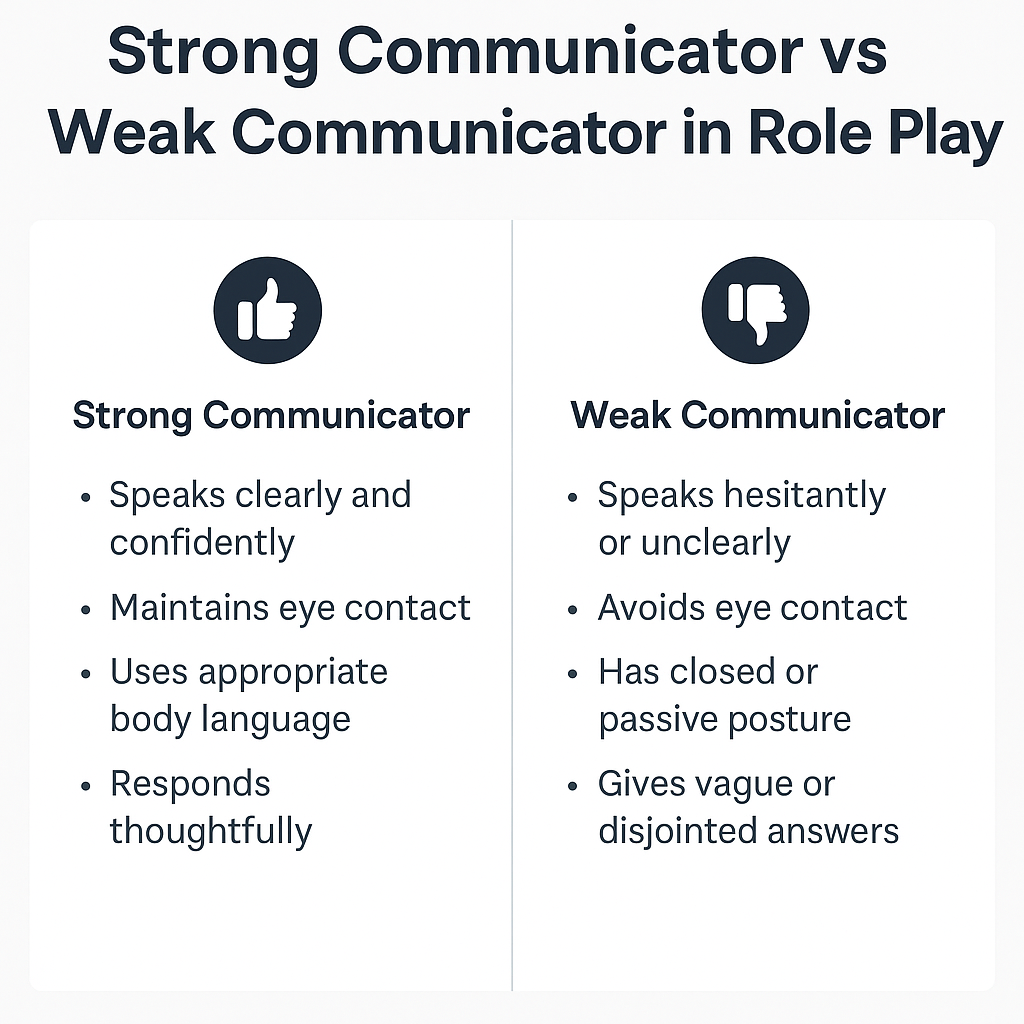
These simulations don’t just test verbal delivery — they reveal whether your candidate can communicate critical information in the moments that matter most.
Communication isn’t just about talking — it’s about listening. In fact, some of the most effective communicators say less and listen more.
During an interview, observing how a candidate listens is just as important as evaluating how they speak. Active listening is a skill that underpins empathy, team alignment, and problem-solving — and it’s essential in any role that involves collaboration.
How to Spot Active Listeners
Strong candidates don’t just wait for their turn to talk. They:
- Paraphrase your questions before answering
- Ask for clarification when needed
- Respond with relevance — not rehearsed talking points
- Use non-verbal cues like nodding, eye contact, and an engaged posture
These are signs they’re truly processing what’s being said, rather than preparing a preloaded answer.
Interview Prompts That Test Listening
Try using layered or abstract questions that require careful attention:
- “I’m going to give you a two-part question. First… then…”
- “Here’s a scenario — but don’t answer yet. What clarifying questions would you ask first?”
- “Let’s assume your manager gives you vague instructions. How do you make sure you’re on the same page before starting?”
These exercises give you a chance to evaluate both listening skills and follow-up behavior — which often reveal more about team fit than a well-delivered monologue.
What Follow-Up Questions Reveal
Encourage candidates to ask you questions throughout the interview — not just at the end. This shows:
- Curiosity about the role or team dynamics
- Strategic thinking about responsibilities or workflow
- Emotional intelligence, especially if they ask about communication preferences or feedback culture
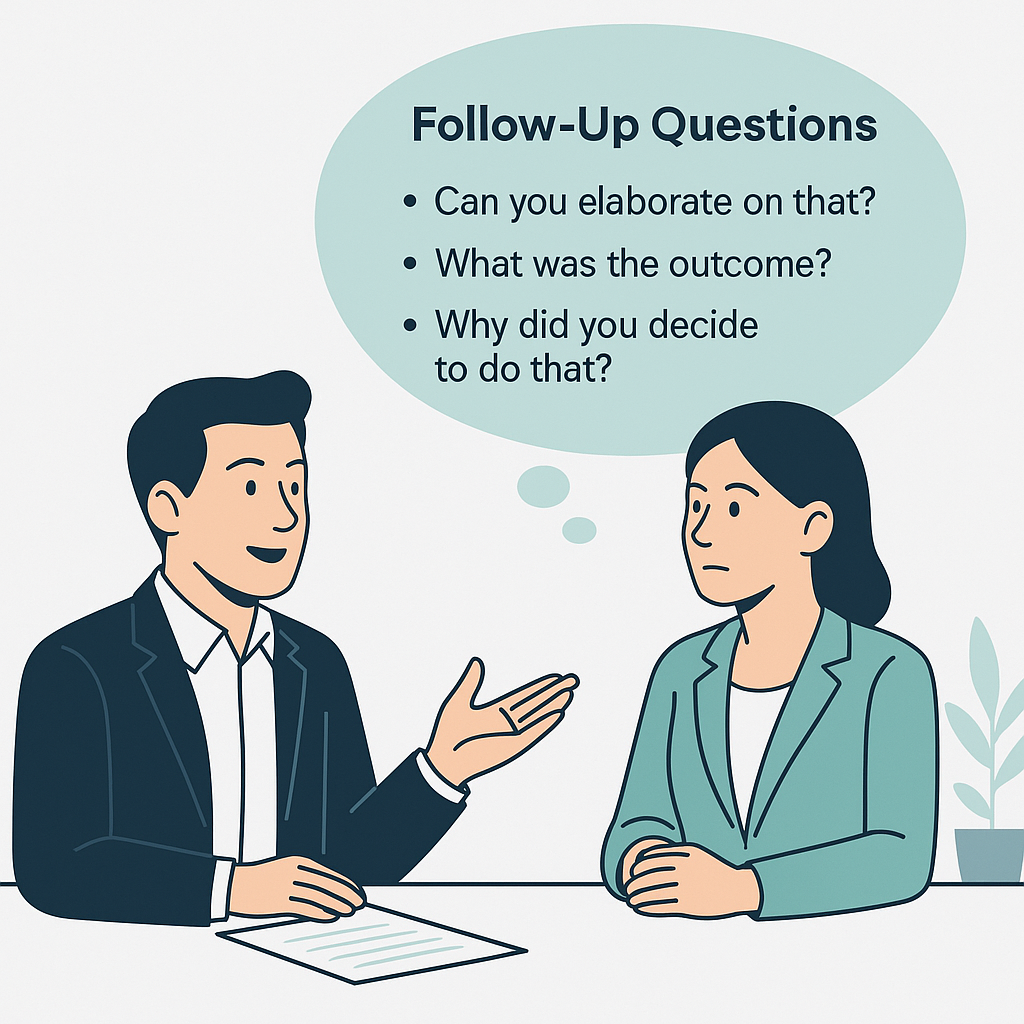
Listening is more than a soft skill — it’s a strategic advantage in any workplace. Don’t let it go unmeasured.
In a fast-paced, distributed work environment, written communication can make or break execution. Whether it’s aligning across departments or clarifying deliverables, strong writing ensures everyone stays on the same page — literally.
Yet many hiring managers skip this essential step. Don’t.
Why It Matters
A candidate may speak well, but if they can’t write clearly, concisely, and professionally, you may end up with misaligned projects, confused colleagues, or even unhappy clients. Written communication skills are especially important for roles that involve:
- Project coordination
- Client communication
- Internal documentation
- Leadership updates or reporting
How to Test It During the Interview
Integrate a short written exercise into your interview process. You don’t need anything complex — just enough to test clarity, structure, and tone.
Examples include:
- “Write a follow-up email summarizing our conversation.”
- “Draft a quick Slack message explaining a project delay.”
- “Create a short agenda for a team meeting around a recent change in priorities.”
Keep the format consistent with the role — Slack, email, internal doc — to evaluate how well they can communicate through the channels your team uses every day.
What to Look For
- Is the message clear and well-organized?
- Are key points communicated up front?
- Is the tone professional, empathetic, or audience-aware?
- Are there grammar or formatting issues that slow down comprehension?
When a candidate nails written communication, it’s a strong signal that they’ll be able to communicate critical information under pressure — and help others stay informed and aligned.
How to Assess Communication Skills in an Interview: Why They Are Non-Negotiable in Hiring
Communication isn’t just verbal — in fact, a significant portion of it is non-verbal. During an interview, a candidate’s body language often tells you just as much (if not more) than their words.
Ignoring non-verbal communication can mean missing critical red flags — or positive signs — about a candidate’s confidence, engagement, and self-awareness.
What to Observe During the Interview
Here are key non-verbal cues to look for — and what they might indicate:
- Eye contact: Too little may suggest discomfort; too much could feel aggressive. Look for natural, engaged contact.
- Posture: Upright posture suggests confidence and attentiveness; slouching may indicate disengagement or low energy.
- Facial expressions: Are they aligned with what’s being said? Forced smiles or blank stares may reveal discomfort or rehearsed answers.
- Gestures: Natural gestures can enhance a message, while fidgeting or crossed arms may suggest nervousness or resistance.
- Pacing and pauses: Rushed answers may hide uncertainty; calm pacing shows composure.
Cultural Sensitivity Matters
Keep in mind that non-verbal communication styles can vary widely across cultures. What might appear evasive in one culture could be a sign of respect in another. Evaluate cues in context, not in isolation.
Combine Cues With Context
Non-verbal behavior should never be judged on its own. Instead, use it to validate or question what the candidate is saying verbally:
- Are their gestures consistent with their message?
- Does their tone match their facial expression?
- Do they seem genuinely present — or performative?
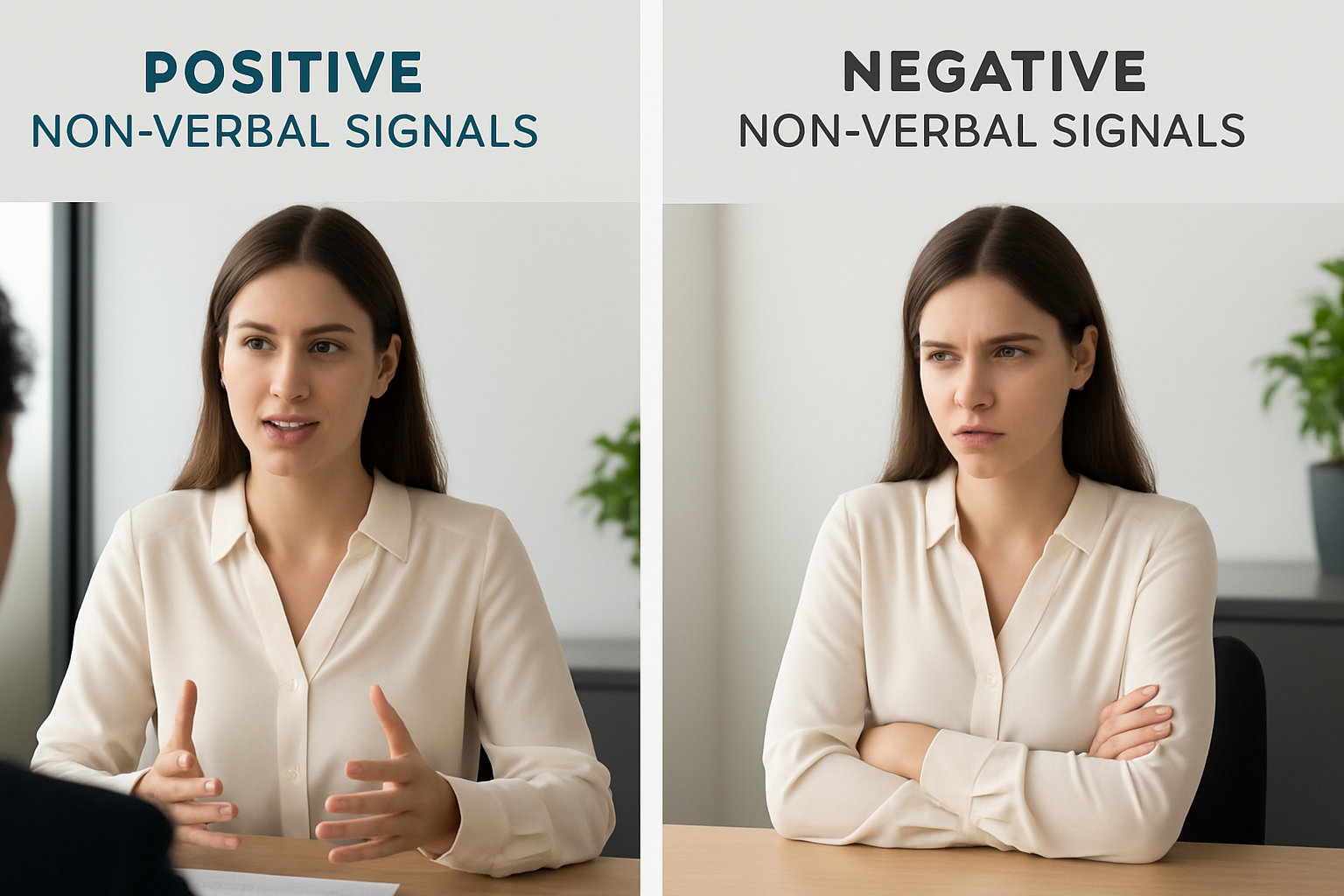
Strong communicators aren’t just good with words — they’re aligned across tone, body, and presence. The best hiring decisions come when you tune into what’s said and how it’s shown.
Test for Communication with Different Audiences
Strong communicators know that what you say is only part of the equation — how you say it (and to whom) is just as important.
The ability to adapt communication for different audiences is essential in most roles. Whether a candidate is presenting to leadership, guiding a junior team member, or negotiating with a client, they need to adjust tone, language, and content to fit the listener.
How to Assess Audience Awareness
During the interview, simulate situations where the same core message must be delivered to different stakeholders. For example:
- “Explain a project update to your direct reports, then rephrase it for the executive team.”
- “Walk me through how you’d introduce a new tool to an experienced colleague versus a new hire.”
- “How would you deliver the same update to a client vs. an internal team lead?”
These scenarios test whether the candidate understands communication context — not just content.
What to Listen For
- Do they adjust their vocabulary depending on technical fluency or seniority?
- Do they change tone — more formal for execs, more collaborative for peers?
- Do they consider what the listener needs to know (vs. what they want to say)?
- Do they ask follow-up questions to confirm understanding?
Why It Matters
In most modern organizations, communication doesn’t happen in silos. Your best hires will work across departments, levels, and personalities — and that requires fluid, audience-aware communication.
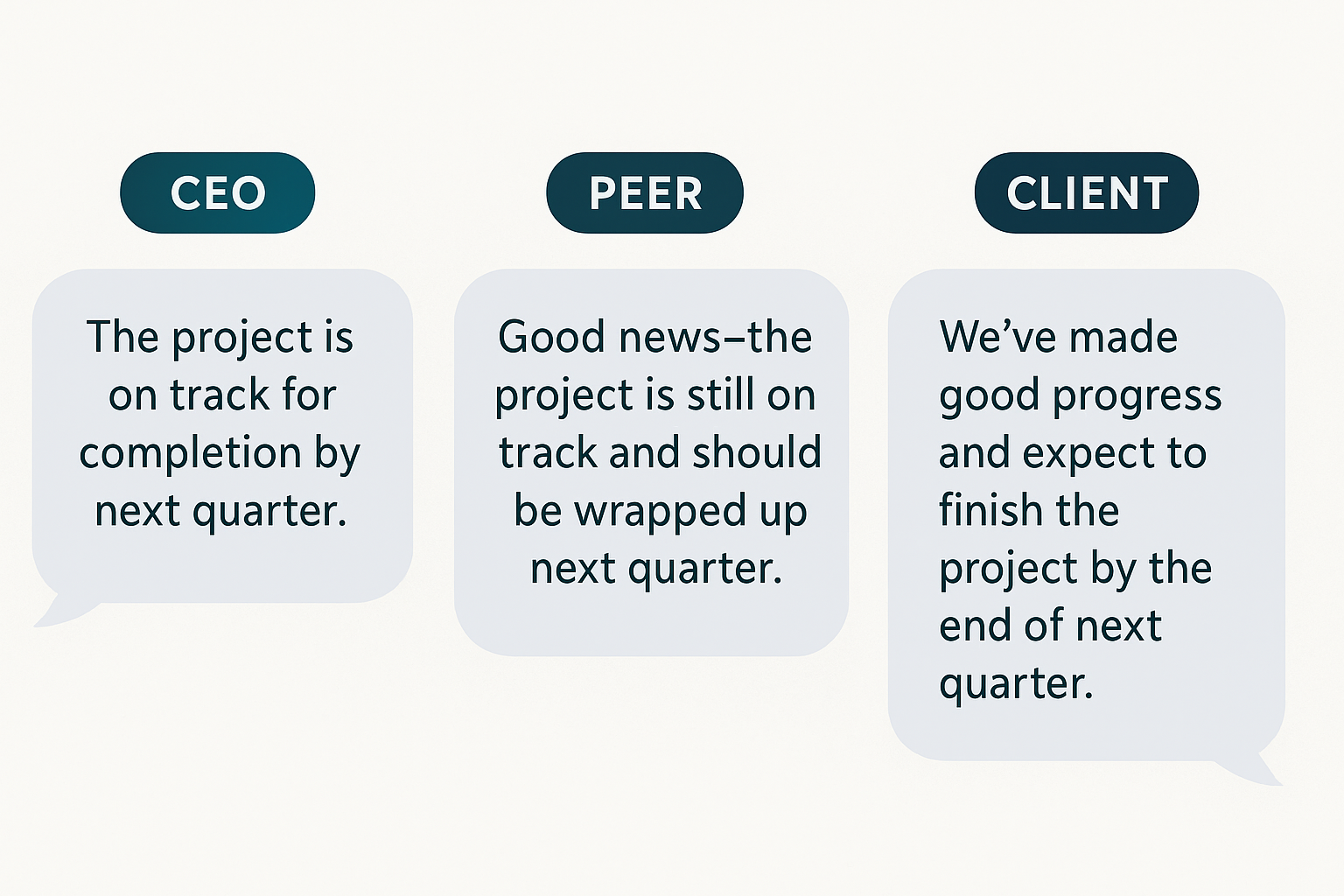
Hiring someone who can communicate effectively with different audiences means fewer misunderstandings, better alignment, and faster execution across the board.
Behavioral Question Bank for Communication Evaluation
If you want to know how a candidate will communicate on your team, look at how they’ve communicated in the past.
Behavioral interview questions are one of the most effective tools for uncovering real patterns — not hypothetical intentions. They force candidates to share how they handled real situations involving collaboration, conflict, and critical messaging.
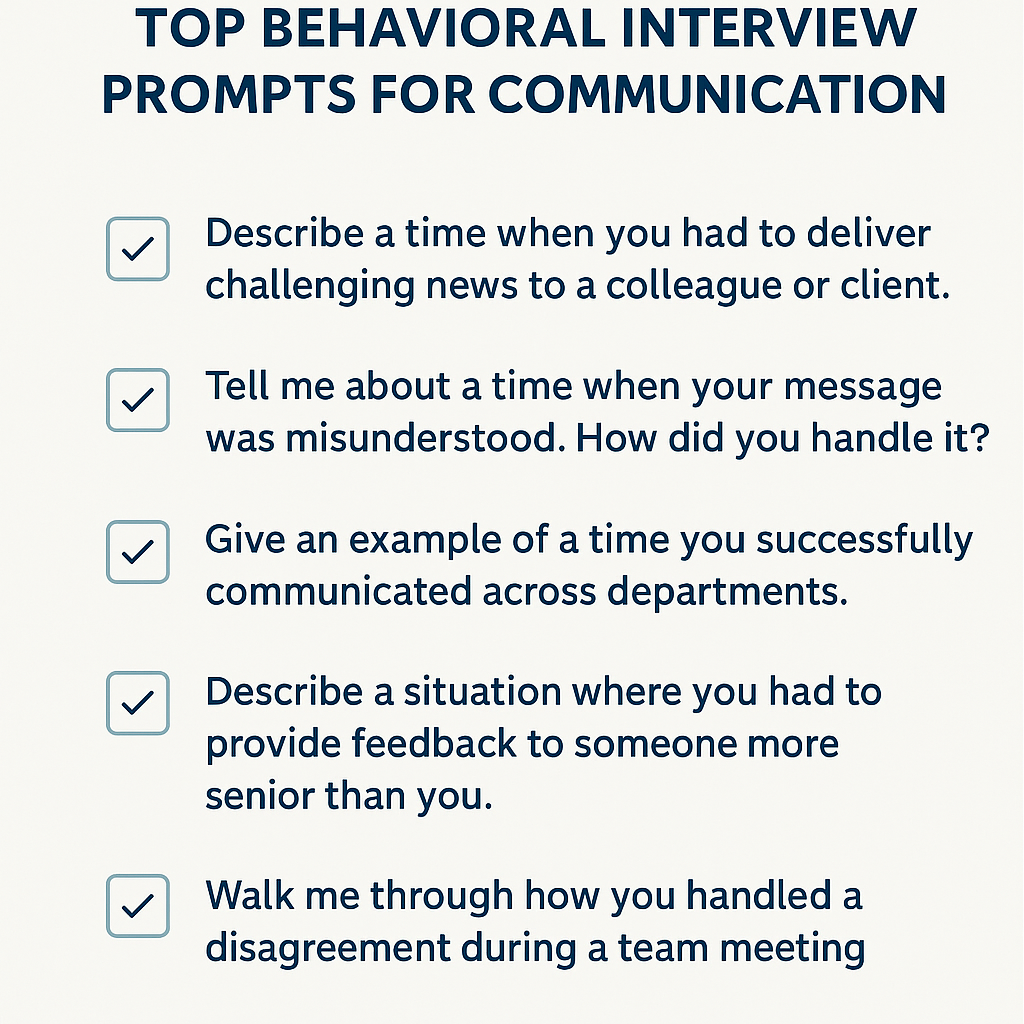
Key Behavioral Prompts
Here are high-impact questions to help you assess different dimensions of communication:
“Describe a time when you had to deliver challenging news to a colleague or client.”
What it reveals: Verbal tact, emotional intelligence, and ability to communicate under pressure.
“Tell me about a time when your message was misunderstood. How did you handle it?”
What it reveals: Ownership, follow-up, and awareness of how tone or delivery impacts clarity.
“Give an example of a time you successfully communicated across departments.”
What it reveals: Cross-functional collaboration and ability to navigate varying communication styles.
“Describe a situation where you had to provide feedback to someone more senior than you.”
What it reveals: Courage, diplomacy, and precision in upward communication.
“Walk me through how you handled a disagreement during a team meeting.”
What it reveals: Listening skills, clarity under pressure, and the ability to communicate differing opinions constructively.
Pro Tip: Use Follow-Up Questions
To dig deeper, don’t stop at their first answer. Try:
- “What did you learn from that experience?”
- “Would you do anything differently now?”
- “How did others react?”
- “What communication method did you choose — and why?”
These follow-ups test reflection, adaptability, and growth orientation — all signs of a communicator who learns from experience.
When done right, behavioral questions give you real-life examples, not canned responses. And that makes all the difference in making a successful hire.
Assess Communication Style and Cultural Fit
Even the most articulate candidate can create friction if their communication style clashes with your team’s culture.
Some workplaces prioritize formal, hierarchical communication. Others thrive on rapid, informal collaboration. Neither is inherently better — but the fit matters. A candidate might have good communication skills on paper, but if their delivery doesn’t align with how your team interacts, it could disrupt workflow and morale.
How to Assess Communication Style
Ask questions like:
- “How would your previous teammates describe your communication style?”
- “When giving updates, do you prefer written summaries, live meetings, or async messages?”
- “What’s your ideal feedback loop — direct and immediate or reflective and private?”
These questions help uncover how a candidate prefers to express themselves — and how they expect others to communicate with them.
What to Watch For
- Do they prefer real-time interaction or time to think before responding?
- Are they structured and direct, or more conversational and flexible?
- Do they view feedback as a collaborative process or a one-way critique?
Their answers can signal whether they’ll enhance team collaboration or create unnecessary friction.
How OAD Helps
Tools like OAD’s scientifically backed surveys go beyond surface-level impressions. They help you understand whether a candidate’s communication traits align with your current team dynamics — before you make the hire.
It’s not just about hiring a good communicator — it’s about hiring someone who communicates well with your people.
Summary – Communication Insights Lead to Successful Hires
Hiring someone with strong communication skills isn’t just about avoiding awkward emails or improving meeting etiquette — it’s about building high-functioning, collaborative, and resilient teams.
Throughout the interview process, you should be actively evaluating how candidates:
- Speak under pressure
- Listen and respond with intention
- Tailor their message to different stakeholders
- Deliver written content clearly and efficiently
- Align with your organization’s communication culture
Each of these dimensions offers a window into how that candidate will operate in real life — with your people, in your systems, under your expectations.
By applying the methods in this guide, you move beyond gut instinct and surface-level impressions. You gain a strategic advantage in identifying talent that will enhance clarity, reduce friction, and elevate performance across the board.
Test OAD Today
At OAD, we know that communication isn’t just a skill — it’s a measurable trait tied to team performance and organizational outcomes.
Our data-backed assessment tools help you understand how candidates will communicate in your environment — and whether they’ll enhance collaboration or hinder it.