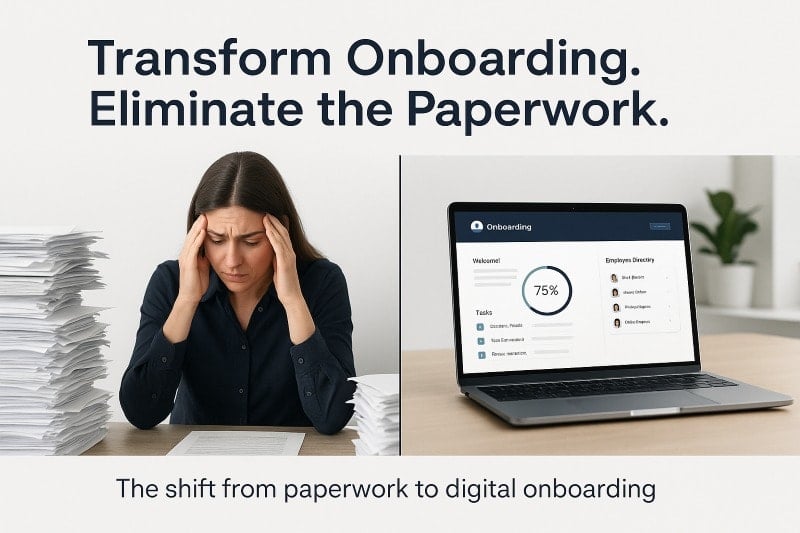
Stacks of new hire paperwork, manual forms, and endless signatures once defined the onboarding process. Today, forward-thinking companies are replacing that outdated routine with paperless employee onboarding — a faster, smarter, and more secure way to welcome new employees. Backed by data and science, this shift isn’t just about efficiency; it’s about creating a seamless employee experience that sets the tone for long-term success.
Stacks of new hire paperwork, manual forms, and endless signatures once defined the onboarding process. Today, forward-thinking companies are replacing that outdated routine with paperless employee onboarding — a faster, smarter, and more secure way to welcome new employees. Backed by data and science, this shift isn’t just about efficiency; it’s about creating a seamless employee experience that sets the tone for long-term success.
Why Paperless Employee Onboarding Matters in 2025
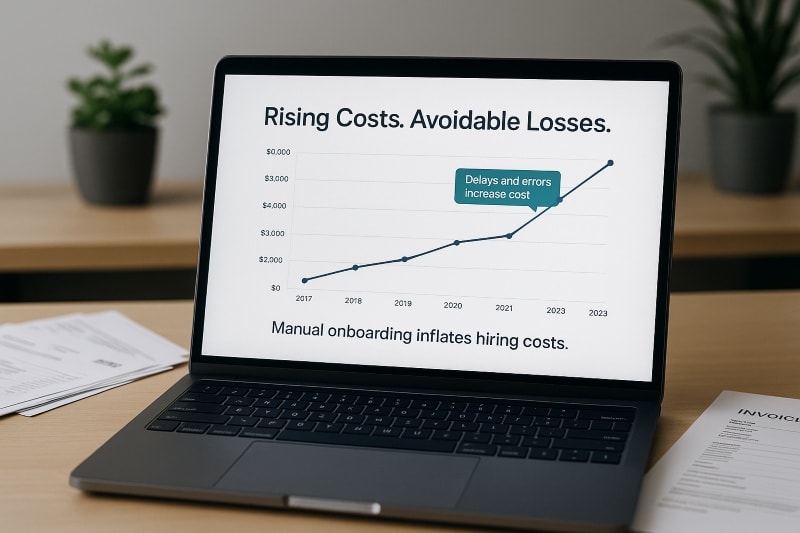
The hiring process has changed dramatically in the last decade. With hybrid work, remote employees, and global hiring pools, HR leaders can no longer rely on outdated, paper-heavy systems. According to SHRM, the average cost per hire now exceeds $4,700, and that number climbs even higher when delays, human error, or incomplete paperwork slow down onboarding. Most businesses are now moving towards paperless onboarding to streamline operations and improve efficiency.
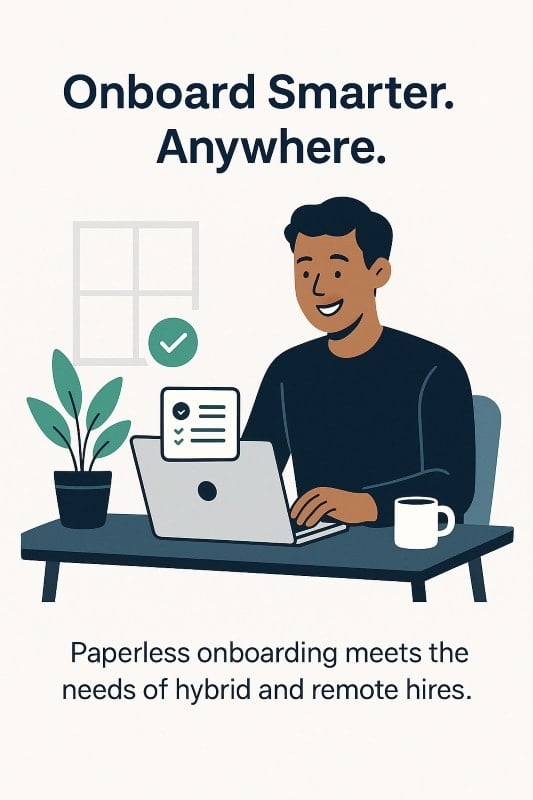
Paperless employee onboarding addresses these challenges head-on. By automating the onboarding workflow, companies reduce administrative tasks, minimize errors, and deliver a consistent employee experience — whether someone is in the office or starting from their own home. One major benefit is that businesses and HR teams save time, allowing them to focus on more strategic tasks.
Leaders like Elon Musk and Jeff Bezos often emphasize speed and scalability as critical business advantages. In hiring, the same principle applies: organizations that onboard quickly and accurately get new employees productive faster, giving businesses the benefit of a faster onboarding process and a competitive edge. Paperless onboarding isn’t just a trend — it’s a strategic move for companies that want to scale without friction.
The Costs of Manual Paperwork in Onboarding
For many organizations, the onboarding process still means stacks of paper forms: tax documents (such as the employee’s W-4 Withholding Certificate), confidentiality agreements, payroll details, and employee handbooks. While familiar, this approach comes at a hidden cost.
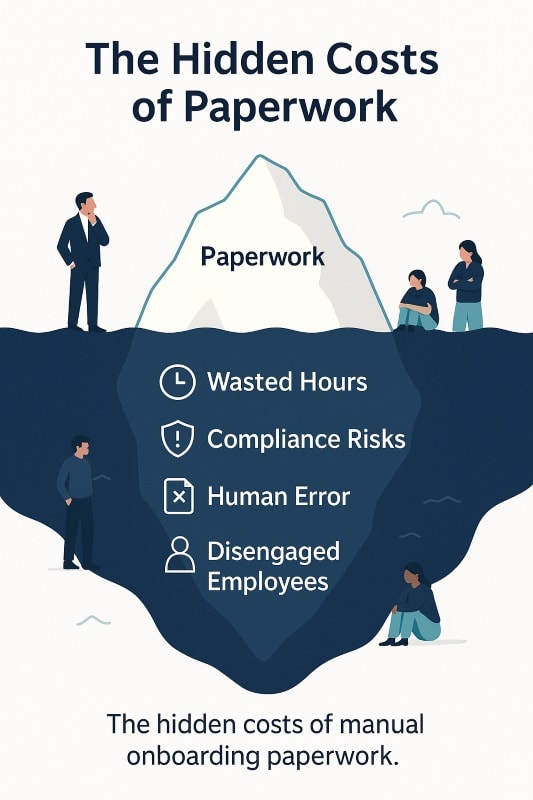
Manual paperwork creates delays. HR teams spend hours chasing signatures, double-checking new hire paperwork for accuracy, and correcting mistakes. The process of filling out forms by hand is tedious and prone to errors—new hires must fill multiple forms manually, increasing the risk of mistakes. Human error is common — a missing form field or misplaced page can slow down the entire onboarding workflow. Beyond inefficiency, paper forms introduce risks: sensitive information like bank details or social security numbers can be mishandled, so it’s critical to handle each hire’s documentation securely to avoid compliance issues and potential liability.
The cost isn’t just administrative. A slow onboarding experience shapes how new hires perceive the company. If their first weeks are filled with redundant forms and outdated processes, it sends a message that the organization isn’t modern or employee-focused. In a competitive talent market, that impression can directly impact retention.
Gallup research reinforces this point: employees who experience a structured, engaging onboarding process are 2.6 times more likely to feel highly engaged at work. Paper-based onboarding does the opposite — draining energy and enthusiasm before the employee even begins their role.
What a Paperless Onboarding Workflow Looks Like
A truly paperless onboarding process goes far beyond uploading PDFs. It’s a structured, digital workflow that removes friction at every step, ensuring new hires can begin their journey with confidence. This workflow serves as a modern new hire onboarding solution, leveraging automation and integration to streamline every phase.
Here’s what a modern onboarding workflow typically includes:
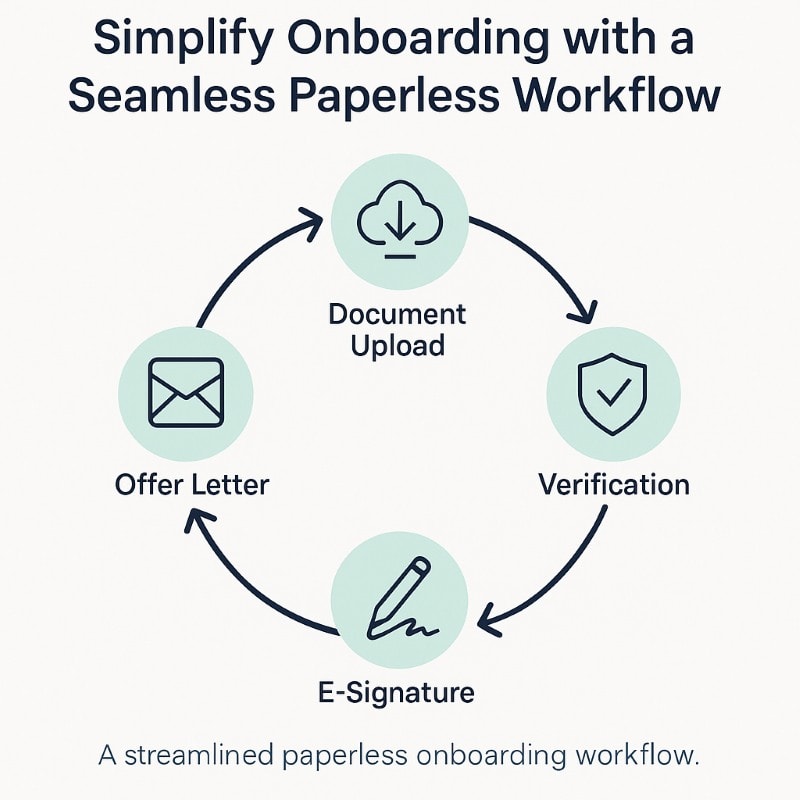
- Digital Offer Letters & Acceptance – Candidates receive and sign offer letters electronically, reducing turnaround time.
- Automated Document Collection – New hires securely upload personal details, bank information, and identification through a self-service portal.
- E-Signatures for Compliance – Confidentiality agreements, company policies, and tax forms can be reviewed and signed electronically — all stored in a secure HR system.
- Instant Verification – Automated checks confirm that forms are completed correctly, reducing human error. The verification process includes identity verification and compliance checks, using software tools to ensure all legal requirements are met efficiently.
- Orientation Integration – The system connects directly to employee handbooks, training resources, and company culture materials, helping new hires feel engaged from day one. Scheduling orientation sessions or training is seamlessly integrated into the digital workflow, saving time and improving efficiency.
The result is not just speed, but accuracy and security. Sensitive information is protected through encrypted systems, and HR teams gain visibility into each step of the process and benefit from streamlined onboarding processes. Instead of chasing down missing paperwork, hiring managers can focus on welcoming employees and building team cohesion.
Core Benefits of Paperless Employee Onboarding
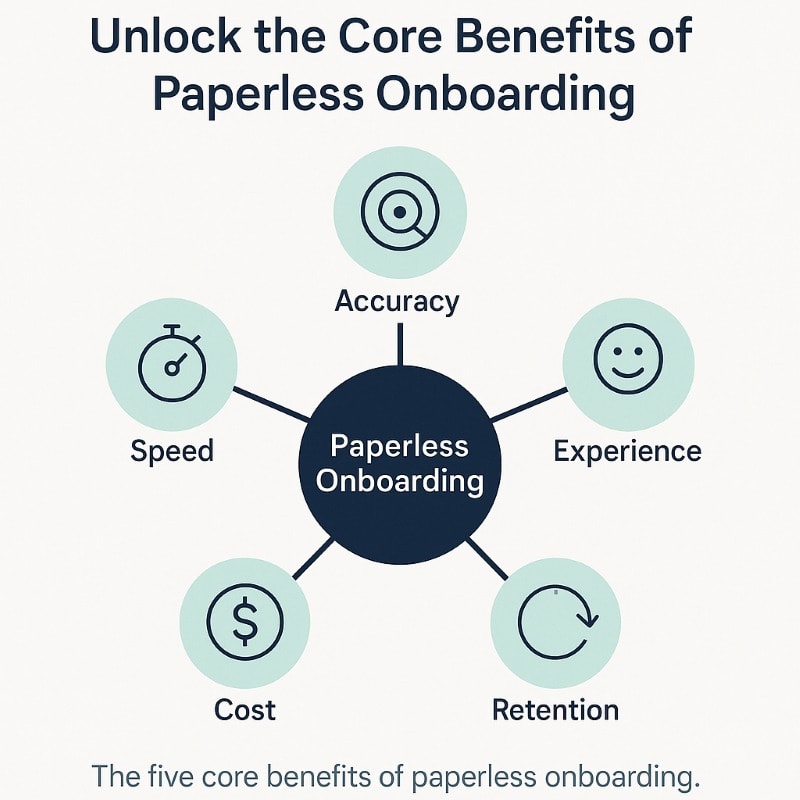
Switching to a paperless onboarding process isn’t just a matter of convenience — it directly impacts efficiency, compliance, and employee satisfaction. By reducing manual tasks and streamlining workflows, a paperless approach saves time for both HR teams and new hires. For companies scaling past 50 employees, these benefits compound quickly.
1. Speed and Efficiency
Paperless systems drastically reduce the time it takes to complete onboarding documents. Instead of mailing, scanning, or manually filing paper forms, new hires can complete everything online from their own home. HR teams save hours by eliminating redundant administrative tasks, freeing them to focus on higher-value work like culture-building and workforce alignment.
2. Accuracy and Compliance
Manual paperwork often leads to errors — missed fields, inconsistent formatting, or even lost forms. With digital onboarding, automated checks ensure forms are completed correctly before submission. Sensitive information, from bank details to confidentiality agreements, is stored securely, reducing compliance risk and protecting the organization from costly mistakes.
3. Enhanced Employee Experience
The onboarding process shapes how new hires view the company. A digital-first experience signals modernity, professionalism, and respect for their time. New employees feel valued when they can handle forms quickly, access company policies easily, and dive into meaningful orientation activities on day one.
4. Cost Reduction
Eliminating paper, printing, and storage may sound small, but across dozens or hundreds of new hires each year, the savings are substantial. More importantly, faster onboarding means employees become productive sooner, directly reducing the hidden costs of downtime.
5. Better Retention and Engagement
According to Gallup, only 12% of employees strongly agree their organization does a great job onboarding new hires. By adopting paperless onboarding, companies can differentiate themselves, creating a positive experience that strengthens engagement and retention long-term. When employees feel supported from the start, they are far more likely to stay and contribute at a higher level.
Integrating Employee Onboarding Software into Your HR System
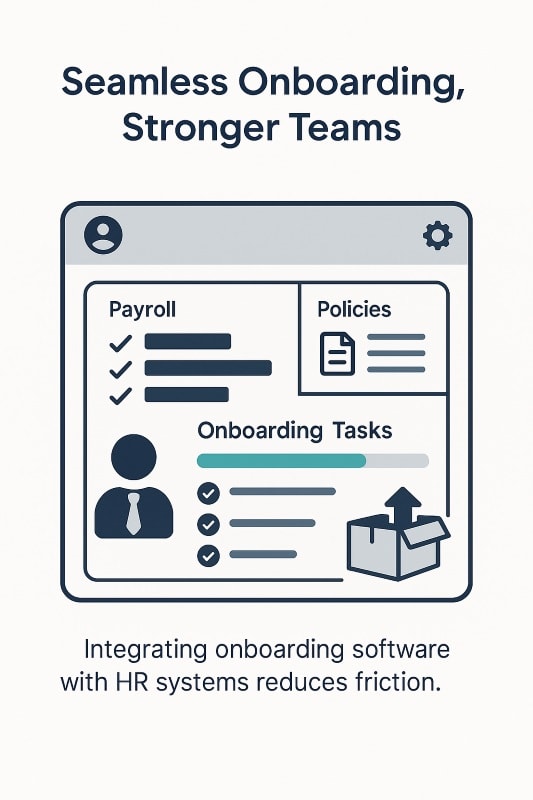
Paperless onboarding is most effective when it connects seamlessly with your existing HR system. The right employee onboarding software integrates payroll, custom forms, and company policies into a single workflow.
This reduces double entry, cuts down on human error, and ensures sensitive information — from bank details to tax forms — is handled securely. For hiring managers, it also provides real-time visibility into where each new hire stands in the process, eliminating unnecessary back-and-forth.
Redefining Employee Handbooks in a Paperless World
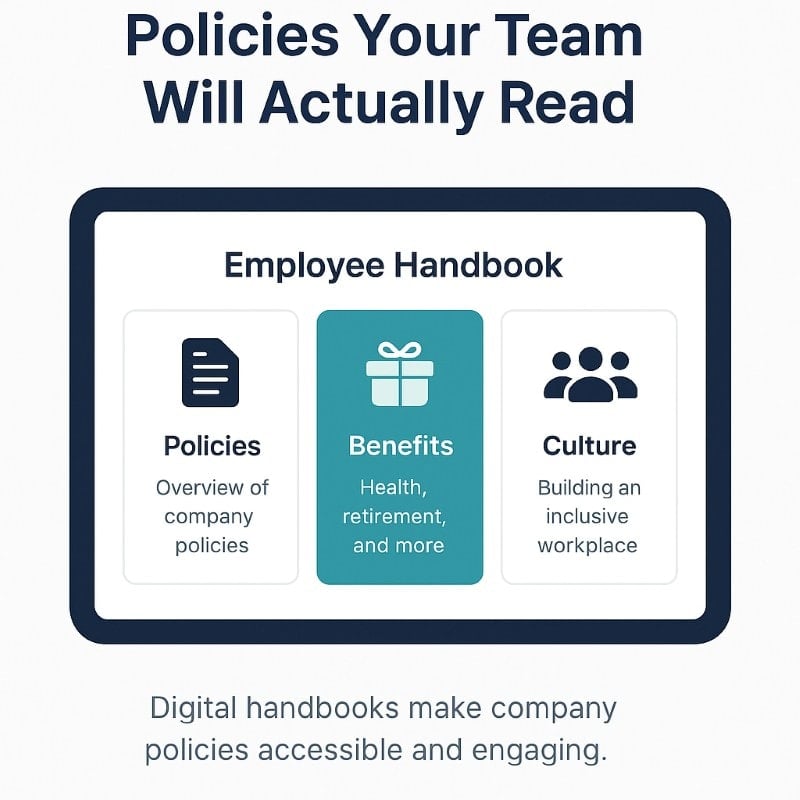
In a digital onboarding process, employee handbooks are no longer bulky binders that gather dust. Instead, they become interactive, living documents accessible from any device.
This shift does more than save paper. It makes policies, benefits, and company culture easy to explore, update, and personalize. New employees can quickly reference what matters most — from confidentiality agreements to PTO rules — without flipping through hundreds of pages.
For leadership, digital handbooks also reinforce culture. Starbucks founder Howard Schultz often emphasized that culture isn’t what’s written in a manual, but what’s lived daily. A digital-first approach ensures the handbook supports that culture by being accessible, updated, and relevant.
Best Practices for a Smooth Paperless Onboarding Process
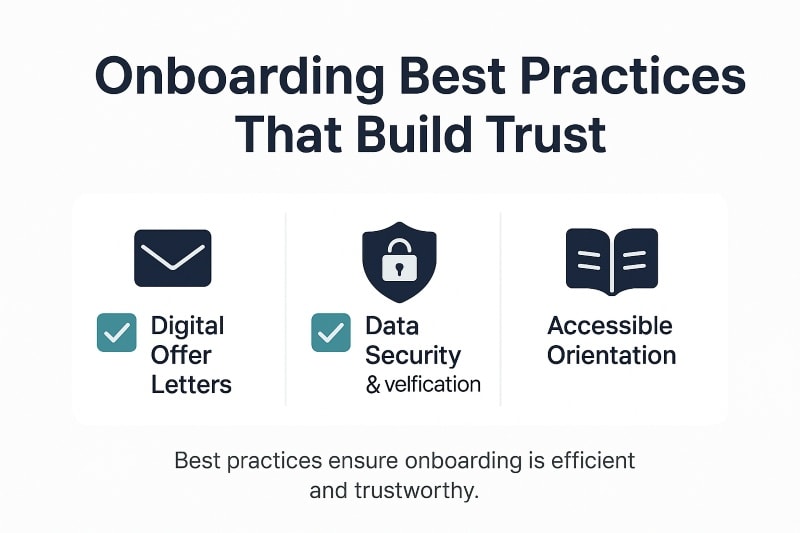
A paperless system works best when it’s intentional, not just digital for the sake of convenience. To maximize results, HR leaders should focus on three best practices:
Deliver Offer Letters DigitallyMove beyond email attachments. Use secure platforms that allow candidates to review, ask questions, and electronically sign within minutes. This reduces delays and ensures sensitive information is protected.
Prioritize Data Security and VerificationBank details, tax forms, and personal information require more than convenience — they demand trust. Ensure your onboarding software includes encryption, two-step verification, and built-in double checks so forms are completed correctly.
Make Orientation AccessibleDon’t let onboarding end with paperwork. Connect employees directly to resources like training videos, digital handbooks, and introductions to company culture. Employee orientation is essential for helping new hires understand company policies and procedures, and digital tools make orientation more flexible and accessible for everyone. This sets the tone for engagement long before day one.
By building these practices into the onboarding workflow, companies not only streamline administration but also strengthen employee confidence and trust in the organization.
The Role of Hiring Managers in Paperless Onboarding
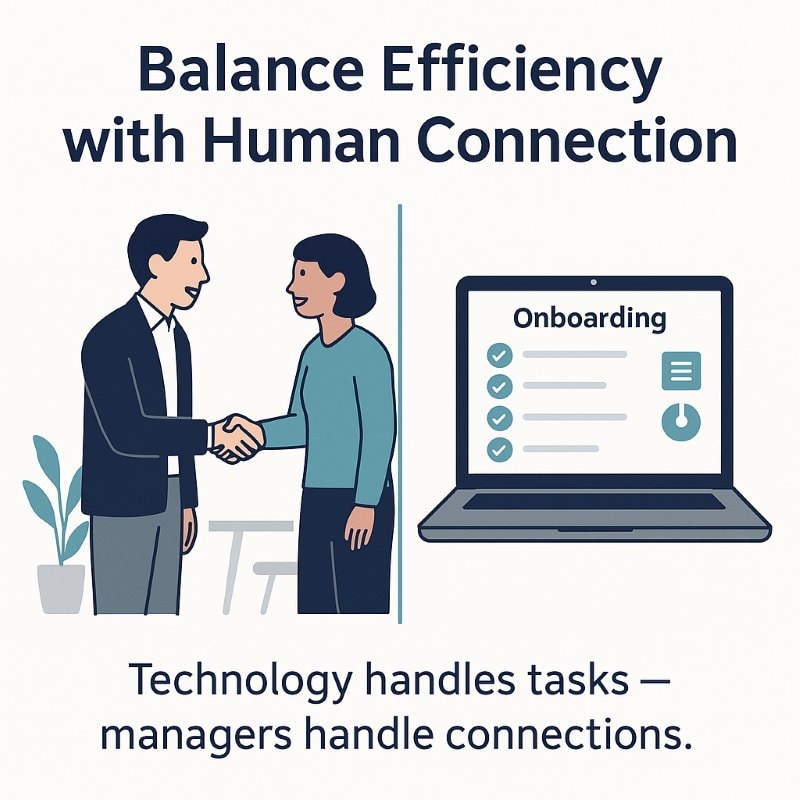
Technology streamlines the onboarding workflow, but the human element still matters. Hiring managers play a critical role in bridging the gap between digital processes and real-world employee integration. They are responsible for ensuring the new hire’s first day is smooth and productive, setting the tone for a successful start.
A well-designed onboarding system can automate forms, policies, and verification — but only a manager can set expectations, answer questions, and connect a new hire to company culture. Paperless tools free managers from chasing signatures and checking paperwork, giving them more time to focus on welcoming employees and guiding them through their first weeks, as well as supporting the new hire’s transition into the company.
This balance of efficiency and personal connection is what makes onboarding effective. As Elon Musk has noted, “You must have a good feedback loop… and constantly think about how you could be doing things better.” Paperless systems provide the data and structure; hiring managers provide the mentorship that accelerates integration.
Case Example: How Instacart Scaled with Paperless Onboarding
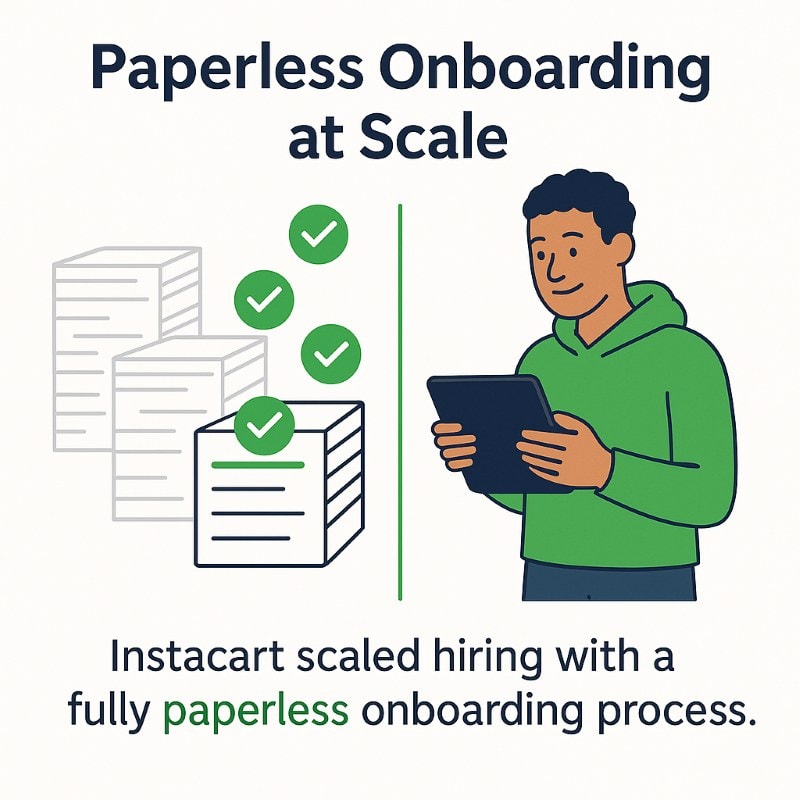
For high-growth companies, onboarding can either become a bottleneck or a competitive advantage. Instacart, the grocery delivery giant, faced exactly this challenge as it rapidly expanded its workforce of shoppers and employees.
Instead of relying on manual paperwork, Instacart implemented Dropbox Sign’s eSignature API to create a completely paperless hire onboarding process. Their hire onboarding was transformed by digitizing every step, allowing new hires to receive personalized onboarding documents digitally, sign them electronically, and have their information securely stored — without a single piece of paper changing hands.
The impact was immediate. Administrative bottlenecks disappeared, forms were completed correctly the first time, and Instacart scaled its hiring at the pace demanded by customer demand. Co-founder Max Mullen summed it up clearly:
“We don’t like dealing with paper documents. That was part of the motivation to go towards Dropbox Sign eSignatures. There certainly is no chance of us going back to paper.”(Dropbox Sign)
Instacart’s success shows how paperless onboarding isn’t just about efficiency — it’s about enabling business growth by removing the friction of manual, error-prone processes.
Bringing Science into Onboarding: The OAD Advantage
Paperless onboarding solves the administrative side of hiring — but it doesn’t answer the deeper question: is this the right person for the role? That’s where science makes the difference.
OAD’s personality and talent assessments go beyond paperwork. They give hiring managers insight into how a new employee will communicate, make decisions, and fit within the existing team — before day one even begins. By combining a seamless paperless workflow with behavioral science, companies can align talent more effectively, reduce early turnover, and build stronger teams.
Executives like Warren Buffett often stress the importance of hiring people whose character and capabilities match the company’s long-term goals. OAD brings that principle into practice with data-backed assessments, ensuring onboarding isn’t just fast, but smart.
Conclusion: The Smarter Way to Onboard in 2025
Paperless employee onboarding delivers speed, accuracy, and a better employee experience. Instacart’s success shows how removing paper transforms efficiency, but lasting success comes from pairing efficiency with science.
By integrating OAD into the onboarding process, companies go beyond eliminating paperwork — they ensure every hire is aligned, engaged, and set up to succeed.