Most recruitment strategies fail because they focus on filling roles, not fueling growth.
In today’s competitive labor market, the companies that attract top talent take a more strategic, relationship-driven approach to hiring. Discover a real-world recruitment strategy that not only delivered high-performing candidates — but transformed the entire hiring process.
Why Most Strategic Recruitment Strategies Fail Today
Outdated Tactics in a Competitive Labor Market
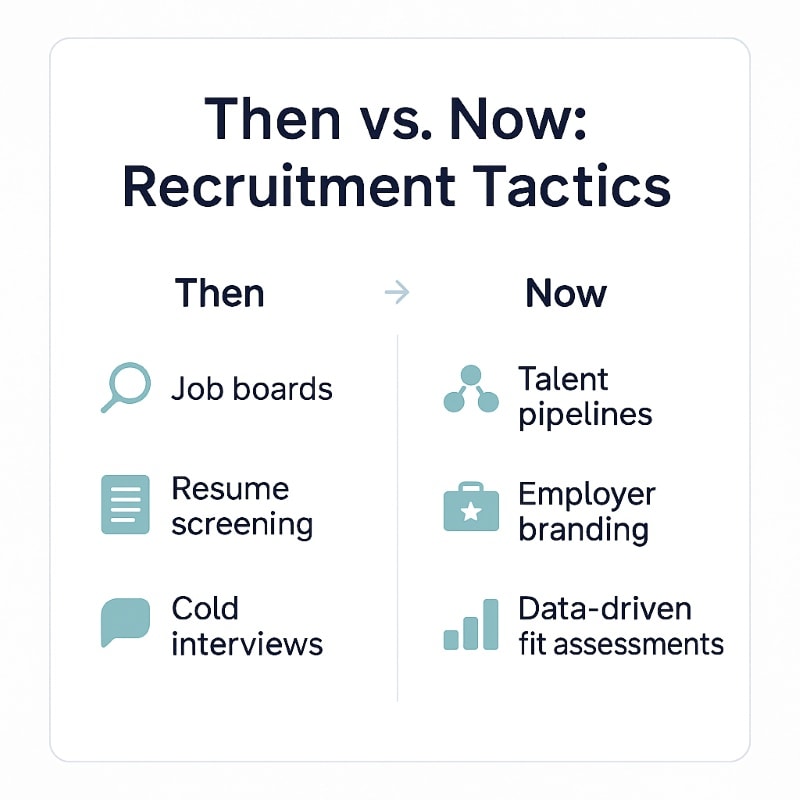
The hiring process has changed — but many recruitment strategies haven’t. In a market defined by talent shortages, skills gaps, and shifting candidate expectations, businesses can’t afford to rely on job boards and resume filters alone. Yet many still do.
Posting job openings, screening for keywords, and hoping the right person applies is not a recruitment strategy — it’s a gamble. Today’s job seekers are discerning, and the best talent often isn’t actively looking. In this environment, traditional recruitment efforts don’t just fall short — they create costly delays and mismatches.
The High Cost of Hiring the Wrong Candidate
According to a study by the U.S. Department of Labor, a bad hire can cost up to 30% of the employee’s first-year earnings. Taking a strategic approach to hiring candidates is essential to avoid these costly mistakes and ensure the right fit for open positions. But that’s just the tip of the iceberg. Poor hiring decisions ripple across the team — damaging morale, slowing productivity, and increasing turnover.
Hiring managers often feel the pressure to “fill the gap fast,” especially when business outcomes depend on specialized roles. But speed without strategy leads to churn, not growth.
Why Job Boards and Generic Outreach Fall Short
Generic job postings may bring in a flood of applicants — but quantity isn’t the problem. Quality is.
The most qualified candidates are often passive — they’re already employed, not scrolling job boards. Attracting them requires more than a bullet list of job descriptions. It takes strategic recruitment: clear goals, long-term planning, and a compelling employer brand that resonates with top talent.
What Is Strategic Recruitment?
From Box-Checking to Business-Aligned Recruiting
Strategic recruitment isn’t about filling open roles — it’s about aligning every hire with long-term business goals.
Instead of rushing to fill vacancies, forward-thinking companies define the kind of talent that will drive key outcomes: launching a new product, entering a new market, or reinforcing company culture during growth. Ensuring that new hires align with the organization’s values and the overall strategic plan is essential for successful integration and long-term results. This shift turns hiring from a reactive chore into a proactive strategy that supports overall business success.
Strategic Recruitment vs. Traditional Hiring
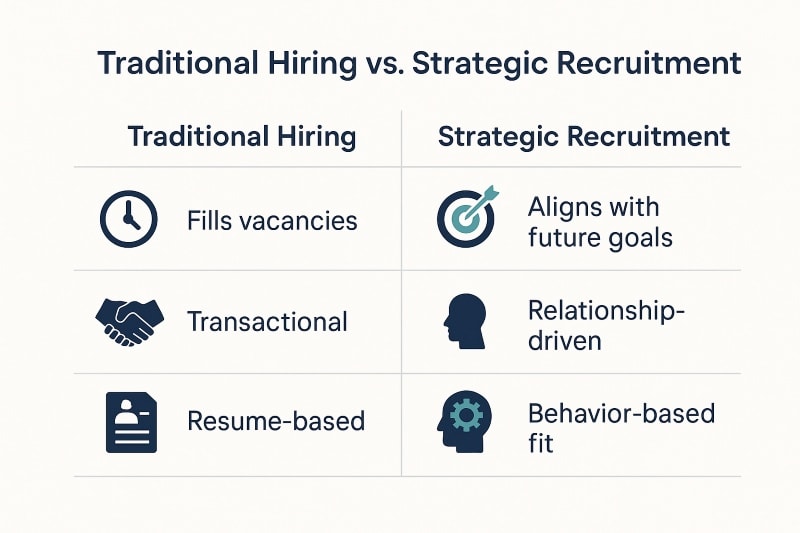
Let’s break it down:
- Traditional hiring reacts to open job positions.
- Strategic recruitment anticipates talent needs before they arise.
- Traditional methods rely heavily on job postings and applicant filtering.
- Strategic recruiters build a pipeline of future candidates aligned with company objectives.
- Strategic recruitment identifies and focuses on prioritized jobs to ensure the most critical roles are filled first, meeting organizational needs efficiently.
This approach creates better candidate quality, stronger cultural alignment, and higher retention rates — all key indicators of recruitment success.
Aligning Recruitment Goals with Business Objectives
Every company says they want the “best candidates.” But the best for what?
Strategic recruitment begins by defining the desired outcomes — not just in terms of skills, but in how a new hire contributes to strategic initiatives. This alignment ensures you’re not just hiring talent — you’re hiring impact. Conducting comprehensive market research helps ensure your compensation packages are competitive, allowing you to attract the right candidates and align with current industry standards.
When hiring managers and HR teams collaborate to define recruitment goals early, the entire recruitment process becomes more focused, efficient, and effective.
Pre-Recruitment: Set the Foundation for Success
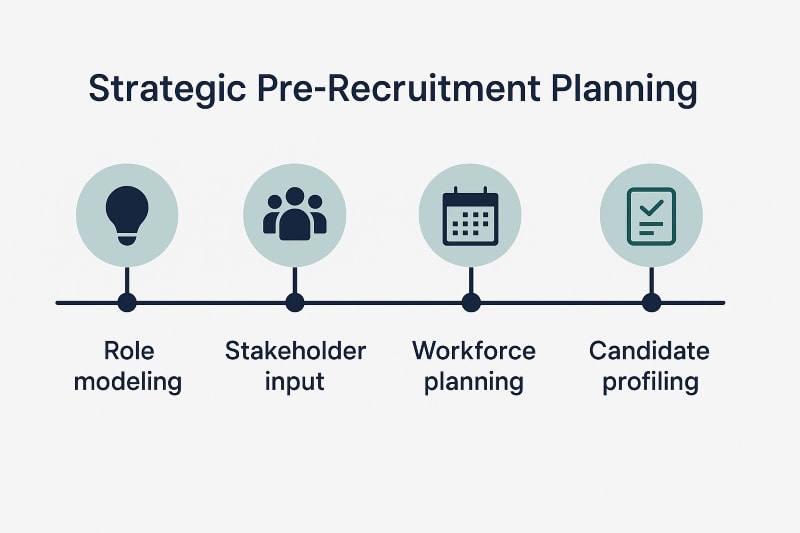
Define Recruitment Goals and Ideal Candidate Profiles
Before a single application is reviewed, high-performing companies invest time in clarity.
What outcomes does the role need to drive in the next 6–12 months? What personality traits will help someone thrive within your team culture? This is where strategic recruitment begins — not with resumes, but with role modeling.
Creating detailed candidate profiles means going beyond job descriptions. It includes values, preferred working styles, and expected contributions to strategic business goals. Tools like behavioral assessments and workforce analytics help define the type of person best suited for long-term success. These tools are especially valuable for identifying suitable candidates for specialized roles, ensuring the recruitment process targets individuals who are the best fit for niche positions.
Involve Hiring Managers and Stakeholders Early
Your HR team might lead the recruitment process, but the hiring manager owns the outcome.
Strategic recruitment requires collaboration. Involving department heads, team leads, and project owners early ensures that every new hire fits into the bigger picture. These stakeholders can flag misalignments, prioritize roles based on urgency, and contribute insights on team dynamics that no resume could reveal.
When multiple perspectives shape the hiring process from day one, the likelihood of a strong cultural and operational fit increases significantly.
Use Workforce Planning to Prioritize Jobs
Not every open position is equally urgent — or equally strategic.
By tying your recruitment strategy to workforce planning, you can determine which roles are mission-critical for hitting quarterly KPIs or supporting upcoming initiatives. This is especially crucial for companies navigating dynamic market conditions, where agility and foresight are essential.
Strategic workforce planning allows your team to forecast needs, balance headcount with budget, and build a recruitment plan that adapts to change.
Build a Magnetic Employer Brand
In today’s competitive labor market, a strong employer brand is no longer optional — it’s a strategic requirement for attracting and retaining top talent. Your employer brand defines the experience of working at your company. It influences every stage of the recruitment process, from the initial job posting to the final step of the onboarding process.
But effective employer branding isn’t about slogans or polished career pages. It’s about authentically communicating your culture, values, and vision — and doing it in a way that resonates with qualified candidates. When done well, employer branding elevates your entire recruitment strategy: it increases candidate quality, accelerates time-to-hire, and lowers overall recruiting costs.
Start with a Clear Value Proposition
Begin with a well-defined employee value proposition (EVP). What sets your organization apart in the eyes of job seekers? Whether it’s career path opportunities, a culture of inclusion, or clear alignment with business goals, your EVP should answer the question: Why should the best candidates choose us?
Consistency is key — this message should show up across all recruitment efforts, including job postings, social media, and referral outreach.
Leverage Social Media and Employee Referrals
Modern job seekers do their homework — often long before they apply. Use social media to showcase your work environment, highlight team achievements, and share stories that reflect your values. Encourage employees to share their experiences and refer candidates — employee referral programs amplify trust and expand your talent pool with culturally aligned prospects.
Align Employer Branding with Business Outcomes
An effective employer brand doesn’t just attract attention — it attracts the right candidates to support your business objectives. Integrate employer branding into your broader strategic recruitment plan, ensuring each candidate touchpoint reflects your recruitment goals and company culture. This alignment helps you stand out in a crowded market and strengthens long-term fit.
Measure and Evolve Your Employer Brand
Employer branding isn’t set-it-and-forget-it. Track key performance indicators like candidate engagement, application conversion rates, referral volume, and employee retention. These insights help refine your approach and keep your messaging relevant in dynamic market conditions.
A great employer brand grows with your business — and with the expectations of top talent.
Real-Life Case Study: The Top 20 Talent Pipeline Strategy
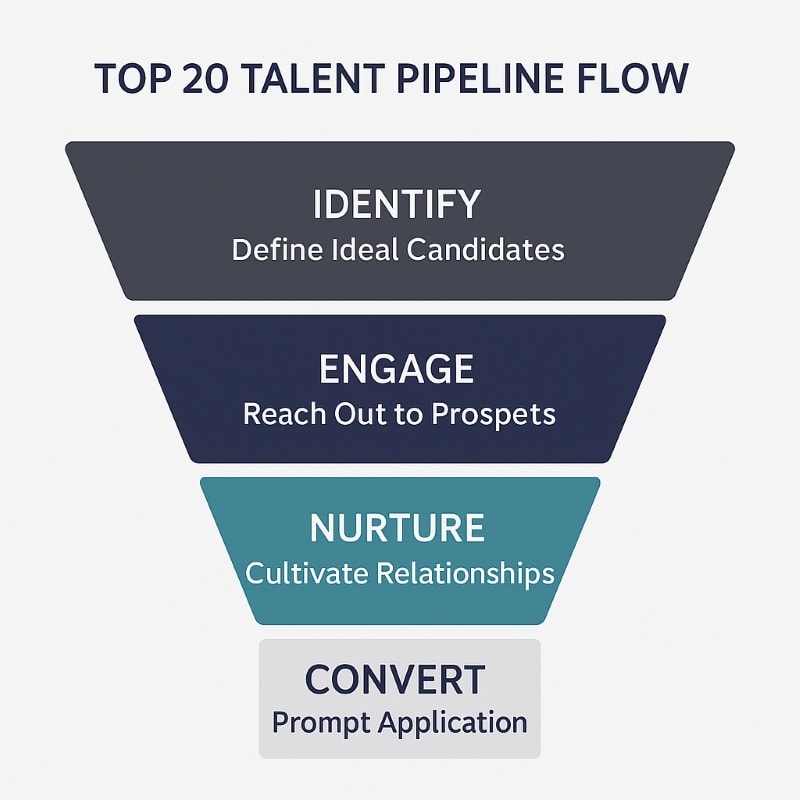
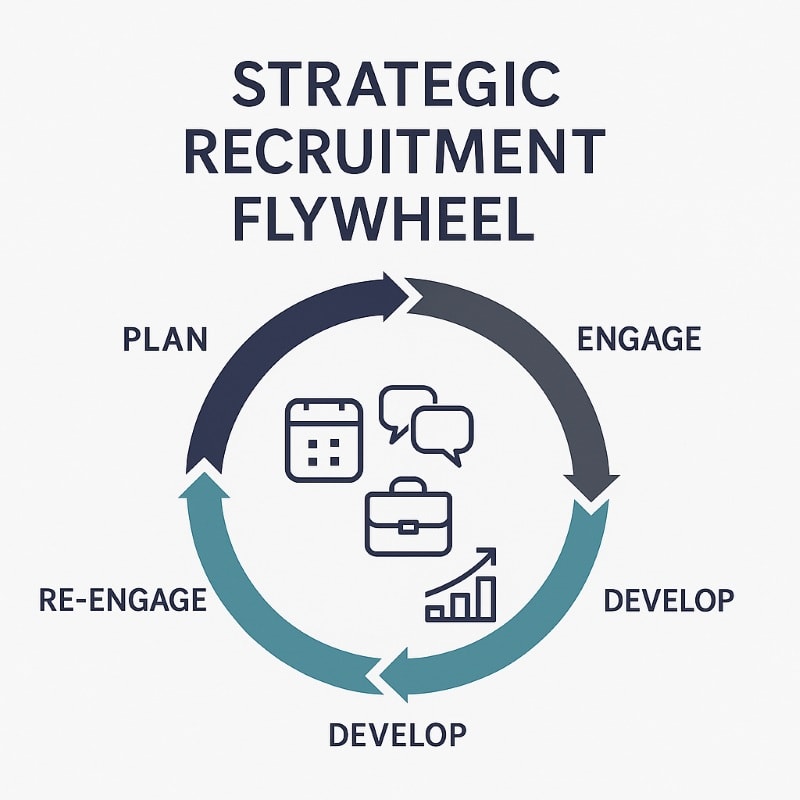
Step 1: Identify Top Talent, Not Just Applicants
Most recruiting efforts start with job postings. This company started with people.
Instead of waiting for applicants, the HR team partnered with department leads to create a “Top 20” list: highly respected professionals they’d love to work with — even if those individuals weren’t actively job hunting. These potential candidates were identified through LinkedIn, industry events, past partnerships, and employee referrals.
This reframing — from job seekers to future contributors — is the foundation of a truly strategic recruitment plan.
Step 2: Build Relationships with Future Candidates
Rather than reaching out with job offers, the team took a more personal approach: soft outreach.
Coffee chats. LinkedIn messages with industry insights. Invitations to webinars. These weren’t formal interviews — they were connection points. It made the employer brand feel human, not transactional.
The key here was consistency. Over time, future candidates stayed engaged without ever feeling pressured. Keeping talent engaged throughout the recruitment process is crucial, as it ensures top candidates remain interested and responsive, ultimately improving recruitment effectiveness.
Step 3: Create Personalized Outreach and Engagement
The company also found creative ways to stay top of mind. They sent relevant articles, congratulated people on promotions, and occasionally invited them to speak at internal lunch-and-learns.
Every interaction was subtle but strategic. It built familiarity and trust — two ingredients traditional recruitment often lacks.
Step 4: Showcase Company Culture Through Live Experiences
To give candidates a sense of what working at the company felt like, they hosted private networking events. These weren’t hiring events — they were culture showcases.
Potential candidates mingled with current employees, experienced the team dynamic firsthand, and left with a better sense of fit than any job description could offer.
By the time roles opened up, hiring was frictionless — the groundwork had already been done.
The Results: Candidate Quality, Loyalty, and Long-Term Fit
Measurable Business Outcomes and KPIs
The Top 20 Talent Pipeline didn’t just improve hiring speed — it transformed hiring quality.
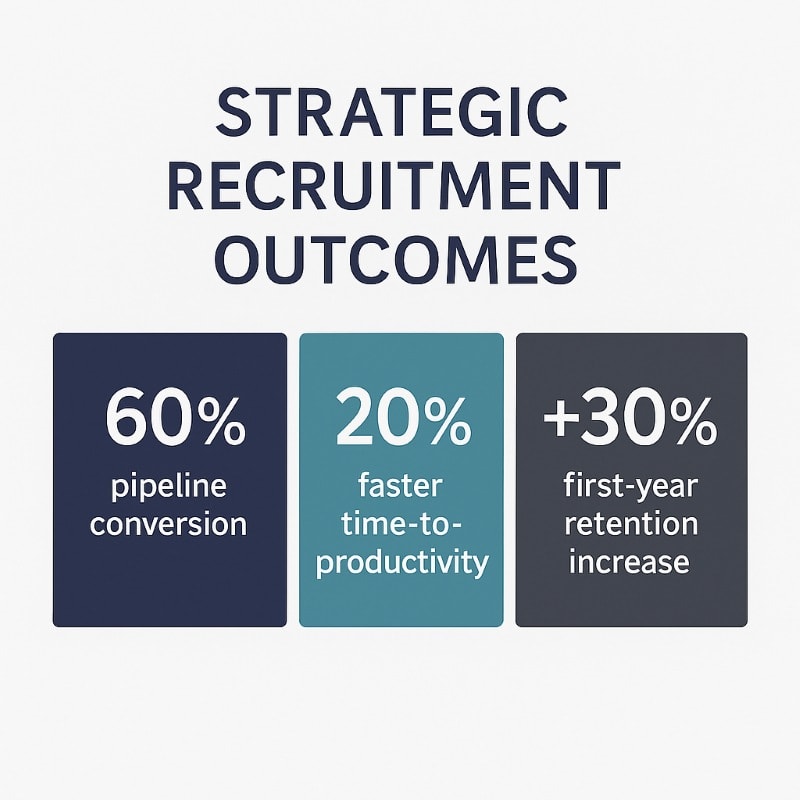
Of the 20 candidates originally identified, 12 eventually joined the company. That’s a 60% conversion rate — nearly unheard of in traditional recruiting strategy. But it wasn’t just about quantity. These hires showed higher engagement scores, faster ramp-up times, and above-average performance reviews within their first year.
Strategic recruitment isn’t about luck. It’s about intention. And when that intention is aligned with KPIs, the results speak for themselves.
Employee Referral Programs and Culture Alignment
Something unexpected happened as the pipeline matured: existing employees started referring candidates who matched the company’s values and culture — without being asked.
Why? Because they saw that the hiring process valued long-term fit, not just flashy résumés. This created a ripple effect: more qualified candidates, stronger internal alignment, and fewer post-hire surprises.
Referral programs work best when employees trust the process — and when the company’s employer branding reflects what it’s really like to work there. Implementing a structured referral program with clear incentives and rewards can further enhance recruitment outcomes by motivating employees to actively participate in recommending qualified candidates.
Lessons for Hiring Managers in a Dynamic Market
This case study reveals a bigger truth: hiring managers can’t afford to think short-term anymore.
In today’s dynamic market conditions, the best talent isn’t waiting to be found — they’re evaluating opportunities months before they’re ready to move. Hiring managers who embrace strategic recruitment gain more than good hires — they build a reputation as leaders who attract and retain the right talent.
How Strategic Recruitment Drives Better Business Outcomes
Improve Talent Acquisition with Clear Recruitment Goals
When recruitment is anchored to business goals, everything changes — from how roles are defined to how success is measured.
Instead of “We need someone now,” the mindset becomes “We need the right person to help us hit Q4 goals and close skill gaps.” That shift reduces hiring friction and sets clearer expectations from day one.
Recruitment goals that support organizational KPIs (like product launches, revenue targets, or customer retention) elevate HR from a back-office function to a growth engine.
Support Business Growth Through Strategic Workforce Planning
Strategic recruitment doesn’t just fill roles — it builds future capacity.
Through workforce planning, companies can forecast talent needs 6–12 months in advance. This gives hiring managers time to nurture the right candidates, align job descriptions with evolving business strategy, and avoid the panic of reactive hiring.
This approach is particularly powerful in competitive labor markets, where talent shortages and shifting market demands make long-term planning essential.
Build a Talent Pool for Future Roles and Skill Gaps
Every business will face turnover. The difference is whether you’re ready for it.
Strategic recruiters continuously grow their talent pool — not just with applicants, but with aligned professionals who could be the right fit six months from now. This candidate-centric approach reduces the time-to-hire, improves candidate quality, and keeps the company resilient in changing conditions.
And when future roles emerge, the groundwork is already in place. You’re not starting from zero — you’re promoting from a bench of trusted, pre-qualified talent.
Post-Hire: Turning New Hires Into Long-Term Assets
Effective Onboarding Process for Top Talent
Your recruitment strategy doesn’t end when an offer is signed — it transitions.
The onboarding process is your first real test: will the promises made during recruitment match the employee’s actual experience? Strategic companies understand that onboarding isn’t orientation — it’s integration.
A strong onboarding process helps new hires quickly grasp team dynamics, understand success metrics, and feel empowered to contribute from day one. When done well, it builds confidence and accelerates productivity — particularly for top performers.
Mentorship, Feedback, and Career Growth Pathways
Retention isn’t driven by perks — it’s driven by purpose.
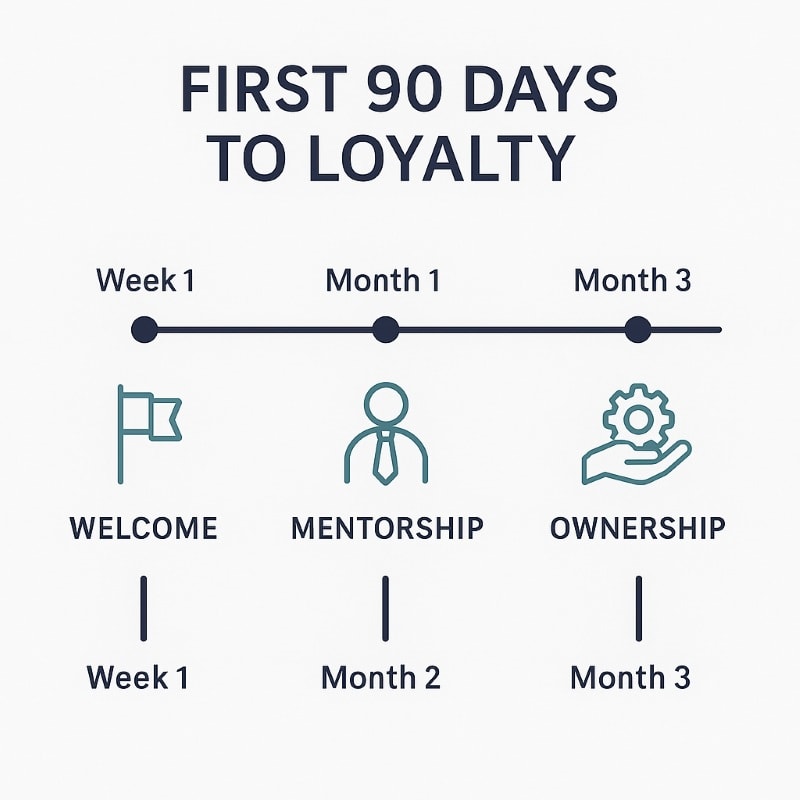
The most successful companies embed mentorship into their onboarding. New hires are paired with experienced team members who provide informal guidance, cultural insight, and a sounding board during their ramp-up period.
Beyond that, companies that invest in clear career growth paths — even during onboarding — are more likely to retain high performers. According to LinkedIn’s 2023 Workplace Learning Report, employees with strong internal mobility are nearly 2x more likely to stay with their company long-term.
Retention Starts on Day One
The data is clear: employees decide how long they’ll stay within the first 90 days.
That’s why companies focused on long-term fit use early feedback loops. They check in often, not just for performance — but to ask: Are you thriving here? Is this the role you expected? How can we help you grow?
When the right talent is supported early, they don’t just stay — they become culture carriers.
The Role of Recruitment Technology and Automation
Streamline the Hiring Process with the Right Tools
Technology doesn’t replace strategic thinking — it amplifies it.
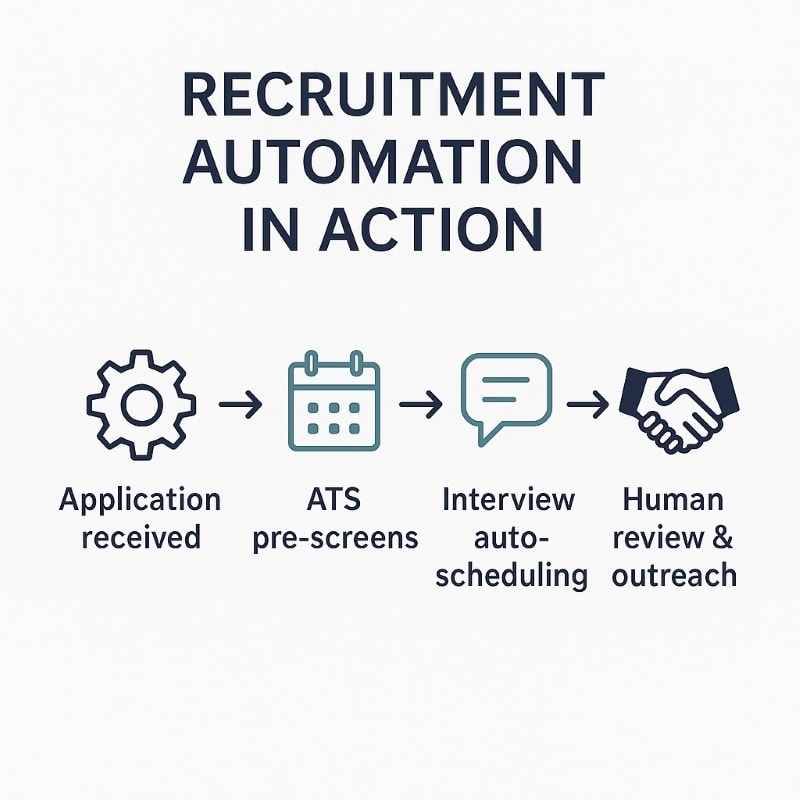
Modern applicant tracking systems (ATS) help HR teams manage high volumes of applicants efficiently, without losing visibility into the right candidates. Automating time-consuming steps like application screening, interview scheduling, and feedback collection frees up time for high-value tasks — like building relationships and evaluating behavioral fit.
The result? More speed, less burnout, and a smoother experience for both hiring managers and candidates.
Eliminate Repetitive Tasks — Not the Human Touch
Automation works best when it removes friction, not connection.
Recruitment tools can automate follow-up emails, pre-screening assessments, and reference checks — but it’s still up to humans to spot nuance, evaluate culture fit, and ask the questions that uncover a candidate’s deeper motivations.
Companies that balance recruitment automation with real human insight deliver a candidate-centric approach that feels thoughtful, not mechanical.
Enhance the Candidate Experience with Smart Tech
In a competitive labor market, the best candidates don’t tolerate clunky hiring processes.
According to SHRM, 60% of job seekers have abandoned an application due to a poor user experience. Streamlined platforms, mobile-friendly forms, and timely communication create a positive experience that reflects well on your employer brand.
Smart tech doesn’t just make recruiting easier — it makes your company more attractive to the very people you want to hire.
Science-Backed Assessments for the Right Talent
You’ve built the talent pipeline. Now, how do you know who truly fits?
OAD’s behavioral assessment platform gives HR teams and hiring managers clear, data-backed insights into how a candidate will actually perform in the role — not just how they look on paper. With just two pages of results, you can predict communication style, decision-making behavior, and alignment with your team’s existing dynamics.
It’s not guesswork. It’s hiring with precision.
Support for HR Teams, Hiring Managers, and Executives
OAD supports every level of the recruitment process — from helping HR filter for job fit, to equipping hiring managers with tailored interview questions, to giving executives confidence that new hires will reinforce long-term culture and business goals.
In fast-scaling organizations, this clarity is essential. It saves time, reduces costly misfires, and ensures every hire moves the business forward.
Build High-Performing Teams — Not Just Fill Openings
Strategic recruitment isn’t about finding the most impressive résumé — it’s about finding the best fit for your team, your mission, and your future.
With OAD’s tools, you can assess candidates before they join and continue developing their strengths after they’re hired. It’s a full-cycle solution that helps companies build not just teams — but ecosystems of performance.
Final Thoughts: Rethink Your Recruiting Strategy
Strategic recruitment is no longer optional — it’s the competitive edge companies need to thrive in today’s dynamic market. The businesses that win aren’t the ones with the flashiest job postings — they’re the ones with the clearest goals, strongest culture, and most intentional approach to talent.
Whether you’re scaling your team or fine-tuning your hiring process, it’s time to stop guessing and start hiring with confidence.
Test OAD
Want to see how OAD can help your team make smarter, faster, and more strategic hiring decisions?
Discover how our behavioral assessments reduce turnover, improve candidate quality, and build high-performing teams — from the very first interview.
Start with the Top Performer Profile and take the guesswork out of your next hire.