Most companies claim to make “data driven decisions,” but few actually do it well. Real data-driven leadership isn’t about collecting endless reports — it’s about interpreting the right data to improve performance, align teams, and reduce costly guesswork. When leaders combine analytics with human insight, decisions become faster, smarter, and far more effective.
How to Make Data Driven Decisions: The Foundation
Understanding Data Analysis
Every strong decision-making process begins with meaningful data analysis — the discipline of turning raw numbers into actionable insight. It’s how leaders move from “what happened” to “why it happened,” and ultimately, “what to do next.”
Through techniques like statistical analysis, data visualization, and predictive modeling, organizations uncover hidden patterns in both structured and unstructured data. This allows them to anticipate trends, identify risks, and spot opportunities before competitors do.
But even the most advanced analytics tools are useless without data quality. Inaccurate, incomplete, or outdated information leads to flawed conclusions — the corporate version of building a skyscraper on sand. Ensuring data integrity and consistency across systems isn’t just a technical task; it’s a strategic responsibility.
When executed correctly, data analysis doesn’t just explain performance — it drives it. Leaders who master this foundation create a measurable link between analytics, strategy, and business success.
The People Behind the Process
The Role of Data Analysts
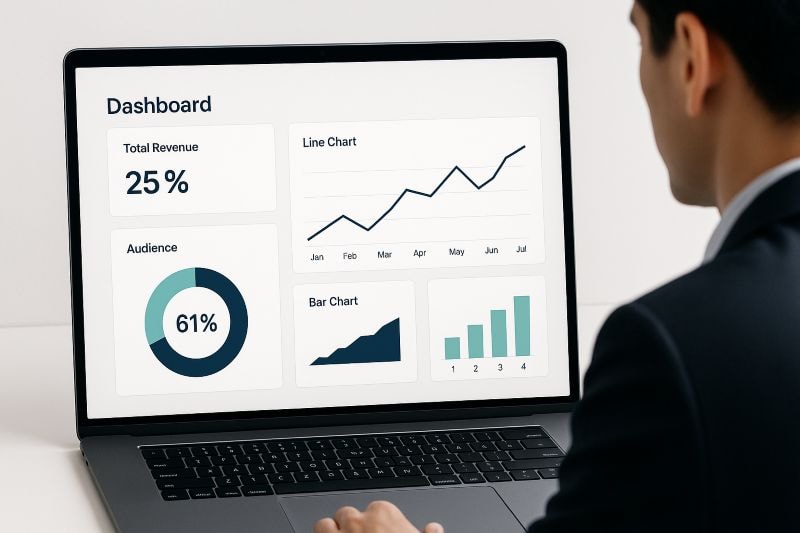
Behind every smart decision is a team that knows how to make sense of chaos. Data analysts are the translators between raw information and business strategy — the ones who turn spreadsheets into stories executives can act on.
Their job isn’t just to crunch numbers. It’s to ask better questions: What’s really driving these results? Which patterns actually matter? To answer, analysts blend data management, statistical analysis, and data visualization to uncover meaningful trends across complex datasets.
Strong analysts also protect the integrity of the process. They enforce data governance, maintain data security, and ensure that insights are built on trustworthy, validated information. In an age where one bad dataset can cost millions, accuracy isn’t optional — it’s survival.
Equally important, analysts bridge the gap between technical teams and decision-makers. They interpret findings in plain language, help leaders understand the “why” behind the numbers, and turn analysis into measurable action.

Business Intelligence and Analytics Tools
Organizations today face one undeniable truth: data drives success. Business intelligence and analytics tools aren’t just helpful — they’re the foundation of every smart decision. These platforms transform chaos into clarity, turning scattered information from across the organization into insights that fuel strategy and growth.
Modern BI tools don’t just collect data — they master it. Structured information from databases, unstructured content from social channels, customer records from CRM systems, operational flows from supply chains — everything gets captured, organized, and prepared for analysis. Integration capabilities break down silos, creating a complete picture that empowers leaders to see what others miss.
Quality matters. Poor data creates poor decisions, but well-managed information becomes the cornerstone of breakthrough insights. Strong governance frameworks and security protocols protect what matters most — customer information, competitive intelligence, sensitive operations — building trust into every analytical process. When data integrity is solid, confidence follows.
Machine learning and artificial intelligence aren’t futuristic concepts — they’re today’s reality. These technologies analyze massive datasets at speeds humans can’t match, uncovering patterns hidden in big data and unstructured content. Social media sentiment, survey responses, behavioral trends — advanced analytics reveals the stories data tells, driving innovation and competitive advantage.
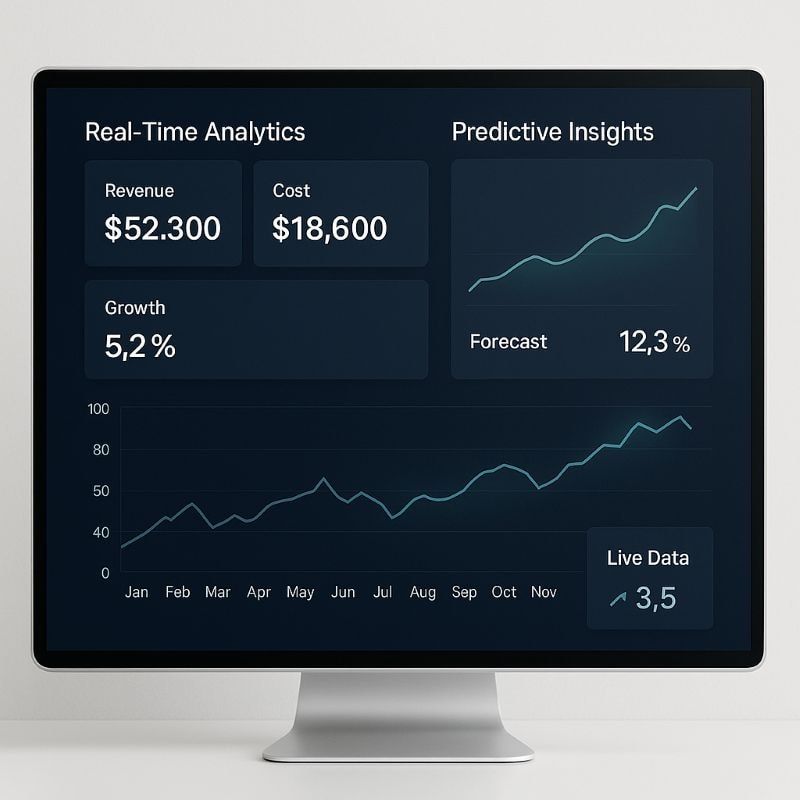
Real-time insights change everything. Performance indicators update instantly, trends emerge as they happen, and leaders respond while opportunities still exist. Predictive analytics takes this further, using historical patterns to forecast what comes next — enabling proactive strategies that align with objectives and drive operational excellence.
Behind every dashboard runs a sophisticated engine. Data pipelines ensure smooth flow from source to insight, while data scientists and analysts apply their expertise to extract meaning from complexity. Quantitative analysis and performance measurement track outcomes, proving that technology investments deliver real, measurable value.
The impact spans every business function — supply chain optimization, customer experience enhancement, process improvement, strategic planning. Data-driven decision making powered by BI tools doesn’t just improve performance — it transforms how organizations compete. When companies embrace analytics and invest in the right tools, they don’t just access information. They unlock potential, accelerate growth, and secure their competitive edge in an increasingly data-driven world.
Turning Insights Into Outcomes
The Benefits of Data Analytics
Data analytics gives organizations something intuition never can: evidence. Instead of guessing what might work, leaders can see what does work — and why. With the right analytics tools, companies identify performance gaps, streamline operations, and make informed decisions that align with measurable goals.
It also transforms key performance indicators (KPIs) from abstract metrics into actionable roadmaps. Tracking the right KPIs enables teams to adjust strategy in real time, reducing inefficiencies before they become costly mistakes. Over time, this creates a cycle of continuous improvement — insight, action, refinement, and measurable growth.
The result is a genuine competitive advantage. Businesses that act on verified insights outperform those driven by assumptions. When analytics become part of the decision-making process, organizations don’t just respond to change — they predict it.

Making a Data-Driven Decision Step by Step
To make the most of your data-driven decision-making, it’s crucial to use data effectively at every stage of the process:
- Define the business problem clearly. Vague goals lead to vague outcomes. Identify exactly what needs to be solved.
- Collect relevant data. Pull information from reliable sources — internal systems, customer behavior, financial data — and ensure accuracy.
- Analyze and interpret. Use statistical analysis, data visualization, or predictive modeling to uncover patterns and correlations.
- Draw evidence-based conclusions. Replace intuition with insight supported by real data.
- Act and measure. Implement changes, monitor results, and refine based on feedback.
This structured process turns data into direction — ensuring that every major decision, from investments to team strategy, rests on a solid analytical foundation.

Building Trust in the Numbers
The Importance of Actual Data
Every powerful insight begins with something simple — actual data. It’s the unfiltered reality behind every report, model, and dashboard. Without it, even the most sophisticated analytics tools are just expensive decorations.
Actual data can come from anywhere: customer behavior, financial transactions, operational systems, or market research. Whether structured (like sales figures) or unstructured (like social media feedback), its value depends entirely on one thing — data quality.
Poor-quality or incomplete data doesn’t just mislead; it can derail strategy. A single flawed data source can cause misallocation of resources, misguided investments, or failed product launches. That’s why data integrity and validation are the foundation of every data-driven decision.
When leaders trust their data, they can confidently make high-impact calls — whether it’s entering new markets, adjusting pricing models, or optimizing supply chains. In the end, it’s not the volume of data that matters; it’s how accurate and relevant that data truly is.

Creating a Data-Driven Culture
Shifting from Intuition to Evidence
A company doesn’t become data-driven by buying new analytics software — it happens when every decision, at every level, is guided by evidence. A true data-driven culture means employees understand the value of data, trust it, and use it instinctively to make smarter choices.
This shift requires more than tools. It demands data literacy — the ability for everyone, not just analysts, to read, interpret, and question data. When employees can see how their decisions connect to performance outcomes, accountability and alignment naturally improve.
Leadership sets the tone. Executives who model evidence-based decision making encourage teams to do the same, replacing intuition and bias with clarity and transparency. And when that mindset becomes habit, organizations transform — not through slogans, but through measurable progress.
A culture like this doesn’t kill creativity; it refines it. Data offers the reality check that helps bold ideas succeed in the real world.

Measuring What Matters
Evaluating the Impact of Data Analysis
Collecting data is easy. Proving it made a difference? That’s where real leadership begins. Measuring the impact of data analysis ensures that insights aren’t just interesting — they’re effective.
Organizations that succeed at this use key performance indicators (KPIs) and clear metrics to connect every data initiative to a business goal. Whether it’s improving conversion rates, reducing turnover, or optimizing supply chains, these metrics reveal whether insights are translating into results.
Strong measurement also supports continuous improvement. When data-driven projects are regularly reviewed and refined, companies learn faster and adapt more efficiently — turning trial and error into an intelligent feedback loop.
Ultimately, the goal isn’t to collect more data; it’s to collect better evidence. The organizations that evaluate impact don’t just react to performance — they shape it.

Final Thoughts: Turning Information Into Intelligence
The promise of data-driven decision making isn’t just precision — it’s progress. The real advantage comes when leaders combine data with human judgment, creating a balance between logic and intuition that drives long-term success.
Data doesn’t replace human insight; it sharpens it. When organizations trust their information and the people interpreting it, every decision becomes an opportunity to improve performance, culture, and competitive edge.
Start with the Top Performer Profile to see how our science-backed assessments help leaders make data-driven decisions with clarity and confidence.