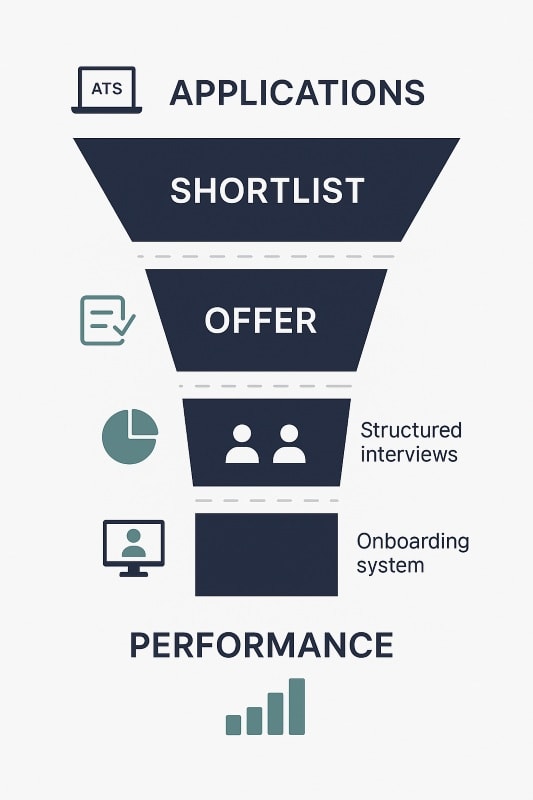
Hiring tools have evolved from simple admin software into critical infrastructure for how you attract, select, and ramp up qualified candidates. When your hiring process, recruiting tools, and onboarding are designed as one system, you don’t just fill open positions – you turn hiring decisions into early performance data you can actually validate. By the end of this guide, you’ll know how to connect the right tools and data so every new hire has a clearer path to success.
Why Hiring Tools Are Now a Strategic Decision, Not Just HR Admin
For many organizations, hiring tools started as a way to “save time” in HR. Today, they sit at the center of how a business competes for talent. With talent shortages, high volume recruiting, and pressure to reduce time-to-hire without sacrificing quality, the systems you choose directly influence who joins your team and how quickly they contribute. Hiring now mirrors air-traffic control: competing priorities, limited visibility, and high-stakes handoffs that punish even small blind spots.
Picture a hiring manager juggling five open roles, two last-minute resignations, and a backlog of interviews while recruiters push conflicting priorities. One missed update in the ATS and the best candidate disappears to a faster-moving competitor.
In one manufacturing client, recruiters chased pipeline volume while hiring managers quietly filtered for ‘people who won’t slow us down,’ creating conflicting success signals.
At OAD, we see this tension constantly. Recruiters optimize for activity, managers optimize for survival, and no one aligns on what ‘success’ actually means until the wrong hire is already on payroll.
In complex organizations, the hiring process is rarely linear. Hiring managers, recruiters, HR, and executives all touch different stages, often using different software. Without a shared view, teams optimize locally: recruiters focus on more candidates in the pipeline, hiring managers prioritise getting urgent jobs filled, and leadership looks at cost-per-hire. The result is activity, not necessarily better outcomes.
The right hiring tools help you go beyond “more candidates” and focus on the right candidates focus on the right candidates, like spotting the quiet analyst who consistently outperforms louder peers once given structured onboarding. They give visibility into which job boards actually deliver qualified candidates, which steps in the process delay decisions, and where strong-looking hires fail to turn into top talent once they are on the job. Used strategically, hiring tools become infrastructure for talent acquisition, not just an HR convenience.
What Counts as “Hiring Tools” in a Modern Talent Stack?
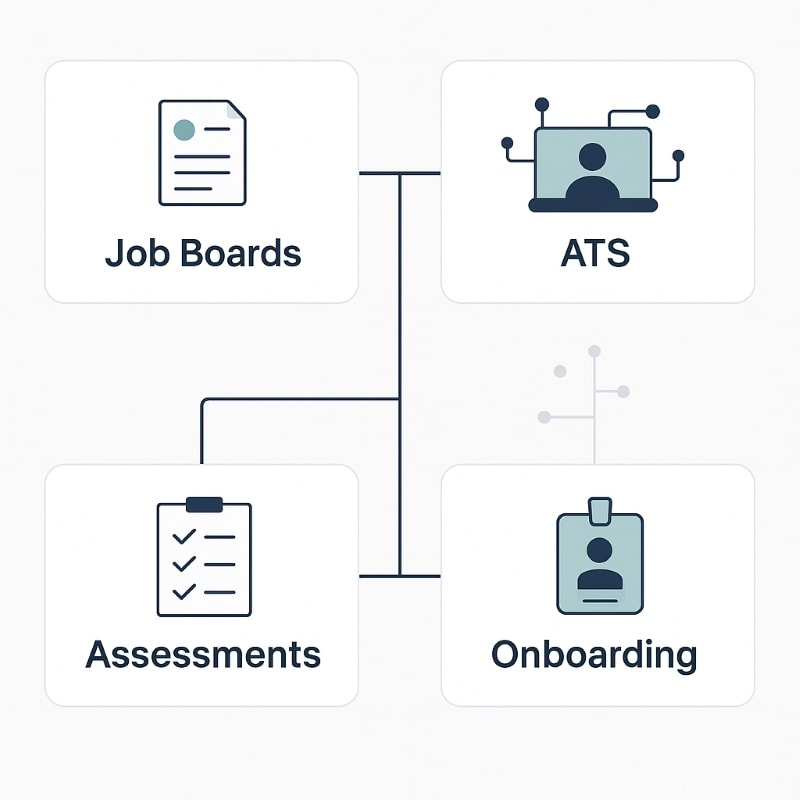
From Job Boards to AI Agents: The Full Landscape
Most organizations interact with hiring tools long before anyone logs into a dashboard. Your job postings on job boards, your careers page on the company website, and even your employer brand content on social channels are all part of your practical hiring toolkit.
Job boards and aggregators help you reach more candidates quickly. But reach does not equal fit. Most reach-heavy channels inflate pipelines but collapse at the shortlist stage because the signal-to-noise ratio is terrible. Effective use means targeting the right platforms for specific roles, refining each job posting so it’s concrete rather than aspirational, and using data to see which channels produce the most qualified candidates.
LinkedIn’s own data shows that broad job postings attract massive volume with low qualification rates. We contrast this pattern constantly with OAD client data, where targeted channels paired with validated role profiles cut unqualified applicants by double digits.t
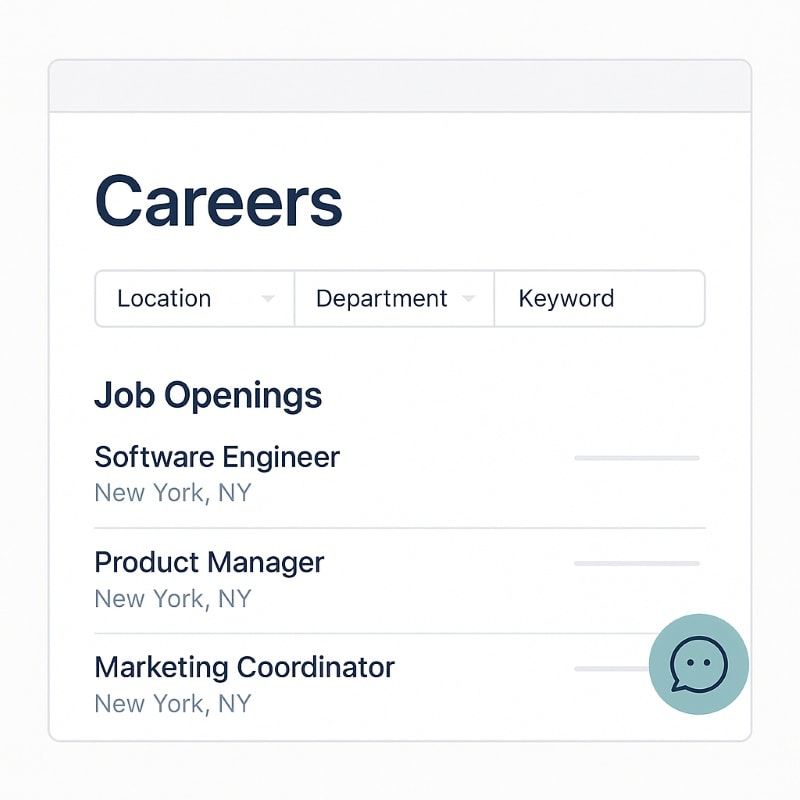
On the front end, many companies now use AI chatbot technology or simple FAQ assistants on their careers page. These ai agents answer basic questions, help job seekers understand the role, and keep interested candidates from dropping off because information is hard to find. AI-powered chatbots can also schedule interviews, efficiently coordinating interview times with candidates to further streamline the hiring process. Done well, this is a user friendly, always-on component of your hiring process that reduces friction without feeling cold or robotic.
Applicant Tracking Systems and Recruitment Software
At the core of most recruiting operations sits an applicant tracking system (ATS). Whether you call it an applicant tracking system, applicant tracking software, or simply “the system,” this category of recruitment software is designed to centralize candidate information, track applicants across stages, and keep the hiring process moving.
An ATS helps recruiters and hiring managers post jobs, capture resumes, sort candidates, and manage communication, often in one interface. Integrated recruitment software layers on more functionality: structured evaluation forms, interview scheduling, simple analytics, and connections to HR or payroll systems. Used consistently, these tools prevent candidates from “falling through the cracks” when teams are juggling multiple open positions.
Evaluation Tools, Testing, and Skill Verification
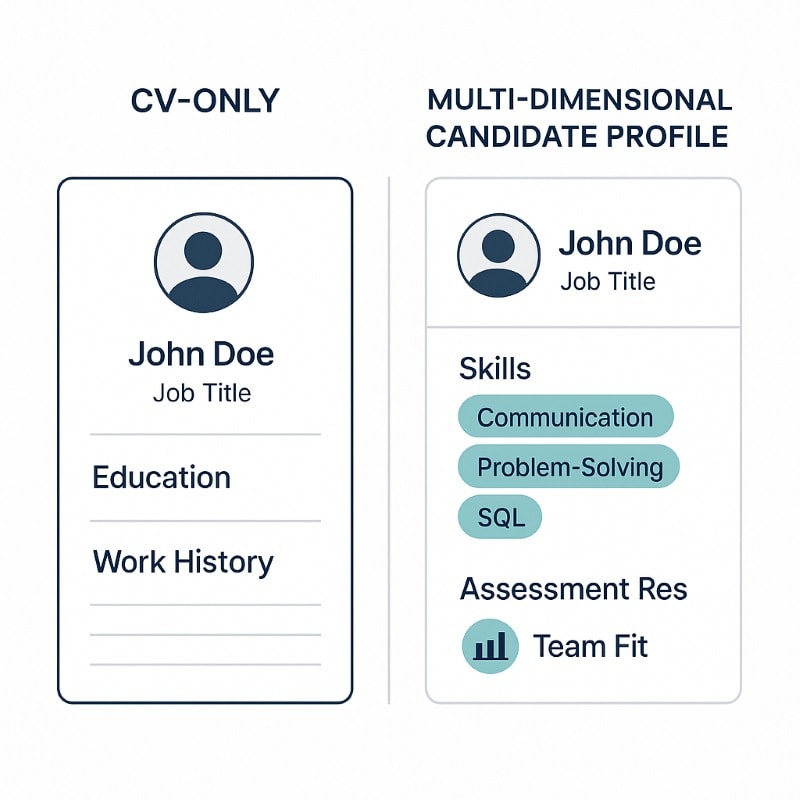
Beyond tracking applicants, modern hiring tools include evaluation tools that help you verify skills, test specific capabilities, and gather structured data beyond the CV. This can range from technical testing platforms and work samples to validated behavioral and personality assessments.
The goal is not to replace human judgment, but to give hiring managers better information. Testing and evaluation tools highlight strengths, risks, and potential gaps relative to the job, the team, and the wider organization. When selection decisions are based on more than impressions in one or two interviews, you reduce the risk of “good interview, poor fit” hires that struggle once they join.
The Real Problem: Hiring Tools Without a People-Centric Approach
Technology alone does not fix a weak hiring process. It only makes the existing approach faster and more visible. It only makes a weak process faster and more visible. In some orgs, it even exposes bottlenecks leadership wasn’t ready to see.
We’ve seen teams deploy new ATS workflows only to watch misaligned candidates get pushed through the funnel even faster. OAD data usually surfaces the deeper issue: unclear role expectations and zero alignment on behavioral fit.
When Automation Just Creates Faster Bad Decisions
An automation-heavy approach can quickly become a liability. If your process is poorly defined, automating it simply allows you to reject more candidates faster, schedule more interviews faster, and move misaligned candidates into roles faster. Admin improves, outcomes don’t.
You see the consequences in familiar ways: promising CVs that stall in the role, early resignations in the first 6–12 months, and feedback from managers that “they looked great on paper, but something never clicked.” In these situations, the tools did what they were configured to do. The underlying hiring logic was the problem.
“All-in-One” Illusions and Tool Sprawl
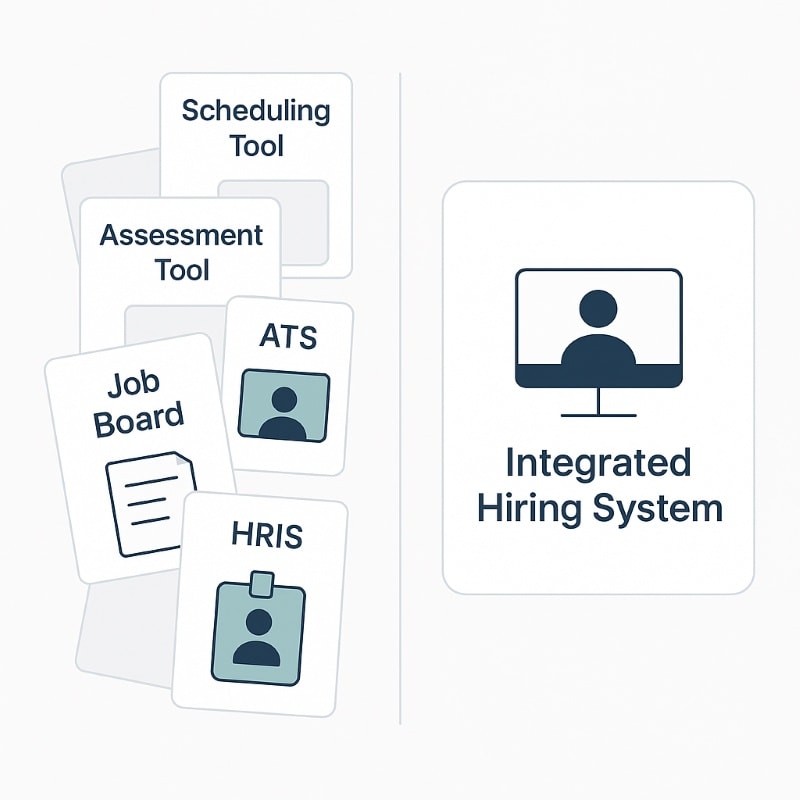
At the other extreme, large companies and growing organizations often accumulate tools over time: different systems for job posting, different platforms for interviews, separate testing software, and another tool for onboarding. Each piece solved a short-term need and may have been “biz applauded” when it launched, but together they create complexity.
Tool sprawl makes it difficult to manage a consistent process. Recruiters and hiring managers switch between systems, re-enter the same candidate information, and lose context between stages. Candidates experience inconsistent communication, repeated questions, and little sense of connection to the company.
A people-centric approach starts with defining how you want candidates and hiring teams to experience the process. Only then do you choose, configure, or remove hiring tools so they support that experience rather than dictate it.
How Hiring Tools Shape the Candidate Experience From First Click
Candidate experience predicts drop-off rates with eerie accuracy; once friction exceeds a certain threshold, even top performers disengage. It directly affects how many interested candidates move forward, how they talk about your company in their network, and whether your employer brand is credible.
Job Descriptions, Job Posts, and Employer Brand
The hiring experience begins with what candidates see in job descriptions and job postings. Effective hiring tools make it easy to maintain clear, up-to-date templates that reflect the actual job and company culture rather than pasting the same generic text across every open role.
Consistent language across job boards, your own website, and any outreach signals that your employer brand is intentional rather than accidental. When job descriptions are specific and realistic, you attract more of the qualified candidates you want and fewer misaligned applicants that drain recruiter and manager time.
Career Site, AI Chatbots, and User-Friendly Interfaces
Your careers page is often the first direct interaction candidates have with your organization. If it is difficult to navigate, slow to load, or unclear about roles, even strong candidates may abandon the process.
Here, hiring tools can quietly improve the experience. A user friendly application flow, a short guided process that adapts to the job, and AI chatbot support for common questions (“Can I apply to multiple roles?”, “What is the hybrid policy?”) help job seekers get what they need quickly. Candidates feel respected when they can self-serve basic information instead of sending emails into a void.
Handling High Volume Without Trashing Human Trust
In high volume recruiting, the pressure to process more candidates quickly is real. But high volume is not an excuse for low trust. Recruiting tools can help prioritize applicants, send timely updates, and keep security and privacy standards high, even when you are handling thousands of resumes.
Clear status updates, simple rejection messages, and consistent timelines are small signals that your organization takes candidates seriously. When hiring tools are used to support transparent communication rather than hide behind “do not reply” inboxes, candidate experience improves even for those who do not get the job.
Using Hiring Tools to Find High-Potential Talent (Not Just Good Interviewers)
Strong hiring isn’t about finding the most charismatic interviewee. It’s about finding people whose skills, potential, and working style match the role and the environment they’ll actually work in.
Smarter Sourcing: Job Boards, Talent Pools, and Boolean Search
Your sourcing strategy should mix reach with precision. Job boards and professional networks are useful for reach, but hiring tools are what turn that reach into targeted sourcing. Recruiting mirrors pro scouting: you cast wide nets, but only structured evaluation spots the players who can actually run your playbook.
Modern recruiting software supports advanced filters and Boolean search logic so recruiters can search for specific skills, experiences, or certifications instead of relying on job title alone. Effective teams also build and nurture a talent pool: a searchable, tagged database of potential candidates who may not be right for one open position today but could be a strong fit for future roles.
Screening With Applicant Tracking Software and AI
Applicant tracking software and integrated AI-powered tools help manage volume without relying solely on manual review. Automated screening rules can flag candidates who meet minimum requirements, surface those with relevant skills, and cluster similar profiles for comparison.
Artificial intelligence can support this triage work, but it should not silently decide who is “good enough” to progress. The strongest hiring process combines AI assistance with clear human oversight and the ability to override or adjust recommendations. Used this way, AI helps save time while keeping responsibility where it belongs: with recruiters and hiring managers.
Skills, Fit, and Role Match: Beyond the Resume
CVs tell you what a candidate has done in the past, not how they will behave in your specific environment. This is where evaluation tools, structured testing, and validated behavioral assessments add value.
Skill testing platforms help verify technical expertise rather than assuming competence based on a previous job title. Behavioral and personality assessments, used appropriately, highlight how a candidate is likely to approach tasks, interact with others, handle pressure, and respond to change. Combined with structured interviews and reference checks, this leads to better decisions about role fit and team fit, not just skill fit.
From Hiring Data to Onboarding Design: Where High Potential Becomes Performance
Most organizations collect rich candidate information during the hiring process and then largely ignore it once the offer is signed. This is a missed opportunity. In medicine, ignoring diagnostic data would be malpractice. In hiring, it’s still common practice.
Building People-Centric Onboarding With Hiring Data
Recruitment software, interview notes, testing results, and assessment data already capture what you hope this person will bring to the role. Instead of archiving that data once the candidate becomes an employee, the same hiring tools can feed onboarding.
For example, if a candidate’s profile shows strong analytical skills but less experience influencing stakeholders, the first 90 days can include targeted projects and support to develop that influence in your context. If assessments indicate they prefer structured environments, managers can adjust the early workload and communication style accordingly.
Aligning Hiring Managers, Recruiters, and New Hires
Hiring managers, recruiters, and HR often hold different pieces of the story. Hiring tools can provide a single, shared view summarizing why this person was selected, what strengths they bring, and what risks or development areas were identified.
When that information is carried into onboarding, the manager can have more meaningful conversations in week one: “Here’s what we saw in your interviews; here’s how we want to use those strengths; here’s where we’ll support you.” This moves onboarding beyond generic presentations and forms, toward a more personal, aligned experience.
Turning Promises Into Proof in the First 90 Days
Onboarding is where the promises made during recruitment become real. Those first 90 days quietly determine whether the hire becomes a future leader or an avoidable early exittools. Hiring tools can track progress against a simple plan: key meetings, early deliverables, check-ins, and feedback milestones.
By connecting hiring data to onboarding activity, you can see more clearly which top candidates actually become top talent and which roles or teams consistently struggle to ramp people up. This closes the loop between selection and performance rather than treating them as separate worlds.

Designing a Modern Onboarding Journey Powered by Hiring Tools
A strong onboarding journey doesn’t happen by accident. It is designed, tested, and adjusted like any other critical process in the business, with the help of the same tools you used to start hiring.
Before Day One: Communication, Clarity, and Confidence
Once a candidate accepts an offer, silence is one of the worst signals you can send. Hiring tools and HR software can automate practical steps such as sending contracts, collecting documents, and sharing benefits information. But they can also deliver more human messages: a short video from the team, an overview of what to expect on day one, and a clear agenda for the first week.
This pre-boarding phase reassures new employees that they made the right decision. It also reduces anxiety and no-show risk, particularly in competitive markets where counteroffers and last-minute changes are common.
Day One to Day Thirty: Role Clarity and Relationship Building
In the first month, new hires need two things: clarity about what “good” looks like in their role, and strong relationship building with their team and manager. Hiring tools can support this by auto-scheduling key meetings, tracking completion of onboarding tasks, and capturing notes or questions in a central place rather than scattering them across inboxes.
Some organizations use simple forms or short check-ins where managers can record answers to a few critical questions: “What is going well?”, “Where are you stuck?”, “What do you need more of?” Over time, this data becomes a useful early warning system about onboarding friction.
Day Thirty to Ninety: Feedback, Signals, and Adjustments
The second and third months are where patterns emerge. Hiring and HR teams can use system data (completed training, early performance metrics, peer feedback) alongside manager feedback to identify whether a new hire is on track or needs targeted support.
Because all of this is recorded in the same ecosystem that handled applicant tracking and selection, you can spot trends: certain roles that routinely need more support, certain teams that onboard exceptionally well, or specific skills that were over- or under-estimated during hiring.
Beyond Ninety Days: From New Hire to Future Talent
After the first 90 days, onboarding blends into broader development and career conversations. The same tools that helped track onboarding can now help managers and employees discuss future opportunities, career paths, and internal moves.
When hiring data and onboarding insights are preserved, internal mobility decisions become more evidence-based. You’re not just asking “Who seems ready?”; you’re reviewing concrete signals about how employees learned, adapted, and performed since joining.

Recruiting With Artificial Intelligence: Helpful vs Harmful Use Cases
Artificial intelligence is now embedded in many hiring tools, often quietly. The question is not whether you will use AI, but how.
Where AI Actually Streamlines the Recruitment Process
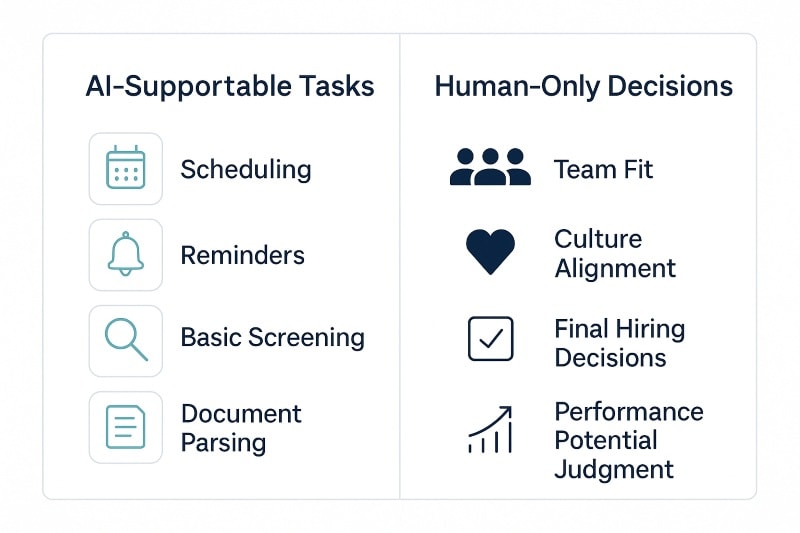
AI-powered tools can meaningfully reduce manual workload in parts of the hiring process that are repetitive and rules-based. Examples include suggesting interview times that work across calendars, sending reminders, answering FAQs through ai chatbot interfaces, and flagging candidates who meet basic criteria for a role.
AI can also help recruiters navigate high volume pipelines by highlighting patterns in resumes and past hiring decisions. Used as a decision-support tool rather than a decision-maker, it helps teams focus their energy where human judgment matters most.
Always Auditable, Always Explainable AI
When AI is used to evaluate candidates, set scores, or recommend who should move forward, the bar should be higher. “Everything explainable AI” and “always auditable” are not slogans; they are operating requirements.
HR and talent leaders need to understand, at least at a high level, how AI models are making recommendations, what data they are using, and how bias is monitored. They must be able to challenge a recommendation, override it, and review its impact over time. If no one can explain why a candidate was rejected or selected, your risk profile and your ethical exposure both increase.
What Must Stay Human
Some decisions in hiring are inherently contextual and relational: weighing trade-offs between potential and experience, judging culture and team fit, and understanding how a person’s style will interact with a manager’s leadership approach.
These are areas where building people-centric processes matters more than adding another tool. Hiring tools and artificial intelligence can provide data points and structure, but they cannot replace accountable leadership judgment. The most resilient organizations are clear about which decisions are supported by AI and which remain firmly human.
Best Practices for Hiring and Recruitment in a Tool-Heavy World
Tools multiply options. Best practices keep them under control.
Combine Software, AI, and Human Evaluation
The strongest hiring processes combine recruitment software, AI-powered tools, and structured human evaluation. Each component plays a different role: software manages the process and data, AI helps navigate complexity and high volume, and people provide judgment and accountability.
Over-reliance on any single layer creates risk. Ignoring data and structure leads to inconsistent decisions. Leaning too heavily on AI without oversight introduces hidden bias and credibility problems. The point is not to automate everything, but to design a system where each part supports better decisions.
Protect the Candidate Experience and Employer Brand
Candidate experience is not only about speed; it is about transparency and respect. Hiring tools should be configured to support timely updates, clear expectations, and simple communication at each stage.
Even small touches – acknowledging applications, providing realistic timelines, giving short but honest feedback where possible – contribute to how candidates talk about your organization. Over time, this shapes your employer brand as much as formal marketing campaigns.
Use Data to Improve, Not Just Report
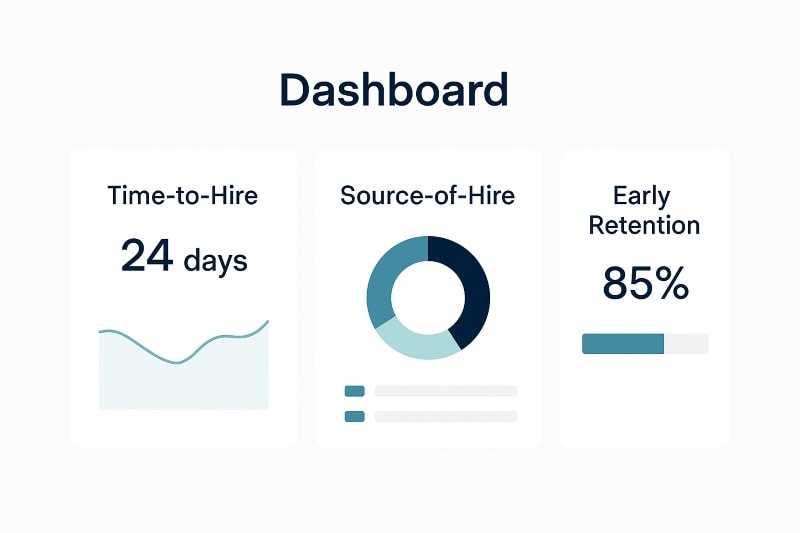
Recruitment software can track time-to-hire, cost-per-hire, and source-of-hire as standard metrics. The value comes from what you do with that data.
If a particular job board consistently generates high application volume but few hires, you have a clear decision. If roles in a specific team regularly show long time-to-productivity or early turnover, you have a prompt to review both selection and onboarding in that area. The best hiring tools support an ongoing evaluate-and-adjust mindset, not a one-time reporting exercise.
Measuring Whether Your Hiring Tools and Onboarding Actually Work
To treat hiring and onboarding as strategic levers, you need ways to measure whether your tools and processes are doing what you expect.
From Time-to-Hire to Time-to-Productivity
Time-to-hire remains a useful metric, but it is incomplete on its own. A fast process that consistently delivers poor fit is expensive in ways that don’t show up on a basic spreadsheet. A fast time-to-hire paired with slow time-to-productivity is a textbook sign of misaligned selection criteria.
Linking hiring data to time-to-productivity and early performance gives a more complete picture. If new employees in certain roles take significantly longer to reach expected performance, you may have an onboarding problem, a role design problem, or a selection problem. Hiring tools that connect ATS data with HR systems make these patterns easier to see.
Candidate and Employee Experience Signals
Candidate experience surveys, new hire pulse checks, and manager feedback are softer metrics, but they are often leading indicators. If candidates consistently report confusion about next steps or lack of feedback, your communication workflows need attention. If new hires report misalignment between the job described and the job experienced, your job descriptions and interview framing need review.
Employee engagement, intent to stay, and internal mobility outcomes in the first few years can all be traced back, at least partly, to the quality of the hiring and onboarding experience.
Closing the Loop into Job Descriptions and Screening
Measurement is only useful if it leads to change. The most effective organizations use insight from onboarding and early performance to refine job descriptions, screening criteria, and evaluation tools.
If you repeatedly discover that certain skills matter more than you thought, you can adjust how you evaluate candidates. If some interview questions do not differentiate between top performers and average hires, you can replace them. Hiring tools should make these loop-closing adjustments straightforward rather than painful.
Where Hiring Tools End – and Where OAD Begins
Most hiring tools tell you what happened: how many candidates applied, which stages they reached, how long each step took. Very few tell you why certain people thrive in your environment while others struggle.
Why Software Alone Can’t Predict Who Thrives in Your Culture
Generic recruiting tools and AI scoring models can rank candidates based on past experience, keyword matches in resumes, or statistical similarities to previous hires. They cannot, on their own, capture the nuances of your specific company culture, leadership styles, and team dynamics. They can rank candidates on surface variables but miss deeper behavioral traits like decision pace or stress-response patterns.
Two candidates with similar CVs may perform very differently depending on the manager they report to, the pace of change in their role, and the level of structure in the organization. Traditional software and black-box AI see the surface; they don’t reliably predict how a person will actually behave once they join.
How OAD’s Assessment Data Supports Hiring, Onboarding, and Performance
This is where a scientifically validated behavioral assessment like OAD adds a missing layer. OAD provides clear, data-driven insight into how people prefer to make decisions, handle pressure, communicate, and work with others.
Design teams with data, not gut feel.
Most org-design decisions come down to role fit, leadership style, and team dynamics. OAD reads those signals from a 7-minute behavioral survey, so you can reconfigure roles and teams with evidence instead of guesswork.
When integrated with your existing hiring tools, OAD helps you:
- Build role profiles that reflect how top performers behave in your context
- Evaluate candidates against those profiles in a consistent, comparable way
- Give hiring managers practical guidance for onboarding and coaching from day one
- Support longer-term development, succession, and internal mobility
The same evaluation tool that helped you select the right candidate becomes the foundation for how you set them up for success.
Example: From Job Posting to High-Performing Employee
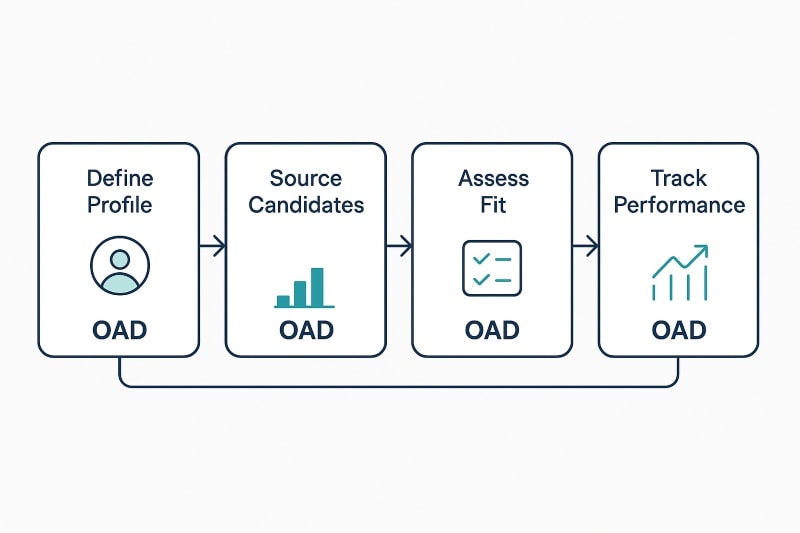
Consider a sales leadership role. You start by defining a success profile using OAD data from your current high-performing leaders: how they solve problems, drive results, and build teams.
You then structure your job posting and sourcing strategy accordingly, focusing on channels where that type of talent tends to be active. Your applicant tracking system and recruitment software manage the pipeline, while OAD assessments and structured interviews provide deeper insight into shortlisted candidates.
Once you select a finalist, OAD data informs the onboarding plan: where to give autonomy quickly, where to provide extra context, how to integrate them into the existing leadership team. Months later, their performance and retention aren’t surprises; they are the outcome of a deliberate, data-backed hiring and onboarding system.
Implementation Playbook: Upgrading Hiring Tools and Onboarding Together
Transforming your approach doesn’t require starting from zero. It requires a clear view of what you have, where it is working, and where it is not.
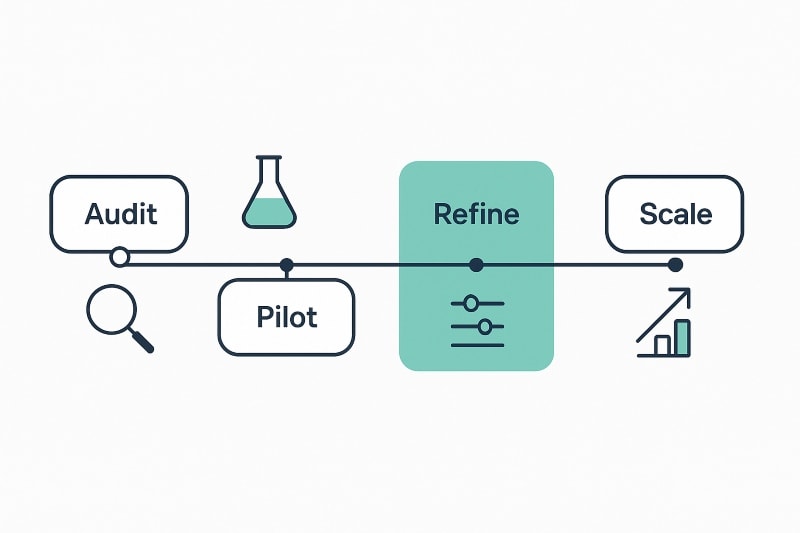
Audit Your Current Tools, Data, and Processes
Begin with a simple map of your current process: how you post jobs, where candidates come from, how you track applicants, how decisions are made, and how onboarding currently works. Identify which software and systems support each step and where manual workarounds appear.
Look for pain points: duplicated data entry, inconsistent communication, unclear ownership of tasks, or gaps between “offer accepted” and “day one.” These are candidates for either process redesign, better tool configuration, or both.
Prioritize High-Impact Fixes
You do not need to fix everything at once. Focus on changes that will meaningfully improve both outcomes and experience. Common high-impact areas include:
- Clarifying job descriptions and posting criteria so you attract better-aligned candidates
- Simplifying applicant tracking workflows to avoid unnecessary steps and delays
- Adding structured assessments before final interviews to reduce reliance on gut feel
- Creating a basic, repeatable onboarding plan for critical roles
Each improvement makes your hiring tools more effective without necessarily adding new software.
Pilot, Learn, and Scale Across the Organization
Rather than rolling out changes across the entire organization immediately, pilot your upgraded process in one business unit or team. Use recruitment software and HR systems to track the impact: time-to-hire, quality of hire indicators, and early performance and retention.
Share the results with stakeholders, adjust based on feedback, and then scale. Over time, you move from a collection of disconnected tools to a cohesive hiring and onboarding system that the business can rely on.
The Benefits of Hiring Tools for Modern Organizations
Modern organizations don’t just hire — they architect their future through strategic talent acquisition. Hiring tools transform recruitment from scattered manual processes into precision-engineered systems that flow seamlessly from sourcing to selection to onboarding. Companies that integrate these technologies don’t simply fill positions; they sculpt high-performing teams, slash operational costs, and craft experiences that magnetize both exceptional candidates and energized hiring teams. The benefits cascade through every layer of the organization — elevated hire quality emerges naturally, efficiency flows freely, and competitive advantage builds momentum with each strategic placement. In today’s talent battlefield, these tools aren’t luxury additions to recruitment workflows; they’re the foundational infrastructure that separates thriving organizations from those left behind, the essential architecture that transforms everyday hiring into sustainable workforce excellence.
Speed, Scale, and Consistency in Hiring
Organizations that win the talent race don’t just hire faster — they engineer excellence through precision and scale. Advanced hiring technology transforms recruitment from a reactive scramble into a strategic advantage. Automation capabilities — job distribution across multiple channels, intelligent applicant tracking that organizes candidate intelligence, and streamlined communication systems — empower hiring leaders to accelerate decision-making while elevating candidate experience standards. Through sophisticated tracking systems, organizations capture and nurture talent through every touchpoint, ensuring that exceptional candidates never slip through the cracks and every opportunity receives the strategic attention it demands.
This operational excellence becomes transformative when managing talent surges or multiple concurrent searches. Modern hiring platforms ensure every candidate experiences consistent, fair treatment — regardless of application volume or competition intensity. By eliminating manual inefficiencies, hiring leaders and talent strategists focus on what drives results: connecting with high-impact candidates, assessing cultural alignment, and making decisions that fuel growth. The outcome isn’t just speed — it’s a hiring ecosystem that delivers measurable performance gains while creating exceptional experiences for both talent and internal teams. When organizations achieve this alignment, they don’t just fill positions faster. They attract stronger talent, build competitive advantage, and unlock the full potential of their hiring strategy.
Data-Driven Decision Making and Reduced Bias
The transformative power of hiring tools lies in their ability to engineer recruitment into a science-backed process. Organizations unlock actionable intelligence by capturing and analyzing critical metrics — time-to-hire, cost-per-hire, and candidate satisfaction — gaining clear visibility into what drives success and where performance gaps emerge. Artificial intelligence and advanced analytics work seamlessly to screen candidates for specific skills and qualifications, ensuring only the most qualified talent flows forward through the process.
This science-driven methodology also dismantles bias from recruitment decisions. Rather than operating on subjective impressions or gut instincts, hiring teams build their evaluations on measurable foundations, focusing on the skills and experiences that truly power role success. Artificial intelligence strengthens this unbiased approach by spotlighting candidates based on their demonstrated abilities and untapped potential, moving beyond personal networks or demographic considerations. The result transforms the entire recruitment landscape — creating not just equitable hiring practices, but unlocking the full potential of organizational diversity and strength.
Enhancing Collaboration Across Hiring Teams
Exceptional hiring doesn’t happen by chance — it’s engineered through strategic collaboration between hiring managers, recruiters, and stakeholders who understand that talent acquisition is the cornerstone of organizational success. Modern recruiting platforms serve as the nerve center where candidate insights, feedback, and progress flow seamlessly, creating transparency that transforms scattered efforts into unified action. This alignment eliminates the friction of miscommunication and accelerates decision-making, turning hiring from a reactive process into a strategic advantage.
AI agents and automation become the silent workforce that handles the routine — scheduling interviews, triggering notifications, updating candidate journeys — freeing human talent to focus on what truly matters: building meaningful connections, crafting acquisition strategies, and delivering experiences that candidates remember long after the process ends. This tech-enabled collaboration doesn’t just improve internal mechanics; it forges an employer brand that resonates with exceptional talent. When hiring teams operate in perfect synchronization, supported by intelligent systems that amplify human insight, they create something powerful — a hiring process that attracts the best, engages authentically, and ultimately transforms both candidates and companies into their highest potential.
Conclusion: The Future of Hiring Tools Is an Onboarding Multiplier
The future of hiring will not be defined by one more AI feature or one more software category. It will be defined by how well organizations use hiring tools to connect three things: who they bring in, how they set them up, and how they support long-term performance.
When your hiring process, recruiting tools, and onboarding are aligned, you don’t just fill roles faster. You turn interested candidates into committed employees, and high potential into sustained performance. That is where hiring tools move from being a cost center to a genuine competitive advantage.
If you want to see how your existing hiring tools perform when paired with data that actually predicts role fit, team compatibility, and long-term potential, start with the free Top Performer Profile. It’s a low-risk way to validate your current approach and start building a hiring and onboarding system that consistently produces top talent.