Cultivating leadership skills is no longer a side project for ambitious managers; it is a core driver of execution, engagement, and retention in organizations with 50+ employees. When leadership development is treated as a structured system instead of a one-off workshop, you build a stronger bench, reduce costly mis-hires, and stabilize teams through change. This article outlines practical, evidence-based steps HR and managers can use to systematically identify, develop, and support leaders at every level of the organization.
Cultivating leadership skills is no longer a “nice to have” development goal. In mid-sized and larger organizations, leadership capability increasingly determines whether strategy gets executed, teams stay engaged, and key people decide to stay or leave.
For HR and managers, the question is not whether leadership matters. The question is how to build it systematically, instead of relying on a few naturally gifted leaders and a lot of hope.
Leadership development works best when it is treated as an organizational system. That system connects clear expectations, behavioral insight, targeted development, and real-world practice, so leaders at every level become more effective over time rather than only more experienced.
Why Cultivating Leadership Skills Is Now A Business Priority
In organizations with 50 or more employees, leadership quality shows up quickly in performance, engagement, and turnover metrics. The ability to lead effectively is critical for organizational performance. One strong manager can stabilize an entire function. One weak leader can quietly drain energy and talent.
Cultivating leadership skills is therefore not just a people initiative. It is a business leadership decision that affects whether organizational goals are achieved, whether change management efforts stick, and whether your best people see a future inside the company.
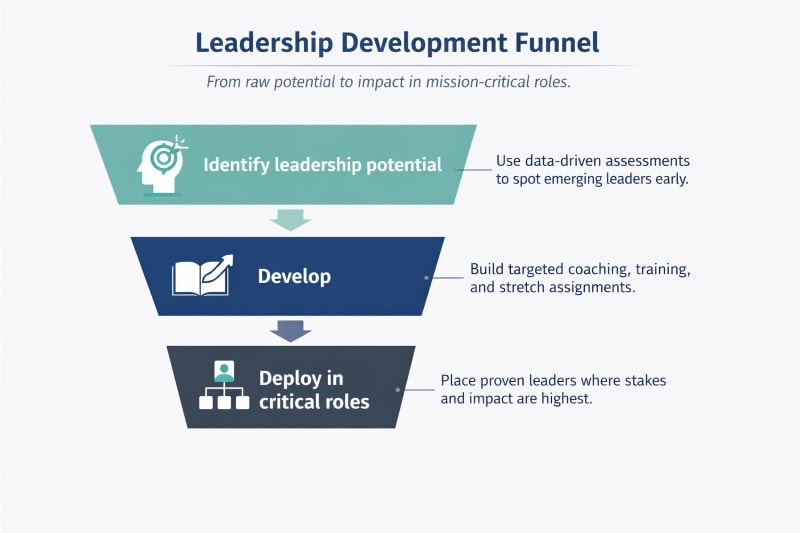
For HR, this means shifting from occasional workshops to a deliberate approach that identifies leadership potential, builds leadership abilities over time, and aligns development with real organizational needs. Ultimately, cultivating leadership skills drives both organizational and individual success.
What Effective Leadership Looks Like In Modern Organizations
Core Leadership Skills Every Leader Needs
Different industries and functions require different technical skills. The core leadership skills, however, are remarkably consistent. Effective leaders tend to excel at:
- Communication skills that create clarity and alignment
- Decision making skills under uncertainty
- Problem solving on complex problems, not just simple tasks
- Relationship building and team building
- Strategic thinking that links daily work to organizational goals
- Goal setting for personal and team performance
These important leadership skills go beyond traditional management skills such as planning or reporting. They are about leading people through ambiguity, trade offs, and change.
Leadership Styles, Traits, And Real World Impact
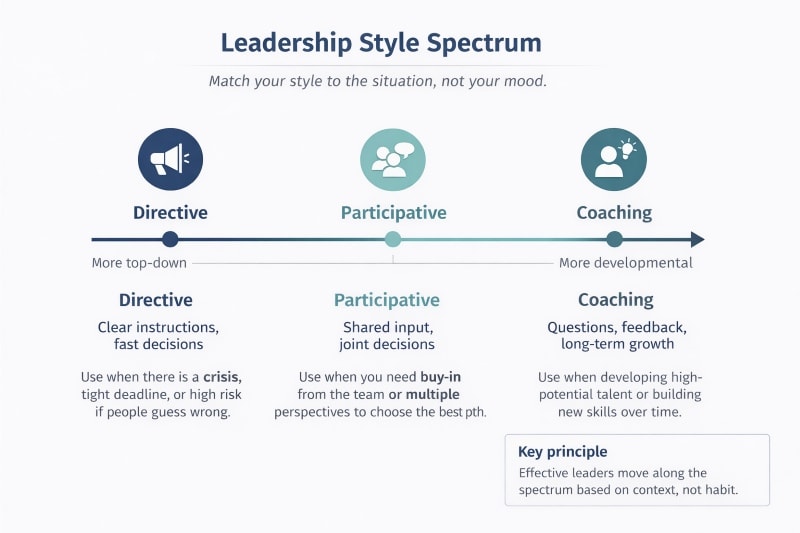
Leadership style still matters, but less as a label and more as a pattern of behavior that people experience every day. Some leaders are more directive, others more coaching focused, some more visionary.
The most successful leaders are those who understand their natural style and adjust it when needed. They know when to be highly structured with a new team and when to step back and empower experienced team members.
Cultivating leadership skills is an essential part of the leadership journey, where developing leadership skills involves observing other leaders, actively learning, and practicing new approaches. This process helps leaders understand their own leadership style, strengths, and blind spots, and then practice different approaches depending on the team, the situation, and the organizational context.
Emotional Intelligence As The Foundation Of Effective Leadership
Self Awareness, Self Reflection, And Managing Emotions
Emotional intelligence is often treated as a soft topic. In practice, it is one of the most important leadership skills. Leaders with higher emotional intelligence are better at reading situations, managing their own reactions, and building trust.
Self awareness is the starting point. Leaders need a clear view of their own strengths, typical stress responses, and impact on others. Without that, feedback is easily dismissed and self improvement remains vague.
Taking time to self reflect is essential for leaders to identify areas for growth and improvement. Structured self reflection helps leaders pause and ask: What triggered me in that meeting? Which behavior helped, which made things worse? Where do I consistently struggle, and what does that tell me about my development priorities?
Social Skills, Relationship Building, And Conflict Management
Social skills and relationship building are not about being extroverted. They are about being intentional in how you connect with team members, peers, and stakeholders. Strong listening skills are essential for understanding team needs and building relationships that foster trust and collaboration. Leaders who systematically build relationships find it easier to align people when decisions become difficult.
Conflict management is a practical extension of emotional intelligence. Effective leaders do not avoid conflict. They use active listening and constructive feedback to surface issues early, understand different perspectives, and move toward conflict resolution that preserves relationships rather than damaging them. Leaders should practice active listening during one-on-one meetings to foster a positive work environment and strengthen team connections.
Cultivating leadership skills in this area means giving leaders tools for tough conversations, coaching them through real situations, and reinforcing that healthy disagreement is part of high performance, not a problem to be ignored.
Communication Skills That Build Trust And Alignment
Active Listening, Non Verbal Communication, And Feedback
Most leaders underestimate how much their communication habits affect engagement. Practicing good communication starts with listening. Active listening means giving full attention, summarizing what you heard, and checking whether you understood correctly, instead of preparing your reply while the other person is still talking.
Non verbal communication also matters. Eye contact, posture, and tone all send signals about openness, urgency, or frustration. Leaders who are aware of their non verbal communication can prevent unnecessary tension and create more psychological safety.
Constructive feedback is another critical capability. Good leaders provide feedback that is specific, behavior based, and tied to impact. They also invite and receive feedback on their own leadership skills, which accelerates their personal growth and sets a visible example for the team.
Communicating Through Change And Complexity
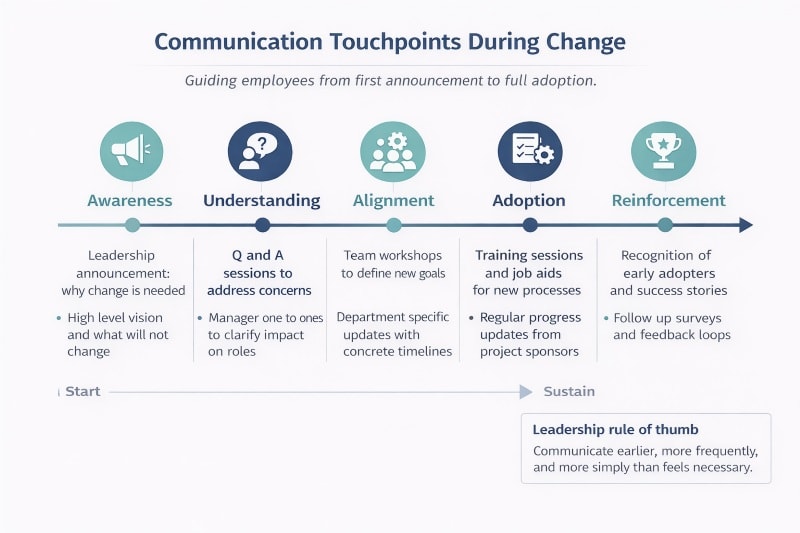
When managing change, communication becomes a primary leadership task. Teams want to understand what is happening, why it is happening, and how it will affect them. Silence or vague messages create anxiety and speculation.
Effective leaders share what they know, clarify what is still unknown, and repeat key messages consistently over time. They link decisions back to organizational goals so that even difficult choices make sense in the larger context.
In practice, improving communication in change situations often requires simple habits: regular updates, open Q&A time, and clear summaries of decisions and next steps so that team members are not left guessing.
Decision Making And Problem Solving Under Pressure
Structured Thinking For Complex Problems
Decision making is central to leadership. Good leaders do not pretend to predict the future. They structure information, identify potential solutions, and make informed decisions based on the best available data and judgment.
With complex problems, this often means clarifying the real problem before jumping into action. It also means involving the right people, testing assumptions, and being explicit about trade offs.
Strategic thinking shows up in how leaders prioritize issues, connect individual decisions to long term objectives, and recognize when a local optimization is misaligned with the bigger picture.
Learning From Decisions: Post Mortems And Continuous Improvement
Even the best decision making process will sometimes lead to suboptimal outcomes. Effective leaders treat these situations as learning opportunities rather than personal failures.
Post mortems, or simple after action reviews, help teams analyze what worked, what did not, and what should change next time. This habit builds continuous learning into decision making and keeps the focus on improving the system, not assigning blame.
Ongoing development—through professional development, coaching, and mentoring—plays a crucial role in building better judgment and more resilient teams. Over time, leaders who consistently reflect on their decisions and invite diverse perspectives develop better judgment, stronger problem solving skills, and more resilient teams.
Identifying Emerging Leaders And Leadership Potential
Beyond Performance: What Leadership Potential Actually Looks Like
High performance in a current role does not automatically equal leadership potential. Many organizations have learned this the hard way by promoting top individual contributors into leadership roles without support.
Leadership potential often shows up in different ways: taking ownership beyond formal responsibilities, influencing peers, staying calm under pressure, and showing genuine interest in leading people, not just work.
For HR and managers, identifying emerging leaders means looking at behavior patterns over time, not only at performance metrics. It also means checking whether someone actually wants a leadership role or prefers a deep expert path.
Using Data, Not Gut Feel, To Spot Future Leaders
Relying solely on intuition to select future leaders creates bias and inconsistency. Managers tend to favor people who think and communicate like they do, which narrows the leadership pipeline.
Behavioral and personality assessments add structure and data to this process. They help you understand how people prefer to communicate, make decisions, handle conflict, and respond to pressure.
This insight does not replace judgment. It sharpens it. When used well, data on leadership potential supports more objective decisions and a more diverse, capable leadership bench.

Designing Leadership Development That Actually Works
Leadership Development Programs, Courses, And On The Job Learning
Leadership development programs and leadership courses can be valuable, but only if they are integrated into the work context. A two day workshop without follow up will rarely change behavior.
Leadership development programs play a crucial role in improving leadership skills by providing structured learning and opportunities for real world application. Effective leadership development combines three elements. First, clear expectations on which leadership skills matter in this organization. Second, structured learning that covers concepts and tools. Third, real world application in the leader’s day to day work, supported by feedback.
Professional development should therefore be designed as a journey, not an event. Emerging leaders need opportunities to apply what they learn with their own teams and then reflect on results.
Stretch Assignments, Big Projects, And Stepping Outside The Comfort Zone
Some of the most powerful leadership development comes from stretch assignments. Leading a big project, coordinating a cross functional initiative, or taking responsibility for a new team forces leaders to grow.
These assignments work best when expectations are clear and support is available. Leaders know this is a development opportunity, not a test they must pass perfectly. HR and senior leaders can then track how people handle ambiguity, decision making, and team dynamics in real conditions.
Cultivating leadership skills therefore requires a portfolio of learning opportunities. Formal training provides frameworks. Stretch roles provide real world experience that turns theory into capability.
Building High Performing Teams Through Everyday Leadership Behaviors
Team Building, Engagement, And Clear Expectations
Team building is often associated with events. In practice, it is mostly about everyday behaviors. Leaders who set clear expectations, follow through on commitments, and recognize good work create a stable environment where people can focus on performance.
Employee engagement rises when team members feel their work matters, their strengths are used, and their voice is heard. Regular one to ones, clear priorities, and visible support from the leader are simple but powerful levers.
Cultivating leadership skills at the team level means helping leaders translate abstract concepts into concrete routines: structured check ins, transparent priorities, and consistent recognition.
Handling Difficult Conversations And Underperformance
Every leader will face situations where performance is not where it needs to be. Avoiding these conversations sends a message that standards do not matter.
Effective leaders address issues directly, but not aggressively. They describe observable behavior, explain impact, and invite the other person into problem solving. They also document agreements and follow up on progress.
Support from HR in the form of templates, training, and coaching makes it more likely that new leaders build solid habits early rather than improvising under pressure.
Creating A Culture Of Continuous Leadership Development
Habit Based Leadership Practice, Not One Off Events
Leadership development is most effective when it becomes part of the culture. This means regular self reflection, ongoing feedback, and a shared expectation that leaders at all levels are still learning.
Simple habits create this culture. Leaders can schedule short weekly reviews of key interactions, maintain personal development goals, and ask for targeted feedback from peers and direct reports.
Over time, cultivating leadership skills shifts from a project to a normal part of how the organization operates. New leaders see visible role models who invest in their own development rather than acting as if they already have every answer.
Measuring Progress: From Individual Growth To Organizational Capability
HR and senior leadership need visibility into whether leadership development efforts are working. This involves both individual level and organizational level indicators.
At the individual level, progress can be tracked through feedback, assessment data, and changes in behavior. At the organizational level, you can look at succession coverage for critical roles, promotion outcomes, engagement scores, and turnover in teams with new leaders.
Treat these metrics as feedback for your system. If the organization is not getting stronger leaders over time, adjust how you identify potential, what you teach, and how you support leaders in applying new skills.
How OAD Helps You Personalize And Scale Leadership Development
Using Behavioral Data To Tailor Development Plans And Leadership Styles
Generic leadership advice has limited impact. Leaders develop faster when they understand their own tendencies and see exactly which behaviors to adjust.
OAD’s scientifically validated assessment gives a clear picture of how someone prefers to communicate, make decisions, handle conflict, and approach work. This makes it easier to connect feedback and development plans to real behavior instead of abstract labels.
For example, a highly decisive leader may need to focus on active listening and inviting more input before making decisions. A more cautious leader may work on faster decision making and comfort with incomplete information. Behavioral data makes these adjustments specific and practical.
Design teams with data, not gut feel.
Most org-design decisions come down to role fit, leadership style, and team dynamics. OAD reads those signals from a 7-minute behavioral survey, so you can reconfigure roles and teams with evidence instead of guesswork.
From Insight To Action: Using OAD To Develop Emerging Leaders And Align Teams
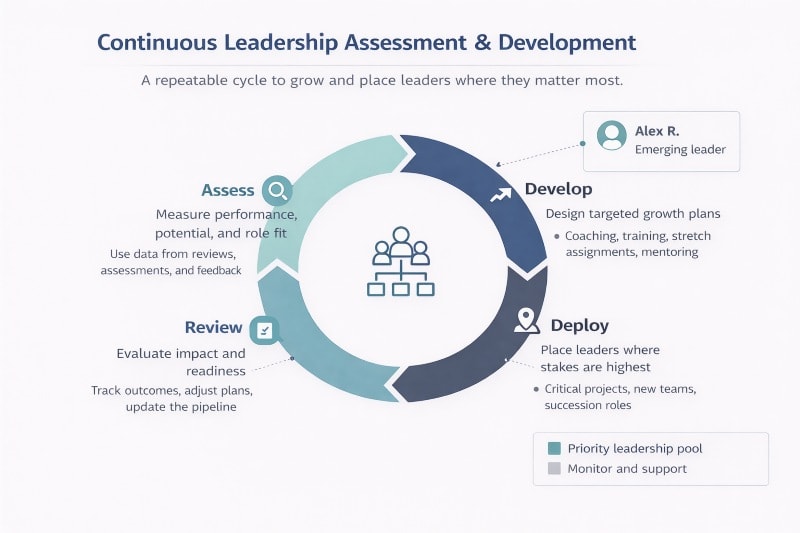
Beyond individual insight, OAD helps HR and managers see how different leaders fit together in teams. You can identify where you have strong leadership coverage, where there are gaps, and which emerging leaders are most ready for larger roles.
This supports more accurate decisions about promotions, succession planning, and team design. It also gives new leaders a structured way to understand their direct reports and adapt their leadership style to get the best from each person.
If you want to see how this works in your own context, you can start with the free Top Performer Profile and review real behavioral profiles for your team. That turns leadership development from a generic aspiration into a data informed, targeted process that builds real capability over time.