Benchmarking helps you move beyond gut feel by comparing your KPIs, processes, and talent outcomes to meaningful internal and external standards. Used correctly, it reveals performance gaps early, guides targeted improvements, and aligns HR with business strategy. This article explains why benchmarking matters, how the process works in practice, and how OAD’s behavioral data gives you a deeper, more precise view of performance than metrics alone.
Why Use Benchmarking: An Introduction for Modern HR and Business Performance
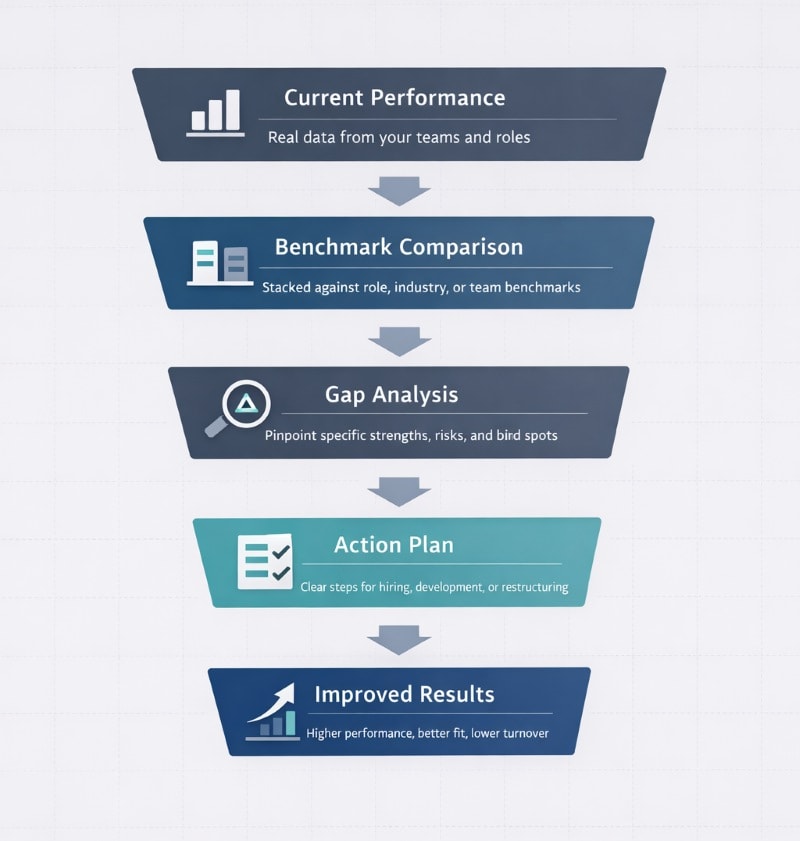
Benchmarking is the process of systematically comparing your company’s business processes and performance metrics—including your company’s performance—to a relevant standard, then using the differences to improve. The standard might be your best internal teams, direct competitors, or recognized industry leaders. The point is to define “good” with numbers, not opinions, and to move beyond the status quo.
For HR leaders and executives, benchmarking turns vague concerns into specific questions. Instead of “our hiring feels slow” you can ask why your time to fill, quality of hire or customer satisfaction scores lag similar organizations. Once you see the gap, you can decide what to fix first.
What Is Benchmarking and Why Use It in Business?
Benchmarking in Plain Terms
Benchmarking means comparing how you perform today with a relevant reference point, then acting on what you learn. Benchmarking can focus on a particular process within your organization, such as a specific workflow or operational procedure, to identify best practices and areas for improvement. If you are still asking why use benchmarking, the answer is that it shows whether you are ahead, in the middle or behind.
Defining Success With KPIs and Business Metrics
Benchmarking only works if success is defined clearly. That requires key performance indicators and business metrics that connect to strategy, not just whatever reports are easy to export. For HR, this often includes time to fill, quality of hire, first year retention, engagement and internal mobility, alongside classic financial and customer metrics. To set appropriate benchmarks, these metrics should be compared to industry best practices and those used in specific industries that excel in similar processes.
Business Benchmarking: Aligning HR With Organizational Goals
Organizations that thrive don’t guess at their performance — they measure it. Business benchmarking stands as the definitive approach that transforms organizational measurement into meaningful advancement. In Human Resources, this means systematically comparing HR processes and key performance indicators against other organizations, industry standards, or internal benchmarks. HR leaders who embrace this approach don’t just ensure effectiveness — they engineer alignment with broader business goals.
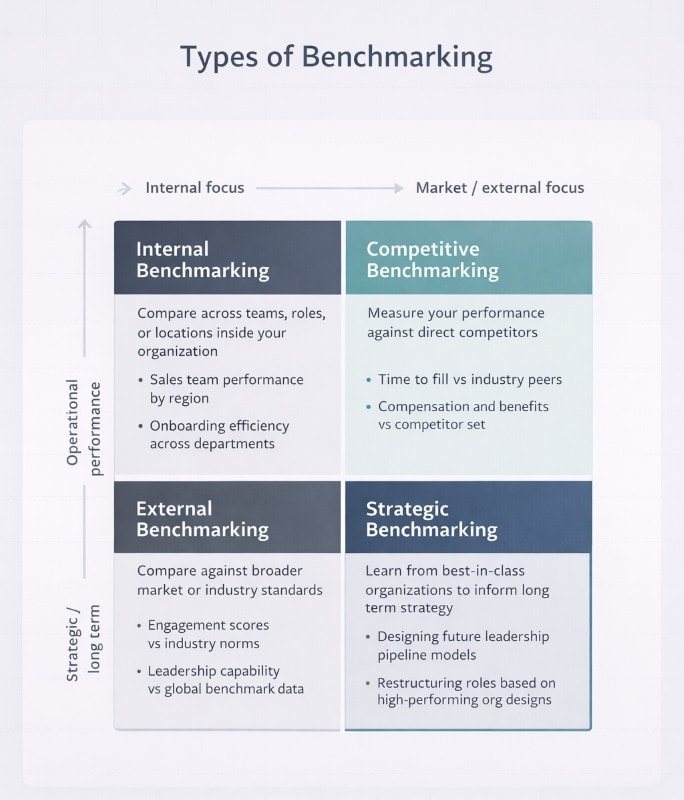
Internal benchmarking unlocks the power within. Companies analyze their HR processes across departments and teams, revealing internal best practices while exposing performance gaps that demand attention. This internal focus doesn’t just identify success — it replicates it, streamlining business operations with surgical precision. External benchmarking opens a different lens entirely, comparing HR metrics like employee satisfaction, turnover rates, and training participation against industry counterparts. This broader view doesn’t just show position — it illuminates opportunity, helping HR teams understand their standing and pinpoint areas where performance gains await.
Competitive benchmarking elevates the game completely. By comparing key HR metrics and processes against direct rivals, organizations expose exactly where they’re falling behind and craft targeted strategies to bridge those gaps. Through comprehensive benchmarking analysis, HR leaders don’t just identify performance gaps — they eliminate them, reduce costs, and develop strategies that fuel continuous improvement while supporting overarching business objectives.
Business benchmarking transforms HR from intuition-driven to insight-powered. Data-driven insights don’t just align HR initiatives with organizational goals — they revolutionize performance and sharpen competitive advantage. When organizations master this alignment, they don’t just improve their metrics. They unlock potential, accelerate growth, and engineer the kind of systematic excellence that separates leaders from followers.
Types of Benchmarking and Where They Add the Most Value
Internal Benchmarking
Internal benchmarking compares performance and processes inside your own company. You might look at differences between regions, business units, plants or teams that perform the same work. By using historical data, you can track changes and improvements over time, making it easier to identify trends and measure the impact of new initiatives. The goal is to surface internal best practices and understand what your top performers do differently so you can scale those behaviors across the organization.
Competitive Benchmarking
Competitive benchmarking focuses on your direct competitor. Here you compare indicators such as compensation, benefits, hiring speed, customer satisfaction and market share. If you consistently lose candidates to the same rival or your service ratings sit below theirs, you know the problem is not isolated. You are losing a head to head contest.
External Benchmarking
External benchmarking widens the lens to include industry standards, professional services benchmarks and world class organizations that face similar challenges even if they operate in different markets. Using industry data is essential for external benchmarking, as it allows you to measure your company’s performance against peers and identify best practices. If every company you usually compare yourself to is slow or bureaucratic, external benchmarks remind you that better performance is possible.
Strategic and Performance Benchmarking in HR
Strategic benchmarking examines how leading organizations design and execute their people strategy. Performance benchmarking in HR looks at outcomes such as quality of hire, high performer retention, leadership bench strength and engagement in key roles. Together they connect HR practices with business performance instead of treating people topics as disconnected from strategy.
Benefits of Benchmarking: From Insight to Action
Identifying Performance Gaps Early
Benchmarking highlights where you underperform long before issues explode. When you compare key performance indicators to internal and external standards, you see which teams, roles or processes fall behind. That makes it easier to focus limited attention and resources on the few areas where improvement and the opportunity to reduce costs will matter most.
Improving Processes, People and Customer Experience
Once gaps are visible, you can study the processes and practices of higher performing teams or organizations. Often the difference is not a single silver bullet but a handful of practical changes such as clearer handoffs, better tools, more rigorous selection or tighter feedback loops. These adjustments improve internal efficiency and customer experience at the same time.
The Benchmarking Process Step by Step
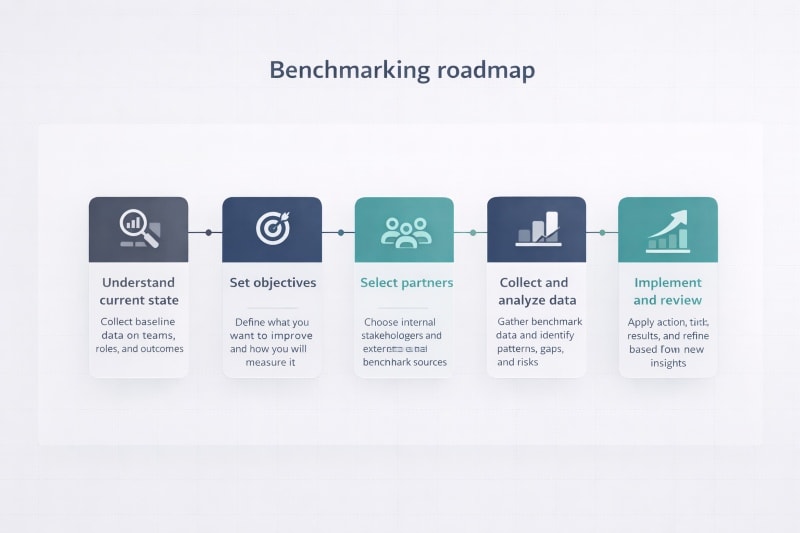
Understand Your Current State
Any benchmarking effort starts with a realistic view of how you perform today.
You need data from HR, finance, operations and customer systems, paired with a process level understanding of how work actually gets done. Without a solid baseline, you will misread gaps or chase the wrong problems.
Set Objectives and Scope
Next you clarify why you are benchmarking and how wide the effort should reach. You might focus on one domain such as recruitment, onboarding, sales productivity or service quality. Objectives should be specific, for example “reduce time to productivity for new hires” or “raise engagement in frontline teams,” so that later comparisons and actions stay aligned.
Select Benchmarking Partners
With objectives clear, you choose who and what to compare against. Good partners resemble you enough that comparisons are meaningful, but may outperform you in the areas you care about. That list can include direct competitors, similar organizations in other regions, industry consortia and third party benchmark providers that aggregate data across many companies.
Collect and Analyze Benchmarking Data
You then collect quantitative and qualitative data from internal and external sources. Quantitative data provides the comparisons on metrics such as time, cost, quality and satisfaction. Qualitative data such as interviews, surveys and process reviews explains why top performers achieve different results. To gather comprehensive benchmarking data, it is important to conduct research through interviews, surveys, and publicly available information. Analysis connects the numbers, the underlying practices and the gaps.
Turn Insights Into an Action Plan and Implementation
The final stage is translating insights into a practical action plan. That plan should specify which processes will change, who will lead each change, how success will be measured and how progress will be reviewed. Implementation often includes communication, training, new tools and adjustments to roles or incentives so that improvements actually stick.
Benchmarking Data Sources HR and Leaders Should Use
Internal Operations and Current Processes
Internal data sources such as HRIS, ATS, performance management platforms, engagement surveys and customer feedback systems are the foundation.
They reveal how your own organization behaves over time, where variation exists and which teams already perform at a higher level. This internal view is essential before reaching for external comparisons.
Industry Standards and External Data
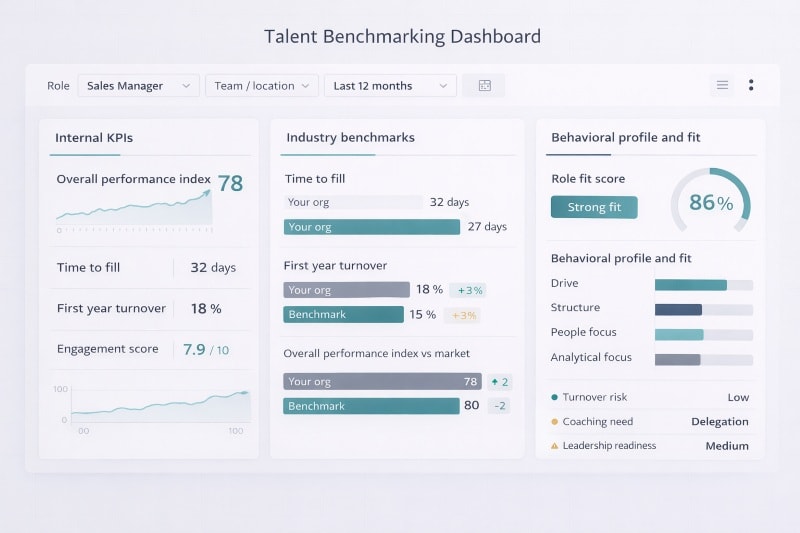
Industry reports, salary surveys, regulatory data and research from professional associations provide external benchmarks. They help you answer questions such as whether your attrition, time to fill, cost per hire or customer satisfaction are typical or outside the norm.
Behavioral and Talent Data
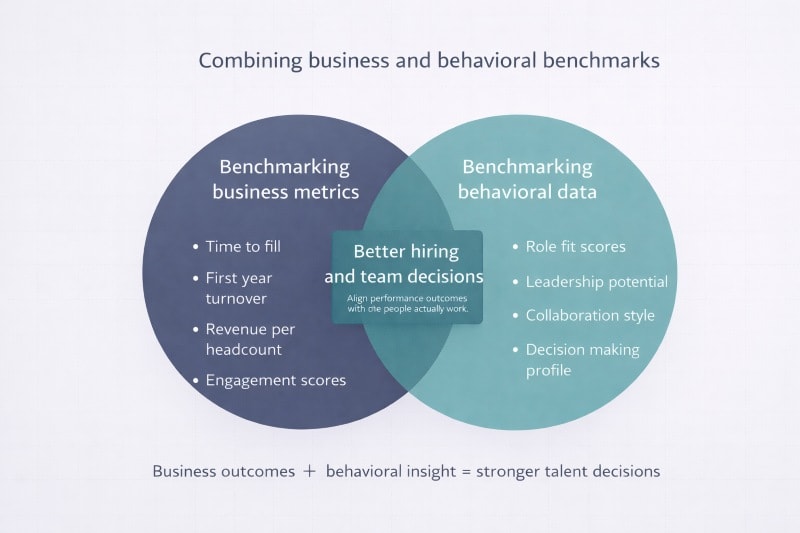
Most benchmarking efforts stop at outcomes. They compare results without examining the underlying talent patterns that create those results. Behavioral and aptitude data fill this gap by revealing how high performers in key roles actually think and work. Once you benchmark those patterns, you can design hiring and development approaches that replicate them.
Best Practices and Optimization for Effective Benchmarking
Organizations that master benchmarking don’t just measure performance — they transform it. Success isn’t accidental when you know exactly where you stand and where excellence lives. True benchmarking power emerges when leaders adopt practices that make every comparison count, every insight actionable, and every improvement sustainable.
The foundation starts with crystal-clear purpose. Define what matters most to your organization’s heartbeat — those key performance indicators that separate thriving from surviving. Customer satisfaction scores, employee performance metrics, and critical business drivers become your North Star. When you identify the right data sources, both internal and external, meaningful insights flow naturally, and accurate comparisons reveal the truth about your competitive position.
Performance benchmarking transforms how organizations see themselves in the marketplace. Compare your key indicators against industry standards and watch performance gaps surface clearly, revealing exactly where process improvements will drive the greatest impact. But strategic benchmarking takes you further — beyond your industry’s boundaries to learn from world-class organizations that redefine what’s possible. This approach doesn’t just reveal innovative practices; it unlocks new pathways to exceptional performance.
Continuous improvement breathes life into effective benchmarking. Treat this as an ongoing journey, not a destination, and you’ll track progress that adapts to industry shifts while sustaining improvements over time. Your benchmarking data becomes a strategic weapon — identifying process gaps, developing targeted solutions, and implementing changes that drive measurable gains in employee performance and customer satisfaction.
Collaboration with industry leaders and strategic partnerships unlock fresh perspectives and invaluable benchmarking intelligence. These relationships accelerate your access to emerging trends, deepen your benchmarking expertise, and fast-track the adoption of breakthrough practices. The ultimate prize isn’t just better performance — it’s achieving the competitive edge that separates market leaders from followers. When organizations optimize their benchmarking efforts through internal analysis, external comparisons, and competitive intelligence, they don’t just identify gaps. They engineer solutions, drive relentless improvement, and unlock the full potential of their business operations.
Common Benchmarking Mistakes to Avoid
Treating Benchmarking as a One Off Project
One of the biggest mistakes is to run a single benchmarking study, present the findings, then move on. Static reports age quickly. Without a regular review cycle, metrics drift, context changes and the organization slides back into decisions based on anecdotes.
Chasing Industry Averages Instead of Competitive Advantage
Another trap is treating the industry average as the goal. Matching the middle of the pack may remove the worst pain, but it will not create an edge. The most effective organizations use benchmarking to identify where they want to outperform competitors and then direct investment and leadership attention accordingly.
Ignoring the People Side of Change
Benchmarking often leads to new processes, structures or expectations. If you handle these as purely technical changes, you will meet resistance. Successful efforts involve leaders and employees early, explain the purpose behind changes and provide support so that new ways of working take hold instead of fading after the initial push.
How OAD Uses Benchmarking to Improve Hiring and Team Decisions
Benchmarking Roles and Success Profiles
OAD helps organizations benchmark not just job titles but the behavioral profiles and competencies that drive success in specific roles. By analyzing patterns among high performers, OAD creates role specific benchmarks that show what “fit” really looks like in your context instead of relying on generic competency lists.
Comparing Candidates Against Role and Culture Benchmarks
Once role benchmarks exist, you can compare candidates against them in a consistent way. This reduces reliance on unstructured interviews and gut feel. Hiring managers gain a clear view of how each candidate aligns with both the demands of the role and the wider culture, which improves hiring quality and reduces costly mismatches.
Design teams with data, not gut feel.
Most org-design decisions come down to role fit, leadership style, and team dynamics. OAD reads those signals from a 7-minute behavioral survey, so you can reconfigure roles and teams with evidence instead of guesswork.
Identifying Talent and Team Performance Gaps Early
OAD data also supports internal benchmarking of existing teams. You can compare the profiles of high performing teams with those that struggle, then identify gaps in role fit, communication styles or leadership capacity. That insight allows you to adjust roles, provide targeted development or redesign teams before problems turn into turnover or missed targets.
Getting Started: A Practical Benchmarking Checklist
Choose One Priority Area and a Small KPI Set
Begin with a single area where better insight would clearly add value, such as recruitment, leadership or a specific customer facing function. Identify three to five KPIs that define success in that space. A narrow focus makes it easier to move from analysis to action and demonstrate early results.
Build a Simple Dashboard and Review Rhythm
Finally, bring your selected KPIs and benchmarks into a simple dashboard that HR, finance and business leaders can review together. Set a regular cadence for reviewing results, discussing implications and agreeing on next steps. When benchmarking becomes part of existing management routines, it keeps improvement work alive instead of treating it as a side project.
Test OAD: Benchmark Your Talent Decisions Against Validated Data
If you want to move beyond surface comparisons and understand how your hiring and team decisions stack up against validated talent benchmarks, OAD can help. The OAD assessment provides behavioral and aptitude data that lets you benchmark roles, candidates and existing teams with a level of clarity that CVs and interviews alone cannot provide.
You can start with the free Top Performer Profile and see how your current talent decisions align with role specific and industry informed benchmarks. It is a practical way to use benchmarking not only to compare business results, but also to understand and improve the people and behaviors that create those results.