A strong leader can elevate an entire organization — but poor leadership is one of the fastest ways to drive away top talent, stall growth, and damage culture. Think of the star engineer who quits after six months under a micromanaging boss — not because of the work, but because of the leader. That’s why a well-structured leadership training outline isn’t just paperwork — it’s the backbone of how companies build effective leaders who inspire, decide with clarity, and drive results. In this guide, we’ll break down the essential components of a science-backed leadership training outline that actually works.
Why Leadership Training Outline Matters
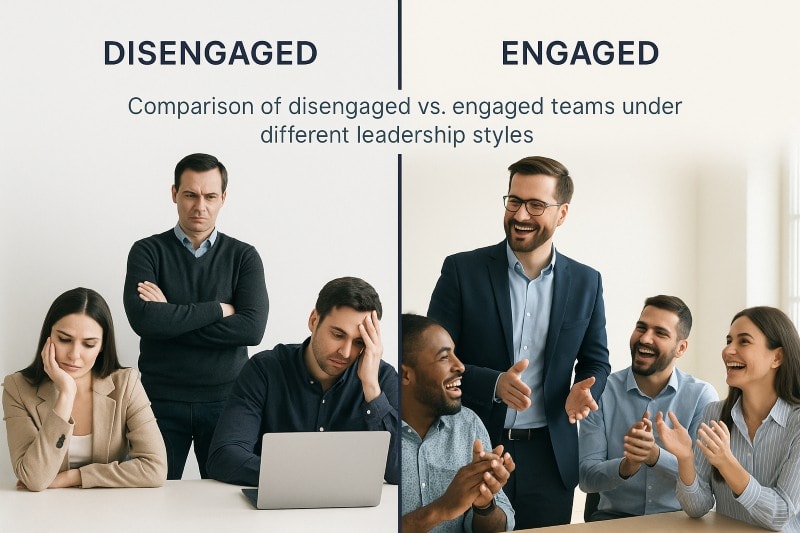
Most companies recognize the importance of leadership, yet too many rely on training programs or generic off-the-shelf courses. At OAD, we see this mistake all the time — leaders thrown into a role with nothing more than a two-day workshop, and then everyone wonders why engagement plummets. Gallup research consistently shows that managers account for up to 70% of the variance in employee engagement — meaning leadership quality can make or break organizational performance.
One key benefit of using a leadership training outline is that it helps organizations achieve higher engagement and better performance by providing targeted development.
Our OAD data shows the solution: the managers who score highest on fit and decision-making style consistently drive the strongest engagement scores.
A leadership training outline changes that. Instead of leaving development to chance, it provides a clear plan and roadmap: what skills leaders need, how they’ll learn them, and how progress will be measured. This structure not only improves consistency but also ensures that training ties directly to company priorities.
For HR leaders and executives, the value of an outline goes beyond logistics. It signals to employees that leadership development is a true business priority — not an afterthought. The benefits of a well-structured outline extend to both individuals and the organization, supporting career growth, team performance, and overall success. When employees see an investment in strong, capable leaders, they’re more likely to stay engaged and aligned with the organization’s goals.
OAD’s validated framework doesn’t just measure skills — it predicts how leaders will behave under stress, conflict, or rapid change, long before those moments arrive. Leadership isn’t just about technical know-how; it’s about personality, decision-making styles, and how individuals respond under pressure. A thoughtful outline takes these factors into account, ensuring the right people are trained in the right way.
Core Principles of Effective Leadership Development
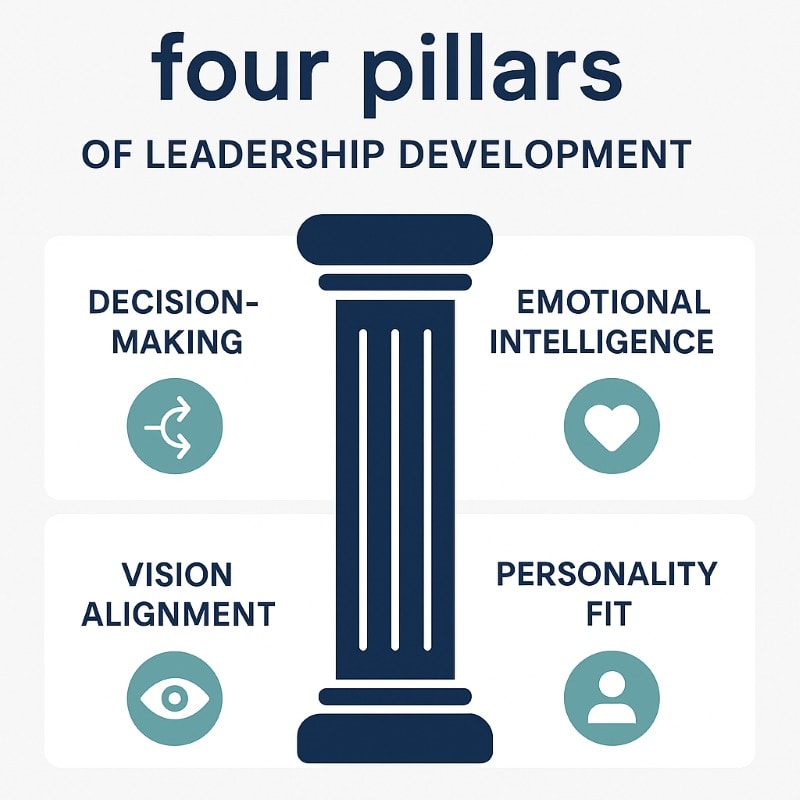
An effective leadership training outline starts with principles that go beyond surface-level skills. These are the building blocks that determine whether training will create leaders who can thrive in complex, high-stakes environments. There are many different leadership styles, and understanding these differences is crucial for selecting the right approach for your team and organization.
Decision-making under pressureGreat leaders don’t just make choices — they make the right choices when it matters most. Training should help leaders weigh data, assess risks, and act decisively, even when outcomes are uncertain. What makes a leader effective in high-pressure situations is the ability to remain calm, process information quickly, and inspire confidence in their team.
Jeff Bezos famously said that waiting for 90% of the data is too late — great leaders often decide at 70%. Training should prepare leaders for that level of conviction.
Emotional intelligence and communicationA leader’s ability to understand themselves and others is directly tied to team performance. Training must focus on empathy, active listening, and the ability to communicate with clarity — especially in moments of conflict. Understanding the core concepts of emotional intelligence is essential for leaders to build trust, motivate teams, and resolve issues effectively.
Picture a team meeting derailed by clashing opinions. A leader with high EQ can defuse the tension in two sentences, turning conflict into collaboration.
Vision alignment with organizational goalsLeaders who can’t connect their decisions to the company’s larger mission create confusion and wasted effort. Training should consistently reinforce how individual actions tie back to organizational strategy.
The science of personality and fitOAD’s research shows that effective leadership development also depends on who is being trained. Not all employees are suited for leadership roles. By integrating personality assessments into training outlines, companies can identify high-potential leaders and customize development paths to match their natural strengths and challenges. Identifying leadership potential early allows organizations to invest in the right individuals and maximize the impact of their training programs.
The Essential Components of a Leadership Training Outline
A strong leadership training outline balances technical expertise with human-centered skills. It should prepare leaders to manage not only projects, but also people, culture, and long-term growth. The essential skills needed for effective leadership include communication, adaptability, and decision-making. A well-designed course should structure these elements to maximize learning and development.
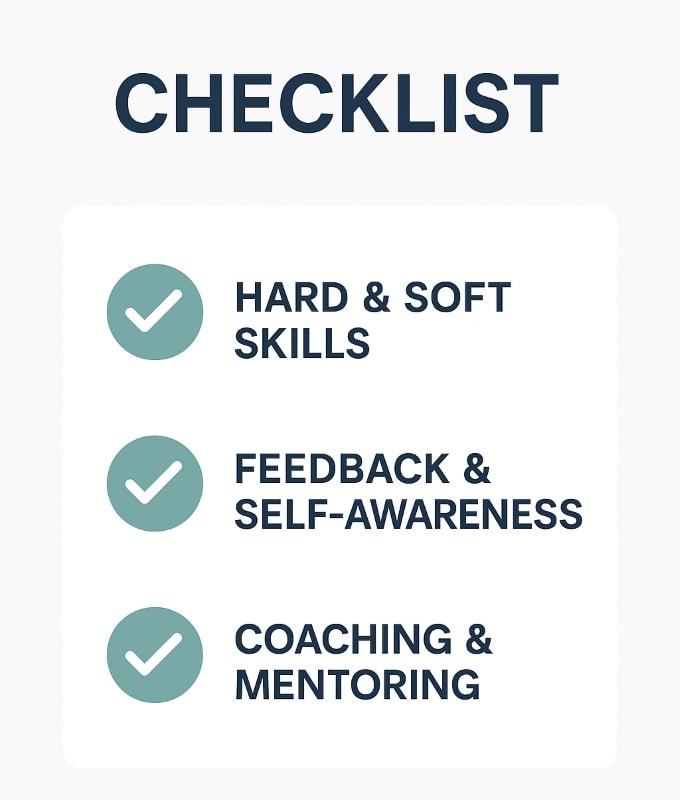
Hard and soft skills developmentLeadership is more than authority — it’s influence. Outlines should cover technical areas like strategic planning and resource management, while also emphasizing soft skills such as coaching, feedback, and conflict resolution. Developing each skill is critical to building trust and driving performance.
Feedback and self-awarenessLeaders who can’t recognize their blind spots risk repeating the same mistakes. Incorporating 360-degree feedback and self-reflection exercises helps leaders understand how their behavior affects others — and how to adjust. Regular feedback is essential to improve leadership abilities and drive continuous growth.
We’ve seen leaders with blind spots derail entire initiatives. A 360-degree feedback loop isn’t optional — it’s the only way to hold up the mirror.
Done wrong, 360s devolve into popularity contests. Done right, they expose blind spots — like the VP whose team knows he kills innovation in meetings but who still thinks of himself as ‘empowering.’ That awareness can save million-dollar projects.
Coaching and mentoring structuresClassroom-style training alone rarely changes behavior. Leaders need ongoing coaching and mentoring to reinforce lessons, translate theory into practice, and build confidence in applying new skills. Providing high-quality resources and support is essential to ensure the effectiveness of coaching and mentoring.
Building a Curriculum for Leadership Training
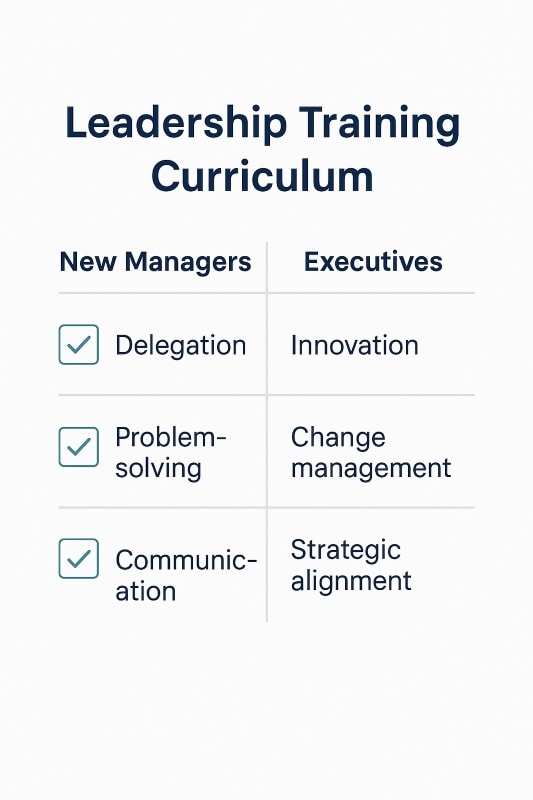
A strong leadership curriculum is more than a list of workshops — it’s the framework that ensures development happens with purpose. The curriculum should span the full spectrum of leadership growth, from foundational skills for new managers to advanced strategies for seasoned executives.
For emerging leaders, the focus is on building confidence in essentials: delegation, problem-solving, and clear communication. These skills form the base that allows new managers to transition successfully from individual contributor to leader.
As leaders progress, the curriculum should evolve. Executive-level training emphasizes change management, innovation, and the ability to align teams with business strategy. The content becomes less about managing tasks and more about shaping vision and driving organizational performance.
What matters most is tailoring the curriculum to the needs and experience level of participants. A first-time manager and a senior executive will not benefit from the same content. By mapping a structured path that adapts to each stage of leadership, organizations ensure development is not only relevant but also impactful — creating leaders who can perform today and grow into tomorrow’s challenges.
Key Leadership Training Topics for 2025 and Beyond
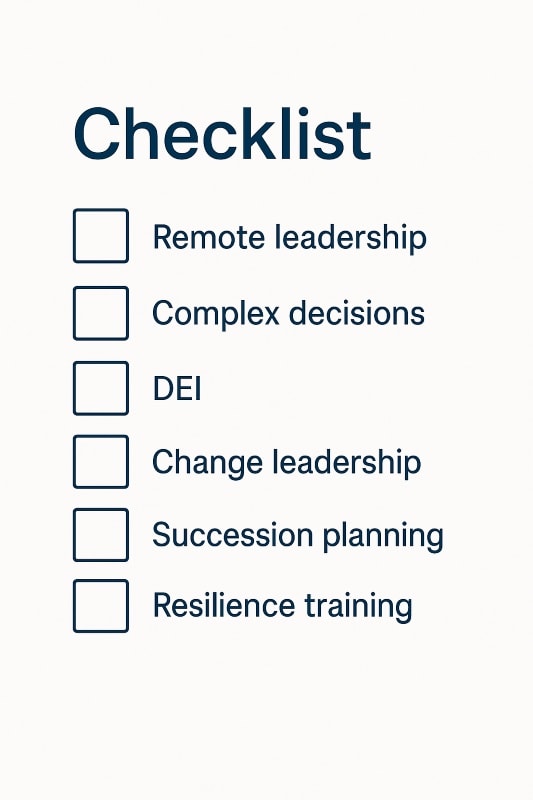
Modern organizations face challenges that didn’t exist a decade ago. Training must evolve to match. Outlines should include:
- Leading hybrid and remote teams effectively
- Decision-making in volatile business environments
- Diversity, equity, and inclusion as leadership priorities
- Change management during transformation initiatives
- Long-term strategic thinking and succession planning
- Neuroscience-backed resilience training
Explore these areas further to deepen your leadership training outline and stay ahead in developing effective leaders.
These topics ensure leaders are prepared not just for today, but for the rapidly changing demands of the future.
Decision Making and Problem Solving in Leadership
At the core of effective leadership is the ability to make sound decisions and solve problems with clarity. Strong leaders don’t rely on instinct alone — they follow a structured process: gathering the right information, weighing options, and evaluating long-term impact. This disciplined approach ensures that decisions support both immediate needs and sustainable business growth.
Great decision-making also isn’t done in isolation. Leaders who foster trust and open communication create teams that contribute diverse perspectives. By encouraging collaboration, they arrive at stronger solutions while also increasing team engagement and ownership.
Equally important is the willingness to take calculated risks. Leaders who combine thoughtful analysis with the courage to experiment create a culture of innovation — one where teams feel safe to test new ideas and improve continuously.
When decision-making and problem-solving are treated as core leadership skills, organizations benefit from leaders who inspire confidence, build credibility, and drive progress even in complex environments.

Training Methodology: Approaches That Work
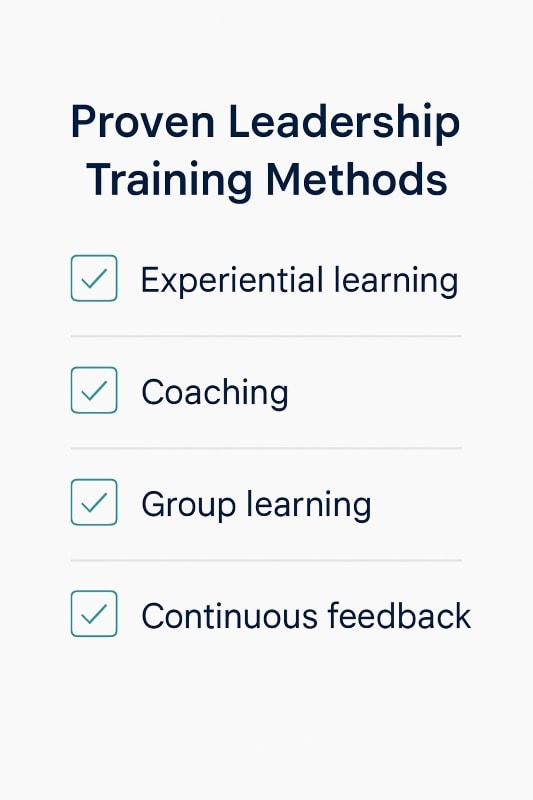
How leadership training is delivered is just as important as what is taught. The most effective programs combine multiple approaches to create an engaging, practical learning experience.
Experiential learning gives leaders the chance to apply new skills in real business scenarios, ensuring lessons move from theory into practice. Coaching provides one-on-one guidance tailored to individual needs, offering leaders targeted feedback and personal growth strategies. Group learning, through workshops or peer discussions, encourages leaders to exchange ideas, learn from one another, and build a network of support.
Regular feedback and assessment tie these methods together, allowing organizations to track progress, reinforce strengths, and address gaps before they become barriers. When combined, these approaches create a cycle of continuous improvement that helps leaders grow and adapt to evolving challenges.
A well-rounded training methodology doesn’t just develop individual leaders — it establishes a culture of learning and performance that strengthens the entire organization.
Common Mistakes to Avoid
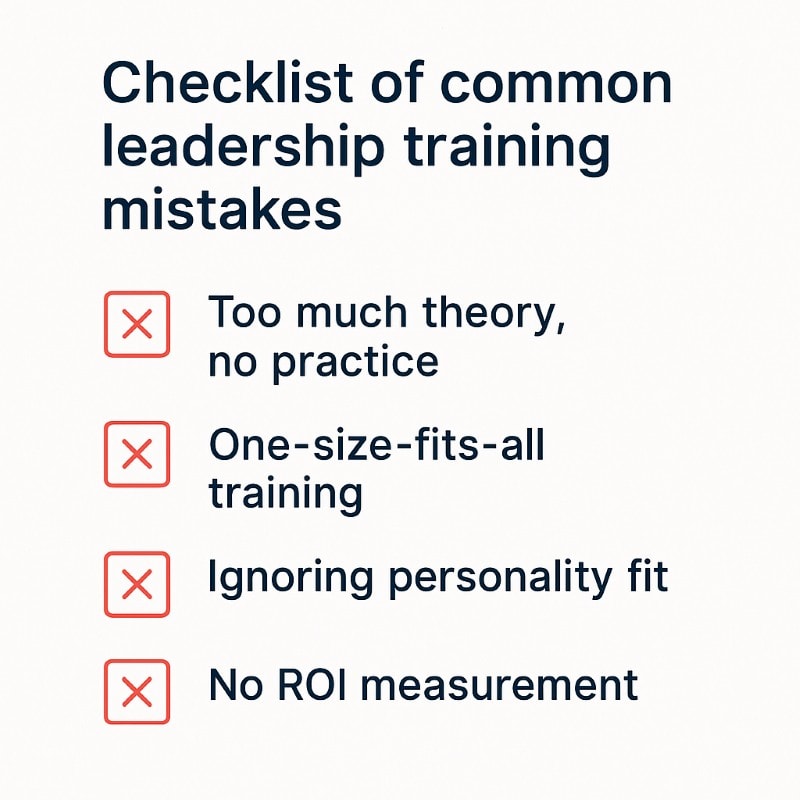
Even well-intentioned training programs fail when outlines are poorly designed. The most common mistakes include:
- Overloading participants with theory and no practice
- Using one-size-fits-all content that ignores context
- Failing to account for personality differences and role fit
- Neglecting to measure results or tie training back to ROI
There are several ways to avoid these pitfalls, such as tailoring content, incorporating practical exercises, and tracking outcomes.
Avoiding these pitfalls is as important as choosing the right content. A science-backed outline prevents wasted effort and ensures training creates measurable impact.
Measuring the Success of Leadership Training
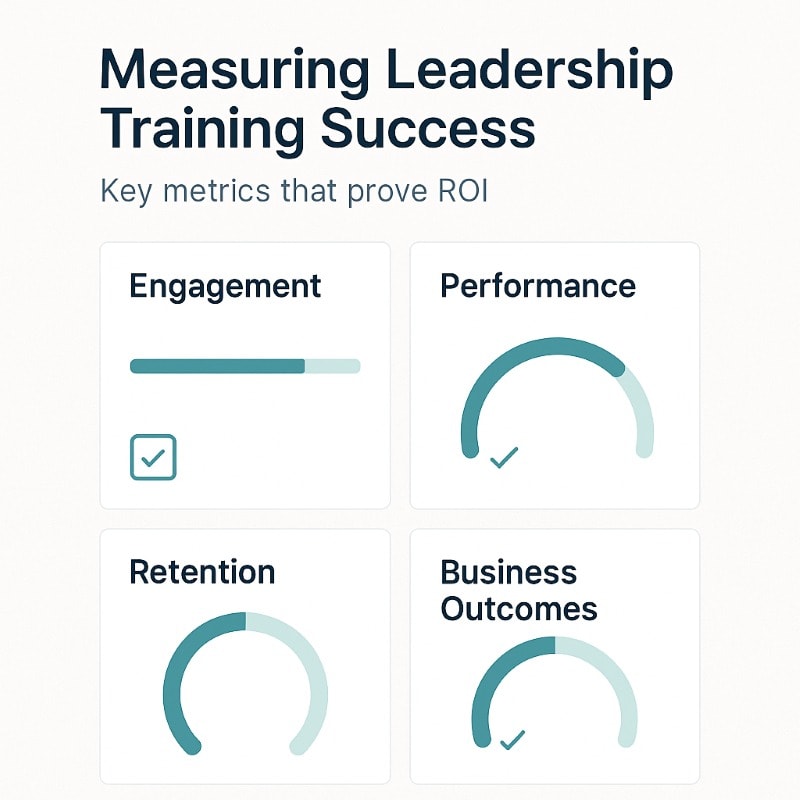
A leadership training outline only delivers value if it drives measurable improvement. Organizations want to see real changes in leadership effectiveness, such as improved communication, decision-making, and team motivation. Without clear metrics, even the best-designed program risks becoming a “check-the-box” exercise with little long-term impact.
Engagement and feedbackSurveys and feedback forms provide insight into whether participants found the training relevant and practical. High engagement levels are an early indicator of effectiveness.
Performance improvementsLeadership training should translate into observable changes — improved team productivity, better decision-making, and stronger collaboration. Good leaders demonstrate these qualities by fostering positive relationships and motivating their teams. Tracking KPIs before and after training helps show the difference.
For example, one client tracked meeting lengths. After training, leadership meetings ran 40% shorter — but produced faster, better decisions.
Retention of high-potential employeesStrong leadership directly influences employee loyalty. If retention of top talent improves after training, it’s a clear signal that leadership quality is rising.
SHRM research shows nearly half of new hires fail within 18 months, often because leaders weren’t trained to support them effectively.
Business outcomes alignmentUltimately, training must tie back to organizational goals: growth, profitability, and culture. Outlines should include mechanisms for evaluating how leadership behaviors support these outcomes.
Instead of relying only on surveys, OAD assessments provide hard data — showing whether leaders’ decision-making and fit have actually improved after training.
Case Study: From Generic Training to Science-Backed Success
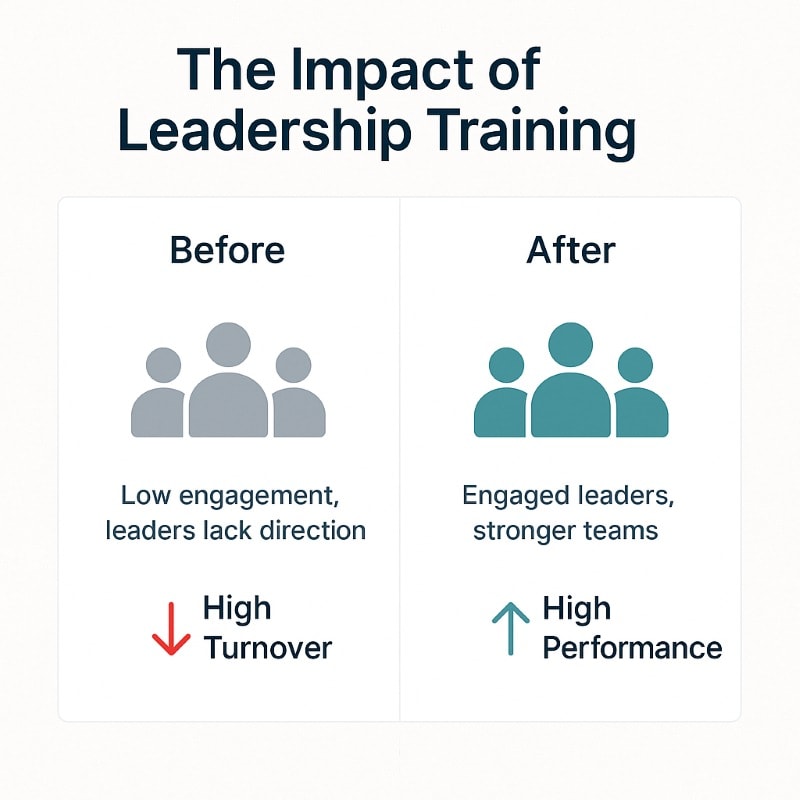
Consider a mid-sized company struggling with high turnover among newly promoted managers. Their leadership training relied on generic workshops that covered theory but failed to prepare leaders for the realities of day-to-day management. Engagement scores were low, and promising employees often left within a year of promotion. The company realized there was a significant difference between their generic approach and more effective, science-backed training methods.
When the company shifted to a structured, science-backed training outline, results changed dramatically. By integrating personality assessments from OAD, they identified which employees were best suited for leadership roles — and tailored training to match their natural strengths. Leaders received targeted coaching, with clear milestones to track progress. This approach not only improved management skills but also had a direct impact on each participant’s career, supporting their professional growth and advancement within the organization.
Design teams with data, not gut feel.
Most org-design decisions come down to role fit, leadership style, and team dynamics. OAD reads those signals from a 7-minute behavioral survey, so you can reconfigure roles and teams with evidence instead of guesswork.
Within 12 months, engagement scores climbed by 22%, turnover among new managers dropped by half, and the company built a stronger internal pipeline of leaders ready for future challenges.
This case shows the difference between “training for training’s sake” and creating a leadership development process designed for measurable impact.
This mirrors what Harvard Business Review has found — companies that customize training see adoption rates nearly double compared to generic programs.
And additonally: McKinsey has found organizations with strong leadership programs are 2.4 times more likely to hit performance targets — a gap your competitors may already be exploiting.
The OAD Advantage in Leadership Development
Even the best-designed leadership training outline falls short if it doesn’t consider the human factor: personality, motivation, and natural decision-making styles. That’s where OAD adds a critical layer of science, offering a comprehensive guide for leadership development that helps organizations build effective leaders step by step.
By using OAD’s personality and talent assessments, companies can identify high-potential leaders before training even begins. Instead of a one-size-fits-all program, development paths are customized to match each leader’s strengths and address specific growth areas. This approach saves time, reduces wasted investment, and builds leaders who are truly aligned with organizational culture and strategy.
It’s the same principle Warren Buffett applies in investing: pick the right companies first, then let time compound. OAD helps you pick the right leaders before you invest.
For HR leaders and executives, the advantage is clear: less guesswork, more precision, and a measurable impact on business outcomes. Training becomes more than a learning exercise — it becomes a strategic investment in future leadership.
Conclusion
Leadership training isn’t about another binder of frameworks collecting dust on a shelf — it’s about shaping decision-makers who deliver under pressure. It’s about shaping decision-makers whose judgment under pressure can alter the trajectory of your entire company. A well-designed outline ensures training is focused, consistent, and tied directly to business outcomes. But the true difference comes from combining structure with science: aligning leaders’ natural strengths with the demands of their roles.
When leadership training is approached this way, companies don’t just develop managers. They build confident decision-makers, effective communicators, and vision-driven leaders who elevate teams and drive growth.
If your organization is ready to move beyond generic training and build leaders who create lasting impact, start with the Top Performer Profile and experience the advantage of science-backed leadership development.