A strong leadership office is no longer a “nice to have” function sitting on the edge of HR. It is a central hub that develops leaders, aligns culture, and translates strategy into everyday behavior across the organization. This article explains what a leadership office is, who it serves, and how it can drive measurable improvements in team performance and organizational effectiveness.
From scattered initiatives to a central leadership office
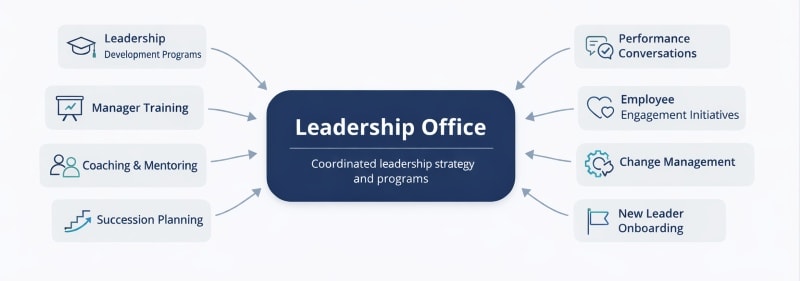
Many organizations start with scattered leadership programs across different departments. A leadership office brings these efforts into one place, creating a centralized leadership structure with a clear mission, budget, and accountability. It owns the design of leadership development, curates resources, and coordinates experiences so leaders are not left to find support through informal networks or random workshops.
How the leadership office complements HR and L&D
The leadership office is not a replacement for HR or learning and development. It acts as a focused partner. By working closely with HR, the leadership office helps build a strong leadership pipeline, ensuring the organization is continuously developing future leaders. HR handles policies, hiring, and performance systems, while the leadership office focuses on leadership roles, skills, and behaviors. Together they shape how leaders lead, coach, and engage members of their teams in real work contexts.
Why a leadership office matters for organizational effectiveness
Translating strategy into everyday leadership behaviors
Strategy fails when it never leaves the slide deck. The leadership office turns strategic priorities into leadership competencies, programs, and coaching. It helps leaders learn how to lead change, involve delegates, and engage people in new ways of working. This is where strategic plans become daily decisions about priorities, feedback, and collaboration.
Strengthening culture, inclusion, and engagement
Culture and inclusion are shaped by what leaders do, not only what they say. The leadership office designs programs that promote psychological safety, inclusion, and community across teams, campuses, and regions. When leaders practice inclusive behaviors, employees feel heard, stay engaged, and are more likely to stay and grow their career internally.
Who the leadership office serves
Senior executives and emerging organizational leaders
A strong leadership office serves both senior executives and emerging leaders. It supports C level leaders with executive coaching and strategic forums, and helps leaders develop executive presence, while also creating pathways so high potential leaders can be nominated, developed, and prepared for bigger roles.
Student leaders and early career talent coming from campus
Many organizations recruit heavily from campus. A leadership office can partner with universities, student leaders, and early career programs to shape the journey from student to professional. Interns, graduates, and student organization leaders can move into structured development programs that focus on real leadership skills, not only technical skills.
Public sector and political leaders in complex environments
In public sector and political contexts, leaders must serve citizens, manage stakeholders, and navigate constant change. The leadership office plays a crucial role in supporting stakeholder engagement, helping leaders effectively collaborate with diverse groups and address their needs. A leadership office can provide mentoring, training, and resources so political leaders and their teams handle complexity with more clarity and less reactivity.
Leadership structure: Defining roles, governance, and reporting lines
Exceptional leadership offices don’t happen by chance — they’re built with purpose. At the foundation stands a visionary director who drives strategic direction and orchestrates transformative leadership programs. This leader commands a team of development professionals, each bringing specialized expertise in coaching, training, and program management to craft experiences that resonate with students, staff, and the broader community.
Governance becomes a competitive advantage through a strategic advisory board featuring senior leaders from university and community sectors. This board delivers cutting-edge guidance, ensuring every program aligns with institutional mission while tackling tomorrow’s leadership challenges. Clear reporting structures create transparency that builds trust, with regular progress updates flowing to university administration and key stakeholders.
This intentional architecture enables the leadership office to cultivate leadership excellence across campus, deliver transformative training experiences, and fulfill the mission of developing leaders equipped to serve and drive meaningful change in their communities. When structure meets strategy, organizations don’t just develop leaders — they unleash potential, accelerate growth, and create lasting impact that extends far beyond campus boundaries.
Core responsibilities of a leadership office
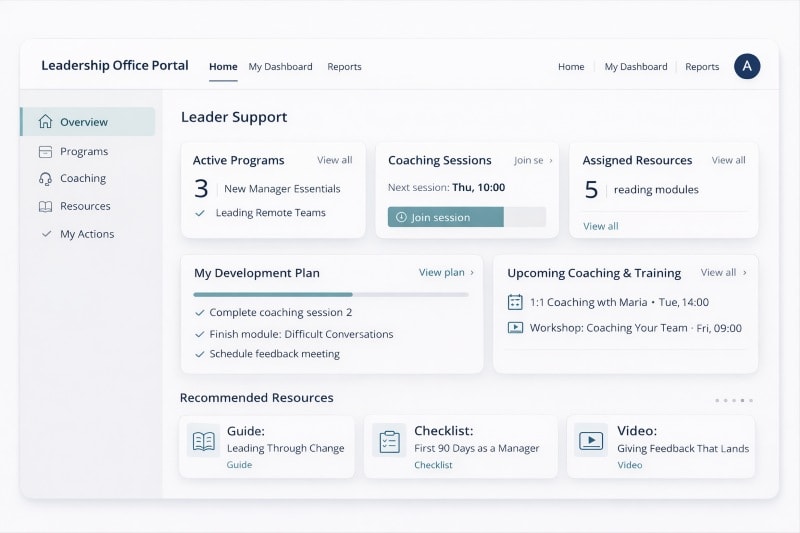
Designing leadership development programs and skills training
The leadership office designs and curates leadership programs, workshops, and learning paths. It defines the focus of each program, from foundational leadership skills to advanced strategic thinking. The leadership office uses a competency model to define and assess the specific leadership skills required for each program. It also ensures training is not generic content that people click through, but relevant experiences rooted in the organization’s real work.
Coaching, mentoring, and support resources for leaders
Beyond formal training, leaders need ongoing support. The leadership office can coordinate coaching, leadership coaching, mentoring, peer groups, and toolkits. Leaders know where to go when they need help with a difficult conversation, a change initiative, or a conflict inside their department.
Leadership development programs and experiences
Workshops, cohorts, and applied learning projects
The most effective leadership programs mix learning with practice. The leadership office can offer workshops, cohort programs, and applied projects where leaders work on real organizational challenges. These applied projects often use action learning, enabling participants to solve real issues while developing leadership skills. Participants develop leadership skills while delivering measurable outcomes for the business or community.
Community engagement, service, and social impact initiatives
Leadership is proven in how people serve others. Many leadership offices integrate community engagement, service projects, and cross functional initiatives, with civic engagement as a key area they support. Leaders explore new contexts, collaborate with different partners, and learn how their decisions affect communities inside and outside the organization.
Building inclusive leadership and culture
Embedding diversity, equity, and inclusion into leadership roles
If inclusion is not built into leadership roles, it will not show up in everyday behavior. The leadership office works with HR and business leaders to create expectations, training, and support around diversity, equity, and inclusion, including addressing unconscious bias in leadership development. It helps leaders learn how to listen, connect, and respond across different backgrounds and perspectives.
Creating communities of practice and peer support
Leadership can feel isolating. Communities of practice give leaders a place to share ideas, experiences, and research, and to learn from each other. The leadership office can host regular forums, learning circles, peer coaching groups, or peer mentoring programs that keep leaders connected and accountable.
Setting up or evolving your leadership office
Clarifying mission, scope, and partnerships across departments
A leadership office needs a clear mission, defined scope, and strong partners. That includes HR, L&D, business units, and in some cases campus or community partners. Together they decide which programs are offered, which leaders are involved, and how success is measured.
Using research, data, and behavioral assessments to focus efforts
Guesswork is a poor strategy for leadership development. A modern leadership office uses data, behavioral assessments, and research to understand what the organization actually needs. This helps create targeted programs instead of broad initiatives that do not change behavior.
Measuring the impact of your leadership office
Tracking leadership skills, career progression, and program outcomes
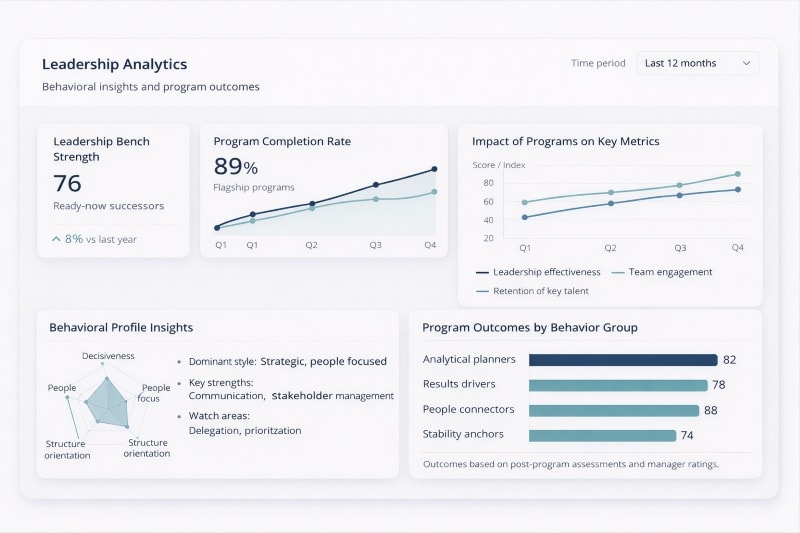
Impact measurement goes beyond satisfaction surveys. The leadership office tracks changes in leadership skills, internal mobility, retention of key leaders, and the outcomes of projects led by program participants. Over time, this shows which investments truly shape leaders and which need to change.
Connecting leadership development to team and business results
Ultimately, leadership development must support organizational effectiveness. The leadership office links its work to metrics such as engagement, team performance, service quality, or innovation. Leaders see that programs are not side projects but part of the core work of the organization.
Where OAD supports your leadership office
Using OAD behavioral data to shape roles, programs, and leader journeys
OAD provides scientifically validated behavioral assessments that help leadership offices understand how different leaders prefer to work, communicate, and make decisions. This data can shape leadership roles, inform program design, and guide coaching conversations. If you are interested in seeing how this works in your own organization, you can test OAD and explore real data from your team.
Future directions for your leadership office
Leadership excellence doesn’t happen by chance — it’s engineered through intentional development and strategic action. The Leadership Development Office drives transformation across campus by creating pathways that unlock potential wherever talent exists. Our vision centers on measurable impact: expanding access through cutting-edge online platforms and dynamic workshops that deliver essential leadership capabilities directly to students, faculty, and staff. We’re architecting breakthrough initiatives around social change, diversity, and inclusion — ensuring our programs stay ahead of emerging challenges and drive meaningful progress.
Collaboration fuels everything we accomplish. Strategic partnerships with departments, campus organizations, and external allies create exponential opportunities for hands-on learning and accelerated career advancement. When we align resources and unite expertise, every community member gains access to transformative experiences that build authentic leadership capacity.
We challenge every student, faculty member, and staff person to engage with our leadership ecosystem — nominate game-changers, step into growth opportunities, and connect with our team for deeper insight. Whether you’re launching your leadership trajectory or amplifying existing capabilities, our office delivers the support that transforms potential into performance. Discover our mission, explore our comprehensive resources, and reach out directly through our website or email — we’re here to help you engineer the future of leadership excellence on campus and far beyond.
Frequently asked questions about leadership offices
What programs and services should a leadership office offer
A leadership office typically offers leadership development programs, coaching, mentoring, community engagement opportunities, and resources for inclusive leadership. Over time, it can also coordinate global initiatives, research projects, and partnerships that support the wider mission.
How student leaders and political leaders can engage with the office
Student leaders, early career talent, and political leaders can connect with the leadership office through nominated programs, open applications, or targeted outreach. A simple email or contact form can start a development journey that includes training, mentoring, and involvement in strategic projects.
How to start a leadership office in a smaller organization or campus context
Smaller organizations and campuses can start with a small, focused leadership office or working group. The key is clarity of purpose, strong sponsorship, and a plan to collaborate with partners across departments and communities. From there, you can build programs, offer resources, and shape a culture where leadership development is part of everyday work.
Start with the free Top Performer Profile: 7 minutes, results in 24 hours, no credit card.