Hiring the wrong person doesn’t just cause frustration—it drains time, damages team morale, and quietly erodes your bottom line. The true cost of bad hiring reaches far beyond a misstep in judgment; it’s a chain reaction of lost productivity, wasted resources, and missed opportunities. In this article, we’ll unpack five common mistakes that cost companies more than they realize—and how to prevent them.
Hiring the wrong person doesn’t just cause frustration—it drains time, damages team morale, and quietly erodes your bottom line. The true cost of bad hiring reaches far beyond a misstep in judgment; it’s a chain reaction of lost productivity, wasted resources, and missed opportunities.
That’s because bad hires don’t just affect one role—they ripple across entire teams. They pull focus away from high performers, dilute culture, increase turnover, and introduce risks that most companies only realize once it’s too late. And while many organizations focus on speeding up their hiring process, few take the time to audit what’s actually going wrong.
Before you hire your next candidate, take a step back and consider whether you might be making one of these five common—and costly—mistakes.
Understanding Bad Hires: What Really Goes Wrong
Every hiring manager knows the sinking feeling of bringing the wrong person onto the team. But bad hires don’t just happen—they’re almost always the result of gaps in the recruitment process.
Whether it’s skipping structured interviews, rushing through reference checks, or publishing vague job descriptions, the pressure to fill roles quickly often overshadows the need for precision. And when that happens, businesses fall into the same hiring mistakes—choosing speed over fit, keywords over capability, and assumptions over data.
The impact? Lost productivity is just the start. A bad hire can damage team morale, disrupt collaboration, and even push out your good employees—the ones quietly absorbing the extra workload. For small business owners, that kind of hit can stall growth for months. And the cost of a bad hire isn’t limited to salary or recruiter fees. It also includes:
- Onboarding and training expenses
- Turnover-related recruitment costs
- Legal fees or reputational fallout from poor performance
- And the intangible costs: lost trust, lower team productivity, and a weaker employer brand
According to SHRM, a single wrong hire can cost up to 30% of their first-year salary—and that figure doesn’t include lost opportunity or delayed progress.
To avoid repeating these costly patterns, hiring managers must take a strategic approach to hiring:
- Write accurate job descriptions with clear criteria
- Use targeted job ads to attract the right talent
- Conduct effective interviews that assess both technical and behavioral fit
- Include a probationary period to catch misalignments early
The bottom line? Understanding what leads to a bad hire is the first step to avoiding one. When you prioritize cultural fit, structured evaluations, and role alignment from the start, your next hire won’t just fill a seat—they’ll strengthen your team.
The High Cost of Ignoring Culture Fit: The Most Expensive Soft Skill Mistake
On paper, a candidate might look perfect—strong résumé, relevant experience, impressive technical skills. But once they join, the cracks begin to show. Communication feels strained. Team collaboration stalls. Meetings turn tense. Why? Because they don’t align with your company’s values or working style. This is the classic case of an ill fitting employee, where misalignment can lead to broader organizational issues such as reduced productivity, damaged company culture, and even loss of client trust.
Cultural misalignment is one of the most overlooked—and expensive—hiring mistakes. According to research by the Society for Human Resource Management (SHRM), poor culture fit accounts for up to 89% of new hire failures. That means even technically competent employees can quietly destabilize a team if their behavior clashes with the environment around them.
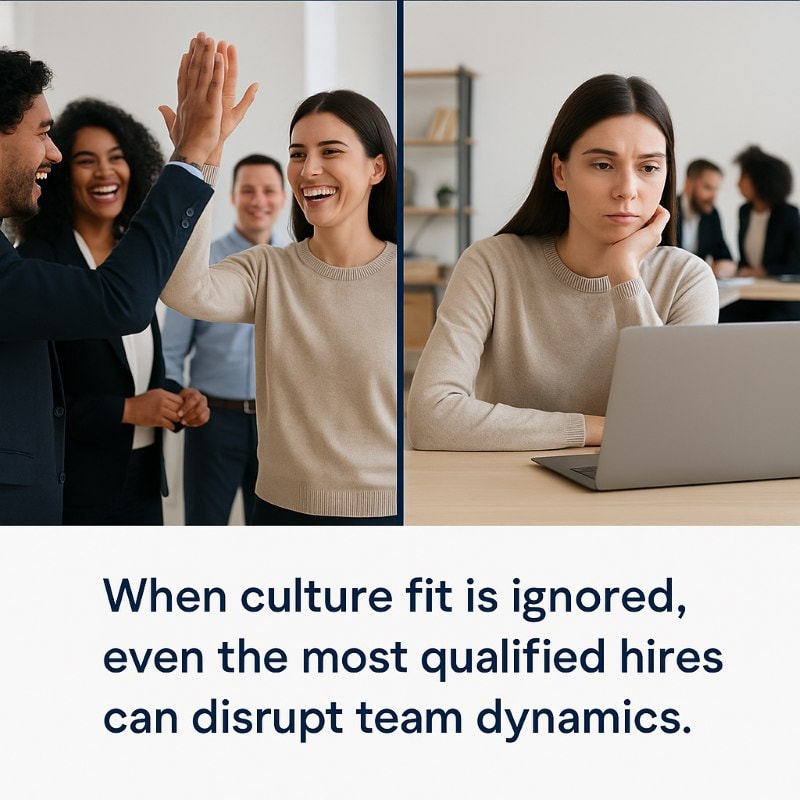
The cost? You’re not just replacing an employee—you’re repairing morale, reestablishing trust, and re-training a replacement. These “soft” issues lead to very real expenses, including:
- Increased turnover
- Lower team productivity, especially when actively disengaged employees contribute to decreased morale and overall performance
- Strained team dynamics
- Lost time from re-hiring and onboarding
Actionable Fix: Use behavior-based assessments early in the hiring process to evaluate cultural fit—not just technical qualifications. OAD’s scientifically validated personality assessments reveal whether a candidate will naturally align with your company’s values, leadership style, and team expectations.
Relying Too Much on Automation and AI Tools
In a world flooded with résumés, automation feels like a lifesaver. AI-powered screening tools promise efficiency, objectivity, and speed. But when hiring decisions are made solely by algorithms, you’re not just saving time—you might be filtering out your best candidates. It’s crucial to ensure that your screening process identifies potential candidates who are a strong fit both technically and behaviorally.
Automated tools are designed to look for matches based on surface-level data: keywords, degrees, job titles. What they miss are the intangibles—like grit, adaptability, or the ability to thrive in your company’s unique environment. These are often the very traits that drive high performance in a real-world setting, and are critical for predicting job performance.
The cost? By over-relying on automation, you risk:
- Disqualifying highly qualified candidates with non-traditional backgrounds
- Hiring based on keywords, not behavior
- Missing red flags that only show up in conversation
- Reinforcing bias baked into datasets and algorithms
A recent Harvard Business School study found that more than 10 million workers were overlooked by automated hiring systems—even though they were qualified. That’s a staggering waste of potential—and a direct hit to your company’s talent pipeline.
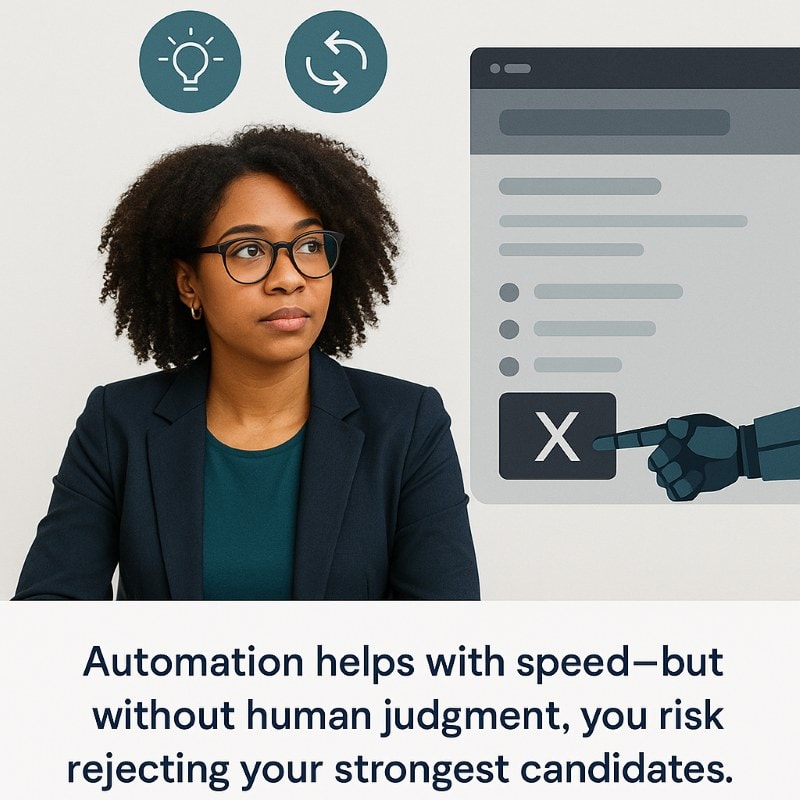
Actionable Fix: Use automation as a support tool, not a decision-maker. Let AI help with sorting and logistics—but layer in behavioral assessments and structured interviews to evaluate soft skills, motivation, and team fit. Specifically, implement structured interviews to improve objectivity and consistency in your hiring process. Tools like OAD help hiring managers spot potential that no résumé or algorithm can detect.
Writing Vague or Generic Job Descriptions
A job description is often your first—and only—chance to make a strong impression on top candidates. Yet many companies still rely on outdated, boilerplate templates that could apply to any role at any company. The result? You attract average candidates who meet the minimum qualifications but lack the drive, creativity, or alignment to truly thrive.
Generic descriptions lead to generic hires. They don’t communicate what success looks like in your organization, what makes the role meaningful, or how it fits into the bigger picture. Even worse, unclear job descriptions can lead to:
- Misaligned expectations between the company and the hire
- Early disengagement or burnout
- Legal risks if the job requirements are not consistently applied
- Wasted recruiter time filtering poor-fit applicants
- Hiring bad employees who are not suited for the role, which can negatively impact productivity and team morale
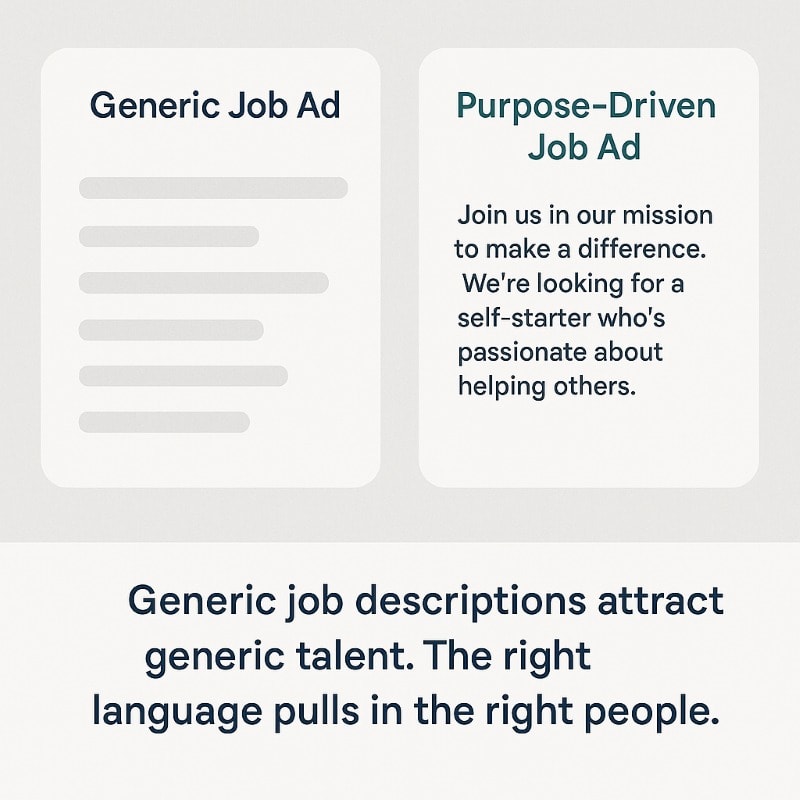
And the cost isn’t just in missed hires—it’s in the opportunity cost of failing to attract your next high performer. Think about it: your ideal candidate is scanning job boards right now. If your listing doesn’t stand out, they’ll scroll right past.
Actionable Fix: Write with precision and purpose. Define the role’s measurable outcomes, required behaviors, and its strategic contribution to the business. Behavioral assessments like OAD can help clarify the success profile for a role—so you write job descriptions that don’t just sound good, but attract the right people from the start. Continually refining your hiring processes is essential to attract and select the best candidates and avoid common pitfalls that lead to bad hires.
Rushing to Hire: The High Price for Hiring Managers of Filling Seats Fast
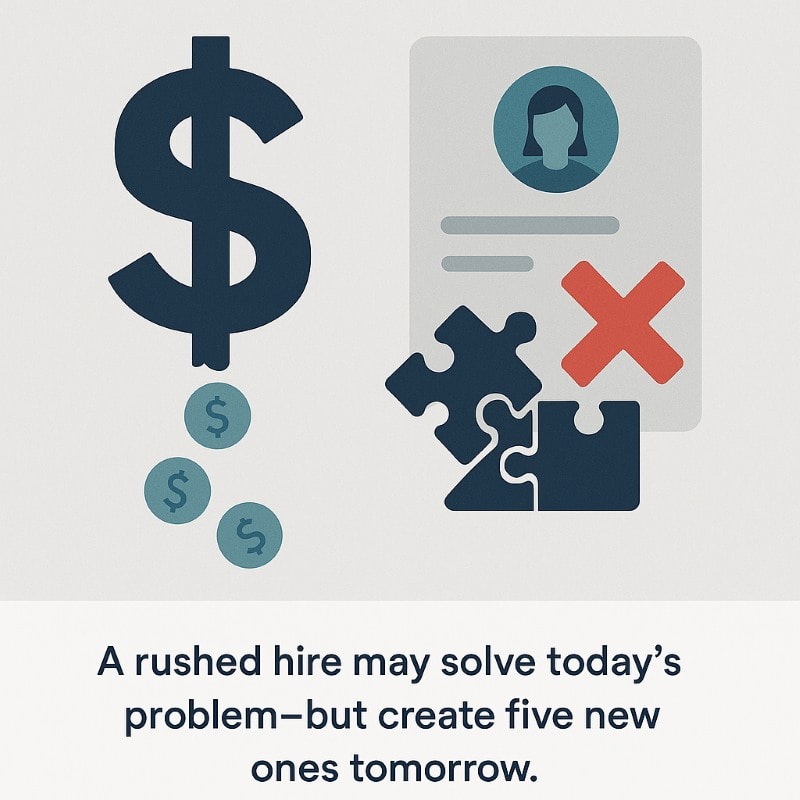
When there’s pressure to fill a role quickly—whether from a demanding executive, a client deadline, or mounting workload—it’s tempting to prioritize speed over precision. But making a rushed hire often means skipping critical steps: reference checks, behavioral assessments, conducting interviews, or deep conversations about expectations and growth.
The result? You may fill the seat, but not with the right person. Skipping these steps can lead to a costly mistake for the business. And in many cases, you’ll be right back at square one in a few months—only now with higher costs and a demoralized team.
The financial hit of a rushed hire adds up fast:
- Recruitment costs (job ads, recruiter fees, conducting interviews)
- Onboarding and training expenses
- Lost productivity from poor performance
- Replacement costs when the hire doesn’t work out
- Emotional fatigue for the team forced to “clean up”
According to the U.S. Department of Labor, the average cost of a bad hire can be up to 30% of that employee’s first year earnings. For leadership roles, the cost climbs even higher. And for small businesses, even a single misfire can have outsized consequences.
Actionable Fix: Build in time for reflection and structured evaluation—even when urgency is high. Implement hiring scorecards and use behavioral assessments like OAD to identify candidates who align with the role and your long-term business goals. As Jeff Bezos once said, “I’d rather interview 50 people and not hire anyone than hire the wrong person.”
Neglecting the Candidate Experience in the Hiring Process
In today’s competitive market, you’re not just evaluating candidates—they’re evaluating you. From the first touchpoint to the final offer, every interaction shapes how potential hires perceive your organization. A disorganized, slow, or impersonal hiring process can quietly drive top talent away—and damage your employer brand in the process.
According to a CareerPlug study, nearly 60% of candidates have declined a job offer because of a poor hiring experience. Whether it’s long delays, lack of feedback, or robotic communication, candidates remember how you made them feel. And in a world of online reviews and Glassdoor ratings, those impressions travel fast.
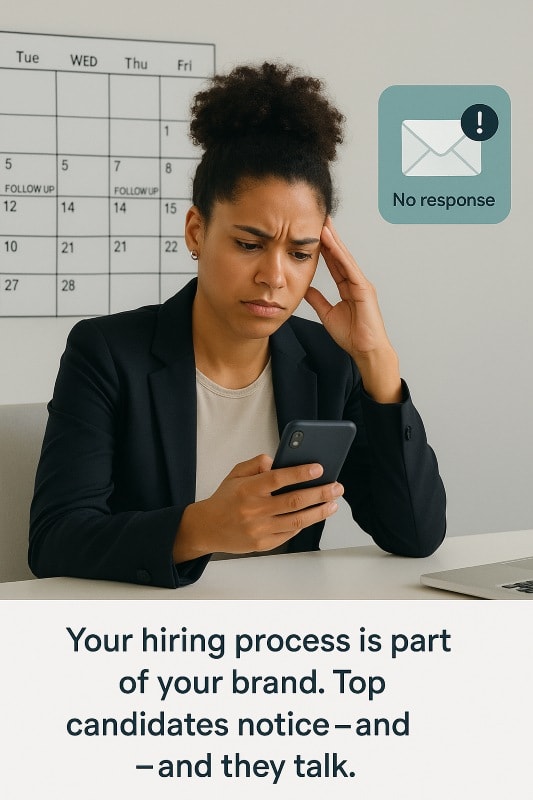
The consequences of a bad candidate experience go far beyond one lost hire:
- Lower acceptance rates from top candidates
- Increased drop-off during the interview process
- Negative reviews that deter future applicants
- Higher recruiting costs due to reputation damage
A negative recruiting process can deter top talent and increase overall hiring costs, including expenses from job advertising, interviews, and recruiter fees. Poor candidate experience can also make it harder for a new employee to integrate smoothly, often resulting in extra workload and stress for other team members.
Actionable Fix: Treat your hiring process like a customer journey. Communicate clearly and promptly. Personalize your outreach. Train hiring managers to conduct effective interviews. And when a candidate isn’t selected, close the loop with respect. Great candidate experiences build trust—even with those you don’t hire.
Bonus: The Real Cost of a Bad Hire: Breaking Down the Numbers
It’s one thing to say a bad hire is expensive. It’s another to see the numbers add up in black and white.
According to the U.S. Department of Labor, the cost of a bad hire can equal 30% of that employee’s first-year earnings. But that’s just the beginning. When you factor in recruitment costs, training expenses, lost productivity, team disruption, and damage to morale, the real figure can be 3 to 5 times the employee’s annual salary—especially in leadership roles. Many of these expenses are hidden costs, such as lost productivity, negative cultural impact, and project delays, which go beyond direct financial outlays.
Let’s say you hire a mid-level employee earning $80,000. If that hire fails within their first year, the total cost could easily exceed $240,000 when you account for:
- Job ads, recruiter fees, and onboarding costs
- Hiring costs related to the recruiting process, including the use of recruiting resources and time spent on interviews and candidate assessments
- Manager and team time spent correcting or covering their mistakes
- Lost momentum on critical projects
- Impact on team morale and engagement
- Increased turnover from frustrated team members, affecting each team member’s productivity and satisfaction
- Potential legal fees or customer complaints
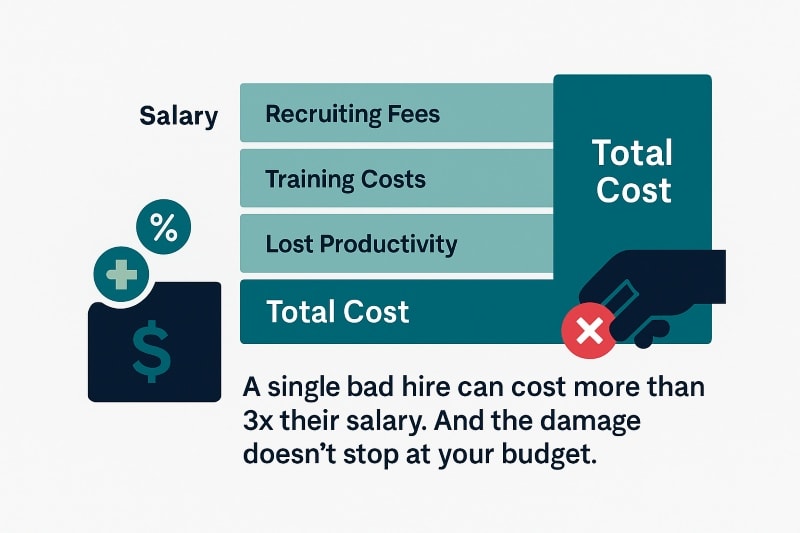
For small businesses and fast-growing teams, even one bad hire can stall progress and drain resources. And when hiring mistakes repeat, the long-term financial impact compounds quickly.
Actionable Fix: Make hiring a strategic investment, not a reactionary task. Use structured interviews, behavioral assessments, and clear success criteria to reduce guesswork and align new hires with your long-term goals. OAD helps you see beyond the résumé—into how a person will really perform, grow, and fit within your team.
Conclusion: Don’t Just Fill Roles—Invest in the Right People
Hiring isn’t just an HR function—it’s a strategic lever for growth, performance, and long-term success. And as you’ve seen, the cost of bad hiring isn’t always obvious. Bad hiring decisions can lead to chaos, decreased productivity, and significant financial losses for your business. It hides in missed deadlines, fractured teams, disengaged employees, and lost momentum.
But the good news? Every one of these costly mistakes is avoidable. Effective hiring practices, such as thorough screening and ongoing refinement of your recruitment process, are essential to avoid costly mistakes. By slowing down, asking better questions, and applying the right tools, you can build a hiring process that attracts not just capable people—but the right people.
The difference between a good hire and a bad one is rarely about skill. It’s about alignment, motivation, and long-term fit. Retaining the wrong people can negatively impact team performance, workplace culture, and overall business outcomes. And when you get it right, the return isn’t just a filled position—it’s a thriving, high-performance team that drives your business forward.
Want to eliminate hiring guesswork and reduce costly turnover? Test OAD’s behavioral assessments to help you make smarter, more strategic hiring decisions—before the offer goes out.
For more insights on improving hiring outcomes, read our related article.