Most “team problems” are not personality problems. They’re predictability problems.
When leaders can’t explain why work slows down, why decisions drag, or why the same conflict keeps resurfacing, they default to guesswork: more meetings, more training, more “alignment.” Team assessments are meant to replace that guesswork with shared, usable information about how people work together.
What Team Assessments Are (and When You Actually Need One)
A team assessment is a structured tool that measures patterns that affect team performance. These assessments are used to assess how individuals and teams process information, interpret situations, and make decisions, especially in real-world workplace scenarios. Depending on the method, a team assessment can reveal behavioral tendencies (how people communicate and make decisions), drivers (what motivates them), capabilities (what they’re good at), or dynamics (how the group behaves under pressure). The best ones do two things at once: they create self-awareness at the individual level and a shared language at the team level.
You usually need one when the cost of confusion is rising faster than your ability to manage it. Common triggers in mid-sized organizations include:
- Growth: new hires arrive faster than norms can form, and role clarity falls apart.
- Cross-functional work: different perspectives become friction, not strength.
- Leadership change: new managers inherit team conflict they didn’t create.
- Communication breakdowns: decisions get revisited, handoffs fail, and accountability blurs.
- Retention pressure: good team members leave because the day-to-day feels harder than it should.
Assessments help teams navigate and overcome challenges such as conflicts, decision-making difficulties, and strategic obstacles by providing insights into how team members approach problem solving and judgment.
Assessments do not “fix” a team by themselves. They help you diagnose what is actually happening so you can choose the right intervention: coaching, clearer responsibilities, process changes, or conflict management support. It’s important to ensure assessments identify opportunities for growth rather than being used solely for punitive measures.
If you want a simple benchmark for whether this is worth doing, look at engagement and manager impact. Gallup’s engagement meta-analyses link engagement with outcomes like productivity, profitability, quality, and turnover, and also highlight that managers account for a large share of the variation in team engagement. That matters because team assessments are often a lever for improving how leaders manage, coach, and set expectations.
What “good” looks like after the right assessment is boring in the best way:
- Clear direction: team goals are explicit and priorities stop shifting daily.
- Role clarity: people know who owns what and what “done” means.
- Faster decisions: fewer loops, less re-litigating, cleaner trade-offs.
- Healthier conflict: disagreements stay about work, not about people.
- Better collaboration: the team’s ability to deliver improves without heroic effort.
High-performing teams often exhibit strong interpersonal relationships, which contribute to a positive team culture and overall effectiveness.
Effective team assessments involve continuous, multi-source evaluation, combining quantitative surveys and qualitative discussions to measure performance against goals and assess collaboration dynamics. Key methods include 360-degree feedback, OKRs (Objectives and Key Results), regular check-ins, and behavior-based assessments like DiSC to identify strengths and development needs. Team health check surveys measure psychological safety, trust, respect, and communication quality within the team. Combining quantitative surveys with qualitative discussions provides a complete picture of team effectiveness. Emotional intelligence assessments, such as the EQ-i, are valuable for teamwork, as they measure how individuals recognize, understand, and manage emotions—essential for effective collaboration. DISC assessments help teams understand behaviors, communication patterns, and stress responses, forming a strong foundation for team development. Using the right tools helps leaders understand team members’ skills, motivations, and collaboration habits, while aligning work responsibilities with team members’ unique talents and strengths enhances overall effectiveness. Being aware of potential biases like reciprocity and scapegoating can help reduce skewed results in team assessments. After-action reviews (AARs) are valuable for capturing lessons and improving future collaboration. Identifying both strengths and weaknesses in team assessments is crucial to enhance collaboration and address areas for improvement. Notably, 93% of executives believe that teams could deliver similar outcomes in half the time if they collaborated more effectively.

The 5 Criteria That Matter (Validity, Fit, Reporting, Implementation, Integrations)
Most “team assessments” fail for one boring reason: the tool is fine, but the selection criteria were lazy. If you buy based on vibes, you get expensive PDFs and no behavior change.
Use these five criteria to evaluate any assessment, globally. The examples reference US guidance where it helps, but the logic holds in any market.
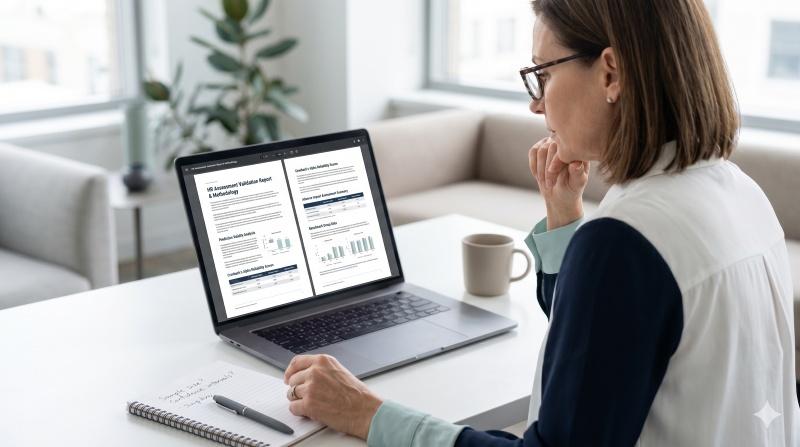
1) Validity: Can the vendor prove the assessment measures what it claims?
Ask for evidence, not promises.
- Request a technical manual (or equivalent documentation). If a vendor cannot produce one, you are buying marketing, not measurement.
- Look for reliability and validity evidence in plain language. Reliability is consistency. Validity is whether the test supports the decisions you want to make. The major testing standards treat these as core requirements, not optional extras.
- US context (useful even if you are global): the Uniform Guidelines on Employee Selection Procedures are explicit that selection procedures should be valid and that users remain responsible for compliant use. That is a strong reason to insist on documentation, especially if assessments inform hiring, promotion, or high-stakes development decisions.
- Practical shortcut: the US Office of Personnel Management’s assessment decision guidance lists reliability and validity as key factors when selecting and evaluating assessment tools.
What to avoid: vendors who wave at “science,” cite unnamed “studies,” or imply precision without showing their work.
2) Fit: Does the tool match your problem and your team dynamics?
A tool can be valid and still be wrong for your use case.
Match the assessment to what you are trying to change:
- If you need fewer communication breakdowns and clearer role clarity, behavioral tools and structured team reports usually help.
- If you need to increase engagement, motivator-based tools can explain why effort drops.
- If the leadership challenge is emotional intelligence or feedback avoidance, self awareness and EQ tools can add depth.
- If work is breaking at handoffs, workflow tools can create clarity fast.
- If the team conflict is about trust and accountability, team dynamics programs often land better than a “type” report.
This is also where “shared language” matters. The best tools help team members talk about differences without turning it into personal attacks.

3) Reporting: Will the outputs drive action, not just “insights”?
Ask to see real sample reports before you buy.
Minimum bar for mid-sized companies:
- Individual results that are easy to explain to team members
- Team-level summaries that show patterns in group dynamics, conflict triggers, and collaboration risks
- Clear recommendations tied to behaviors and responsibilities, not generic advice
- A format leaders will actually use (dashboard, summary, workshop-ready output)
If the report does not translate into a concrete team development plan, it will become shelfware.
4) Implementation: Can you roll it out without a consulting circus?
Implementation is where good tools die.
Reality-check:
- Who will run the process, HR or leaders?
- Does the tool require certification, coaching, or facilitation to interpret responsibly?
- How much time will it take per team, including the readout and follow-through?
- What will you do with the results in week 1, week 4, and week 12?
If the vendor’s success plan is basically “give them the report,” walk away.
Global note: ISO 10667 exists for a reason. It sets requirements and guidance for assessment service delivery in workplace settings, including expectations for clients working with providers. Even if you never buy the standard, the message is clear: assessment quality includes how it is delivered and used, not only what it measures.
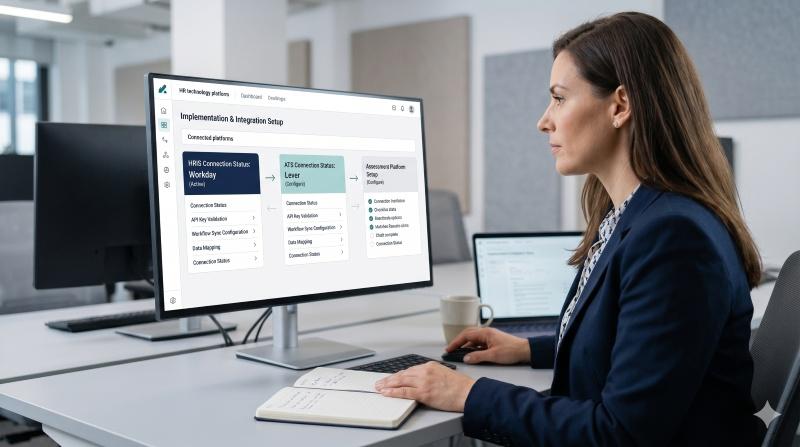
5) Integrations and data governance: Will this fit your HR tech stack and risk posture?
For 50–250 employee organizations, friction kills adoption. Ask about:
- HRIS and ATS integrations, or at minimum clean exports and APIs
- Data retention and deletion policies
- Role-based access controls (who can see what)
- How results are stored, shared, and protected
If you cannot explain the data flow to a cautious exec or legal partner, you are taking on avoidable risk.
Top Team Assessment Approaches (Pros, Cons, Best-For)
No single assessment covers every leadership and team development need. Mid-sized companies usually get better results by choosing the “right assessment for the right job,” instead of searching for a mythical one-tool-for-everything platform.
Many assessment tools evaluate organizational culture across core areas such as Mission, Consistency, Involvement, and Adaptability. Understanding these dimensions helps leaders align culture with performance and make informed decisions about team effectiveness. Strengths-based assessments like CliftonStrengths also support personal development by helping individuals and teams understand and leverage their unique talents.
The five approaches below cover the most common problems: team conflict, team dynamics, role clarity, engagement, and team performance. For each, you’ll see what it’s for, where it works, and what to watch out for.

1) Behavioral Assessments
What it’s for
Behavioral assessments are built to surface communication preferences, working styles, and predictable interaction patterns. The practical value is speed: teams get a shared language for differences without turning every disagreement into a personality debate.
Typical outputs
- Communication and collaboration tendencies
- Likely stress behaviors (how people respond under pressure)
- Team member interaction tips (how to work with each style)
- Sometimes, team dynamics summaries based on aggregated profiles
Best for
- Cross-functional teams where different perspectives create friction
- Managers who need clearer role clarity and fewer communication breakdowns
- Teams that need fast alignment without heavy facilitation
Limitations to manage
- DISC-style tools are often misunderstood as “this is who I am,” rather than “this is what I tend to do in certain contexts.” Interpretation matters.
- Behavior shifts by role, stress level, and culture. Without a structured readout, teams can over-index on labels and miss the actual work problems.
How OAD connects
A scientifically validated behavioral tool like OAD’s behavioral team software becomes useful when it links tendencies to decisions: responsibilities, decision making rights, and conflict triggers. That is where many teams move from “insights” to performance.

2) Motivators and Role Fit Assessments
Motivation insights that reveal internal drivers help these tools focus on what drives effort, satisfaction, and sustained engagement. They can explain why two strong performers react differently to the same job, leader, or environment.
What it’s for
These tools focus on what drives effort, satisfaction, and sustained engagement. They can explain why two strong performers react differently to the same job, leader, or environment.
Typical outputs
- Motivation patterns (what energizes vs drains a person)
- Values alignment indicators (what a person prioritizes at work)
- Role fit insights that help with job design and retention
Best for
- Retention problems where the work is “fine,” but motivation is dropping
- Role design in growing teams where responsibilities are shifting
- Culture alignment decisions where you need more than gut feel
Limitations to manage
- Motivators do not always predict situational behavior. Someone can be highly motivated and still create team conflict through poor communication.
- Some tools produce generic outputs unless they are tied to real job demands and team goals.
How OAD connects
If motivators explain why energy rises or falls, behavioral data helps you see what happens day-to-day when pressure hits. In practice, combining engagement drivers with behavioral patterns often gives teams a deeper understanding of what to change.

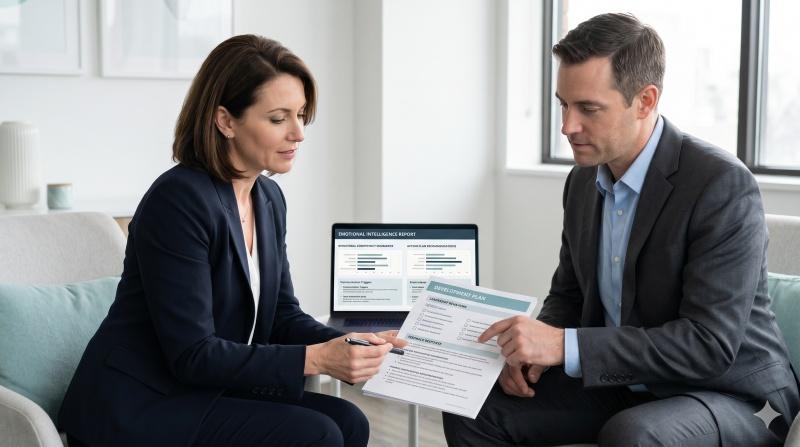
3) Emotional Intelligence and Self-Awareness Tools
What it’s for
These tools focus on self awareness, emotional intelligence, and interpersonal effectiveness. They are often used in leadership development and coaching, especially where the leadership challenge is feedback avoidance, conflict escalation, or low trust.
Typical outputs
- Self-awareness and self-regulation themes
- Social awareness and relationship management patterns
- Coaching prompts and development areas for leaders
Best for
- Leadership pipelines where promotion readiness matters
- Coaching and training programs that need measurable baselines
- Teams where conflict management fails because leaders do not model it well
Limitations to manage
- Many EQ tools require facilitation or coaching to translate into daily practices.
- EQ is easy to “agree with” and hard to implement without habits, feedback loops, and manager reinforcement.
Authority layer without fake precision
If you want a simple anchor for why this matters: engagement and performance are strongly shaped by managers and daily interactions. Gallup’s research regularly highlights manager impact on engagement outcomes, which makes leader behavior a high-leverage target for assessment and development.
How OAD connects
EQ tools can improve leadership habits. Behavioral tools can make team interactions predictable and coachable. In strong implementations, EQ becomes the “why,” and behavioral insights become the “how” in real meetings, feedback, and decision making.
4) Working Genius (Workflow and Handoff Clarity)
Workflow assessments only add value if they are fast, practical, and reliable, similar to how a quick, clinically validated survey tool lets leaders move from theory to action in real project environments.
What it’s for
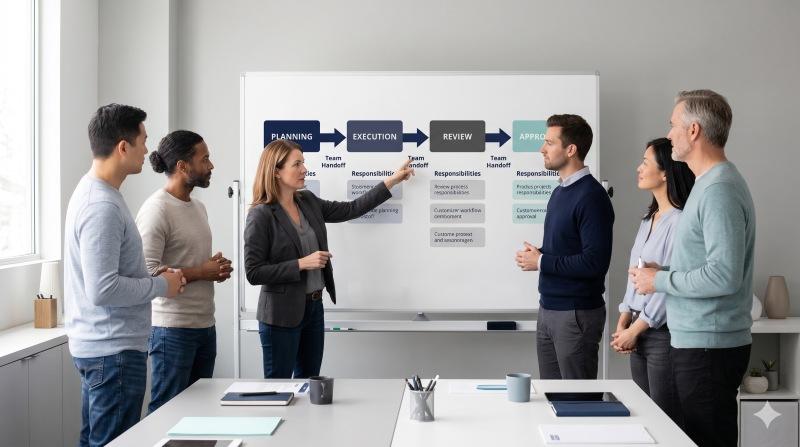
Workflow tools like Working Genius focus on where work flows smoothly and where it stalls: ideation, planning, execution, handoffs, and follow-through. The value is rapid applicability for project teams.
Typical outputs
- Natural strengths related to stages of work
- Friction points in handoffs and collaboration
- Practical agreements for how teams divide completed work
Best for
- Project-heavy organizations where delays come from unclear handoffs
- Teams that need role clarity around who owns what stage of the work
- Leaders who want a quick intervention with low overhead
Limitations to manage
- Workflow frameworks are often not designed as deep psychometrics. They can be extremely useful without being the right assessment for high-stakes decisions.
- They solve a specific slice of team effectiveness. They do not replace broader team dynamics work when trust or conflict is the core issue.
How OAD connects
If the primary failure is workflow and handoffs, start there. If the failure keeps returning as conflict, miscommunication, or decision making breakdowns, you usually need behavioral data and team-level reporting to stabilize how people work together.
5) Team Dynamics Programs (Five Behaviors-style)
For executive coaches and advisors, pairing these programs with behavioral tools for data-driven coaching can deepen conversations about how leaders respond to stress, handle conflict, and shape team norms.
What it’s for
Team dynamics programs focus on how the group functions: trust, conflict, commitment, accountability, and results. They are designed for intact teams where relationships and expectations are a major driver of performance.
Typical outputs
- Team-level diagnostics tied to behaviors and norms
- Facilitated sessions to surface friction and build agreements
- A development path that can be reinforced over time
Best for
- Executive teams where trust issues block decision making
- Teams with persistent conflict and low accountability
- Organizations investing in broader team development, not a one-off workshop
Limitations to manage
- These programs often require facilitation to land well. Without reinforcement, they turn into “good session, back to normal.”
- If you skip measurement quality and delivery quality, you can end up with a lot of talk and little change. ISO’s guidance on assessment service delivery exists because the process matters, not only the tool.
How OAD connects
Team dynamics programs can build norms. Behavioral assessment data can make those norms easier to apply consistently, especially across multiple teams in a growing organization.

Quick Comparison Snapshot: Choose Based on Your Goal
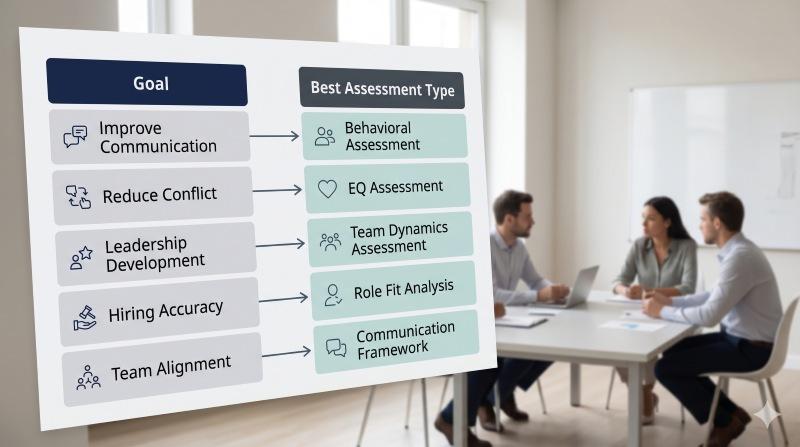
Most teams do not need “the best assessment.” They need the right assessment for the problem currently hurting team performance.
Use this as a fast filter before you waste time on demos.
If your main issue is communication breakdowns and role clarity
Start with: Behavioral assessments (DISC-style) or a science-backed behavioral tool with team reporting
Why it works: Builds shared language, reduces misreads, improves day-to-day collaboration
Watch out for: Label-thinking and weak facilitation
If your main issue is engagement and motivation
Start with: Motivators and role fit tools
Why it works: Explains why effort drops, where work design misaligns with drivers
Watch out for: Mistaking motivation insights for behavior prediction
If your main issue is leadership effectiveness and self awareness
Founders and CEOs making high-stakes leadership calls benefit from hiring with long-term fit in mind, so that development efforts land on leaders who can actually sustain culture and performance.
Start with: EQ and self-awareness tools, ideally paired with coaching support
Why it works: Improves feedback, conflict handling, emotional regulation under pressure
Watch out for: Tools that generate “insights” without habits and reinforcement
If your main issue is workflow friction and failed handoffs
Start with: Working Genius-style workflow frameworks
Why it works: Fast clarity around responsibilities, handoffs, and completed work
Watch out for: Using workflow tools as substitutes for deeper team conflict work
If your main issue is trust, conflict, and accountability
Start with: Team dynamics programs (Five Behaviors-style) with facilitation
Why it works: Targets group dynamics directly and sets norms for conflict management
Watch out for: One-and-done workshops with no follow-through
How to Choose the Right Tool for Your Team
Buying a team assessment is not “choosing a tool.” It’s choosing what you want to make predictable: communication, motivation, decision making, conflict, or delivery.
Here’s a decision process that works in real mid-sized organizations, not just in vendor slide decks.
1) Match the tool to the problem you are solving
When role design or promotions are at stake, use behavior fit reports that match role to personality so you are aligning responsibilities with how people naturally operate, not just with resumes and interviews.
Start with the friction you can observe, not the outcome you wish you had.
- If teams keep misreading each other: you need shared language and behavior patterns.
- If energy and effort are dropping: you need motivators and role fit insights, plus risk alerts that flag burnout and disengagement early.
- If leaders avoid hard conversations: you need self awareness and EQ development, plus reinforcement.
- If projects stall at handoffs: you need workflow clarity and responsibilities.
- If conflict is constant: you need dynamics work (trust, accountability) and structured follow-through.
This is why “ultimate guide” lists help. They stop you from picking “the coolest tool” and force you to pick the right tool.
2) Decide the depth you need: individual insights vs team dynamics
A lot of tools only give individual profiles. That can still be useful, but it won’t automatically improve group dynamics.
Design teams with data, not gut feel.
Most org-design decisions come down to role fit, leadership style, and team dynamics. OAD reads those signals from a 7-minute behavioral survey, so you can reconfigure roles and teams with evidence instead of guesswork.
Use this rule:
- If your issue is mostly communication and role clarity: individual insights plus a team readout can be enough.
- If your issue is trust, accountability, or recurring team conflict: you need a team-level intervention plan, not only profiles.
Team effectiveness improves when results translate into shared working agreements: how you run meetings, how you make decisions, how you give feedback, and how you resolve disagreements.
3) Reality-check implementation: time, skills, coaching, cost
A tool that requires heavy facilitation can still be the right choice. It just needs to match your capacity.
Ask these four questions:
- Who owns implementation, HR or leaders?
- What does it require: self-serve rollout, coaching, training, certification?
- How many hours per team, including the readout and reinforcement?
- What will you change in team routines as a direct result?
If you want a globally relevant quality anchor, ISO 10667-1 is blunt about this point: assessment quality includes delivery and client responsibilities, not just the instrument itself.
4) Sanity-check your validity and legal posture (especially for hiring use)
If results will influence hiring, promotion, or selection decisions, the documentation matters even more. The Uniform Guidelines (US) are widely referenced because they emphasize valid selection procedures and appropriate use. Even outside the US, the principle is the same: you should be able to defend why you chose the assessment and how you used it.
A practical shortcut: OPM’s Assessment Decision Guide lists reliability and validity among the core factors to consider when selecting an assessment tool. That’s not a vendor opinion. It’s baseline due diligence.
Design teams with data, not gut feel.
Most org-design decisions come down to role fit, leadership style, and team dynamics. OAD reads those signals from a 7-minute behavioral survey, so you can reconfigure roles and teams with evidence instead of guesswork.
Pilot and Rollout: Make the Assessment Change Behavior, Not Just Create “Insights”
Teams love reading reports. Teams hate changing routines. Your rollout needs to assume that.
A good pilot does three things: it proves adoption is realistic, it shows whether reporting is actionable, and it gives you evidence you can take to leaders before scaling. Choosing scalable, transparent pricing for behavioral insights also matters so you can afford to extend the pilot if it works.
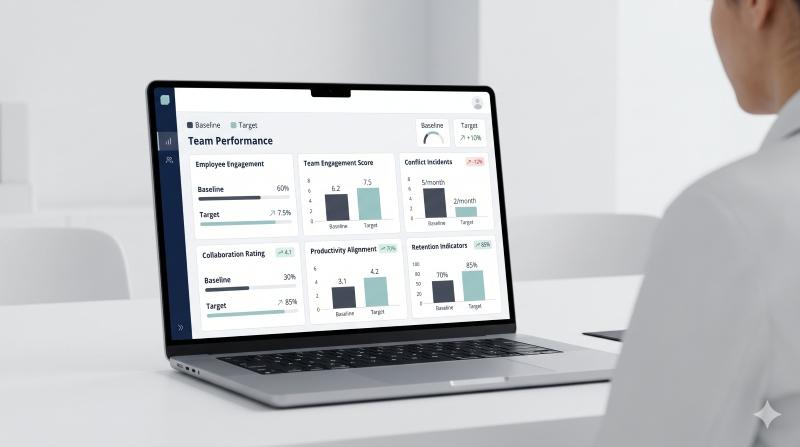
1) Pilot plan (1–2 teams) plus baseline measures
Pick teams where the pain is real and visible. Avoid the “easy team” that will make any tool look good.
Before anyone takes an assessment, define what you are trying to improve in plain business terms. Examples:
- Fewer escalations and fewer repeated conflicts
- Faster decisions (less looping and rework)
- Clearer responsibilities and fewer handoff failures
- Higher engagement and lower regrettable turnover
- Better cross-functional collaboration
Baseline does not need to be complicated. Use what you already track, plus one light internal pulse. If you want one directional, defensible anchor: Gallup consistently shows engagement is linked with outcomes like productivity, profitability, quality, and turnover. That’s why engagement can be a reasonable leading indicator during a pilot, even if your final target is delivery performance. You can also tighten hiring inputs with behavioral interview questions to assess cultural fit so new joins don’t reintroduce the same friction patterns.
2) Readout session: turn results into role clarity and team norms
The readout is where most implementations fail. If you only distribute reports, you get three outcomes:
- People skim it.
- People label each other.
- Nothing changes.
A productive readout does the opposite. It turns results into agreements, especially when each person can access their own secure application account for ongoing insights.
Use a tight structure:
- Start with the goal: what the team is trying to improve (team goals, outcomes, delivery).
- Name the patterns: what the assessment suggests about group dynamics and predictable friction.
- Translate into behaviors: what changes in meetings, decision making, handoffs, and communication.
- Set role clarity: who owns what, how responsibilities are defined, what “done” means.
- Agree on conflict rules: how the team will handle disagreements without dragging them into personal territory.
This is also where a “shared language” becomes useful. It reduces defensiveness. Instead of “you always derail meetings,” you get “we tend to push for speed and skip alignment, so we need a checkpoint.”
3) Reinforcement: manager routines that keep it alive
Behavior change sticks when leaders reinforce it in weekly work, not in quarterly workshops.
Build reinforcement into existing rhythms:
- A 5-minute “how are we working together” check-in at the end of staff meetings
- A standard way to assign owners and deadlines (role clarity in writing)
- A decision log for high-impact decisions to reduce re-litigating
- Monthly 1:1 prompts tied to the assessment language (coaching without drama)
If the tool requires coaching or certification to be used responsibly, plan that up front. “We’ll figure it out later” is how you end up with a fancy assessment and a confused organization.
Using Assessments for Team Conflict (Without Making It Weird)
Team conflict is not automatically bad. The problem is unmanaged conflict: unclear expectations, personal attribution, and the same arguments repeating because nobody names the real issue.
A good team assessment helps you do three practical things:
- Predict where conflict will show up
- Create a shared language to discuss it
- Build routines that prevent it from hijacking execution
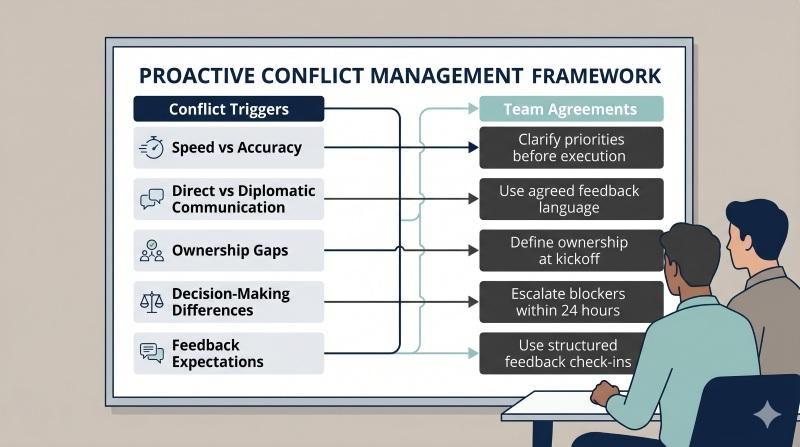
Identify predictable conflict triggers and friction points
Most conflict patterns are boringly consistent. Examples:
- Speed vs accuracy: one group pushes decisions fast, another wants more data.
- Direct vs diplomatic: one person hears “clarity,” another hears “attack.”
- Ownership gaps: responsibilities are unclear, so people step on each other’s work.
- Invisible standards: the team’s definition of quality differs, so feedback feels random.
Assessments create a map of where those frictions are likely to appear. That helps leaders stop treating conflict as “a personality issue” and start treating it as a design issue: role clarity, decision rules, meeting structure, and handoffs. Hiring for strong communication skills assessed systematically in interviews also reduces how much conflict comes from simple misreads.
Build a shared language for feedback and expectations
Most teams avoid hard conversations because they do not have a safe way to describe what’s happening. A shared language gives them neutral terms.
Neutral language matters because it reduces defensiveness. It also improves coaching. Leaders can be specific without making it personal.
Practical examples:
- “We’re skipping alignment again. Let’s do a 2-minute checkpoint before we decide.”
- “This is a handoff issue, not a competence issue. Who owns the next step?”
- “We’re debating preferences. What decision criteria are we using?”
When the assessment is science-backed and the reporting is team-level, this becomes easier. You are not guessing why conflict happens. You’re naming patterns and then changing the process around them.
Reinforce conflict management through leader routines
Conflict management works when it’s built into routine decision making, not treated as a special event.
Simple reinforcements that actually get used:
- A “decision owner” assigned for every decision above a certain threshold
- A short norm for disagreement: “state your concern, propose an alternative, agree on criteria”
- A monthly retro question: “where did conflict slow delivery and what rule would prevent it?”
If you do nothing after the assessment, teams revert. If you build 2–3 routines into how work happens, teams improve without needing constant facilitation.
Recommendations by Scenario (Including OAD for 50–250 Employee Companies)
Most mid-sized organizations have the same constraint: you need a tool that creates usable team insights without turning implementation into a second job. Pick based on what you are trying to stabilize.
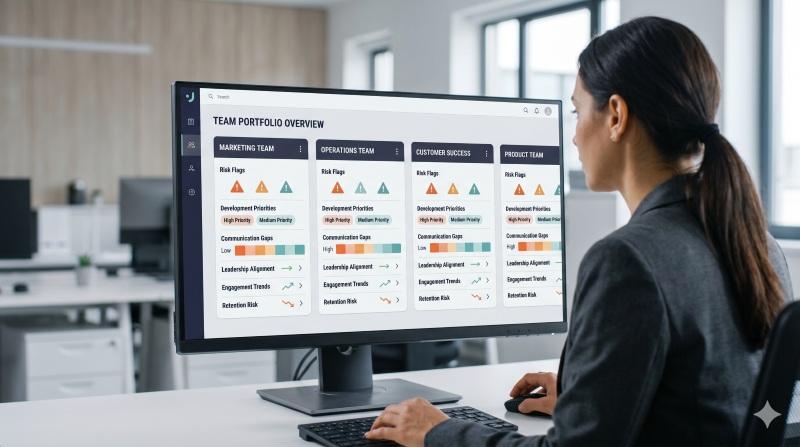
If you need better team performance across multiple teams (50–250 employees)
Recommendation: OAD (behavioral assessment with team reporting)
Best for organizations that need consistent role clarity, fewer communication breakdowns, and a repeatable process leaders can actually use.
Why this is the right fit at this size: you need standardization without bureaucracy. A short assessment plus clear team-level reporting is usually easier to scale than facilitator-heavy programs, and more actionable than generic “team building.”
When you are comparing vendors, include OAD in the short list and test it on one team first.
If you have an executive team with trust and accountability issues
Recommendation: Five Behaviors-style team dynamics programs (facilitated)
Best when the core issue is the group dynamics itself: avoidance of conflict, unclear expectations, low follow-through, and political behavior.
This approach works when the organization is willing to invest in facilitation and reinforcement. Without that, it becomes a good workshop and a bad quarter.
If your organization is project-heavy and handoffs keep failing
Recommendation: Working Genius-style workflow clarity tools
Best for teams that are busy, capable, and still constantly stepping on each other because ownership is unclear across stages of work.
Use it to clarify responsibilities, handoffs, and completed work expectations quickly. If the friction shows up as interpersonal conflict, layer in behavioral assessment and team norms.
If you are building a leadership development track
Recommendation: EQ and self-awareness tools plus coaching support
Best for strengthening feedback, conflict management, and leadership habits under pressure.
Keep expectations realistic. EQ tools rarely change behavior by themselves. They work when leaders build routines and get reinforcement. Gallup’s engagement research supports the idea that managers strongly shape team engagement, which is why leadership behavior is a high-leverage development target.
FAQ: Team Assessments
What is a team assessment?
A team assessment is a structured tool that measures patterns that affect how a team works, such as behavior, communication, motivation, role clarity, or team dynamics. The practical goal is to improve team effectiveness by turning invisible friction into visible, coachable information.
What is the best team assessment for improving team dynamics?
It depends on what is breaking.
- If the issue is communication breakdowns and role clarity, behavioral assessments with team reporting are often the fastest win.
- If the issue is trust and accountability, facilitated team dynamics programs tend to work better.
- If the issue is workflow and handoffs, workflow clarity tools can stabilize execution quickly.
Do team assessments predict job performance?
Some assessments can support performance-related decisions, but only if the vendor can show evidence that the interpretations you are using are valid for that purpose. That is why standards bodies emphasize validity evidence and responsible use, not just attractive reports.
How do I measure team effectiveness after an assessment?
Use a simple before-and-after set that matches your original goal:
- Delivery metrics (cycle time, rework, missed handoffs)
- People signals (engagement pulse, retention risk, internal mobility)
- Team process signals (decision speed, meeting effectiveness, conflict escalation frequency)
Tie measurement to routines you changed, not to the assessment itself.
How often should teams retake assessments?
Most teams do not need constant retesting. Retest when the context changes: reorgs, major growth, leadership change, or when you are running a new development cycle. The bigger requirement is reinforcement. Without it, retesting just produces new PDFs.
Next Steps: Vendor Scorecard Plus Test OAD
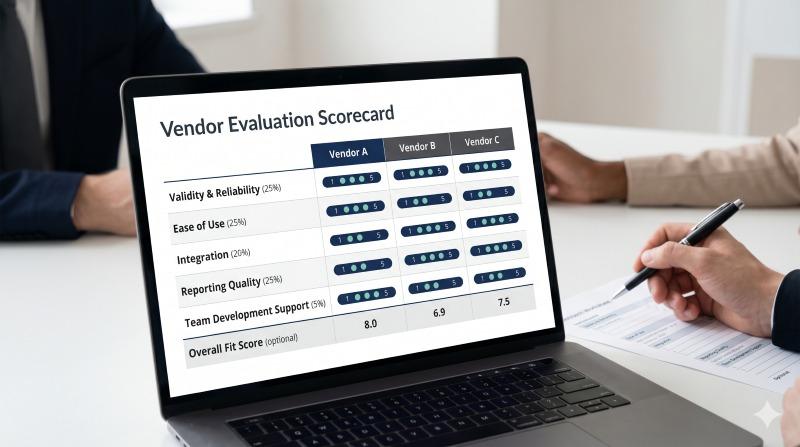
Step 1: Use a vendor scorecard (avoid demo theater)
Score each vendor on the five criteria:
- Validity documentation (technical manual, reliability, validity evidence)
- Fit for your problem (team conflict, engagement, role clarity, workflow)
- Reporting quality (team-level actions, not generic insights)
- Implementation plan (readout, reinforcement, coaching/training needs)
- Integrations and data governance (HRIS/ATS/API, access controls)
If you want an external sanity check for due diligence language, OPM’s assessment decision guidance explicitly calls out reliability and validity as key factors when selecting an assessment tool.
Step 2: Run a pilot (one team, one month, clear success measures)
Define the baseline, do the readout, change two routines, measure movement. If you cannot name the routines, you are not implementing. You are consuming content.
Step 3: Test OAD
If you want to see how OAD performs on your roles and teams, test OAD and run a pilot with one team. Compare outcomes with data instead of gut feel. This is especially critical in contexts like private equity hiring strategy to improve team fit and ROI or when you need to build winning sales teams and promote the right reps.