Motivation to workers is not a “soft” HR topic; it is a hard performance driver that shapes productivity, engagement, and retention across your organization. When employees are genuinely motivated, they contribute more discretionary effort, collaborate more effectively, and produce higher-quality work that supports long-term business success. For HR leaders and executives, understanding what truly drives employee motivation is the starting point for building a resilient, high-performing workforce. You can see it in a single quarter: one frontline team working through issues together and closing gaps, while another quietly drops tasks, delays responses, and lets ‘good enough’ slide. From the outside, both teams look similar on paper; the difference is the motivation you don’t see on the dashboard.
Understanding Motivation to Workers and Engagement
Motivation and employee engagement are closely connected but not identical. Motivation describes the energy and drive employees bring to their work, while engagement reflects how consistently they invest discretionary effort toward the company’s goals. When you treat these as the same thing, you risk measuring “activity” instead of the true motivation levels that predict business outcomes. Organizations should focus on strategies that boost employee motivation to drive both engagement and productivity.
Think of the high-potential specialist who cares deeply about their craft but is buried in conflicting priorities. Motivation is there, but engagement drops every time another ‘urgent’ request lands without context.
How motivation and employee engagement differ – and reinforce each other
Employee motivation answers the question: “Why do employees choose to do their best work here?” Employee engagement answers: “How often do they actually show up with that energy?” Highly motivated employees can still become disengaged if work design, leadership, or culture get in the way. Engagement initiatives that ignore intrinsic motivation usually create short-lived spikes instead of sustainable performance.
In practice, leaders need both: clear strategies to improve employee motivation and systems that support engaged employees over time. Building engagement requires fostering a supportive organizational culture where employees feel valued, aligned with company values, and motivated to contribute. That means aligning roles, goals, and resources so workers feel their effort makes a meaningful contribution to the organization’s success.
Engaged, not engaged, and actively disengaged employees
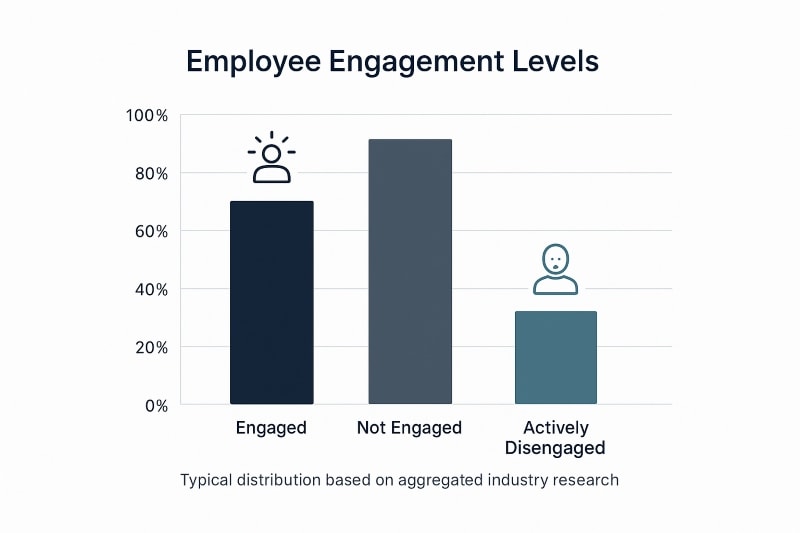
Most organizations have a mix of engaged, not engaged, and actively disengaged workers. Global engagement data often shows a rough 3-way split: a minority truly engaged, a silent majority ‘just there,’ and a small but expensive group actively disengaged. That last group is tiny on paper and huge in impact. Engaged employees feel connected to the company’s mission, understand how their work produces quality outcomes, and are willing to invest discretionary effort. Not engaged employees meet basic expectations but rarely go beyond them, often because they lack clarity, recognition, or a sense of belonging. Actively disengaged employees are psychologically checked out and may even undermine progress or team morale. Low employee morale can further decrease motivation and engagement across the workforce, making it critical for organizations to address morale proactively to prevent a negative cycle and support better business outcomes.
In leadership workshops, HR rarely needs a chart to recognize this pattern. Everyone can immediately name the one or two energized ‘go-to’ people, the big middle who do what’s required, and the few names that make managers quietly roll their eyes.
From an HR perspective, this distribution is not just a “people issue”; it is a direct indicator of future company performance. A workforce with a high share of engaged employees typically shows stronger productivity, better customer outcomes, and lower turnover. A workforce dominated by not engaged or actively disengaged employees will struggle to sustain performance, regardless of how strong the strategy or technology might be.
Using motivation as a lever to re-engage disengaged employees
Boosting motivation to workers is one of the most effective ways to shift people from “not engaged” back toward engaged. That usually means addressing everyday blockers to motivation: unclear expectations, limited autonomy, lack of meaningful feedback, or a work environment that feels unsafe or indifferent. When employees feel valued, see progress in their role, and understand how the team’s contributions are recognized and valued within the organization, their intrinsic motivation returns and engagement rises.
That shift rarely looks dramatic. It often starts with something as simple as a manager finally clarifying priorities, removing one pointless report, and giving an employee room to solve a problem their way.
For HR leaders and managers, the practical question is simple: what do our people need in order to bring more of their best effort more often? The rest of this article focuses on answering that question with evidence-based approaches that improve motivation in the workplace and create a more committed, high-performing workforce.
The Business Impact of Motivated Employees
Motivation in the workplace is not a nice-to-have; it is a vital factor in how consistently your organization hits its targets. When a sales team misses its quarterly target by 7%, the root cause is rarely the comp plan. It’s usually a small, invisible drop in day-to-day motivation: slower follow-ups, fewer proactive calls, more ‘good enough’ proposals instead of great ones.
When we review underperforming sales teams with leaders, the first instinct is to ‘tune the comp plan.’ Yet when we dig into call activity, follow-up speed, and proposal quality, the pattern is obvious: motivation slipped long before the numbers did.
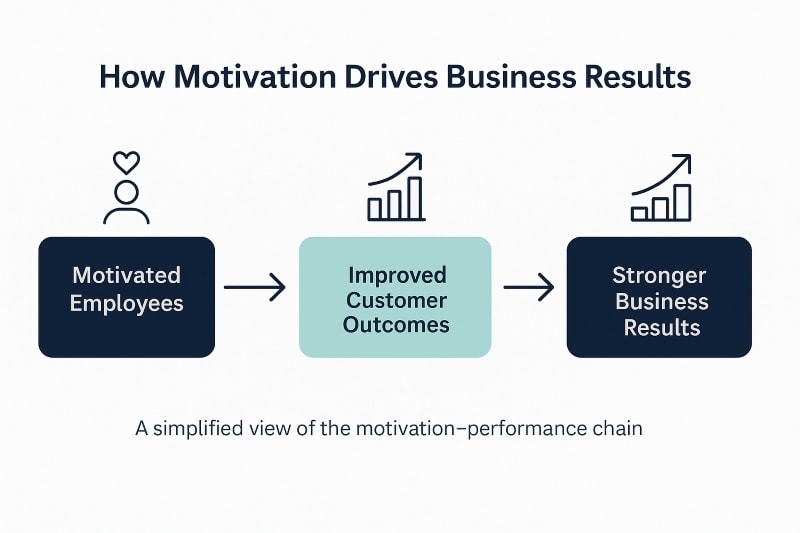
When employees are highly motivated, they bring more energy, focus, and ownership to their roles, which directly improves employee performance and the quality of work delivered to customers and stakeholders. This level of motivation has a significant impact on overall business performance, driving improvements in profitability, reducing absenteeism, and lowering turnover rates. Over time, this effect compounds into stronger company performance, better business outcomes, and a more resilient organization.
Links between motivation, employee performance, and company performance
At the individual level, motivated employees tend to show higher productivity, greater accuracy, and more initiative. They are more likely to produce quality work consistently, which benefits both customers and the organization. They are more likely to solve problems proactively, follow through on commitments, and invest discretionary effort when it matters most. At the team level, motivated teams communicate more openly, coordinate work more smoothly, and are better equipped to navigate change and uncertainty.
Most large-scale productivity and engagement studies converge on the same point: motivated employees make fewer errors and solve more problems without being asked. The pattern is remarkably consistent across industries.
For the business as a whole, these behaviors translate into measurable outcomes: shorter cycle times, higher-quality outputs, improved customer satisfaction, and stronger financial performance. Organizations with a motivated workforce typically see fewer errors, lower rework, and more effective collaboration across departments. In other words, motivation to workers is not abstract psychology; it is a practical driver of operational and financial results.
Employee motivation as a vital factor in retention and engagement
Employee motivation is also tightly connected to employee engagement and retention. Motivated employees are more likely to feel a sense of ownership toward their role, their team, and the company’s mission. They show up with more consistent effort, are less likely to mentally “check out,” and tend to stay longer, reducing turnover and the associated hiring and training costs.
You see this most clearly during merger announcements or major restructures. The employees who feel connected to the mission and supported by their leaders may worry, but they stay engaged. The ones who were already running on low motivation are the first to polish their CVs.
By contrast, low motivation is often an early signal of disengagement and future attrition. External factors such as market conditions, compensation, and recognition can also influence employee motivation and retention, but internal drivers are often more sustainable. Employees who no longer see meaning in their work, who feel that their contributions are overlooked, or who experience a misalignment with the organization’s goals are more likely to look for opportunities elsewhere. For HR leaders, monitoring motivation levels is therefore an early-warning system, not just a descriptive metric.
How motivation drives business outcomes: revenue growth, customer satisfaction, and competitiveness
Over time, a motivated workforce shapes the organization’s position in the market. Motivated employees are more likely to deliver consistent, high-quality service, which strengthens customer relationships and drives repeat business. They are more inclined to innovate, suggest improvements, and adapt to changing customer needs, all of which support revenue growth and long-term competitiveness. A motivated and engaged workforce is essential for the company’s success, as it directly influences organizational performance and helps the business thrive in a competitive market.
In highly competitive markets, many organizations share similar strategies and technologies. What often differentiates the top performers is not the plan on paper but the motivation of the people executing it. When employees feel valued, supported, and aligned with the company’s goals, their motivation has a positive impact that reaches far beyond internal metrics and into the organization’s reputation, growth, and financial success.
Leaders from manufacturing to tech repeat the same idea in different words: strategy is cheap, execution is scarce. Jeff Bezos framed it as ‘good intentions don’t work, mechanisms do’ – and motivated people are the ones who actually run those mechanisms.
How Motivation Reduces Turnover and Improves Retention
Turnover is rarely just “bad luck” in hiring; it is frequently a lagging indicator of deeper motivation and engagement problems. Employees who feel disconnected from the company’s mission, unsupported by their managers, or unable to grow in their roles are more likely to leave, even if compensation is competitive. Focusing on motivation to workers helps address these underlying issues before they turn into resignation letters and unplanned vacancies. Implementing targeted strategies to increase motivation—such as providing recognition, setting clear goals, and supporting professional development—can significantly reduce turnover and improve employee retention.
The cost of high turnover and absenteeism for company performance
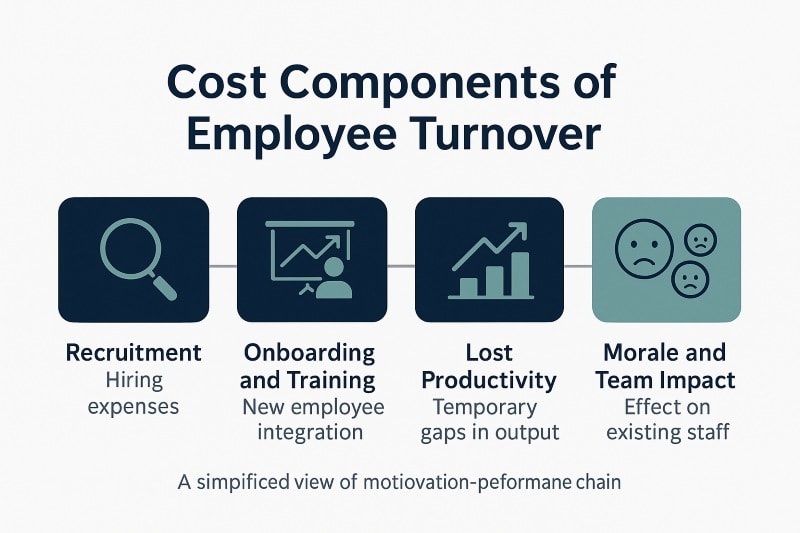
High turnover carries visible and hidden costs. There are direct expenses tied to recruiting, onboarding, and training new hires, as well as the productivity lost while roles remain unfilled. Replacing a single mid-level professional often costs 50–200% of their annual salary once you factor in hiring, onboarding, and ramp-up time. Multiply that by a department with 20% turnover and you’re quietly funding an entire ‘shadow payroll’ of churn. On top of that, frequent departures can disrupt team dynamics, increase workload for each team member, and erode trust in leadership.
Absenteeism follows a similar pattern. When employees are not motivated, they are more likely to disengage, call in sick more often, or arrive late and leave early. Over time, this affects service levels, project timelines, and team morale. The result is a drag on company performance that cannot be fixed by compensation alone.
Why motivated employees stay longer and strengthen employee retention
Motivated employees are more inclined to stay with an organization because they experience their work as meaningful, appreciate their colleagues, and see a path for growth. They are more willing to navigate short-term challenges because they believe their contributions matter and that the organization is invested in their success. Organizations that empower employees by giving them autonomy and trust are more likely to retain top talent. This sense of alignment and value is one of the strongest predictors of employee retention.
Retention is not about eliminating all frustration or difficulty from the workplace. It is about ensuring that employees feel their effort is recognized, their voice matters, and their career can progress. When those conditions are present, employees are less likely to respond to external offers and more likely to commit to the organization through periods of change or uncertainty.
Building a motivated workforce as a long-term retention strategy
Sustainable retention comes from building a motivated workforce, not from isolated perks or short-term incentives. This requires a coherent approach: hiring for fit, designing roles that make use of employees’ strengths, providing constructive feedback and coaching, and reinforcing a positive work environment where people feel respected and included.
For HR leaders and executives, the goal is to embed motivation into core systems rather than treating it as an annual campaign. That includes aligning performance management with intrinsic and extrinsic motivators, using employee feedback and surveys to identify friction points, and equipping managers to lead in a way that supports both performance and well-being. When motivation is treated as a strategic lever, retention improves as a natural outcome, not as a separate initiative to be managed in isolation. Efforts to improve employee engagement—by helping employees see the purpose and impact of their work—also drive long-term retention and motivation.
Intrinsic Motivation: The Core of Sustainable Performance
If you want motivation that survives beyond the next bonus cycle, you need to understand intrinsic motivation. This is the energy that comes from within: the satisfaction of mastering a skill, solving a difficult problem, or contributing to something meaningful. Intrinsically motivated employees don’t ask “What do I get for this?” every time they take action; they’re driven by interest, purpose, and progress. Leaders who inspire employees to find meaning and purpose in their work can unlock higher levels of intrinsic motivation.
Think of the product engineer still iterating on a feature two weeks after launch, not because anyone asked, but because they can’t stand leaving a problem half-solved. No bonus is attached to that extra effort; the reward is in the craft.
You can see the difference on any project team: the bonus chasers sprint in the last week; the intrinsically motivated ones are tweaking the solution long after the deadline because they care how it works in the real world.
When organizations focus only on external rewards, they often overlook this deeper engine of performance. The result is a workforce that performs only when pushed, monitored, or paid extra. Building a truly motivated workforce means designing work so people actually want to do it, not just endure it.
Meaningful work and alignment with the company’s mission and goals
Meaningful work is not about inspirational posters or grand mission statements; it’s about employees seeing a clear line between their daily tasks and the organization’s mission. Regularly communicating the organization’s mission helps employees understand the broader purpose of their work and how their individual contributions support overall strategic goals.
When team members understand how their work supports the company’s goals, small tasks feel less like chores and more like contributions.
For example, a customer support agent who knows how their quality of response affects customer retention will likely care more about accuracy and empathy. The same is true for a finance specialist who sees how their reporting supports strategic decisions, not just compliance. This line of sight between work and impact is one of the strongest drivers of intrinsic motivation.
Leaders can strengthen this connection by consistently explaining the “why” behind priorities, not just the “what.” Regularly tying projects and goals back to the organization’s mission and values helps employees feel that their work matters and that their effort has a positive impact.
Autonomy, mastery, and purpose in daily tasks
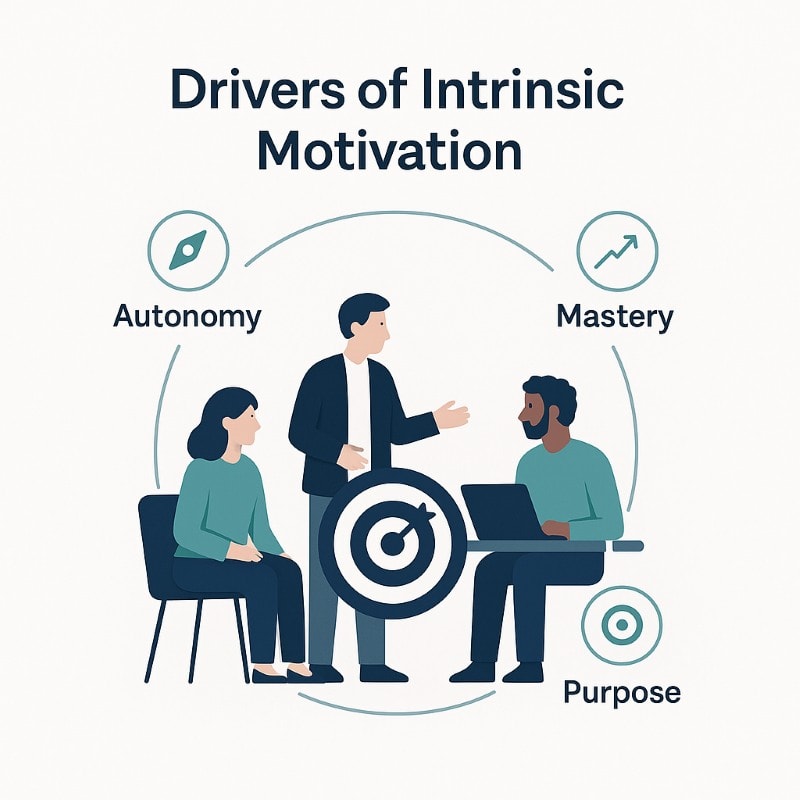
Intrinsic motivation thrives when employees experience autonomy (control over how they do their work), mastery (opportunities to get better at something important), and purpose (a reason bigger than the task itself). If any of these are missing, motivation tends to flatten, even in otherwise attractive roles.
Autonomy does not mean chaos; it means giving employees discretion within clear boundaries. Mastery requires stretch assignments, feedback, and learning opportunities, not just “sink or swim” pressure. Purpose emerges when leaders share context, customers’ stories, and long-term objectives instead of treating employees as task executors.
When autonomy, mastery, and purpose are present in daily work, employees are more likely to invest effort without constant supervision. They explore better ways of working, share ideas, and support colleagues because the work feels worth doing well.
Sense of belonging, team identity, and cultural values
Intrinsic motivation is also social. People are more motivated when they feel they belong to a team that shares standards, values, and a sense of identity. A strong team identity answers questions like: “What do we stand for?” and “How do we treat each other and our stakeholders?”
When employees feel connected to their team and to the organization’s cultural values, they are more willing to go beyond minimum requirements. They care about not letting colleagues down, about maintaining quality, and about protecting the team’s reputation. That sense of belonging is a powerful intrinsic motivator that you cannot replace with any incentive program. A strong sense of team identity helps keep the team motivated and aligned with organizational goals.
Extrinsic Motivation: Using Rewards Without Creating Dependency
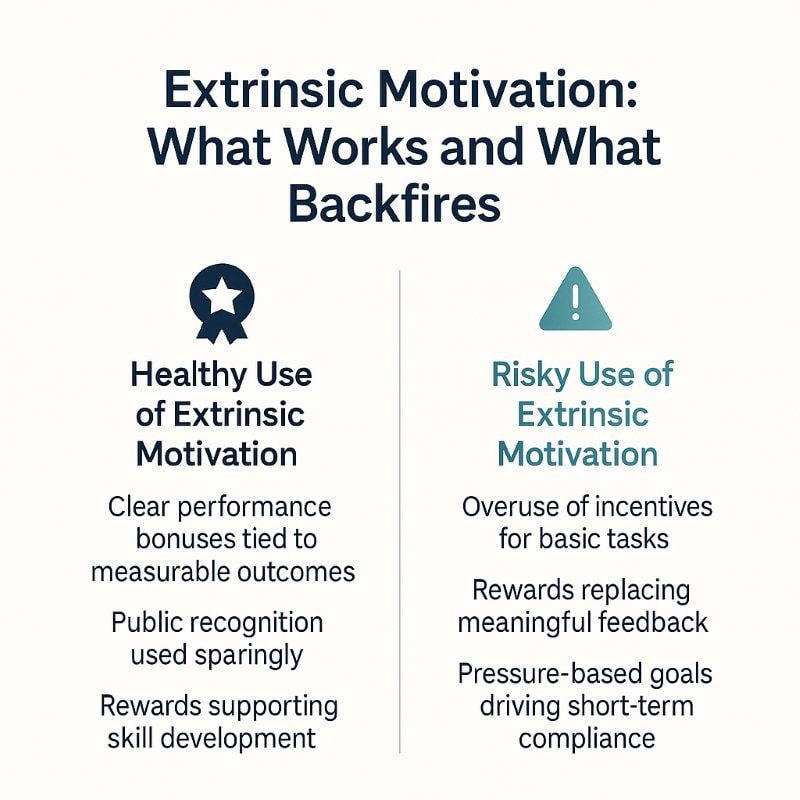
Extrinsic motivation comes from outside the individual: salary, bonuses, promotions, public recognition, and other tangible rewards. These tools are necessary and can positively influence motivation to workers, especially around short-term goals or clear performance thresholds. When used appropriately, extrinsic rewards can support work motivation by reinforcing positive behaviors and helping employees feel valued, which contributes to a more engaging and productive workplace environment. The problem starts when extrinsic motivators become the only motivators.
If employees learn that the only reason to put in extra effort is an immediate reward, they quickly adjust their behavior: no bonus, no effort. This creates a fragile system where motivation spikes around campaigns, contests, or fiscal year-ends and drops everywhere else.
Financial incentives, bonuses, and tangible rewards
Financial incentives can be effective when the link between behavior and reward is transparent, fair, and consistent. For example, bonuses tied to clear performance metrics or revenue-sharing schemes can help align employee effort with business outcomes and company goals. Tangible rewards like gift cards, extra days off, or team outings can also support motivation when used thoughtfully.
However, financial incentives cannot fix deeper issues such as poor leadership, unclear expectations, or a toxic workplace culture. If employees feel disrespected, overworked, or ignored, no bonus structure will turn them into highly motivated employees for long. Incentives should reinforce an already sound environment, not compensate for structural problems.
Recognition, positive feedback, and visible appreciation
Not all extrinsic motivators are financial. Genuine recognition and specific positive feedback are among the most cost-effective tools leaders have to improve employee motivation. When employees feel seen and appreciated for their contributions, they are more likely to repeat and expand those behaviors.
Effective recognition is timely, concrete, and linked to the organization’s goals or values. Measuring motivation through regular feedback and recognition helps organizations track engagement and adjust strategies as needed. Vague praise like “good job” does little. Recognition that highlights the specific behavior and its impact on customers, colleagues, or results reinforces what the organization truly values. Over time, this kind of positive feedback helps shape a more motivated workforce.
Where extrinsic motivators help and where they quietly backfire
Extrinsic motivators work best for clearly defined, short-term objectives, especially when tasks are routine, measurable, and bounded. They can also help kick-start change initiatives or encourage adoption of new processes. Well-designed extrinsic motivators can also encourage teamwork by rewarding collaborative efforts and shared achievements.
They backfire when employees start to feel controlled, when rewards are perceived as unfair, or when they undermine intrinsic motivation. For example, giving bonuses only to visible top performers can demotivate quieter high contributors and support staff whose work is essential but less measurable. Similarly, incentives tied to the wrong metrics can create unintended behaviors, like cutting corners to hit numbers.
The goal is balance: use extrinsic motivators to highlight priorities and celebrate progress, while steadily investing in intrinsic motivators like meaningful work, autonomy, and professional growth.
Applying Self-Determination Theory in the Workplace
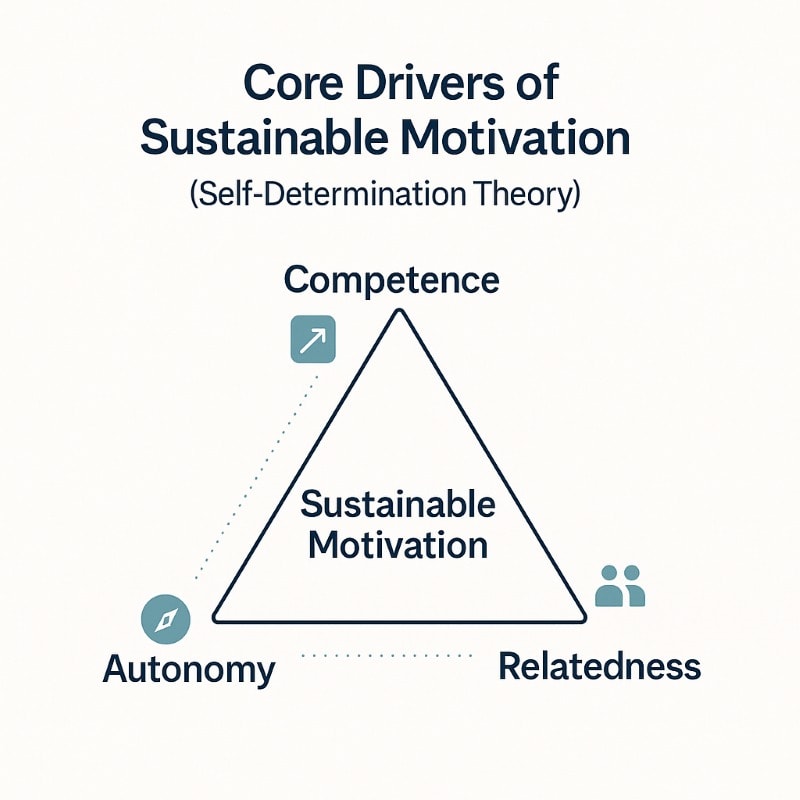
Self-determination theory (SDT) offers a practical framework for understanding human motivation at work. It suggests that people are most motivated and engaged when three core needs are met: competence, autonomy, and relatedness. When these needs are supported, employees are more likely to be intrinsically motivated and to sustain high levels of performance over time.
Decades of motivation research point to the same three levers: competence, autonomy, and relatedness. SDT simply gives leaders language for what employees have been saying in exit interviews for years.
For HR leaders and executives, SDT is not just an academic concept; it is a useful checklist for designing roles, teams, and processes that keep employees motivated. Instead of guessing what might drive motivation to workers, SDT provides concrete levers to examine and adjust.
Competence, autonomy, relatedness as levers for motivation to workers
Competence is the feeling of being capable and effective in one’s work. Employees need opportunities to build skills, take on appropriate challenges, and receive feedback that helps them see their progress. Without this, even talented individuals can feel stuck and demotivated.
Autonomy refers to having a sense of control over how work is done. That doesn’t mean unlimited freedom, but it does mean being trusted to make decisions within clear guidelines. Overly prescriptive processes and micromanagement directly undermine autonomy and erode motivation.
Relatedness is the need to feel connected to others and to something larger than oneself. In the workplace, this shows up as supportive relationships, psychological safety, and a shared sense of purpose. When any of these three needs are consistently blocked, motivation levels drop and disengagement grows.
Designing roles and workflows that support intrinsic motivators
To improve employee motivation, look at the design of roles and workflows through the SDT lens. Ask:
- Does this role offer real opportunities for competence development, or is it a repetitive task loop with no visible growth?
- Does the employee have meaningful autonomy over how they prioritize, schedule, or approach their work?
- Does the team environment support relatedness, or is the person working in isolation with minimal connection to others?
Practical changes might include expanding decision-making authority, adjusting performance metrics, or redesigning handoffs between teams to reduce friction. Even small shifts, like involving employees in how processes are updated, can signal trust and respect, which in turn support intrinsic motivators.
Building a Positive Work Environment and Workplace Culture
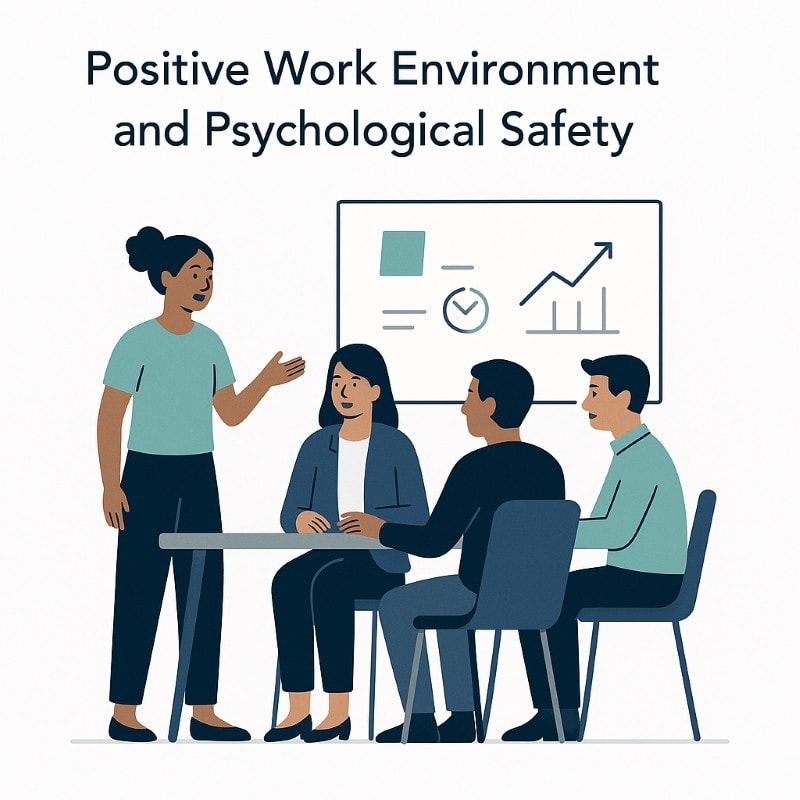
You cannot separate workplace motivation from the environment in which people work. A positive work environment is not about superficial perks; it is about how employees experience fairness, safety, respect, and clarity in their day-to-day interactions. When those foundations are strong, employees are far more likely to stay engaged and motivated.
Some of the lowest-motivation teams we see sit in beautifully designed offices with endless perks. The moment you talk to employees, the story changes: unclear decisions, inconsistent leadership, and a constant sense of walking on eggshells.
A strong workplace culture makes expectations visible: how decisions are made, how conflicts are handled, and how successes and failures are discussed. If that culture rewards learning, collaboration, and accountability, motivation grows. If it tolerates blame, favoritism, or chronic overload, motivation erodes.
Psychological safety as the foundation of engaged employees
Psychological safety means employees feel they can speak up, ask questions, and admit mistakes without fear of ridicule or punishment. It is a critical condition for motivation because employees who are constantly self-protecting are not focused on performance or improvement; they are focused on avoiding harm.
Teams with high psychological safety share ideas more freely, surface problems earlier, and correct course faster. This supports continuous improvement and innovation, and it also supports employee well being. People are much more willing to invest discretionary effort in an environment where they are not bracing for negative reactions.
Encouraging employees to speak up, challenge, and improve processes
Encouraging employees to speak up is not a slogan; it requires visible follow-through. When team members raise concerns or suggest improvements, leaders need to listen, respond, and, where possible, act. Even when a suggestion cannot be implemented, explaining the reasoning shows respect and maintains trust.
Over time, this creates a culture where employees feel responsible for improving how work gets done, not just performing tasks. That sense of ownership is a strong source of motivation and directly supports better business outcomes. It also helps organizations adapt faster, because more people are actively scanning for risks and opportunities.
Daily habits that signal respect, fairness, and trust
Culture is built in everyday moments: how managers run meetings, how feedback is given, how workload is distributed, and how success is recognized. Simple habits such as starting meetings on time, clarifying decisions, acknowledging contributions, and enforcing reasonable boundaries around working hours signal that employees are valued.
When employees consistently experience respect, fairness, and trust, they are more likely to stay engaged and motivated, even during periods of pressure. They interpret difficult moments as part of shared challenges, not as personal exploitation. Over time, this creates a work environment where motivation is not driven by fear or obligation but by commitment and shared purpose.
Leadership Behaviors That Drive (or Destroy) Motivation
Motivation to workers lives or dies in the space between what leaders say and what they consistently do. Even with a strong company culture and well-designed roles, a single manager’s habits can turn a motivated team into a group that simply goes through the motions. Leadership behavior is often the strongest signal employees receive about what really matters in the workplace.
You don’t need a 360 to know where motivation is leaking. Just open a manager’s calendar. If one-to-ones are constantly moved, skipped, or shortened, employees already know where they sit in the priority list.
When leaders provide clarity, remove obstacles, and treat team members with respect, employees feel empowered to give their best. When leaders default to control, criticism, or silence, employees protect themselves instead of contributing discretionary effort. For HR and executives, that means leadership behavior is not a “soft skill” topic; it is a core driver of employee performance and retention.
Clear expectations, context, and connection to organizational goals
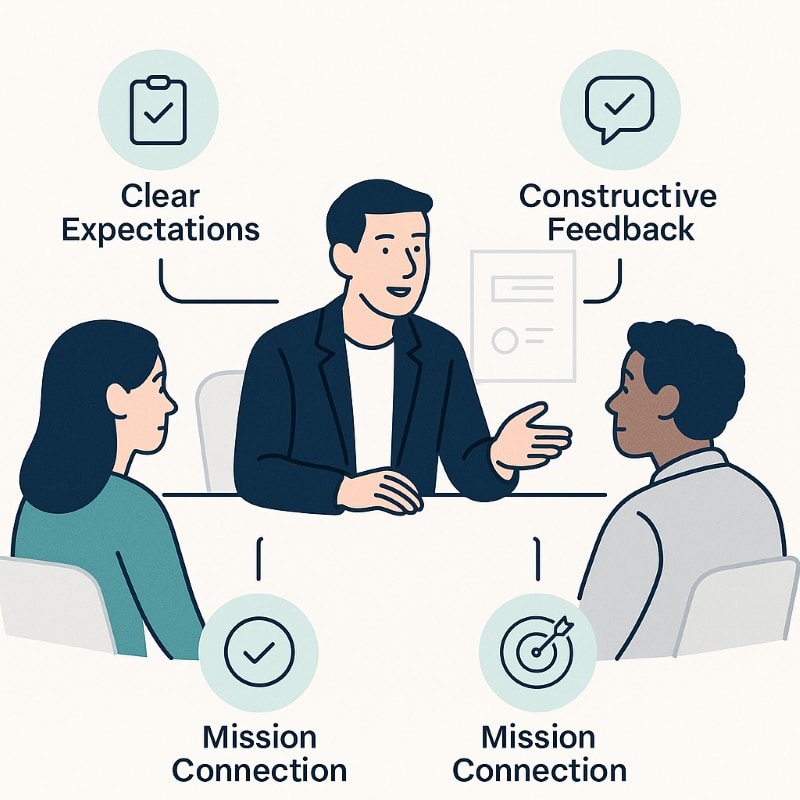
Motivated employees know what is expected of them and why it matters. Leaders who invest time in setting clear goals, explaining priorities, and linking tasks to organizational goals create a sense of direction and stability. Team members understand how their work supports the company’s mission and where to focus their energy when trade-offs are necessary.
Vague expectations or constantly shifting priorities are motivation killers. When employees aren’t sure what success looks like, they hesitate, second-guess themselves, or spread their effort across too many tasks. Over time, this erodes both confidence and motivation. Effective leaders revisit expectations regularly, especially when the business context changes, so employees feel guided rather than left to guess.
Context is just as important as clarity. Explaining the “why” behind decisions allows employees to see how their team’s contributions fit into the broader strategy. This strengthens alignment with the organization’s mission and helps employees feel like partners in execution, not just recipients of instructions.
Constructive feedback vs micromanagement and criticism
Feedback is one of the most direct ways leaders influence motivation in the workplace. Constructive feedback is specific, timely, and focused on behaviors and outcomes rather than personal traits. It helps employees understand what they are doing well, where they can improve, and how to reach the next level of performance. When feedback is handled this way, it supports both competence and confidence.
Micromanagement does the opposite. When leaders control every detail, re-do work without explanation, or constantly correct minor issues, employees stop taking initiative. They learn that their judgment isn’t trusted and that effort may be wasted. Over time, motivated employees either disengage or leave for environments where they can use their strengths more freely.
The goal is a feedback culture where employee feedback flows in both directions. Leaders share constructive feedback with team members and are open to hearing what employees need in order to stay motivated and perform at their best. That two-way dialogue is a strong signal of psychological safety and respect.
How leaders communicate the organization’s mission and cultural values
Mission and cultural values are not internal marketing copy; they are lived primarily through leadership behavior. When leaders consistently connect decisions, priorities, and recognition back to the company’s mission, employees start to view it as real, not symbolic. Integrating the company’s mission into everyday work and goal-setting fosters a sense of purpose and belonging, helping employees connect their efforts to a larger organizational goal. This helps workers see their daily tasks as part of a larger story, which is a powerful motivator.
Leaders also model cultural values through how they handle pressure, conflict, and mistakes. If a company claims to value collaboration but leaders routinely reward individual heroics and tolerate blame-shifting, employees will follow the behavior, not the posters. Motivation drops quickly when there is a gap between stated values and observed behavior.
Maintaining a motivated workforce requires leaders who can translate mission and values into everyday choices: whom they promote, how they allocate resources, which behaviors they recognize, and which they correct. When those choices are consistent, employees feel they are part of something coherent and worthwhile, which supports long-term motivation and engagement.
Feedback, Coaching, and Employee Voice
Employees stay motivated when they can see a path forward and feel heard along the way. Feedback and coaching provide direction and support; employee voice ensures that information flows upward, not just downward. When these elements work together, employees feel both guided and respected, which strengthens motivation and engagement.
Regular, quality employee feedback conversations
Feedback should be a habitual part of work, not an annual event. Regular check-ins focused on progress, priorities, and obstacles help employees course-correct early rather than discovering problems months later. These conversations are most effective when they combine recognition of strengths with clear, constructive guidance on what to adjust.
If the most detailed feedback an employee hears is in a once-a-year review, you’re not managing performance, you’re doing historical forensics.
Leaders who structure feedback around specific examples and shared goals help employees connect their day-to-day actions with longer-term expectations. This not only improves employee performance but also reinforces the sense that leaders are invested in employee success, not just evaluating them.
Using employee input to refine work environment and workflows
Employees are closest to many of the systems and processes that either support or undermine motivation. Inviting their input on how work gets done is a practical way to identify friction points and improvement opportunities. Tools such as employee surveys, team retrospectives, or open feedback channels can surface patterns that might be invisible at leadership level.
Crucially, this is not only about collecting ideas; it is about treating those ideas as valuable operational data. When employees see their suggestions leading to concrete adjustments in workload, tools, or communication, they understand that their experience matters and that they can influence their work environment.
Turning feedback into visible action to build trust
Nothing erodes motivation faster than feedback loops that go nowhere. When employees repeatedly share concerns or ideas and see no visible response, they learn that speaking up has no impact. Over time, they disengage, and leaders lose access to critical information about risks and opportunities.
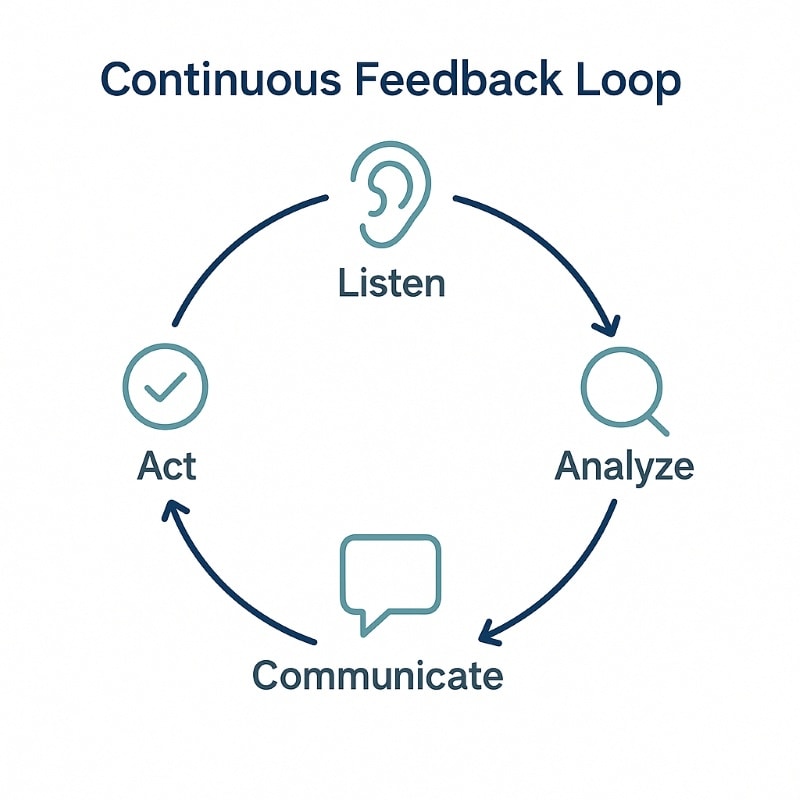
Turning feedback into visible action does not mean implementing every suggestion. It means closing the loop: acknowledging input, explaining decisions, and showing where and how change is happening. Even small, incremental improvements signal that leadership is listening and responsive. This builds trust, reinforces psychological safety, and encourages employees to keep contributing their insights and effort.
Professional Development and Career Growth
Motivated employees rarely want to stand still. When people see a path to grow their skills and responsibilities, they are more likely to invest energy in their current role and stay with the organization longer. Professional development is not a perk; it is a core mechanism for sustaining motivation and engagement.
Career development paths as a key to employee satisfaction
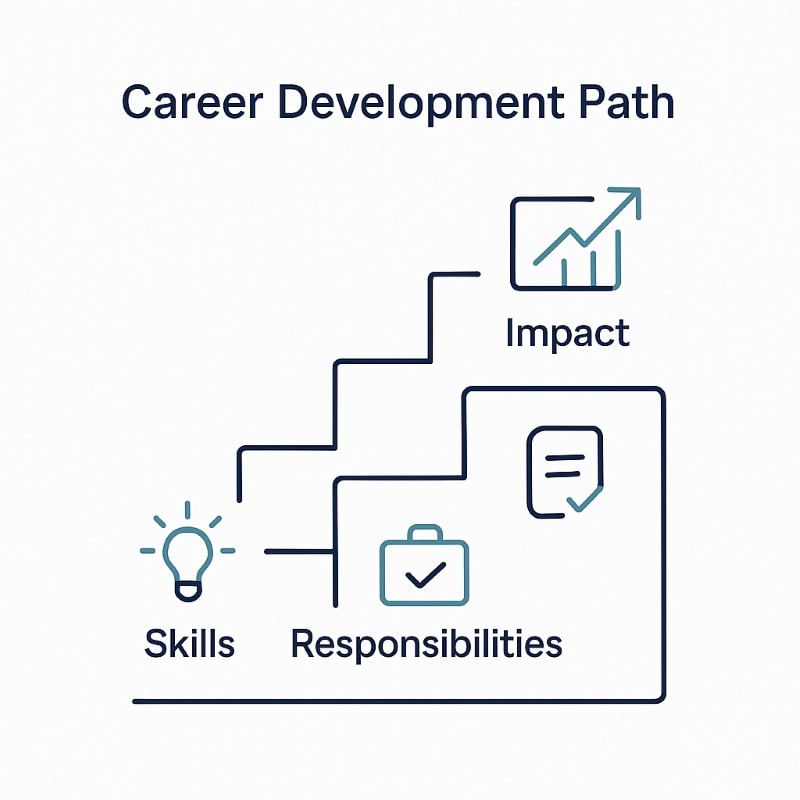
Clear career paths help employees understand what progression looks like inside your company. Without that clarity, even strong performers may assume they need to leave to grow. Documented career frameworks, transparent promotion criteria, and clear expectations for each level give employees a roadmap for advancement.
When a senior analyst gets an external offer, your biggest risk isn’t salary. It’s that they can describe the next three steps at the other company and can’t name even one inside yours.
This does not mean promising constant upward movement. Lateral moves, project-based assignments, and skill-broadening opportunities can be just as motivating when they are framed as deliberate steps in a long-term career. The key is visible structure: employees want to know that effort and improvement lead somewhere.
Personal growth, skill-building, and internal mobility
Motivation to workers increases when people feel they are becoming more capable as a result of their work. Providing access to training, stretch projects, mentoring, and cross-functional collaboration gives employees tangible opportunities to build competence. Over time, this builds a more adaptable workforce and reduces your dependency on external hiring.
Internal mobility is especially powerful. When employees can move into new roles or teams without leaving the company, they retain their organizational knowledge while refreshing their motivation. HR’s role is to ensure that internal opportunities are visible, accessible, and supported by fair selection processes.
The role of mentoring and coaching in employee success
Mentoring and coaching help employees translate development opportunities into real progress. A mentor can provide perspective on career decisions; a coach can help an employee build specific skills or behaviors. Both send a strong signal that the organization is willing to invest in individual success, not just immediate output.
Leaders who regularly discuss development, not just performance, contribute to a more motivated workforce. Employees who feel supported in their growth are more likely to stay engaged through setbacks, adapt to change, and contribute at a higher level over time.
Work-Life Balance, Well-Being, and Sustainable Motivation
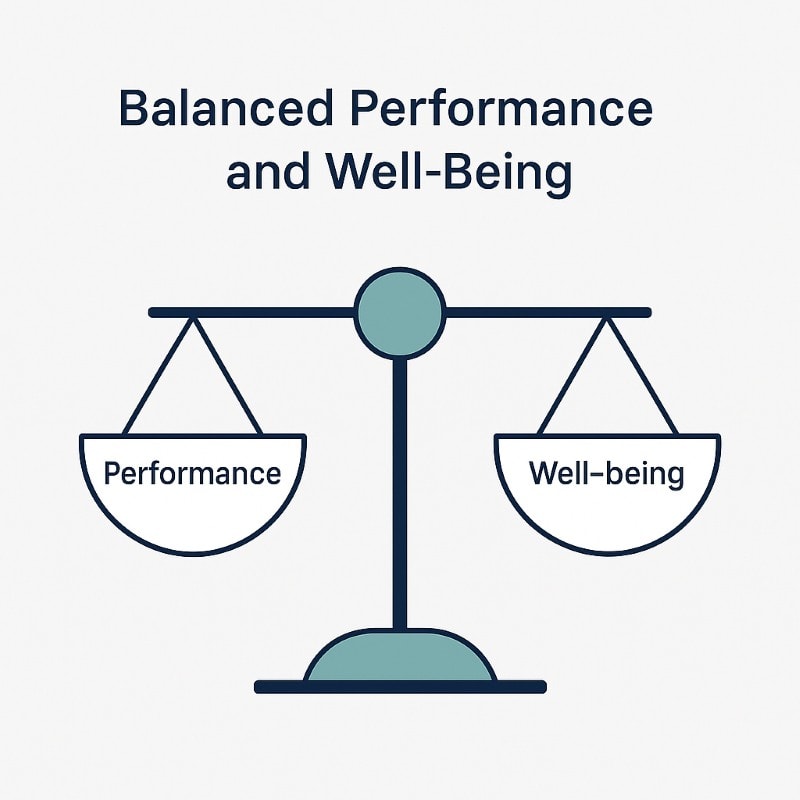
You cannot sustain high motivation in a chronically exhausted workforce. A good work-life balance and attention to employee well being are practical requirements if you want motivation to last beyond the next busy quarter. Short-term overdrive followed by burnout is not a strategy.
Chronic fatigue doesn’t just lower morale; it wrecks decision quality. Tired managers default to short-term fixes, avoid hard conversations, and miss weak signals that later become crises.
Healthy work-life balance and its impact on motivation levels
Healthy work-life balance does not mean low expectations or unlimited flexibility. It means that workload, deadlines, and availability expectations are realistic and clearly communicated. When employees can plan their work and personal life with some predictability, they are more likely to bring energy and focus to their tasks.
By contrast, constant “crunch mode,” unplanned overtime, and unclear boundaries around working hours slowly drain motivation. Employees might comply for a while, but they eventually disengage or leave. Monitoring workload and adjusting resourcing accordingly is a direct lever for preserving motivation.
Managing workload, stress, and burnout risk
HR and leaders should treat stress and burnout as operational risks, not just individual resilience issues. Early signs include rising absenteeism, increased mistakes, slower response times, and more frequent conflicts. Addressing these requires both systemic and individual interventions: better prioritization, realistic staffing, and training managers to recognize and respond to early warning signals.
Providing access to mental health resources, employee assistance programs, or well-being initiatives can help, but only if they are backed by real changes in how work is structured. Employees will not feel genuinely supported if the message is “take care of yourself” while workload remains unsustainable.
Supporting employee well being through policies and daily practice
Policies around flexible work, paid time off, and reasonable availability are part of the foundation. Daily behavior is the test. Leaders who respect boundaries, refrain from rewarding constant overwork, and model healthy habits themselves send a much stronger signal than any policy document.
When employees experience consistency between the company’s stated values and everyday practices, they are more likely to trust leadership and remain motivated. Well being is not the opposite of performance; it is a condition for sustained performance and long-term motivation.
Using Data and Assessments to Drive Employee Motivation
Motivation to workers is often discussed in broad terms, but it can be measured and managed with the right data. Organizations can measure motivation by using employee surveys and behavioral assessments to assess motivation and engagement levels, providing actionable insights for evidence-based action. Employee surveys, engagement scores, and validated assessments help you move from assumptions to evidence-based action. The goal is not to quantify every emotion but to identify patterns that leaders can actually address.
Personality and motivation profiles as inputs for job fit and engagement
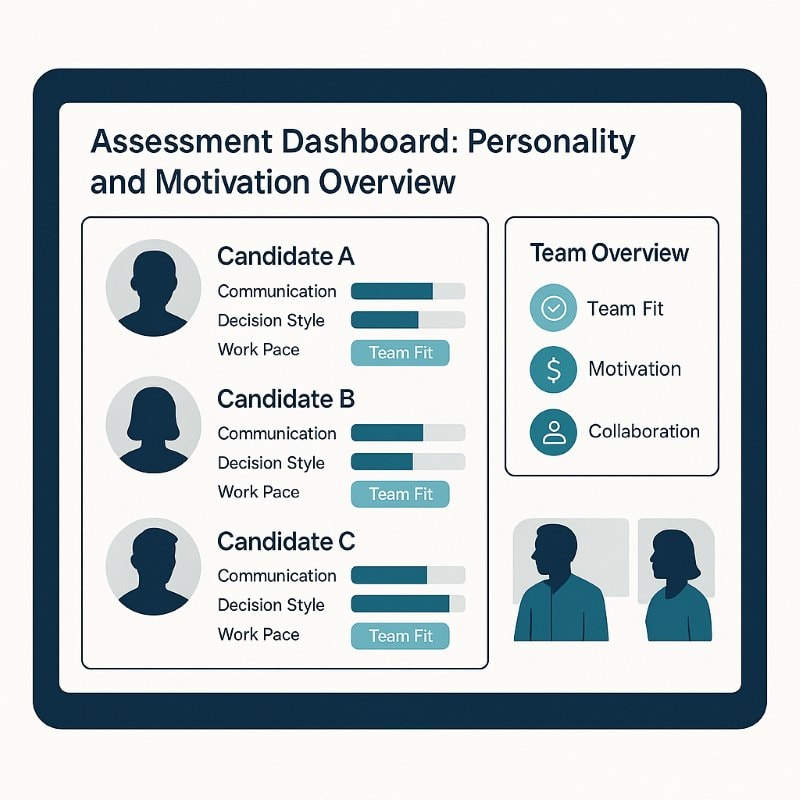
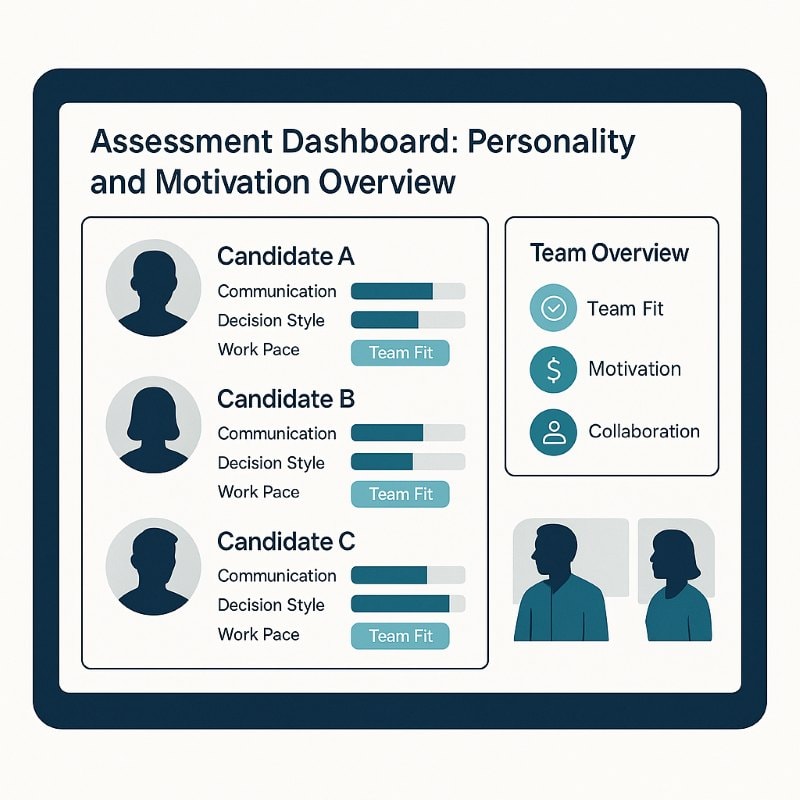
Different people are motivated by different work environments, task types, and leadership styles. Personality and motivation assessments provide insight into how an individual is likely to approach work, respond to pressure, and collaborate with others. Used well, these insights inform hiring, role design, and team composition.
For example, someone energized by complex problem-solving and autonomy may struggle in a tightly controlled, routine-heavy role. Another employee who thrives on collaboration may become demotivated in an isolated individual contributor position. Aligning roles with natural preferences and strengths is one of the most effective ways to keep employees motivated.
How tools like OAD support better role design and team composition
OAD’s scientifically validated assessments give organizations a data-backed view of how people are wired to work. Instead of relying on intuition alone, HR and leaders can see where there is strong job fit, where friction is likely, and how different profiles will interact on a team. This reduces the risk of placing employees in roles that quietly undermine their motivation.
Design teams with data, not gut feel.
Most org-design decisions come down to role fit, leadership style, and team dynamics. OAD reads those signals from a 7-minute behavioral survey, so you can reconfigure roles and teams with evidence instead of guesswork.
For example, one client used OAD data to redesign a customer operations team that was quietly burning out its most analytical profiles in high-volume, reactive roles. By shifting responsibilities and adjusting leadership style, they reduced turnover in that group by a third within a year.
The same data can inform how managers lead individual team members: who needs more structure, who benefits from autonomy, who prefers direct feedback, and who needs time to process. By adjusting leadership styles and team design based on objective insights, organizations can improve employee motivation and engagement in a targeted way.
Practical Steps to Improve Employee Motivation Now
Big frameworks are useful, but leaders also need concrete actions. Improving motivation to workers does not require a complete organizational redesign; it starts with focused adjustments in how work is structured and how people are led.
Quick diagnostic: where motivation breaks down in your organization
A simple diagnostic can start with three questions:
- Do employees clearly understand what is expected of them and why it matters?
- Do they feel they have the tools, autonomy, and support to meet those expectations?
- Do they believe their effort is recognized and leads to growth or opportunity?
Where the answers are weak, motivation is likely weak as well. Use engagement surveys, pulse checks, or structured manager conversations to pinpoint the most common friction points across teams.
Prioritizing a few high-impact interventions
Instead of launching a dozen disconnected initiatives, focus on two or three high-impact changes. For example: improving the quality of one-on-one conversations, clarifying role expectations, or redesigning a bottleneck process that causes constant frustration. Clear ownership, timelines, and follow-up matter more than the number of programs you introduce.
Pick one or two friction points OAD data repeatedly flags – for example, low autonomy for high-initiative profiles or chronic overload in one function – and run a 90-day experiment to fix just those.
The most effective interventions are usually those that employees themselves have named as barriers to their motivation. When they see those issues being addressed, trust increases and motivation follows.
Design teams with data, not gut feel.
Most org-design decisions come down to role fit, leadership style, and team dynamics. OAD reads those signals from a 7-minute behavioral survey, so you can reconfigure roles and teams with evidence instead of guesswork.
Building a simple roadmap for the next 90 days
A practical 90-day roadmap might include: assessing current motivation and engagement levels, prioritizing 2–3 core issues, training managers on specific behaviors (feedback, clarity, recognition), and communicating progress. The aim is to create visible movement, not perfection.
Using tools like OAD to understand team dynamics and job fit during this period can sharpen decisions and ensure that changes are grounded in real data, not just anecdote. Over time, this combination of insight and action builds a more motivated, resilient workforce.
Common Myths and Pitfalls in Workplace Motivation
Many motivation strategies fail because they are built on persistent myths. When leaders assume that money is the main motivator, or that a single engagement program will “fix” everything, they overlook the complexity of human motivation. Recognizing these misconceptions is the first step toward more effective approaches.
“Money is the main motivator” and other misconceptions
Compensation must be fair and competitive, but beyond a certain point, pay alone does not create highly motivated employees. Once basic expectations are met, factors like meaningful work, growth opportunities, leadership quality, and culture often have a stronger impact on motivation and retention.
Most HR leaders know at least one team that is well-paid and visibly miserable. Their problem isn’t comp; it’s pointless work, erratic leadership, or a culture of quiet punishment.
Other myths include the idea that perks (snacks, events, surface-level wellness initiatives) can compensate for poor leadership, unclear roles, or toxic behaviors. These may generate short-term goodwill, but they rarely change sustained motivation or performance.
One-size-fits-all programs that ignore context
Generic engagement programs applied uniformly across teams ignore differences in work type, team composition, and local culture. What motivates a sales team may not motivate a specialized technical team, and what works in one region may not translate to another. Assuming that one program will work everywhere leads to shallow impact and initiative fatigue.
Effective motivation strategies are grounded in data and tailored to the realities of specific teams and roles. This is where combining surveys, assessments, and local leader input makes a difference.
Overusing perks while neglecting core work design and leadership
Finally, many organizations over-invest in peripheral perks while under-investing in core work design and leadership capability. Employees notice when office upgrades appear but chronic workload issues, unclear expectations, or poor management practices remain untouched.
Motivation improves most when the fundamentals are strong: fair workload, competent and respectful leadership, meaningful work, and real growth opportunities. Perks can complement this foundation, but they cannot replace it.

Conclusion: Turning Motivation to Workers into Business Success
Motivation to workers is not a single initiative or campaign; it is the cumulative effect of how you design work, lead people, and make decisions every day. When employees feel clear on expectations, aligned with the company’s mission, supported in their growth, and able to maintain a healthy work-life balance, motivation becomes a natural outcome rather than something you have to force.
For HR leaders and executives, the opportunity is to use data, evidence-based frameworks, and tools like OAD to understand what truly drives motivation in your organization. From there, you can design roles, teams, and leadership behaviors that support both performance and well being. The payoff is a more engaged, resilient workforce that delivers stronger business outcomes over the long term.