Motivation in business is not a “culture” problem. It’s a performance system problem.
When employee motivation drops, you usually see it in the numbers first: lower output, slower execution, more quality issues, higher absenteeism, and rising employee retention risk. Gallup’s engagement meta-analyses repeatedly show that engagement is strongly related to outcomes like productivity, profitability, turnover, quality, and customer loyalty.
For HR leaders and people managers in mid-size companies, motivation is a strategic lever because you can influence it quickly through role design, manager behavior, and measurement. You do not need a bigger “engagement initiative.” You need better signals and tighter interventions.
Motivation in Business: Why It Matters for Performance and Employee Retention
Motivation vs engagement vs job satisfaction
These terms get used like synonyms. They are not. Understanding the principles of human motivation is foundational to distinguishing between motivation, engagement, and job satisfaction in the workplace.
- Employee motivation: the energy and intent that drives effort toward goals.
- Employee engagement: the emotional and cognitive commitment to doing good work.
- Job satisfaction: how someone feels about their job conditions.
A satisfied employee can still be unmotivated. An engaged employee is usually motivated, but engagement can drop fast when workload, role clarity, or management quality breaks.
The metric chain HR should care about
Motivation rarely shows up as one clean KPI. Instead, it appears as a pattern of changing motivation levels:
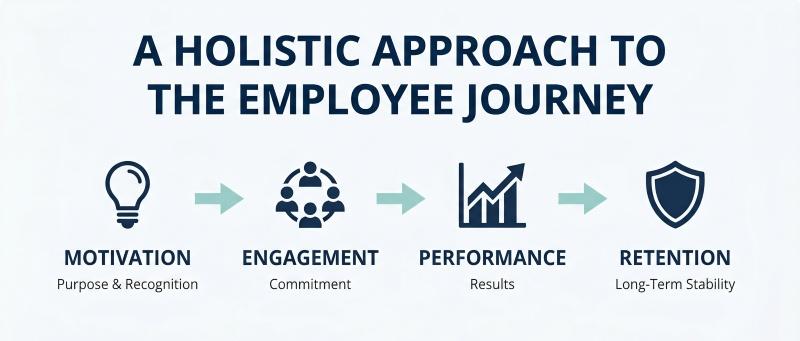
Motivation level shifts → engagement shifts → performance shifts → retention risk shifts
This is why people analytics matters. To truly understand and improve motivation in business, organizations need to regularly check motivation levels through ongoing feedback, performance reviews, and measurement—not just rely on an annual survey. Regularly checking in with employees helps leaders tailor motivational strategies and maintain engagement.
Gallup’s large meta-analysis work links engagement to multiple organizational outcomes, including composite performance. Organizations that prioritize motivation enjoy higher retention rates, as employees who feel appreciated and supported are more likely to stay.
Intrinsic vs extrinsic motivation: what to use when
Most “motivate employees” advice is just a debate about perks versus purpose. The practical version is simpler:
- Intrinsic motivation is driven by the work itself: progress, mastery, autonomy, meaning, problem solving.
- Extrinsic motivation is driven by external rewards and external factors: pay, bonuses, promotions, recognition, tangible rewards, or societal expectations.
Understanding what drives both intrinsic and extrinsic motivation is key. According to Self-Determination Theory, three fundamental psychological needs—autonomy, relatedness, and competence—fuel motivation and are essential for employee well-being and motivation.
What to use when
Use intrinsic motivators when you want:
- sustained performance
- learning and creative solutions
- higher-quality decisions
- long-term commitment
- to implement effective strategies that foster deep motivation and engagement within your team
Use extrinsic factors when you need:
- to reinforce specific tasks or behaviors
- to create clarity on priorities
- to fix fairness issues (pay inequity destroys motivation fast)
- to apply effective strategies for motivating employees through targeted rewards and recognition
The risk of overrelying on external rewards
Research on rewards and intrinsic motivation is nuanced: some rewards can undermine intrinsic motivation depending on how they’re structured, especially when they feel controlling rather than supportive.
In practice: performance-based rewards can work, but only if the basics are right (fair pay, clear expectations, good management). According to Herzberg’s Two-Factor Theory, these basics are known as hygiene factors—such as salary, interpersonal relationships, and working conditions—which are necessary to prevent dissatisfaction but do not necessarily increase satisfaction or motivation in business. If hygiene factors are not addressed, incentives become a loud distraction.

The key drivers of employee motivation in mid-size companies
Mid-size companies have a predictable challenge: scaling adds complexity faster than management systems mature. So motivation problems usually come from the same handful of drivers.
Understanding and applying motivational theories offers key benefits, such as improved productivity and increased employee engagement, especially when organizations foster self-driven extrinsic motivation. Motivational theories explore different factors that influence how people behave at work, including personal satisfaction and physical rewards, and what encourages them to achieve goals in their job.
Below are the drivers that matter most, plus what to measure and what to do.
1) Employees feel valued and respected
What it looks like: recognition, voice, fair treatment, consistent decisions, and fair and transparent compensation that helps employees feel respected.
Measure it:
- pulse item: “I feel valued for my work”
- recognition frequency (manager-driven, not platform vanity)
- regretted attrition by team
Do it:
- weekly specific recognition tied to outcomes (“what you did” + “why it mattered”)
- close the loop on employee feedback within 14 days
Design teams with data, not gut feel.
Most org-design decisions come down to role fit, leadership style, and team dynamics. OAD reads those signals from a 7-minute behavioral survey, so you can reconfigure roles and teams with evidence instead of guesswork.
2) Growth opportunities and career growth
What it looks like: career progression clarity, professional development, new skill acquisition, and opportunities for personal growth.
Measure it:
- internal mobility rate
- training participation by role level
- pulse item: “I can grow here”
McKinsey has reported large differences in engagement and intent to stay based on employee experience quality, which includes development and support. According to Maslow’s Hierarchy of Needs, people are motivated to fulfill basic needs first (like food and safety), but as those are met, personal growth and self-fulfillment become key drivers of motivation in business.
Do it:
- define “next level” expectations for each role (skills, behaviors, results)
- build a lightweight development plan into performance reviews

3) Role clarity, autonomy, and decision rights
What it looks like: clear responsibilities, control over how work is done, fewer pointless approvals. Motivational strategies should be tailored to different employees’ roles, as the needs and drivers for engagement can vary significantly depending on specific positions and responsibilities.
Measure it:
- pulse item: “I know what’s expected of me”
- cycle time delays caused by approval bottlenecks
- rework rates
Gallup’s Q12 framework emphasizes basic needs like knowing what’s expected and having what you need to do the job. McClelland’s Needs Theory states that every person has the need for achievement, affiliation, and power, and the dominance of one or more types of motivation comes from their life experiences—understanding these needs helps leaders motivate employees in different roles more effectively.
Do it:
- document decision rights for key processes (who decides, who consults)
- set autonomy boundaries: outcomes fixed, methods flexible
4) Workload, well being, and a positive work environment
What it looks like: sustainable pace, fewer fire drills, manageable cognitive load, and a focus on employee well-being. A positive working environment that supports employee well-being is essential for maintaining motivation, engagement, and long-term performance. Key drivers of motivation include job stability, independence, recognition, opportunities to be creative, and a supportive working environment.
Measure it:
- overtime and after-hours load by team
- absenteeism trends
- pulse item: “My workload is manageable”
Do it:
- treat workload spikes as operational incidents: root cause, mitigation, prevention
- redistribute work before burnout becomes attrition
Design teams with data, not gut feel.
Most org-design decisions come down to role fit, leadership style, and team dynamics. OAD reads those signals from a 7-minute behavioral survey, so you can reconfigure roles and teams with evidence instead of guesswork.
5) Fairness and trust in the system
What it looks like: consistent rules, transparent standards, no favoritism.
Measure it:
- pay equity checks (internal)
- promotion rate consistency across comparable groups
- performance review distribution anomalies by manager
Do it:
- standardize performance reviews with defined behaviors and examples
- calibrate across managers quarterly
- prioritize fostering trust in leadership practices, as leaders who demonstrate trust and empowerment create an environment where employees feel motivated to contribute their best. Fostering trust builds a foundation of security and mutual respect, which is essential for long-term engagement and motivation in business.

How to measure employee motivation
If you cannot measure motivation, you cannot manage it. Tracking and measuring motivation levels is essential for understanding employee engagement and identifying areas for improvement. The goal is not perfect measurement. The goal is early detection and targeted action.
Core KPIs (practical, not academic)
Use a small set of metrics you can track monthly:
- Engagement index (from pulse survey)
- Intent to stay (simple item)
- Internal mobility (moves, promotions, lateral growth)
- Absenteeism (trend, not one-off)
- Regretted attrition (who you lost that hurts)
- Performance distribution (especially by manager/team)
It’s also important to understand what motivates individual team members, as recognizing and supporting their unique drivers can significantly improve overall motivation and performance.
Pulse surveys without survey fatigue
- short (5–8 items)
- consistent core questions
- segment by manager, role, tenure
- publish actions taken, not just results to foster a shared sense of purpose and alignment within teams, ensuring everyone is motivated by common goals
Add a behavioral baseline (where people analytics gets sharper)
Surveys are sensitive to recent events. Behavioral data is more stable.
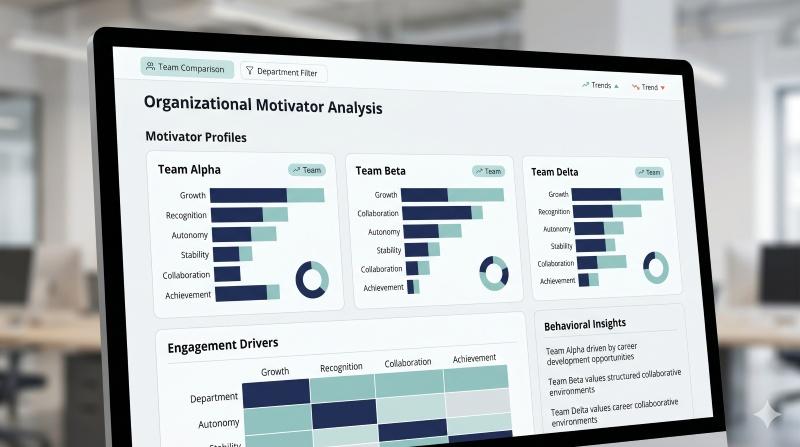
Behavioral assessments can help you understand what motivates different employees and how well their roles match those motivators. These tools also provide valuable insights into individual performance by measuring and identifying factors that drive or hinder worker productivity. That matters because “one motivation program” usually fails across an entire organisation.
This is where structured assessment data can complement engagement surveys: it helps HR move from generic fixes to role- and team-specific interventions.
How to motivate employees: manager practices that move the metrics
Leaders love strategy decks. Employees feel motivated by what happens on Tuesday. To truly drive motivation in business, it’s essential to take a holistic approach—addressing both intrinsic and extrinsic factors to create a comprehensive, well-rounded strategy that sustains engagement and organizational success. Leaders can best support their employees by encouraging independence and providing helpful feedback, and coaches can amplify this using behavioral coaching tools for leaders, which leads to higher job satisfaction and long-term commitment.
Weekly recognition that does not become noise
- be specific
- tie it to meaningful outcomes (quality, customer, speed, reliability, customer loyalty)
- make it consistent
Autonomy with guardrails
Motivation rises when people own outcomes. It dies when they own blame.
Set:
- clear goals (what success means)
- clear constraints (time, budget, risk)
- clear ownership (who decides)
Growth that is visible, not promised
Career growth is not a once-a-year conversation.
Build a simple rhythm:
- one growth goal per quarter
- one new skill focus
- one real project that stretches capability
McKinsey’s HR Monitor highlights gaps in feedback frequency and development practices in many organizations, which is the kind of quiet failure that erodes motivation over time.
Performance reviews as coaching, not judgment theater
Performance reviews should do three things:
- clarify expectations and help employees understand how their work contributes to organizational goals by setting clear and achievable goals
- reinforce progress
- remove blockers
If performance reviews feel unpredictable or political, motivation collapses and employee engagement becomes performative.

Rewards and incentives: design extrinsic motivation that does not break the system
Extrinsic motivation is not evil. It is just easy to misuse.
Use financial incentives and performance based rewards for two things only:
- Reinforce a specific behavior you can observe and measure
- Signal priorities when tradeoffs are real (speed vs quality, revenue vs churn, output vs safety)
Gallup’s published summaries of engagement research repeatedly show sizeable differences between high- and low-engagement teams on outcomes leaders actually care about, including productivity, profitability, absenteeism, and turnover.
What works (and stays fair)
- Monetary rewards tied to measurable outcomes that employees can influence (not vague “company performance” lotteries).
- Tangible rewards used sparingly for defined wins (finish a migration, reduce defects, improve CSAT), especially in building and motivating high-performing sales teams.
- Recognition that is timely and specific, not annual and generic.
What backfires
- Incentives that feel controlling or arbitrary.
- Programs that reward one function while creating extra work for another.
- Bonus designs that push short-term output while punishing long-term quality.
If you need a simple guardrail: pay and incentives should protect trust first, then drive performance.
Evidence check on “rewards undermine motivation”
The best-supported nuance is: tangible rewards can reduce intrinsic motivation under certain conditions, especially when rewards are expected and controlling rather than informational. The Deci, Koestner, and Ryan meta-analysis is still a foundational reference here.
Overcoming barriers: burnout, low engagement, and underperformance
Motivation problems often get mislabeled as attitude problems. In mid-size companies, they’re usually system problems. Addressing these issues means creating an environment where employees are given opportunities to take on challenging tasks, which keeps them engaged and helps foster a sense of competence and mastery. When employees are motivated, they become more resilient and adaptable to change—qualities that are essential in today’s competitive, fast-paced business environment.
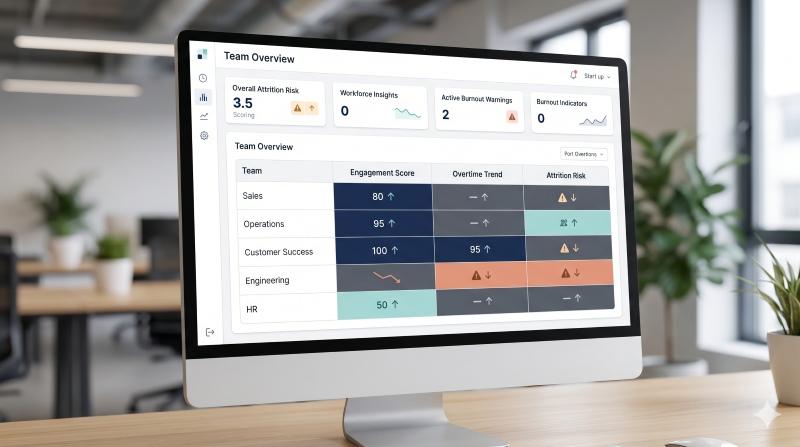
Early warning signals you can track
- Engagement or intent-to-stay drops concentrated in one team or manager span
- Absenteeism trend up over 4–8 weeks
- Workload markers: overtime, after-hours messages, cycle-time delays
- Performance variability spikes (some people carrying the whole output)
Fix the system before you “fix the person”
Common root causes:
- unclear priorities
- role confusion
- constant context switching
- approval bottlenecks
- manager capability gaps
Interventions that consistently help (and can be supported by early risk and readiness alerts):
- simplify priorities for the quarter (fewer “top priorities” than execs think is possible)
- reset decision rights (who owns what)
- remove one recurring meeting or approval step per workflow
- rebalance workloads within two weeks, not “next quarter”
Underperformance: a clean, non-dramatic approach
Keep it operational:
- define expected outcomes for specific tasks
- agree on a short improvement window
- provide support (coaching, training, tools)
- measure progress weekly
This protects the team and keeps trust intact. When employees are motivated and understand how their personal goals align with organizational goals, they are more likely to contribute effectively to team and company objectives.
If you want measurement that does not swing wildly with last week’s events, add a stable baseline. Behavioral data helps you understand what different employees need to feel motivated and where role fit friction will show up.
If you want to see how this looks with your own teams, you can test OAD with a pilot group and compare motivator patterns against engagement and retention signals.
Conclusion: build a motivated workforce with behavioral data
Motivation in business improves when you treat it as a measurable operating system:
- define the drivers that matter
- measure motivation and engagement regularly
- segment by manager and role
- intervene with specific manager behaviors
- monitor retention and performance shifts
- commit to continuous improvement in leadership strategies and engagement practices, especially in how founders and CEOs make strategic hiring and promotion decisions
A motivated workforce fosters a supportive and positive atmosphere, helping attract top talent and strengthening your organization’s reputation.
If you want to see how OAD performs on your own roles and teams, you can test OAD with a small pilot group and compare motivation signals with behavioral data instead of gut feel.

FAQ: motivation in business and employee motivation
How do you measure employee motivation?
Use a short pulse survey (engagement + intent to stay) paired with operational signals like absenteeism, internal mobility, performance trends, and regretted attrition. Segment by manager and role to find root causes quickly.
What motivates employees most at work?
Common motivational factors include feeling valued, meaningful work, progress and growth opportunities, autonomy with clarity, fair systems, a manageable workload, and experiencing a sense of belonging, accomplishment, or security. The mix varies by role and individual, which is why segmentation matters.
Do financial incentives improve employee performance long term?
They can, when they reinforce specific behaviors and sit on top of fair pay and clear expectations. Poorly designed incentives can shift focus to short-term gains and weaken intrinsic motivation depending on structure and context.
How do you keep employees motivated without raising pay?
Strengthen intrinsic motivators: role clarity, autonomy, growth, recognition, and workload balance. Also fix fairness issues. People lose motivation faster from perceived unfairness than from “not getting another perk.”