Hiring more people isn’t the same as building a high-performing workforce.
If you want to scale efficiently, serve customers better, and retain top talent, it’s time to stop guessing and start optimizing your workforce with science-backed strategies.
What Does It Mean To Optimize Workforce Today?
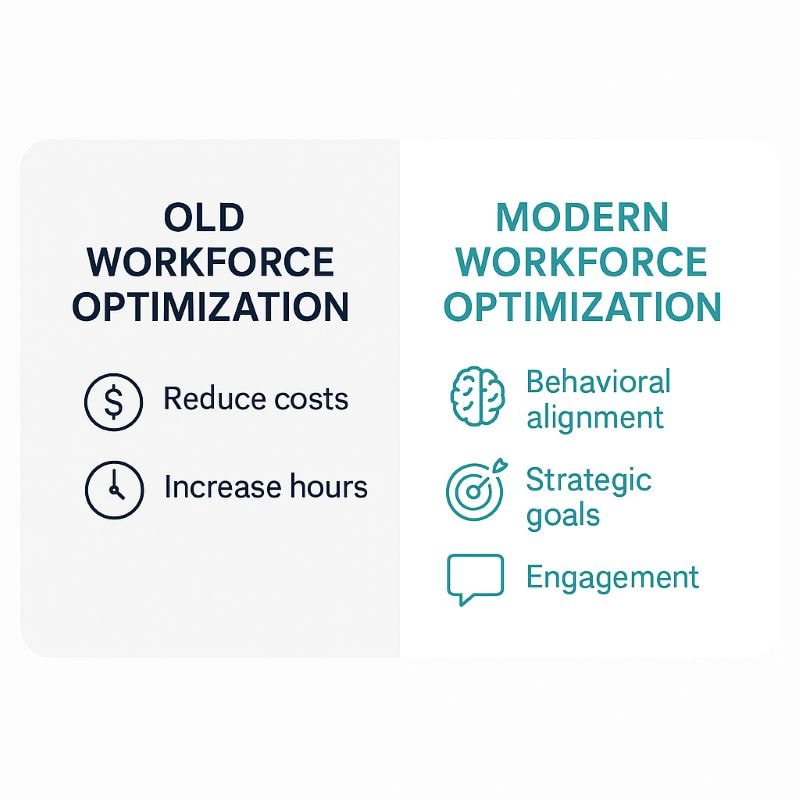
When most companies talk about optimization, they’re thinking in terms of costs or headcount. But real workforce optimization is about aligning the right people with the right roles—so your team isn’t just busy, but truly effective. By utilizing employee performance data to identify which employees excel at specific tasks, organizations can enable more effective staffing and role assignment.
It’s the strategic process of ensuring your workforce is positioned to execute on your company’s vision. That includes understanding employee behavior, anticipating customer demands, and ensuring everyone is working toward the same objectives.
Unlike outdated approaches that focus purely on efficiency, modern optimization takes into account human factors: motivation, collaboration style, cognitive load, and cultural alignment. This shift transforms optimization from a mechanical process into a people-first performance strategy. Successful workforce optimization means integrating analytics, effective talent acquisition, performance management, and people-first strategies to maximize employee productivity and overall business value. Building an agile workforce that can quickly adapt to changing business needs is now essential for effective workforce optimization.
And it pays off. Companies that align their workforce with strategic objectives don’t just move faster—they outperform competitors across productivity, retention, and customer satisfaction.
Why Workforce Optimization Drives Business Success
A well-optimized workforce isn’t just more efficient—it’s more engaged, more aligned, and more capable of driving long-term results.
According to Gallup, companies with highly engaged employees see 21% higher profitability and 17% higher productivity. These gains aren’t just internal wins—they translate directly to better customer experiences, stronger brand reputation, and more resilient growth.
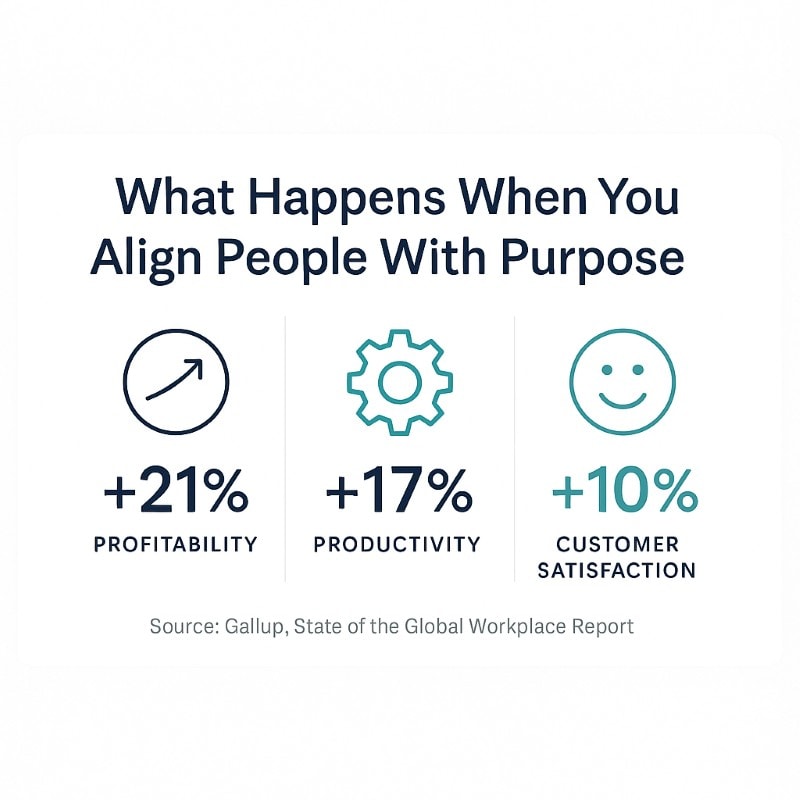
When every team member understands their role, plays to their strengths, and feels supported by leadership, performance naturally improves. Add behavioral alignment to the mix, and you unlock a deeper layer of cohesion that traditional management systems often overlook.
Ultimately, optimizing your workforce means creating the conditions for people to excel—so your business can do the same. These efforts are essential drivers of overall business success, fueling sustainable growth, productivity, and long-term achievement.
The Core Benefits of Workforce Optimization
Optimizing your workforce isn’t just a tactical move—it’s a long-term investment in your organization’s agility, resilience, and growth capacity. Labor optimization is a key component of these benefits, as it strategically aligns workforce practices to improve productivity, efficiency, and cost-effectiveness.
Let’s break down the key benefits:
- Higher retention: When people are placed in roles that match their behavioral strengths, they stay longer and contribute more.
- Increased productivity: Employees perform better when their tasks align with how they naturally think and work.
- Agile teams: An optimized workforce adapts more quickly to shifting customer preferences and market trends.
- Better customer experiences: Engaged employees deliver stronger service, which leads to improved customer satisfaction scores and loyalty.
- Lower operational costs: Labor optimization helps reduce labor costs and improve profitability by aligning roles and balancing workloads, which reduces turnover, inefficiency, and unnecessary overhead.
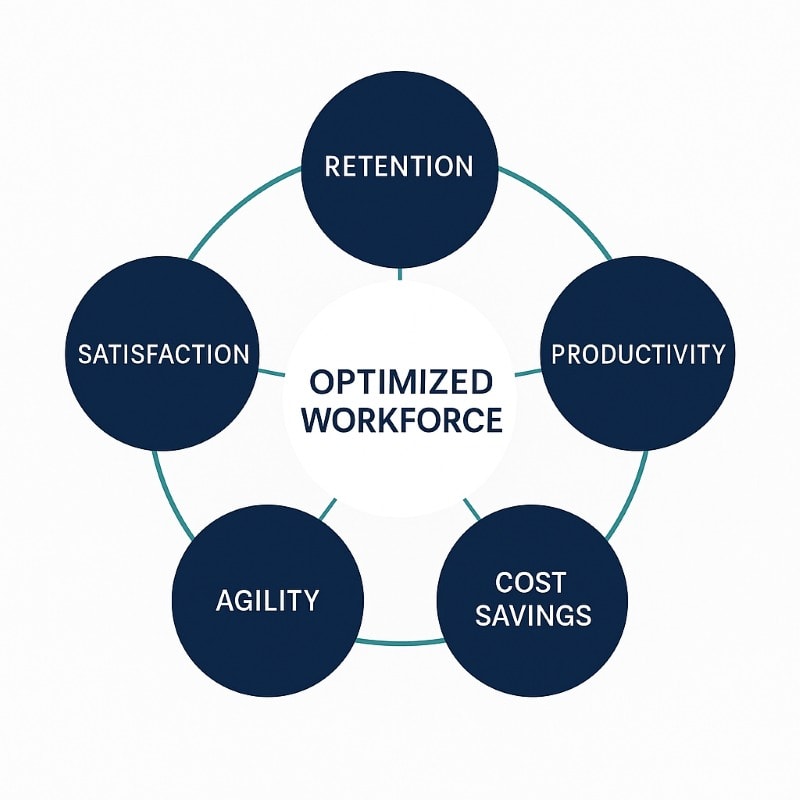
What do all these outcomes have in common? They stem from knowing your people—not just what’s on their resumes, but how they actually behave, collaborate, and grow inside your organization.
How Behavioral Science Transforms Optimization
Most companies hire based on experience and gut instinct. While assessing existing skills is important for understanding workforce capabilities and identifying skill gaps, behavioral science provides deeper insights for workforce optimization. But behavioral science adds a layer of precision that gut feeling simply can’t match.
Tools like OAD’s behavioral assessments reveal how candidates naturally respond to pressure, communicate with teammates, and make decisions. These insights help managers place people in roles where they’ll thrive—not just survive.
Imagine hiring a team lead who’s technically competent but conflict-avoidant. Without behavioral data, you might not know that until friction arises. But with behavioral insights up front, you can predict team dynamics and proactively build a more cohesive group.
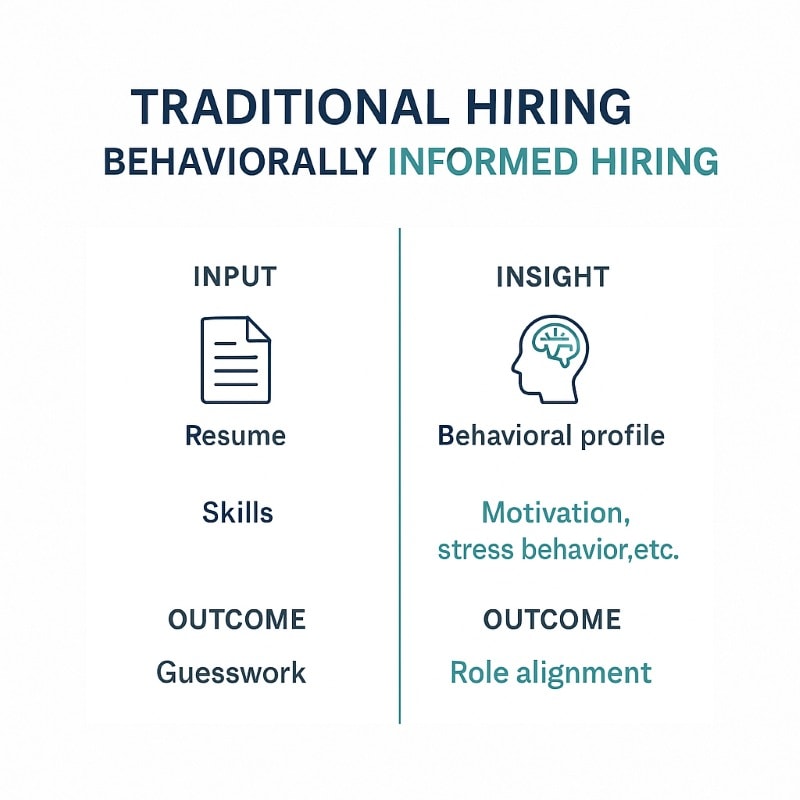
And the benefits don’t stop at hiring. Ongoing workforce optimization uses behavioral data to refine communication strategies, anticipate burnout risks, and create personalized development plans. It turns your workforce strategy from reactive to predictive.
Strategic Workforce Planning: Beyond Staffing Levels
Hiring more people isn’t always the answer. Strategic workforce planning means looking ahead—mapping your talent needs to your business strategy, not just your current vacancies.
This starts with understanding how your organization will evolve over the next 6 to 24 months. Analyzing your current human resources helps identify skill gaps and areas for development to meet future demands. Are you entering new markets? Launching new products? Restructuring departments? Each of these shifts impacts the roles, skills, and behaviors your workforce needs.
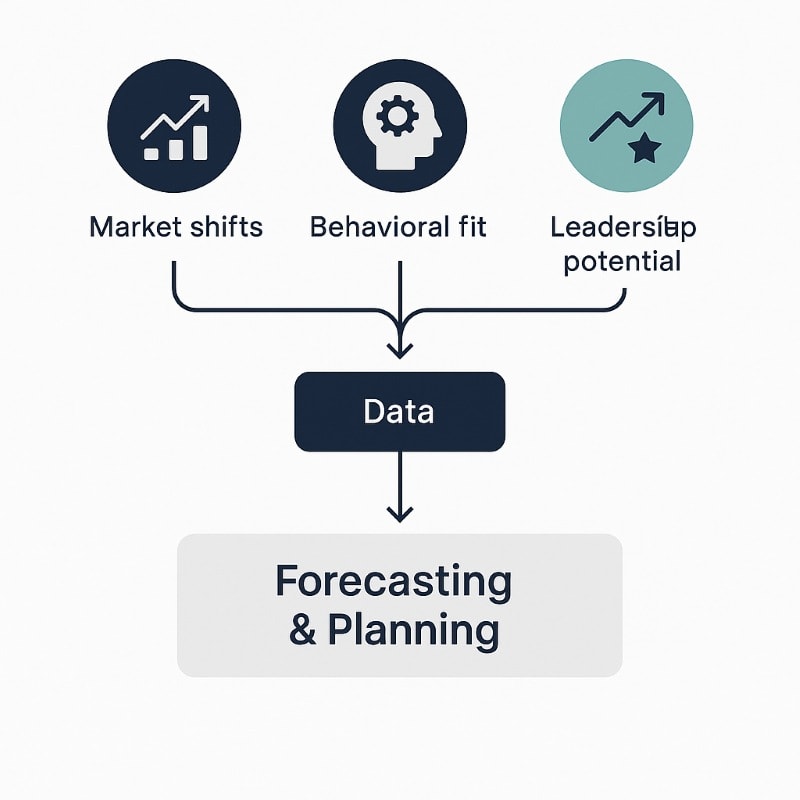
Relying on past org charts won’t cut it. Instead, use behavioral and cognitive data to forecast how existing team members will handle increased complexity, manage change, or take on leadership. Incorporating forecasting processes is essential for predicting future workforce needs and ensuring optimal resource allocation.
By aligning your future workforce with your long-term objectives, you avoid costly overhiring, reduce churn, and build a team that’s agile by design—not by chance. Implementing solutions and talent acquisition strategies will address identified gaps and ensure the right talent is in place for organizational success.
Using Data to Measure What Matters
You can’t optimize what you don’t measure. Measuring key metrics is essential for guiding workforce optimization, as it provides clear benchmarks that inform decision-making and align efforts with organizational goals. Yet too many companies rely on vague metrics like “overall satisfaction” or outdated annual reviews to gauge workforce performance.
Effective workforce optimization depends on consistent, actionable data. This includes behavioral assessments, performance metrics, and employee engagement surveys—measured at regular intervals, not just once a year.
For example, tracking cognitive load can help prevent burnout before it impacts productivity. Monitoring behavioral trends can reveal early signs of misalignment or leadership gaps. And layered metrics—like combining engagement data with role performance—give you a true pulse on workforce health.
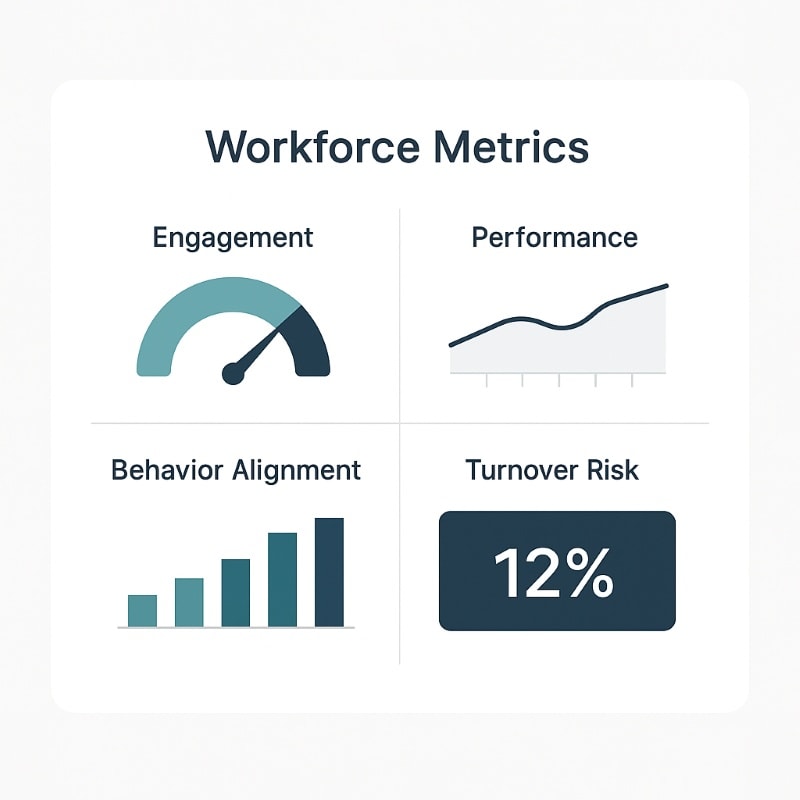
Platforms like OAD bring all of this data into one place, helping you turn insights into action. Data analytics enables organizations to analyze workforce data, uncover trends, and derive actionable insights for strategic decision-making.
Leveraging Technology for Workforce Optimization
The best workforce strategies aren’t just people-driven—they’re tech-enabled.
Modern workforce optimization tools go far beyond scheduling software or payroll systems. They integrate behavioral insights, automate repetitive tasks, and give leaders real-time visibility into performance trends and team dynamics.
Workforce management software can track employee availability, forecast staffing needs, and flag gaps before they become bottlenecks. Shift management tools further optimize scheduling and staff allocation, ensuring the right people are in place during peak periods and streamlining operational efficiency. When paired with behavioral data, these platforms help managers assign tasks based not just on capacity, but on natural working styles. Integrating quality management systems also helps maintain high service standards, ensure compliance, and support continuous improvement by monitoring customer interactions and agent performance.
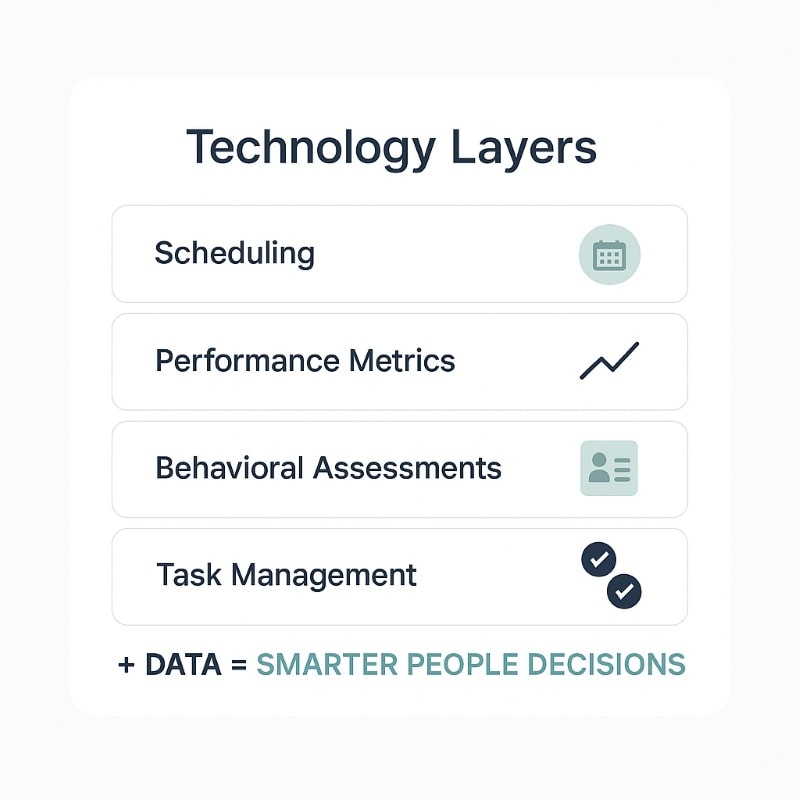
Automating low-value tasks also frees up your team to focus on meaningful work—boosting both productivity and employee satisfaction. Leveraging customer data allows you to further refine workforce strategies, improve service quality, and increase customer satisfaction. The result? A more agile, responsive, and scalable workforce.
Boosting Employee Satisfaction and Morale
You can’t optimize your workforce if your employees feel undervalued, overworked, or misaligned.
True optimization means creating an environment where people thrive—not just perform. Performance management practices that set clear goals, provide feedback, and acknowledge achievements can boost employee morale. That starts with understanding what motivates them, how they learn, and where they want to grow.
Development programs tailored to behavioral profiles help employees build skills in ways that feel natural—not forced. Recognition strategies aligned with communication styles ensure that praise actually lands. And when people feel seen, supported, and set up for success, their job satisfaction soars.
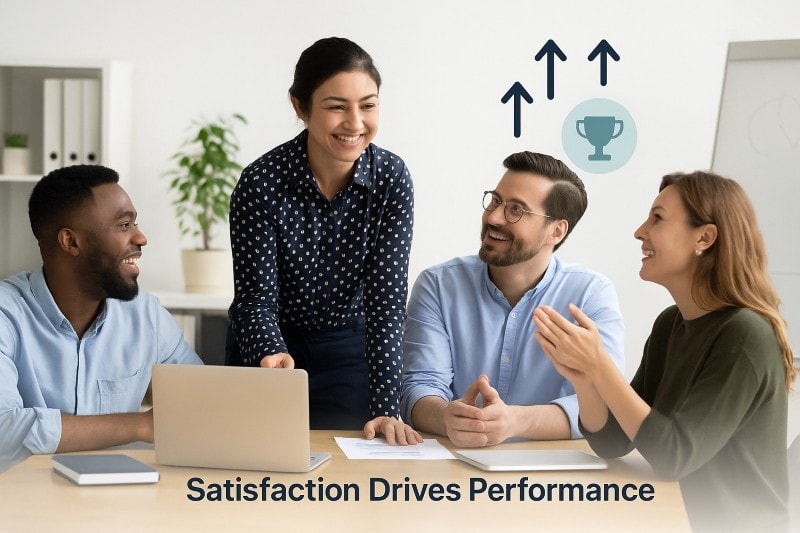
It’s not just good for morale—it’s good for business. These strategies also improve employee satisfaction, leading to better business outcomes. Engaged employees are more productive, more loyal, and more likely to become internal advocates for your company culture.
Aligning Employees with Business Strategy
The most successful companies don’t just have strong strategies—they have teams who understand and embody them.
Workforce optimization bridges the gap between high-level goals and day-to-day execution. When employees see how their role contributes to broader objectives, they become more invested, more proactive, and more resilient in the face of change. Aligning workforce efforts with organizational objectives ensures that every team member is working toward the same benchmarks, driving productivity and operational efficiency.
Behavioral alignment plays a critical role here. Workforce engagement management differs from workforce optimization by focusing specifically on employee engagement, motivation, and retention through strategies like feedback, recognition, and wellness programs. A high performer in one department might struggle in another if their natural working style doesn’t fit the demands of the role. But when you align behaviors with business needs, you create momentum—not friction.
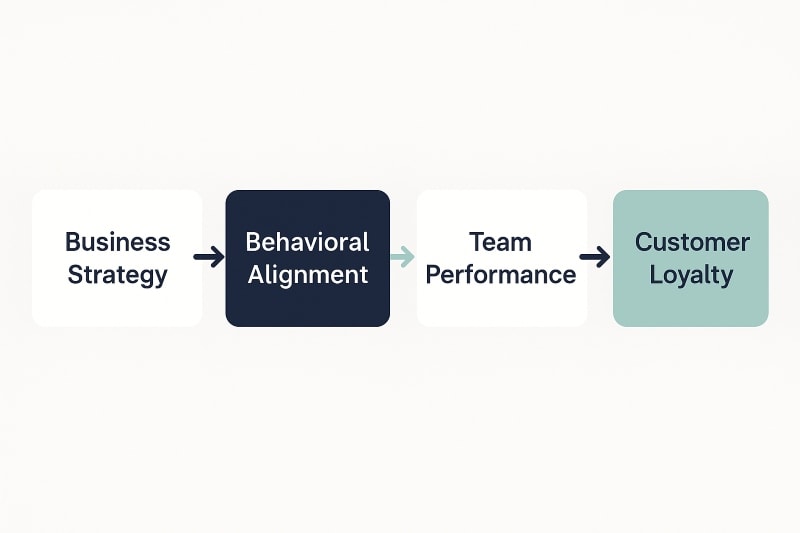
This alignment doesn’t just improve individual performance. It drives customer loyalty, enhances decision-making, and accelerates company-wide growth.
The Role of Human Resources in Driving Optimization
In today’s most effective organizations, HR isn’t just an administrative function—it’s a strategic powerhouse.
Human resources teams are uniquely positioned to lead workforce optimization efforts. They sit at the intersection of people, data, and culture, making them the natural owners of alignment, engagement, and performance strategies. HR also plays a critical role in supporting career development, helping to foster employee retention, job satisfaction, and growth by providing continuous learning opportunities and clear advancement pathways.
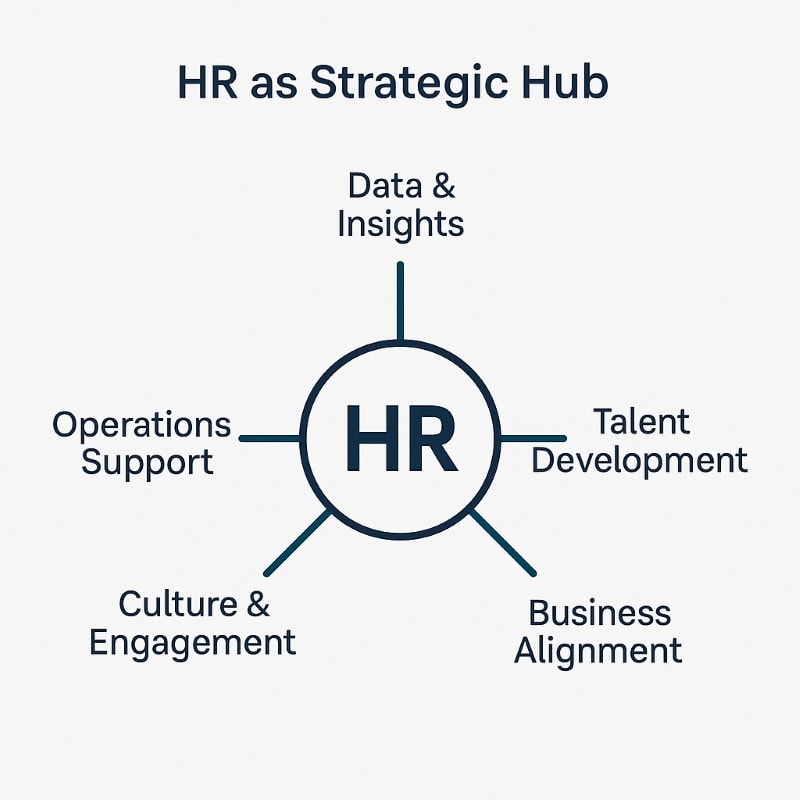
By using tools like behavioral assessments, performance reviews, and workforce analytics, HR can shift from reactive support to proactive leadership. They can identify rising stars, detect early signs of disengagement, and ensure that staffing decisions support long-term business goals.
When HR steps into this strategic role, it doesn’t just elevate the department—it transforms the entire organization.
Fostering Employee Development and Growth
Employee development isn’t a perk—it’s a core pillar of effective workforce optimization. When organizations invest in targeted training programs, mentorship, and clear career advancement pathways, they boost employee efficiency, satisfaction, and long-term productivity.
Strategic development doesn’t just prepare employees for their current roles—it equips them to adapt to shifting customer demands and evolving strategic objectives. It’s a future-proofing strategy that supports both individual growth and business agility.
Workforce management software plays a critical role here. By tracking employee performance, analyzing workforce data, and identifying skill gaps, companies can build personalized development plans that align with both career aspirations and business needs.
The result? A high-performing, engaged, and future-ready workforce—one that’s motivated to grow and empowered to deliver exceptional customer satisfaction in a dynamic marketplace.
Avoiding Common Optimization Mistakes
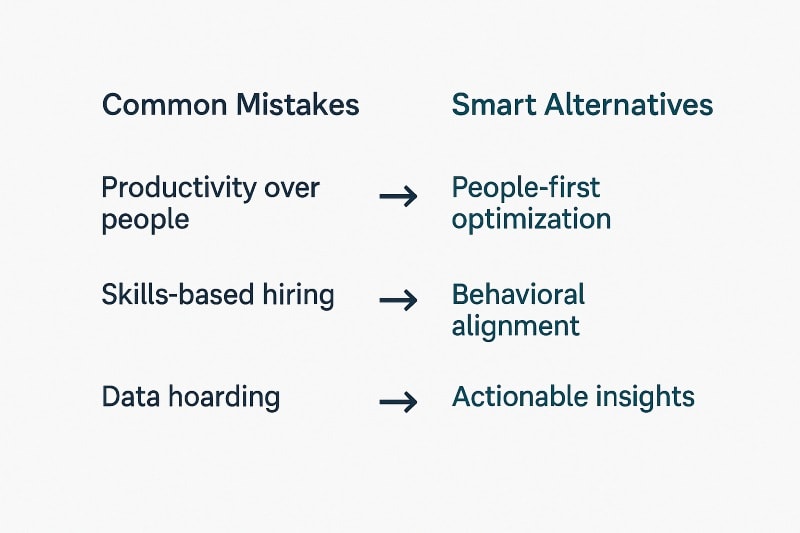
Even with the best intentions, workforce optimization can go sideways if you focus on the wrong things—or ignore the right ones.
Mistake #1: Prioritizing productivity over people.If optimization becomes a numbers game, you risk burning out your top performers and creating resentment among the rest. The goal should be to create productive employees who are also engaged and aligned with company values. Efficiency without engagement is a short-term win and a long-term liability.
Mistake #2: Ignoring behavioral misalignment.You can have the right skills on paper, but the wrong behavioral fit in practice. That disconnect leads to poor communication, missed expectations, and underperformance—especially in high-stakes roles.
Mistake #3: Collecting data, but not acting on it.Surveys, assessments, and analytics mean nothing if they don’t lead to better decisions. Data must be tied to clear action steps, not buried in dashboards or reports.
Avoiding these pitfalls isn’t just about damage control—it’s about unlocking the full potential of your workforce by aligning intention with insight.
How to Get Started: A Practical Optimization Framework
Workforce optimization doesn’t happen overnight—but it also doesn’t require a massive overhaul to get started.
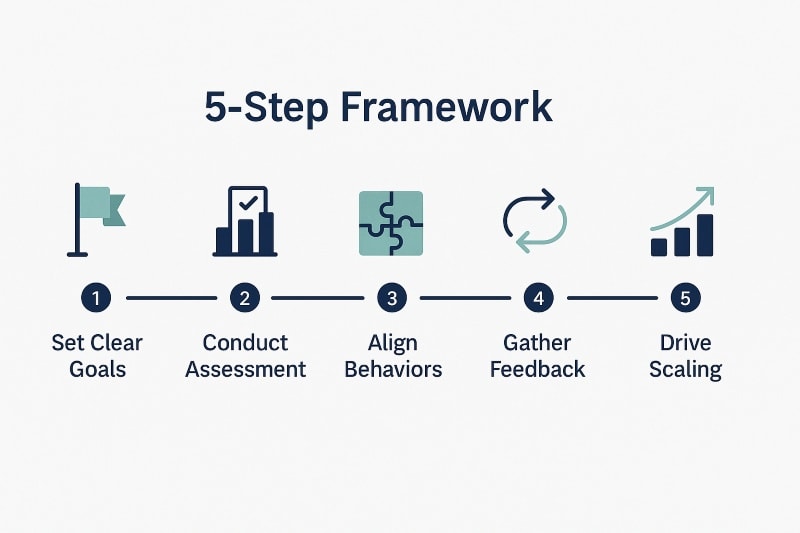
Here’s a simple, science-backed framework to launch your efforts:
Step 1: Define strategic objectives.Clarify what success looks like for your business in the next 12–24 months. Growth? Innovation? Stability? Your workforce strategy should reflect those goals.
Step 2: Assess your current workforce.Use behavioral and cognitive assessments to map out your team’s natural strengths, gaps, and misalignments. This is your baseline.
Step 3: Align roles, not just responsibilities.Go beyond job titles. Match employees to roles that fit their working style, communication preferences, and leadership potential.
Step 4: Implement with feedback loops.Start with a pilot. Track key metrics, gather qualitative feedback, and adjust as needed. Optimization is a process—not a one-time fix.
Step 5: Scale what works.Once your initial framework gains traction, expand it across departments, roles, and processes.
With the right tools and a clear roadmap, even small changes in alignment can unlock exponential returns across performance, engagement, and retention. Workforce optimization offers organizations a range of benefits and solutions, including improved efficiency, higher employee satisfaction, enhanced customer experiences, and access to advanced tools and software for effective workforce management.
Workforce Optimization Best Practices
To unlock the full value of workforce optimization, companies need more than good intentions—they need systems, data, and discipline.
One of the most effective strategies is analyzing workforce data to make smarter staffing decisions. By understanding who performs best in which roles—and when—leaders can ensure the right people are in the right place at the right time.
Technology plays a key role here. Automating repetitive tasks allows employees to focus on higher-value work, which increases productivity, reduces burnout, and improves job satisfaction.
Performance management systems are another critical component. These tools track key metrics like employee performance, engagement levels, and customer satisfaction scores—turning day-to-day operations into a source of continuous insight.
And with the help of workforce optimization software, organizations can streamline these efforts: forecasting staffing needs, reducing labor costs, and improving business performance across the board.
The common thread? Data-driven decision-making, paired with employee-centric management systems, creates a culture of continuous improvement that benefits both the workforce and your customers.
Monitoring Progress and Sustaining Results
Workforce optimization isn’t a one-and-done initiative—it’s a continuous process that demands ongoing measurement, refinement, and strategic focus.
Tracking key metrics like employee productivity, customer satisfaction, and operational efficiency allows leaders to validate what’s working—and quickly pivot when it’s not. This ongoing evaluation ensures that optimization efforts stay aligned with both organizational objectives and evolving workforce dynamics.
Workforce analytics and data analysis reveal trends, highlight performance gaps, and inform smarter decisions. Regular workforce assessments help identify emerging skill gaps and shape targeted development plans—keeping employees aligned, adaptable, and growth-ready.
Workforce management software plays a central role in this feedback loop. It automates performance tracking, supports proactive task management, and helps forecast future staffing needs with precision.
The result? A system of continuous improvement that sustains the benefits of workforce optimization over time—driving measurable business success and maintaining your competitive edge in a dynamic market.
Key Components of Workforce Optimization
Workforce optimization isn’t just about efficient staffing—it’s about aligning people, processes, and data to drive both performance and long-term business outcomes. At its core, it’s a strategic framework that combines human insight with technology to create high-functioning, future-ready teams.
Strategic Workforce Planning
Effective optimization starts with clarity. Strategic workforce planning involves assessing current capabilities, identifying talent gaps, and forecasting future needs. By anticipating shifts in the market and aligning resources proactively, companies ensure they have the cognitive and behavioral strengths in place to meet evolving demands.
Performance Management with Real Impact
Modern performance management is about more than annual reviews—it’s about real-time feedback, clear expectations, and actionable data. When tied to cognitive ability and behavioral fit, performance frameworks don’t just evaluate—they empower. The result? Stronger engagement, improved job satisfaction, and measurable gains in productivity.
Employee Development for Agility and Retention
Upskilling isn’t optional in today’s environment. Targeted development programs help employees build new cognitive skills, adapt to role changes, and grow into leadership. Organizations that invest here don’t just retain talent—they unlock it.
Technology-Driven Optimization
Workforce management tools and analytics platforms play a critical role. From automating scheduling to surfacing trends in employee performance, these technologies allow HR teams to make smarter, faster decisions. When combined with cognitive and behavioral insights, the result is a precision hiring and development strategy.
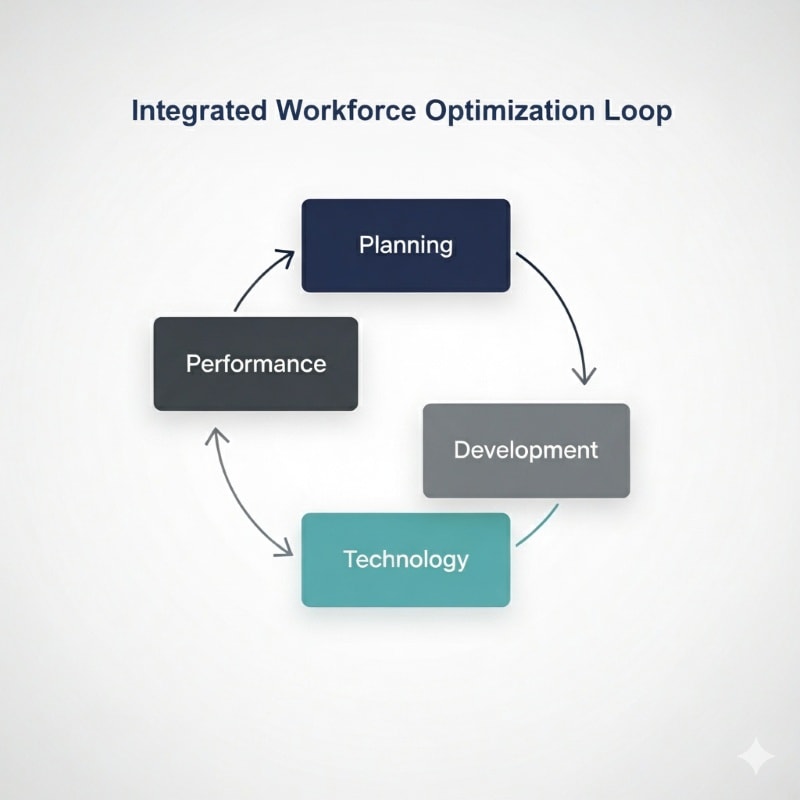
Together, these elements create a scalable system—one that aligns individual strengths with organizational goals and builds a workforce equipped for complexity and growth.
Workforce Optimization Tools That Drive Results
Strategic hiring is only one part of the equation. To truly optimize performance across your organization, you need tools that turn workforce data into measurable outcomes. Today’s most effective teams rely on an integrated suite of technologies to boost efficiency, improve retention, and align talent with evolving business needs.
Workforce Optimization Software
These platforms help automate core processes—scheduling, forecasting, and reporting—reducing manual overhead and ensuring teams are staffed intelligently. By eliminating guesswork, organizations stay agile and responsive, even as conditions shift.
Data Analytics for Informed Decision-Making
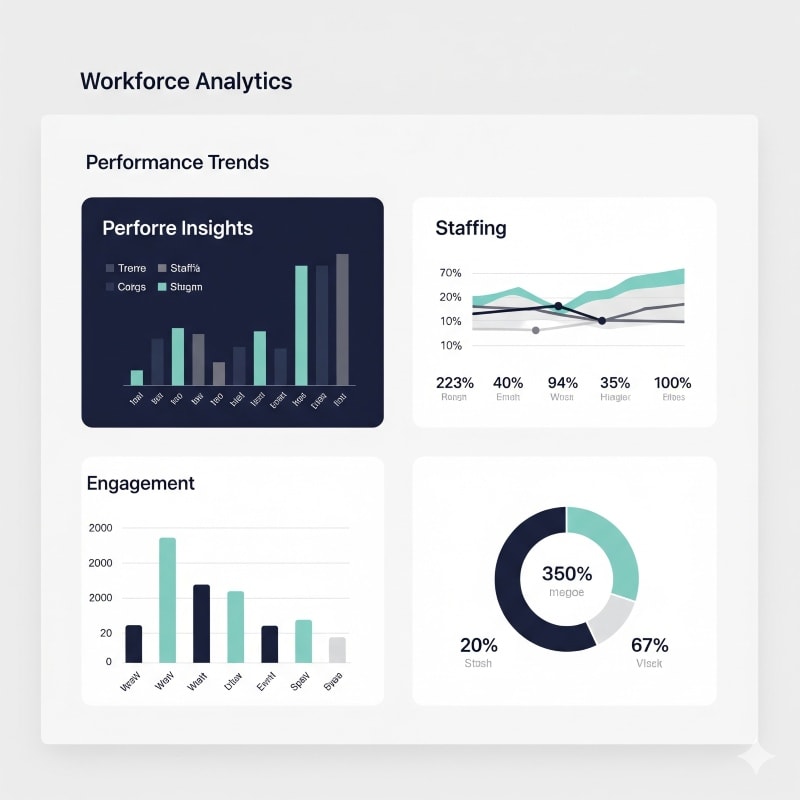
Modern analytics platforms give HR and operations leaders the visibility they need to track key metrics like employee performance, engagement, and team productivity. These tools surface trends and challenges before they become costly problems—supporting proactive decisions.
Performance Management Systems
Beyond tracking outputs, today’s performance tools support coaching, development, and continuous feedback. When paired with cognitive and behavioral insights, they help managers reinforce strengths, close skill gaps, and build high-performing teams from within.
Learning Management Systems (LMS)
Employee development is a cornerstone of optimization. LMS platforms support skill-building at scale—delivering role-specific training, tracking progress, and promoting continuous learning. When integrated with cognitive assessments, these systems ensure training is not only relevant, but retention-worthy.
Specialized Optimization Tools
From workforce analytics to quality management systems, additional tools help pinpoint performance patterns, identify gaps, and maintain high service standards. When used together, these solutions don’t just optimize individual performance—they align the entire organization toward shared outcomes.
Looking Ahead: The Future of Workforce Optimization
The future of workforce optimization will be shaped by intelligent technology and an increasingly dynamic workplace. AI, machine learning, and IoT are redefining how companies use workforce data—enabling smarter forecasting, more adaptive scheduling, and deeper visibility into performance and engagement.
As remote and hybrid models become permanent fixtures, optimization strategies must adapt. Supporting a distributed workforce requires new approaches to performance management, communication, and behavioral alignment—without sacrificing agility.
Strategic workforce planning will become a core differentiator, helping organizations attract and retain top talent in a competitive market. And as automation expands, investing in workforce optimization software and skills management programs will ensure that human capital remains aligned, empowered, and engaged.
Businesses that prioritize employee development, leverage emerging technologies, and commit to ongoing optimization won’t just keep up—they’ll lead.
You don’t need to guess who will thrive in your organization—you can know.
With OAD’s behavioral and cognitive assessment tools, you’ll gain deep insights into how your people think, collaborate, and lead. From hiring to development to succession planning, our science-backed platform helps you optimize your workforce with confidence.
Ready to align your team with your strategy? Start with the Top Performer Profile and see how workforce optimization can transform your business from the inside out.