Every effective leader shares one trait: self-awareness. A self assessment of leadership skills isn’t just a reflective exercise — it’s a mirror that reveals how leaders think, communicate, and inspire. When done right, it transforms intuition into insight, helping managers evolve from decision-makers into catalysts for growth across their teams and organizations.
What Is a Self Assessment of Leadership Skills?
A self assessment of leadership skills is a structured reflection process that helps leaders evaluate how effectively they influence, communicate, and make decisions, as well as assess their ability to handle challenging situations and make strategic decisions. Unlike performance reviews that measure outcomes, self-assessment focuses on behaviors — the patterns that shape leadership effectiveness over time.
Through guided reflection or validated tools such as psychometric assessments and a research-based leadership style quiz, leaders gain clarity on their leadership style, strengths, and developmental gaps. It is important to complete the self-assessment process thoroughly to gain valuable insights into your leadership abilities, emotional intelligence, and personal growth. This awareness helps managers in identifying their current skill set and areas for development, as well as identifying both strengths and gaps in their leadership skill set.
At OAD, we’ve seen that leaders who combine self-assessment with behavioral data outperform their peers in both engagement and performance metrics — because they manage based on insight, not assumption.
Why Self-Assessment Matters for Managers
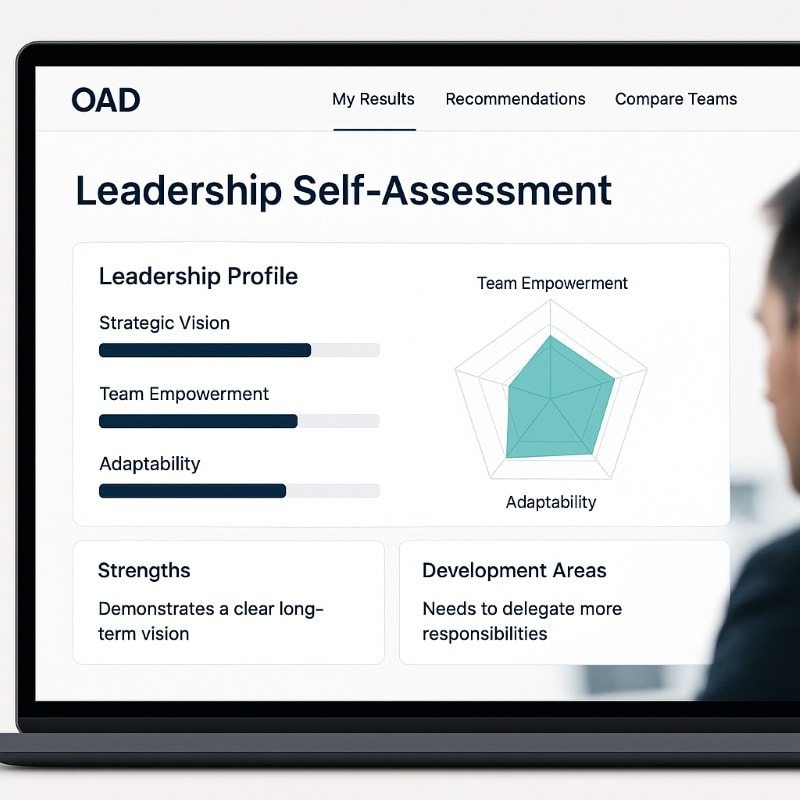
Leadership isn’t static — it either evolves or erodes. For managers, regular self-assessment is the difference between repeating the same mistakes and leading with intention. Self-assessment matters because it directly impacts leadership effectiveness and can shape the trajectory of a manager’s career. By examining how they communicate, make decisions, and handle conflict, leaders uncover blind spots that might quietly undermine their credibility.
Research from Harvard Business Review shows that leaders with high self-awareness are more trusted and drive higher team performance. Self-assessment creates that foundation by leading to a better understanding of one’s leadership style and communication methods. It transforms vague feedback into actionable insight, turning leadership development from guesswork into a measurable process.
For organizations, encouraging managers to assess their leadership skills builds a culture of accountability and growth — one where honest and fair reflection is seen as strength, not weakness. Fair and honest feedback is essential in the self-assessment process to ensure meaningful improvement.

Understanding Your Leadership Style
Every leader has a distinct approach — the tone they set, the pace they expect, the way they handle disagreement. For those in leadership roles, a leadership self-assessment helps reveal these patterns, providing insight into which style dominates your decision-making and how it impacts your team.
Common frameworks identify styles such as authoritative, democratic, coaching, or laissez-faire. Each comes with strengths and potential pitfalls: the authoritative leader drives results but can stifle input; the democratic leader builds collaboration but risks indecision. Some leadership styles foster a creative environment and encourage innovative thinking. Knowing your default mode allows you to adapt instead of react.
Psychometric tools, like OAD’s scientifically validated assessments, go deeper than quizzes — mapping how behavioral tendencies align with leadership demands. This awareness helps managers tailor their communication, delegate more effectively, and build trust through consistency, self-awareness, and developing a sense of how they are perceived by others.

How to Conduct an Effective Leadership Self-Assessment
A leadership self-assessment works best when it’s structured, honest, and repeated over time. To prompt your self-assessment, consider the following questions that help you reflect on your leadership skills, strengths, and areas for improvement. It’s not about judging competence — it’s about tracking growth. Here’s how effective leaders approach it:
- Choose the right framework or tool. Use validated assessments that measure leadership behaviors, not just personality traits. Tools like OAD’s behavioral analysis help translate reflection into measurable data.
- Reflect on recent experiences. Identify moments when your decisions shaped team outcomes — good or bad. These are leadership case studies in disguise.
- Gather feedback. Ask peers, supervisors, co-workers, and each team member for specific examples of your leadership impact. Gathering feedback from co-workers as well as team members ensures a collaborative evaluation process, and feedback from each team member can provide unique insights. Anonymous 360° feedback often yields the most honest insight.
- Spot patterns. Look for recurring strengths or blind spots that influence performance.
- Create an action plan. Define concrete steps — new habits, training, or mentorship — to address growth areas.
Self-assessment is most valuable when paired with feedback and accountability. Leaders who make it routine gain deeper self-awareness, better decision-making, and stronger leadership effectiveness across the board.
Characteristics of Successful Leaders
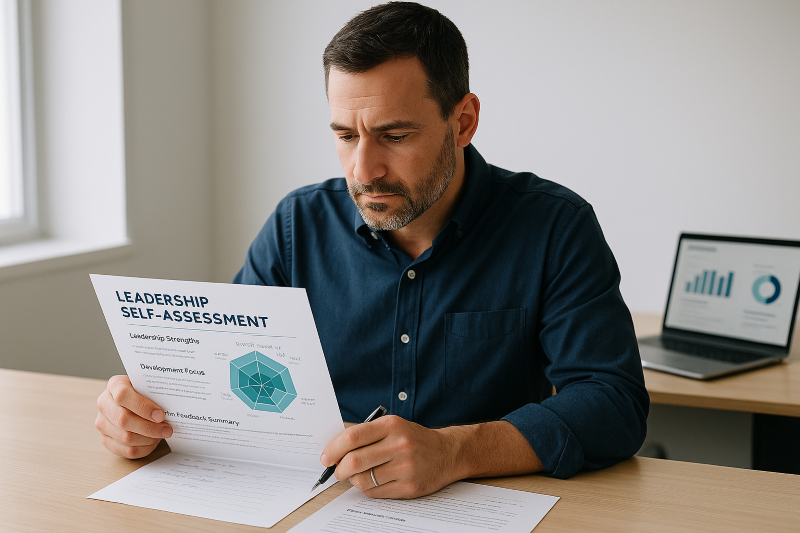
Exceptional leaders share a defining trait: they know themselves deeply and never stop evolving. Self-awareness isn’t optional — it’s the foundation that separates true leadership from management by title alone. The most impactful leaders embrace leadership self assessments as essential tools, not bureaucratic exercises. These insights reveal strengths worth amplifying and blind spots that demand attention. Self assessment questionnaires and feedback from teams become their compass, guiding them toward authentic leadership that resonates with those they serve.
Rigidity kills leadership. The best leaders adapt their approach like skilled musicians adjusting to different audiences — same core talent, different expression. They read the room, understand individual team members, and shift their style accordingly. Today’s business landscape doesn’t reward one-trick leaders. It demands flexibility, quick thinking, and the wisdom to know when change is needed. Leadership self assessments become their mirror, showing which behaviors drive results and which need refinement to boost leadership effectiveness.
Great leaders understand a fundamental truth: their success lives and dies with their team’s growth. They don’t just manage people — they develop them. These leaders build cultures where respect flows naturally, communication happens without fear, and support becomes the norm. They set expectations that inspire rather than intimidate. Their feedback doesn’t just correct; it elevates. When team members thrive, everyone wins.
The learning never stops for effective leaders. They devour industry trends, seek out best practices, and constantly explore new leadership development resources. This isn’t academic curiosity — it’s strategic necessity. Leaders who stay current make better decisions and inspire confidence in their teams. Their commitment to growth becomes contagious, creating organizations where improvement is expected, not exceptional.
Soft skills aren’t soft — they’re the hard foundation of leadership success. Communication, conflict resolution, and time management separate leaders who inspire from those who merely instruct. These capabilities build trust, spark engagement, and drive measurable business performance. When leaders master these skills, they don’t just manage outcomes; they shape them.
True leadership combines honest self-assessment with relentless growth. It’s not a destination but a journey that demands reflection, adaptation, and unwavering commitment to serving others. The leaders who understand this don’t just succeed — they create success for everyone around them.
Turning Insight into Action: Building an Improvement Plan
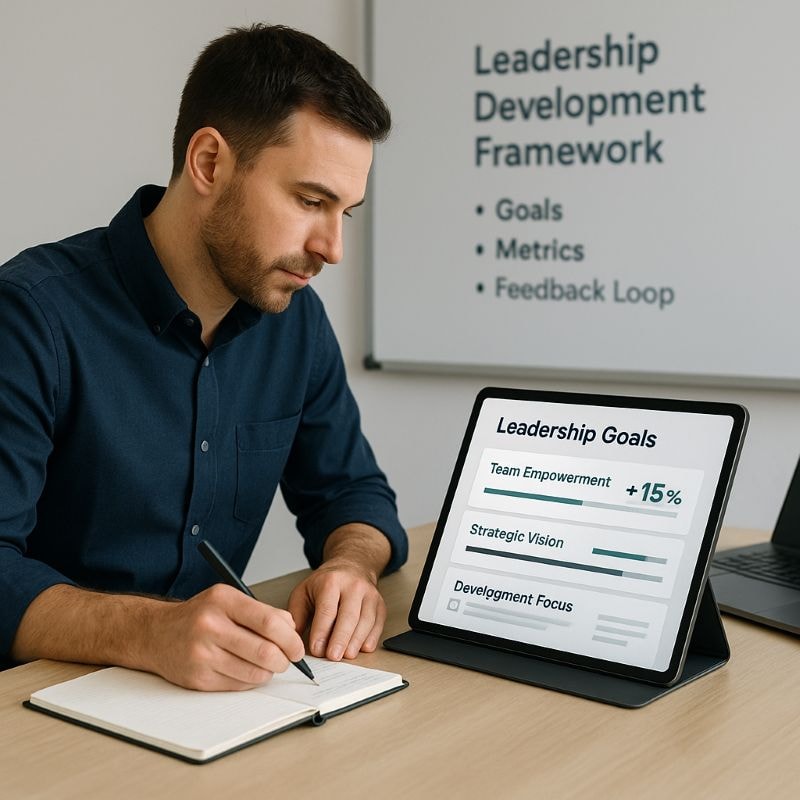
Self-assessment without follow-through is just intellectual decoration. Once you’ve identified your strengths and weaknesses, the next step is to convert insight into a leadership improvement plan — one grounded in data and behavior, not wishful thinking.
Start by selecting two or three critical areas that influence daily performance, such as communication, delegation, or decision-making. Define measurable outcomes for each. As you set future goals and plan for ongoing leadership development, frameworks like SMART goals (Specific, Measurable, Achievable, Relevant, Time-bound) or OAD’s data-driven benchmarks help leaders stay focused on tangible results.
Design teams with data, not gut feel.
Most org-design decisions come down to role fit, leadership style, and team dynamics. OAD reads those signals from a 7-minute behavioral survey, so you can reconfigure roles and teams with evidence instead of guesswork.
Progress shouldn’t rely on motivation alone. Schedule regular check-ins with mentors or HR partners to evaluate what’s improving and what still needs work. Over time, these consistent reviews turn leadership development from an abstract goal into a visible trajectory of growth and can open up new opportunities for career advancement.
Leveraging your organization’s talent pool can further support leadership development by connecting individuals with the right resources, training, and mentorship.
The Role of Feedback in Leadership Growth
No leader sees themselves clearly. That’s why feedback is the essential counterpart to self-assessment — it reveals what self-perception misses. A manager might believe they’re empowering their team, while their employees quietly experience micromanagement. External perspectives turn that disconnect into actionable truth.
The most effective leaders invite feedback before problems escalate. They build systems for it — 360° surveys, peer reviews, or behavioral tools like OAD’s assessments — that normalize honest dialogue. When feedback is regular, it stops feeling like criticism and becomes a shared commitment to growth, providing valuable guidance for leadership development.
The key is response, not reaction. Great leaders treat feedback as data, not as a verdict. They analyze it, look for trends, and adjust behaviors accordingly. This creates psychological safety and models the humility that keeps a team learning together.

Overcoming Common Leadership Challenges
Even the most self-aware leaders stumble. The real differentiator isn’t perfection — it’s resilience, and the ability to overcome obstacles. Common obstacles like resistance to feedback, decision fatigue, or imposter syndrome can quietly derail leadership progress if left unchecked.
Design teams with data, not gut feel.
Most org-design decisions come down to role fit, leadership style, and team dynamics. OAD reads those signals from a 7-minute behavioral survey, so you can reconfigure roles and teams with evidence instead of guesswork.
Effective leaders confront these challenges head-on. They acknowledge emotional triggers, manage stress before it cascades through the team, and adapt their approach when old habits resurface. Behavioral insight from OAD assessments often reveals hidden drivers — like dominance under pressure or avoidance in conflict — that explain these recurring patterns.
When leaders respond with reflection instead of defensiveness, they build credibility. Teams notice. Over time, that consistency fosters trust and stability, even during organizational turbulence. In short: leaders who face their blind spots don’t just survive challenges — they grow stronger because of them.

Personal Growth Beyond the Office
Leadership development doesn’t stop when the workday does. The habits that shape strong leaders — reflection, empathy, curiosity — are the same ones that define how they show up in every part of life. Developing self-awareness and leadership skills outside the workplace is an ongoing process that supports both personal growth and career progression. Investing in personal growth strengthens professional impact because emotional intelligence isn’t a switch; it’s a system.
Leaders who read, seek mentorship, or practice mindfulness build resilience that carries into high-stakes decisions. They stay composed when others panic and adapt when conditions change. That steadiness is what teams interpret as confidence.
Continuous learning, whether through coaching, executive programs, or behavioral assessments like OAD, keeps leadership relevant in a world that changes faster than job titles. Growth outside the office fuels growth inside it — and that’s what separates managers from true leaders.

Bringing It All Together
A self assessment of leadership skills is more than a tool — it’s a habit of reflection that keeps leaders grounded, aware, and adaptable. Regular self-assessment is essential for becoming an effective leader, as it helps identify strengths and areas for growth. When combined with honest feedback and a clear development plan, it becomes the engine for continuous improvement.
The best leaders don’t rely on instinct alone. They use data, introspection, and evidence-based insights to refine how they lead — building teams that trust, perform, and grow. Leadership isn’t a fixed identity; it’s an evolving practice shaped by awareness and action.
Start with the Top Performer Profile to gain science-backed insight into your leadership style and see how behavioral data can strengthen decision-making, communication, and long-term team success.