Implementing data effectively is no longer a technical side project; it is a core management discipline that directly shapes performance, risk, and growth. Without clear data governance, even sophisticated tools produce conflicting reports, data silos, and decision paralysis. This article shows how to implement data across your organization through a practical, governance driven approach that improves data quality, protects sensitive information, and turns data into measurable business outcomes.
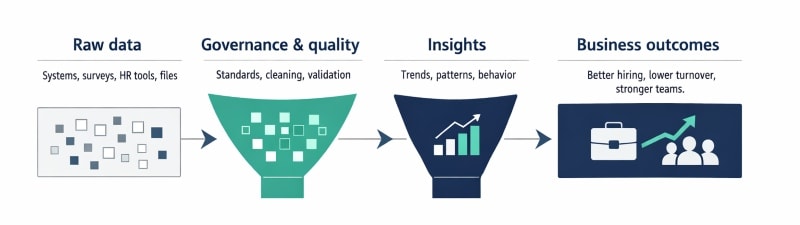
Most organizations say they are data driven. Fewer can explain how a sales report, a customer complaint, and a behavioral assessment move from messy reality to a reliable dashboard that leaders trust. That gap is where data governance lives.
Data governance is the discipline that turns scattered data assets into something you can actually manage. It keeps data accurate, consistent, and secure so people can make decisions without debating which report is correct every week.
When you implement data effectively, you create a shared language around what data means, who owns it, and how it is used to support business objectives. Governance does not exist for its own sake. It exists so leaders can act on data with confidence.
How to Implement Data Governance For Better Business Outcomes
Good data governance directly supports business outcomes. It reduces data silos, improves data quality, and cuts the time people waste reconciling conflicting numbers.
Effective data governance can provide a competitive advantage by supporting business growth and market positioning, making data initiatives a strategic asset rather than just a technical improvement.
A robust data governance program clarifies how data supports key performance indicators, such as revenue growth, customer satisfaction, or employee retention. It aligns data management processes with business goals instead of leaving them buried in IT.
Strong governance also reduces risk. It lowers the likelihood of data breaches, supports regulatory compliance, and avoids penalties linked to mishandled customer data or employee data.
Finally, governance improves operational efficiency. When data formats are standardized, data quality rules are known, and roles are clear, a robust governance program ensures data accuracy, completeness, and consistency, supporting better decision-making.
Understanding Data Governance In Today’s Data Driven World
Data Governance Definition
Data governance is the overall management of an organization’s data assets. It defines how data is collected, stored, accessed, used, and protected.
At a minimum, data governance covers data quality, data security, and compliance. In more mature organizations, it also covers metadata management, data lineage, and how data connects to strategic initiatives such as digital transformation.
The core goal is simple. Data governance ensures that the organization’s data assets are reliable, usable, and trustworthy for everyone who relies on them.
Data Governance vs Data Management vs Data Quality
Data management focuses on the technical processes that move and store data. It covers topics like data integration, databases, ETL jobs, and data flows between systems.
Data quality focuses on whether data is accurate, complete, consistent, timely, and relevant. Data quality management introduces data quality standards and data quality rules. Ensuring data consistency is crucial for effective data integration and reducing errors, as it standardizes data formats and maintains uniformity across systems.
Data governance sits above both. It sets the framework, policies, and roles that shape how data management and data quality work are done. It defines who owns which data, how decisions are made, and which controls are required for sensitive data.
Why Data Governance Is Critical In Today’s Data Driven World
In today’s data driven world, organizations depend on data to make decisions about pricing, hiring, customer experience, and strategic investments. That only works if the data is consistent and trusted.
Implementing data governance is a structured, strategic initiative that requires clear goals and executive support to ensure success across the organization.
Without governance, you get conflicting versions of the truth, hidden data silos, and undocumented logic in spreadsheets. Leaders lose confidence in reports, and decisions slow down.
Effective data governance gives you a repeatable way to implement data across the organization. It reduces surprises and turns data into a strategic asset instead of a constant source of arguments.
Key Elements Of A Data Governance Framework
Data Governance Framework Building Blocks
A data governance framework is the structured approach you use to manage data assets. It describes how policies, standards, processes, and tools fit together.
Typical building blocks include:
- A clear scope of the organization’s data assets
- Data governance policies and data governance processes
- Data quality standards and controls
- Data security and access management
- Regulatory compliance requirements and controls
Robust data governance tools help organizations efficiently analyze data to improve decision-making and reduce delays caused by unreliable sources.
A robust framework turns vague intentions about “better data” into concrete expectations that teams can work with.
Roles And Responsibilities: Data Owners, Data Stewards, Data Custodians
A successful data governance program depends on clarity about roles and responsibilities. In practice that means:
- Data owners are accountable for specific data domains and how they support business objectives.
- Data stewards manage data quality and ensure data quality standards are applied in day to day work.
- Data custodians, often in IT, handle the technical management of data storage, access, and security.
Without these roles, everything related to data is “everyone’s job” and nothing gets solved properly.
The Data Governance Council And Decision Rights
Many organizations create a data governance council or steering committee. This group makes decisions on cross functional data issues such as:
- Which data governance tools to use
- Which data quality challenges to prioritize
- How to manage data across shared platforms
- How to interpret regulatory compliance requirements
The council prevents data decisions from being made in isolation and helps align governance initiatives with business goals.
Data Governance Policies And Standards
Policies and standards are the rules by which the organization manages data. Examples include:
- Data classification and retention policies
- Data access controls for sensitive data
- Data quality standards for customer data or financial data
- Standardizing data formats for key data elements
These policies reduce ambiguity. They give data stewards and technical teams a reference point for daily decisions.
Step 1: Align Data Governance With Business Objectives
Linking Data Governance To Business Goals And KPIs
Effective data governance starts from business objectives, not from technology. Before you design a governance program, you need to know which outcomes you want to influence.
These might include higher customer satisfaction, lower churn, faster hiring, better forecasting accuracy, or improved operational efficiency. Once these outcomes are clear, you can define KPIs and decide which data assets matter most.
When governance and data strategy are tied to KPIs, it becomes easier to justify investments in data governance tools and data quality implementation.
Defining Business Value And Desired Business Outcomes
Every data governance initiative should answer a simple question: what business value will improved data quality and consistency create in this area.
Perhaps it reduces time to close the books each month. Perhaps it cuts the number of manual corrections in HR systems. Perhaps it supports customer personalization that increases retention.
If you cannot link governance activities to a business outcome, they risk being deprioritized when budgets get tight.
Prioritizing The Organization’s Data Assets That Matter Most
Not all data assets deserve the same level of control. Start by identifying the organization’s data assets that have the greatest impact on risk and value.
Customer data, financial data, employee data, and critical operational data are obvious candidates. In many organizations, behavioral and talent data, such as OAD assessments, also belong on this list.
By focusing governance on high value data assets first, you increase the chance of visible wins that build executive support.
Step 2: Map Your Current Data Landscape And Data Assets
Where Your Data Resides: Data Sources, Systems, And Data Formats
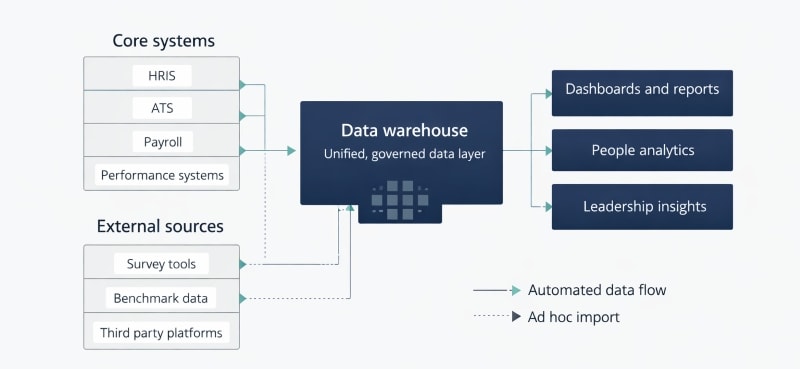
To implement data effectively, you need a clear picture of where data resides today. That includes core systems, data warehouses, spreadsheets, external data sources, and third party tools.
Documenting data sources and data formats helps you understand the complexity of your data ecosystem. It also reveals where standardizing data formats will have the biggest impact.
Identifying Data Silos And Broken Data Flows
Data silos occur when teams keep their own data with no shared standards or integration. These silos create inconsistent data, duplicate effort, and incomplete views of the business.
As you map your data landscape, identify where data flows smoothly and where it stops. Look for handoffs that rely on manual exports, email attachments, or ad hoc spreadsheets. These are prime candidates for governance and data management improvement.
Managing Data Assets Across Existing Systems
Many organizations cannot replace their existing systems quickly. Effective data governance implementation accepts this reality and focuses on coordination, not perfection.
You define data governance processes that span systems, clarify ownership for each data domain, and prioritize interfaces and integration points. You aim for seamless integration where possible and clear rules where perfect integration is not realistic.
Step 3: Design Practical Data Governance Processes
Core Data Governance Processes: From Data Collection To Data Access
Data governance processes translate your framework into repeatable workflows. Typical processes include:
- Data collection standards and validation rules
- Data quality checks and exception handling
- Data access requests and approvals
- Issue management for data quality challenges
Each process should specify responsibilities, required controls, and the data governance tools used to support the work.
Embedding Data Governance Processes Into Daily Operations
Governance fails when it is treated as a separate project. Governance succeeds when it is woven into existing business processes.
For example, onboarding a new customer should automatically trigger specific data quality checks. Launching a new HR survey should follow agreed data governance policies for sensitive employee data.
Link governance to processes people already follow. This keeps implementation realistic and sustainable.
Coordinating Governance With Other Data Management Processes
Data governance does not replace data management. Instead, it guides how data management processes are designed and prioritized.
For example, decisions about standardizing data formats, redesigning data flows, or implementing metadata management should all be informed by your governance framework.
This alignment ensures that data management investments directly support business objectives and governance priorities.
Step 4: Standardizing Data Formats For Consistency And Integration
Standardizing Data Formats And Data Elements
Standardizing data formats is one of the most practical ways to improve data quality and integration. It means agreeing on how key data elements, such as customer IDs, job titles, or product codes, are represented across systems.
Standardization reduces data quality issues caused by inconsistent codes, date formats, or free text fields. It also improves data accuracy when you consolidate data from multiple sources.
Reducing Data Silos Through Common Standards
When teams share common data formats and definitions, it becomes easier to integrate data and reduce data silos. Systems can exchange data with fewer custom mappings, and analytical teams spend less time cleaning and reconciling data.
Common standards do not eliminate the need for local flexibility, but they provide a baseline that keeps the overall data ecosystem coherent.
Ensuring Seamless Integration Across The Data Ecosystem
Standard formats are a precondition for seamless integration. They make it possible to connect core systems, data warehouses, and analytics tools without constant manual intervention.
When new data sources are added, standardization gives you a clear target to align to. This keeps the ecosystem manageable as the organization grows and adds more tools.
Step 5: Implement Data Quality Standards And Continuous Monitoring
Data Quality Standards And Data Quality Rules
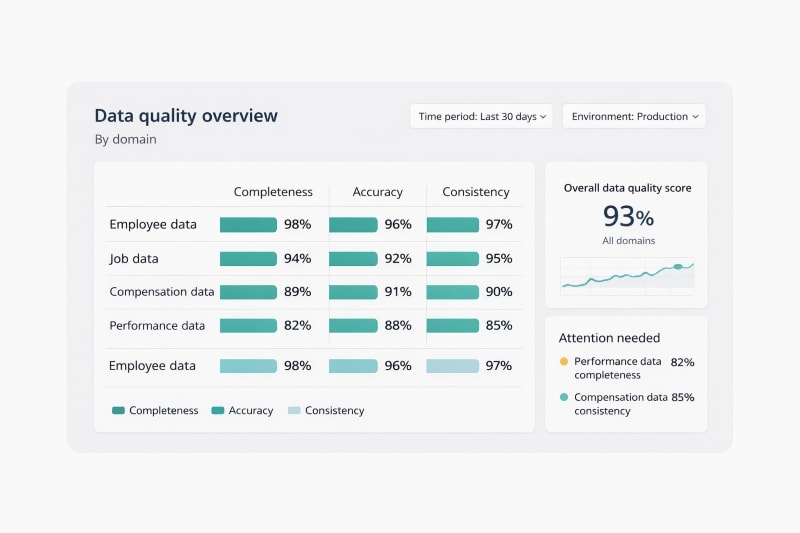
Data quality standards define what “good enough” means for key data elements. They might specify required fields, allowed values, acceptable ranges, or matching rules for deduplicating records.
Data quality rules then translate these standards into checks that can be implemented in systems or data quality tools. Together, they ensure that data quality issues are identified early instead of surfacing in executive reports.
Handling Data Quality Issues And Data Quality Challenges
Even with strong standards, data quality issues will occur. Effective data governance processes define how issues are recorded, prioritized, and resolved.
Data stewards play a central role here. They analyze patterns in data quality challenges, work with data owners to adjust rules, and collaborate with IT to address root causes.
The goal is continuous improvement, not perfection. Each issue is an opportunity to make the data ecosystem more robust.
Continuous Monitoring For High Quality, Consistent Data
Continuous monitoring matters more than occasional clean up projects. Tracking data quality metrics over time lets you see trends, compare data sources, and understand which areas need investment.
Continuous monitoring supports regulatory compliance and builds trust in data. Leaders are more likely to rely on dashboards when they know there is a systematic approach behind the numbers.
Step 6: Strengthen Data Management And Metadata Management
Effective Data Management Processes For Operational Efficiency
Data management processes handle the day to day tasks of storing, moving, and transforming data. These processes must be designed with governance in mind.
Examples include standardized ETL routines, controlled data access patterns, and scheduled data refreshes aligned to business needs. Efficient data management reduces latency and keeps analytics aligned with operational reality.
Metadata Management, Lineage, And Impact Analysis
Metadata describes your data assets. It includes definitions, owners, usage, and technical details such as where data is stored and how it is transformed.
Metadata management and data lineage help you understand how changes in one system affect downstream reports and analytics. This is essential for impact analysis, regulatory compliance, and troubleshooting.
A well maintained metadata repository supports both governance and day to day problem solving.
Supporting Regulatory Compliance With Better Data Management
Regulatory compliance requires evidence. Good data management practices make it easier to demonstrate where data comes from, how it is protected, and how long it is retained.
When governance requirements are embedded in data management processes, audits become less disruptive and less risky for the organization.
Step 7: Protect Sensitive Data And Ensure Data Security
Data Security Foundations: Access Controls, Encryption, Monitoring
Data security is a core part of any data governance program. Sensitive data, such as customer information, health data, or internal HR assessments, must be protected at rest and in transit.
Basic controls include role based access management, encryption, secure authentication, and activity monitoring. These controls should be aligned with data classification policies defined in the governance framework.
Preventing Data Breaches And Managing Sensitive Data
Data breaches are often caused by weak processes, not only by advanced attackers. Misconfigured systems, overshared files, or unmonitored exports can all expose sensitive data.
Governance helps by setting clear rules on where sensitive data may reside, who can access it, and how it must be handled. Training, monitoring, and periodic reviews keep these rules active.
Integrating Data Security Into Data Governance Processes
Data security should not be a separate conversation. It needs to be integrated into every data governance process, from data collection to data access to data archival.
When security is built into governance, you avoid fragmented controls and reduce the likelihood of gaps that attackers can exploit.
Step 8: Meet Regulatory Compliance Requirements
Regulatory Compliance Requirements For Customer And Employee Data
Many organizations handle customer data and employee data that is subject to strict data protection laws and industry regulations. These requirements cover consent, data retention, access rights, and breach notification.
Failure to meet regulatory compliance requirements can lead to fines, reputational damage, and loss of customer trust.
Embedding Compliance Into Data Governance Policies And Processes
Compliance should be designed into your data governance policies, not bolted on later. Policies must specify how data is collected, stored, and used in line with relevant regulations.
Processes should describe how access requests are handled, how data subject rights are respected, and how retention limits are applied.
By embedding compliance into governance, you make it part of everyday operations instead of an annual crisis.
Using High Quality Data To Demonstrate Compliance
Regulatory compliance relies on accurate records. If your data quality is weak, you cannot reliably prove that you followed the rules.
High quality data, supported by data quality standards and continuous monitoring, makes it easier to respond to audits, data subject requests, and regulator questions.
Step 9: Choose Data Governance Tools That Actually Fit Your Organization
Key Features To Look For In Data Governance Tools
Data governance tools should support your framework, not dictate it. Useful capabilities often include:
- Centralized metadata management
- Configurable data quality rules and workflows
- Role based access controls for data owners and data stewards
- Dashboards for data quality and governance KPIs
The goal is to support governance processes and make them repeatable.
Governance Tools For Data Quality, Metadata, And Workflows
Some organizations use a single platform. Others combine specialized tools for data quality, metadata management, and workflow automation.
Whatever you choose, ensure that tools can capture roles, manage data quality issues, and document approvals. That documentation becomes valuable when you need to show how decisions were made.
Ensuring Seamless Integration With Existing Systems Where Data Resides
No governance tool operates in isolation. It must integrate with the systems where data resides, such as ERPs, CRMs, HR platforms, and analytics tools.
Before selection, evaluate how easily the tool connects to your current data ecosystem and whether it will create new data silos or help reduce them.
[Image suggestion: Comparison style visual showing several governance tools and key features such as data quality, metadata, and workflow management.
Alt text: “Comparison of key features across data governance tools.”]
Step 10: Build A Data Driven Culture And Executive Support
Executive Support For A Successful Data Governance Program
Executive support is a strong predictor of whether data governance initiatives survive competing priorities. Leaders must sponsor governance efforts, allocate resources, and set expectations for data driven decision making.
When executives use governed data in their own decision making, it signals that governance is not optional.
Creating A Data Driven Culture Across Functions
A data driven culture is not only about dashboards. It is about everyday habits. Employees ask for data before forming opinions, challenge unclear definitions, and respect processes for managing data assets.
Aligning incentives, training, and communication with this culture is part of a successful data governance program.
Training Data Stewards, Owners, And Business Users
Roles such as data owners and data stewards do not succeed without support. Training should cover both the “why” and the “how” of governance.
Business users also need practical guidance on how to request data, report issues, and apply data governance policies in their work.
Step 11: Continuous Improvement For Data Governance And Data Quality
Measuring What Matters With Key Performance Indicators
Data governance is not a one time project. It is a continuous improvement loop. To manage it, you need KPIs that track:
- Data quality levels by domain
- Number and severity of data quality issues
- Time to resolve issues
- Adoption of standards and policies
These metrics help you understand whether your governance efforts are delivering business value.
Continuous Improvement Loops For Governance Processes
Continuous improvement means periodically reviewing your data governance framework, processes, and tools. You adjust based on feedback from users, changes in regulations, and new business objectives.
This prevents your governance program from becoming rigid and disconnected from reality.
Adapting To Changing Business Needs And Data Landscapes
As the business model evolves, new products launch, or acquisitions occur, your data landscape changes. Governance must adapt.
Effective data governance implementation includes explicit steps for reviewing and updating your framework when the environment shifts.
Where Talent And Behavioral Data Fit: OAD As A Strategic Data Asset
Treating OAD Behavioral Insights As Core Data Assets
Most organizations now recognize the value of customer data and financial data. Fewer treat behavioral and talent data as strategic assets, even though people decisions often drive the largest costs and risks.
OAD’s scientifically validated assessments generate structured, high quality data about how people think, communicate, and work. When you treat this as part of your core data assets, you can integrate it into workforce planning, succession planning, and team design.
Managed under your data governance program, OAD data benefits from the same data quality standards, data security controls, and regulatory compliance protections as other critical data.
Linking Talent Data To Business Objectives, KPIs, And Outcomes
Behavioral data becomes powerful when it is linked to business objectives. Examples include:
- Reducing turnover by aligning people to roles that match their behavioral profile
- Improving team performance by understanding communication patterns
- Supporting data driven hiring decisions that reduce the cost of bad hires
You can define KPIs that connect OAD data to business outcomes, such as retention rates, ramp up time, or sales performance. This turns talent data into a measurable part of your data strategy.
Design teams with data, not gut feel.
Most org-design decisions come down to role fit, leadership style, and team dynamics. OAD reads those signals from a 7-minute behavioral survey, so you can reconfigure roles and teams with evidence instead of guesswork.
Integrating OAD Data Into Your Broader Data Governance Program
OAD data should follow the same governance rules as other sensitive data. That includes clear data owners, data stewards, and data custodians, along with defined access policies and retention rules.
When you integrate OAD into your governance framework, you ensure that behavioral insights are accessible to decision makers in HR and leadership without compromising privacy or compliance.
You can start with the free Top Performer Profile to see how structured behavioral data fits into your broader data governance and data management processes.
Conclusion: Implementing Data Effectively Is A Continuous Practice
Implementing data effectively across an organization is not just a matter of buying tools or cleaning a few spreadsheets. It requires a clear data governance framework, defined roles, practical processes, and a sustained focus on data quality, security, and compliance.
When governance begins with business objectives, prioritizes critical data assets, and integrates with daily operations, data becomes a reliable driver of decisions rather than a source of friction.
Behavioral and talent data, such as OAD assessments, belong in this picture. Managed under your governance program, they provide high quality insights into the people side of performance and risk.
Start with the free Top Performer Profile: 7 minutes, results in 24 hours, no credit card.