That’s because building a high-performing team isn’t just about hiring talent—it’s about aligning people to roles where they can thrive, communicate effectively, and stay accountable under pressure. In this guide, we’ll break down a proven, data-driven framework to help your organization unlock elite performance, starting with the people you already have.
Building High Performing Teams: Why It Isn’t Optional Anymore
In today’s economy, team performance is no longer just a competitive edge—it’s a survival requirement. Whether you’re navigating shifting market conditions or scaling operations, a high-performing team determines how quickly and effectively you hit your organizational goals.
Building high performing teams is a strategic approach that involves implementing best practices and leadership techniques to foster collaboration, communication, and a strong team culture. Top-performing organizations focus on these strategies to ensure their teams are not just busy, but effective—strategically aligned, behaviorally matched to their roles, and empowered to adapt as circumstances change.
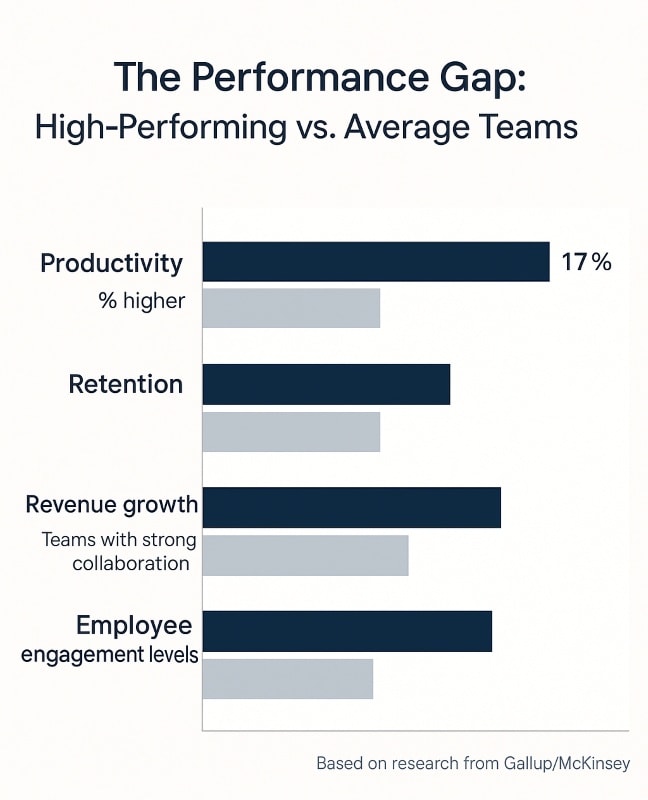
Research from McKinsey shows that high-performing teams can boost productivity by up to 25% in collaborative settings. That kind of leverage doesn’t come from chance—it comes from structure, clarity, and data-driven decision-making. Building high performing teams is essential for creating positive change and successfully navigating organizational change.
The Hidden Cost of Underperforming Teams
Most organizations don’t realize how much performance suffers until it’s too late. Groups struggle with frequent stumbling blocks such as miscommunication, unclear roles, and lack of commitment. When teams are misaligned or lack clarity, the cost shows up everywhere—from missed deadlines and duplicated work to lost clients and declining morale. And these inefficiencies compound over time.
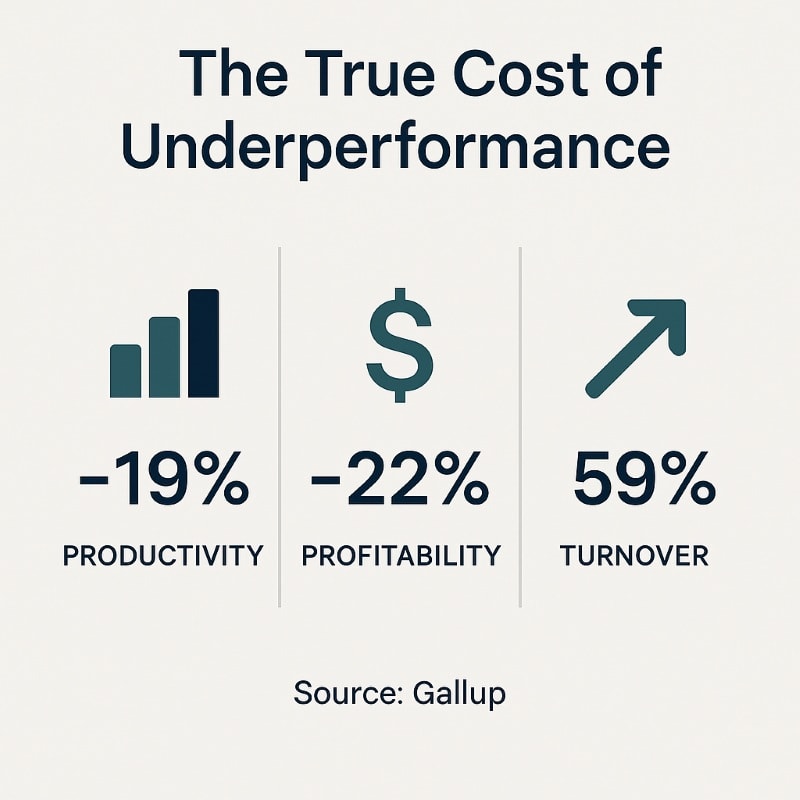
According to Gallup, companies with low employee engagement—often a symptom of weak team dynamics—see 18% lower productivity and 23% lower profitability. When co workers miscommunicate, productivity drops and adapting to change becomes more difficult. But these aren’t just abstract numbers. They represent lost revenue, slowed innovation, and missed opportunities to outperform competitors.
Underperformance isn’t just about hiring the wrong people. It’s about not giving the right people the environment, expectations, and behavioral alignment they need to thrive. And in fast-scaling organizations, that gap can be fatal to growth.
Step Zero: Diagnose Before You Build
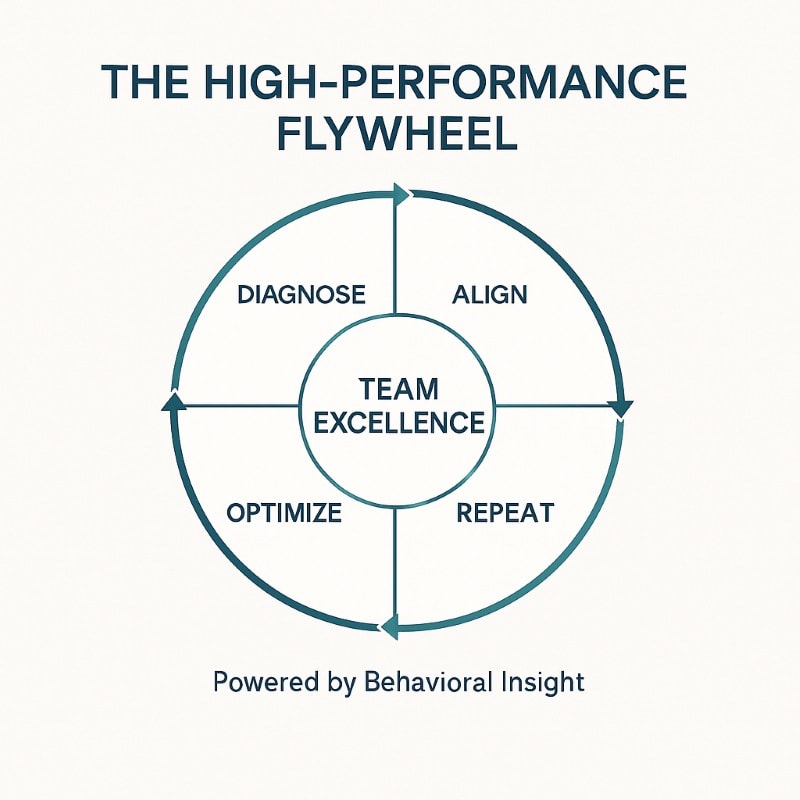
Before you invest in training, coaching, or new hires—pause. Most performance problems stem not from a lack of effort, but from misalignment between people, roles, and expectations. That’s why high-performing teams don’t start with action. They start with insight—specifically, the ability to diagnose issues and understand frequent stumbling blocks that hinder team effectiveness.
In management consulting, this is called a “discovery phase.” At OAD, we call it behavioral diagnostics. The goal is simple: understand what makes each individual tick—how they think, communicate, take initiative, and respond to pressure. Teams often lack self awareness about their challenges, which can lead to persistent problems if not addressed. Then match those traits to the actual demands of the role.
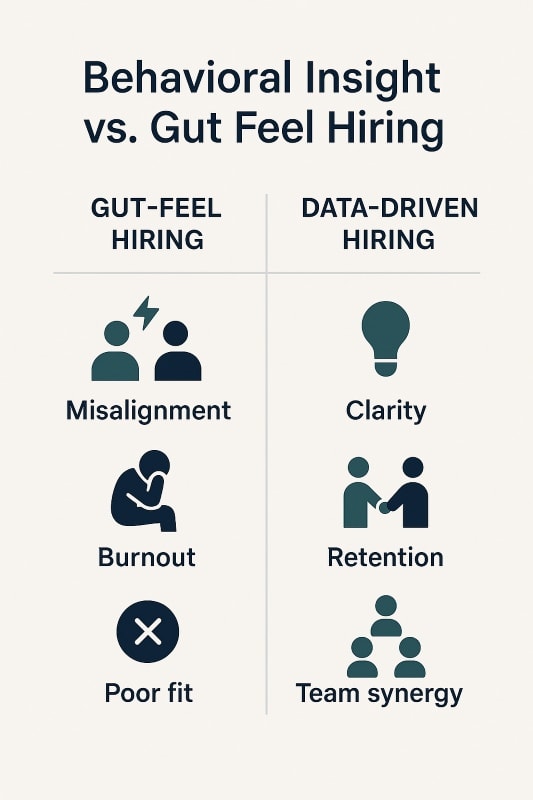
Behavioral assessments reveal what resumes can’t. They identify how someone will show up under real-world conditions—not just in interviews. Drawing on consulting experience, OAD offers frameworks and structured tools that help teams diagnose and address issues effectively. This kind of diagnosis helps teams avoid common stumbling blocks like mismatched leadership styles, poor communication loops, and passive conflict.
Using a diagnostic tool like OAD’s Organizational Alignment Diagnostic helps companies clarify not just what roles they need—but who can actually succeed in them.
Core Principles for Building High-Performing Teams
Define Clear Expectations and Role Standards
Even the most talented individuals will underperform without clarity. The structure needed to set clear expectations and standards is essential for team success. When expectations are vague, priorities shift, standards slide, and accountability becomes subjective. That’s why clear, role-specific expectations are the foundation of every high-performing team.
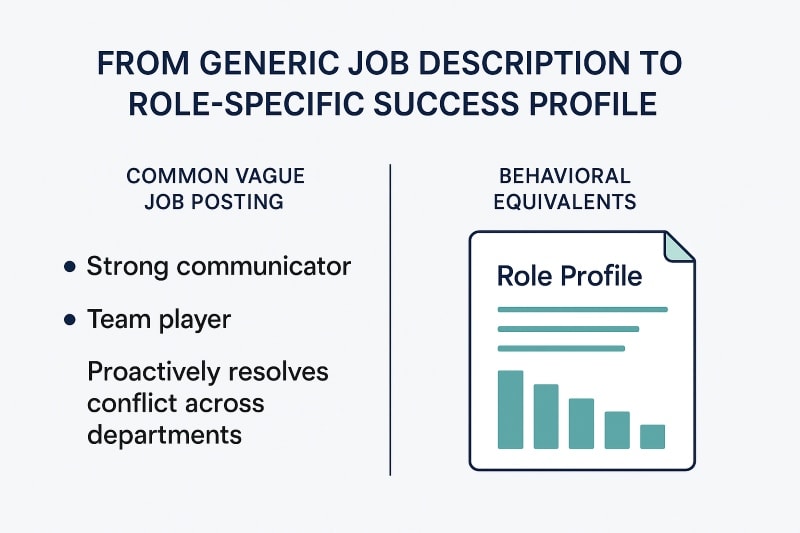
Start by defining what “success” looks like—not in generic terms, but behaviorally. What does initiative mean in this role? What level of independence is expected? How should the person communicate under stress or manage competing deadlines?
This is where high-growth companies often rely on success profiles. These are detailed behavioral benchmarks tailored to each role. They go beyond skills and experience to include performance indicators tied to traits like resilience, urgency, and adaptability, and help ensure that individual goals are aligned with team and organizational objectives.
It’s the difference between saying “we want a strong leader” and specifying “this role requires assertive decision-making under tight deadlines, with low tolerance for ambiguity.” The more specific you are, the more likely you’ll attract (and retain) the right people.
Notably, Amazon is famous for defining what high performance looks like—often through their 16 Leadership Principles. But while their model works at scale, most organizations need a customizable approach. Tools like OAD help fill this gap by creating data-backed success profiles based on your organization’s unique performance needs.
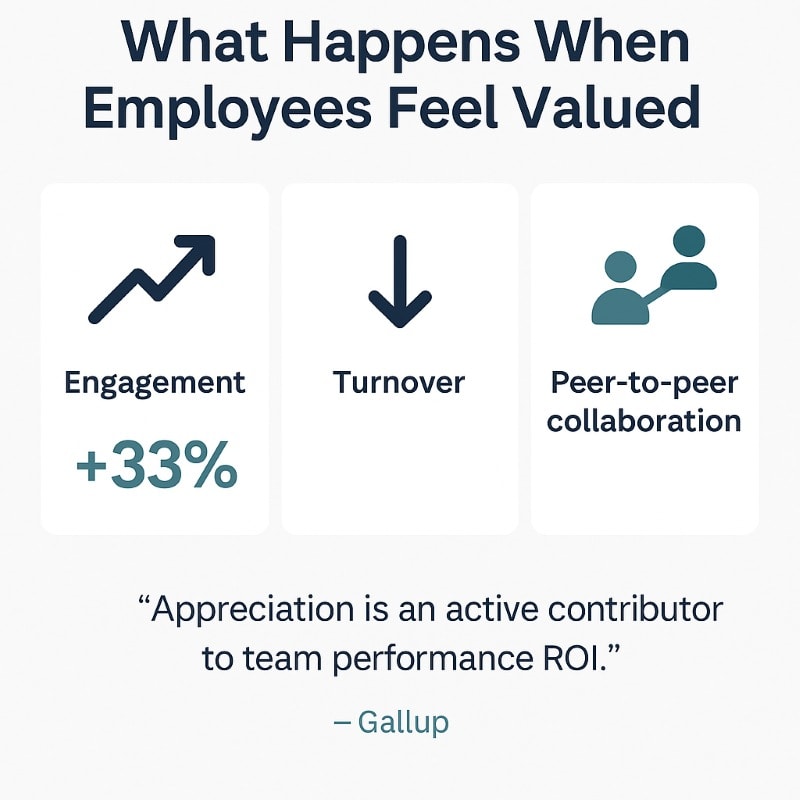
Build a Culture Where Team Members Feel Valued
High-performing teams aren’t driven by pressure—they’re fueled by purpose. And at the core of that purpose is a simple truth: when team members feel valued, they commit more deeply, collaborate more effectively, and perform at their best. Recognizing and leveraging each other’s strengths is essential to building a supportive team culture where everyone can contribute their best and learn from one another.
According to a SHRM study, 79% of employees who quit cite a lack of appreciation as a major reason for leaving. This isn’t about praise for praise’s sake—it’s about building a culture where contributions are seen, growth is supported, and individuals feel psychologically safe to speak up, take risks, and stay engaged.
Start by embedding recognition into daily operations, not just annual reviews. This includes:
- Regular check-ins that acknowledge progress toward development goals
- Public shoutouts for collaborative wins
- Feedback loops that reinforce alignment, not just correction
The behavioral nuance here matters. Some team members thrive on public recognition; others value private affirmation or growth-oriented feedback. OAD’s personality data can help leaders tailor how recognition is delivered so that it lands with impact.
When people feel valued, performance becomes self-sustaining—and the team dynamic becomes a force multiplier rather than a bottleneck.
Strengthen Accountability Without Micromanagement
In high-performing teams, accountability isn’t a buzzword—it’s a shared behavior that drives consistency, trust, and results. But here’s the catch: accountability can’t be imposed from the top down. If it is, it risks sliding into micromanagement and eroding trust.
The most effective teams create structure that supports autonomy. This means:
- Clear, measurable goals tied to team and individual performance
- Transparent tracking tools (like shared scorecards or dashboards)
- Regular check-ins focused on alignment, not surveillance
Regular check-ins and shared expectations help keep everyone on the same page, ensuring team members are aligned and informed as they work toward common goals.
Take Howard Schultz’s approach at Starbucks: he emphasized “personal ownership” at every level—from barista to boardroom. The message was clear: you’re trusted, but you’re also responsible. That mindset, when reinforced by the right systems, builds teams that take initiative, follow through, and hold each other to high standards.
Peer accountability is a powerful accelerator here. When team members are empowered to set expectations together—and respectfully challenge each other when those expectations aren’t met—accountability becomes cultural, not positional.
OAD can support this by surfacing behavioral tendencies around follow-through, structure, and urgency—helping leaders assign responsibilities that match natural strengths.

Foster Collaboration Across Functional Lines
In most organizations, silos form faster than strategy. Marketing doesn’t talk to sales, product skips over operations, and teams default to what’s familiar—not what’s effective. This kind of disconnect kills momentum and prevents high-performing teams from scaling.
Cross-functional collaboration isn’t just about communication—it’s about building shared ownership over business outcomes. When team dynamics are structured around collective goals rather than isolated metrics, you create alignment that drives innovation and speed. Understanding and addressing specific team needs is essential to ensure that collaboration is effective and that each group can contribute their strengths toward shared objectives.
Amazon is a clear case study here. Jeff Bezos’ famous “two-pizza teams” principle was designed to keep teams small, agile, and deeply cross-functional. Instead of handoffs, there’s shared decision-making—and that creates speed without sacrificing accountability.
To implement this, focus on:
- Defining shared objectives that span departments
- Creating rituals for visibility (e.g., weekly syncs, shared KPIs)
- Encouraging team effort through co-ownership of deliverables
Behavioral insight plays a critical role here, too. Some team members are naturally collaborative; others prefer autonomy. OAD’s data helps leaders design collaborative structures that work with people’s instincts—not against them.

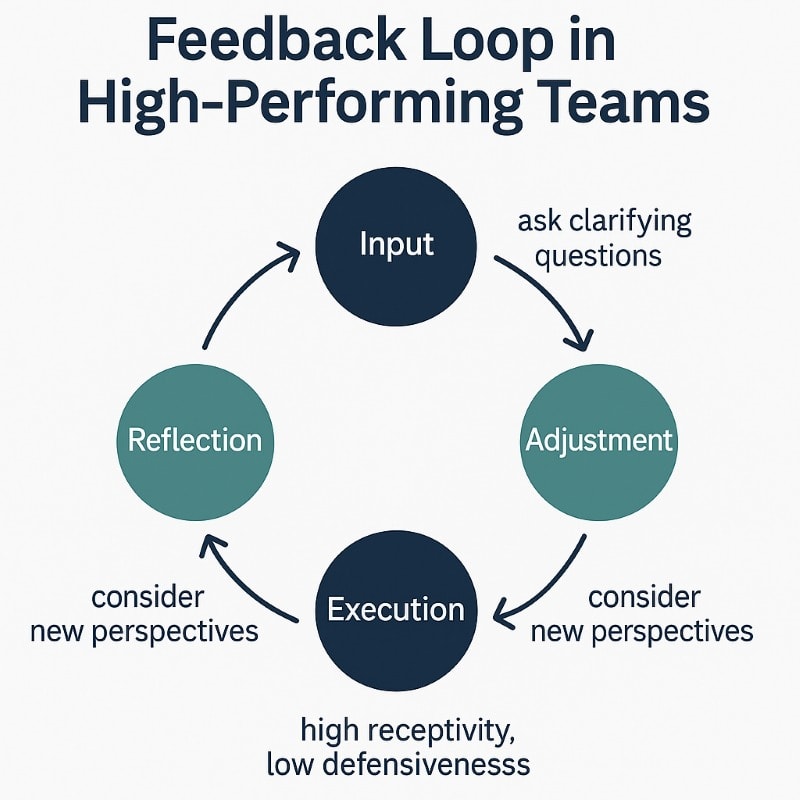
Train Teams to Embrace Feedback Loops
High-performing teams don’t avoid feedback—they build systems to invite it. They know that real growth doesn’t come from top-down reviews once a year, but from everyday conversations that help people reflect, adjust, and improve in real time.
Creating a culture of continuous learning requires more than just “open door” policies. It means embedding feedback into your operating rhythm:
- Quick retros after projects or campaigns
- Real-time input during meetings (“What’s working, what’s stuck?”)
- Structured peer reviews focused on team dynamics, not just tasks
The goal isn’t perfection—it’s progress. And progress is only possible when feedback is normalized, not feared.
Here’s where behavioral insight makes the process more effective: some team members are naturally receptive to feedback, while others see it as confrontation. OAD helps managers understand those preferences in advance, so they can tailor how and when feedback is delivered to maximize impact without triggering resistance. Teams can also learn solutions tailored to their unique challenges through personalized feedback and training, ensuring that development programs address specific needs such as conflict resolution, communication, and adapting to organizational change.
Feedback loops also build resilience. When teams learn how to work through challenges openly—without blame—they become better equipped to navigate change, handle conflict, and course-correct quickly.
Decision Making That Drives Results
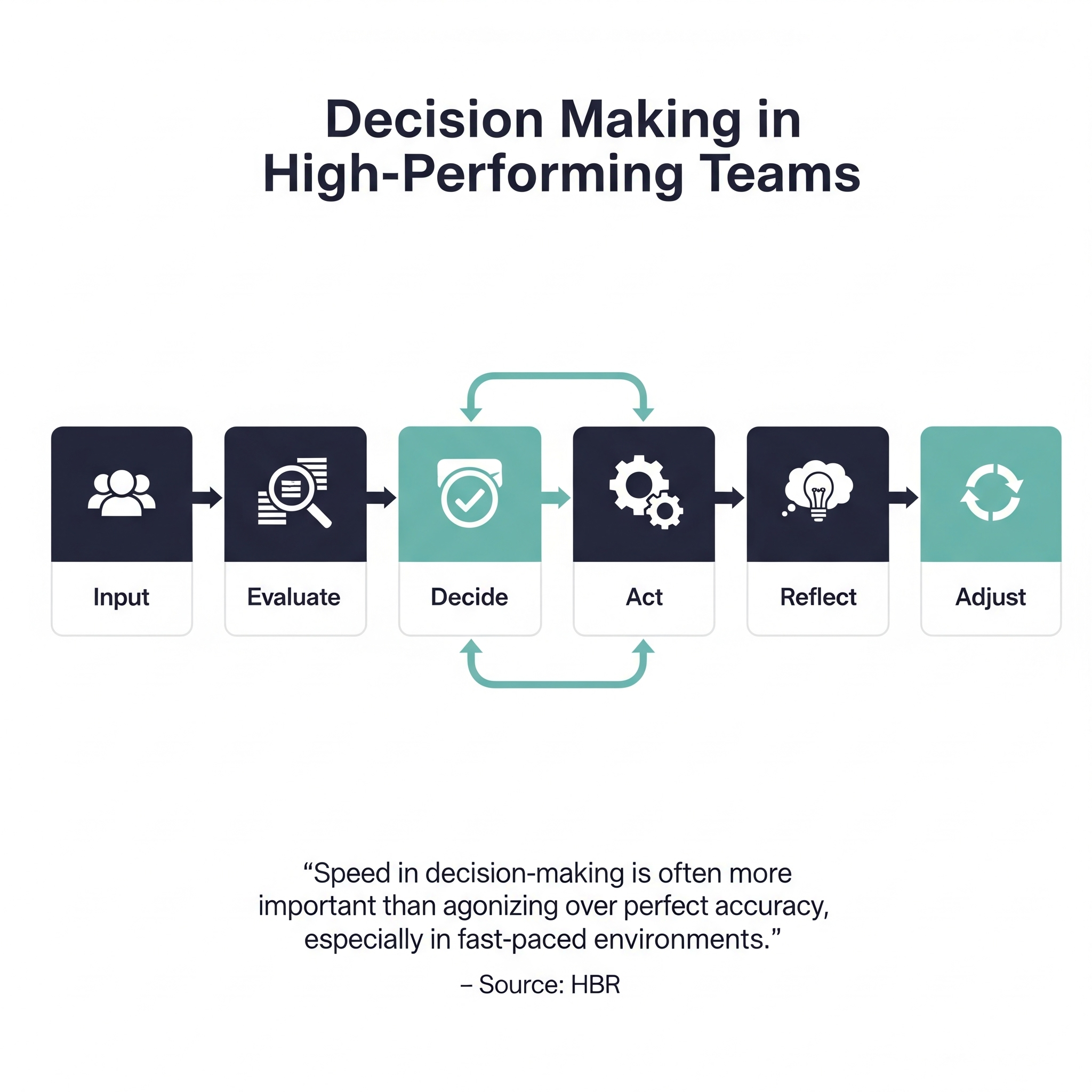
In every high-performing team, decision making is a core differentiator. It’s not just about making the right call—it’s about making it at the right time, with the right input, and in the right way. Top-performing teams strike a balance between analytical rigor and agility. They evaluate options quickly, adapt to changing circumstances, and move forward with clarity.
Effective decision making starts with environment. Teams perform best when diverse perspectives are welcomed, not sidelined. Leaders must create psychological safety—where team members feel comfortable challenging assumptions, offering alternatives, and contributing insights that may go against the grain. These habits strengthen team behaviors over time and foster trust.
Reflection is just as critical as execution. High-performing teams adjust team behaviors by regularly debriefing past decisions. What worked? What didn’t? Why? This kind of deeper understanding builds decision-making muscle over time and ensures the team stays aligned with broader organizational goals.
The goal isn’t perfection—it’s progress. In teams where collaboration is the norm and learning is continuous, decision making becomes a cultural asset. It empowers people, speeds up execution, and fuels consistent forward motion—even under pressure.
Metrics That Drive, Not Demoralize
Metrics are essential—but only when they fuel progress, not fear. In many teams, performance metrics are used as a spotlight for mistakes rather than a compass for growth. That’s a recipe for disengagement and blame.
High-performing teams use metrics to create focus, clarity, and momentum. They track the right outcomes, tie them to behavior, and review them regularly—not to punish, but to learn and adapt.
Start by aligning metrics to outcomes that matter. Instead of vague goals like “improve collaboration,” define what success looks like: faster decision-making across functions, fewer handoffs, or reduced project delays. Then assign measurable KPIs that reflect that behavior.
For example:
- Collaboration = response time across departments
- Ownership = task completion rate without escalation
- Growth = progress toward development goals
Enrolling in relevant courses, including those offered by a university, can help team members develop new skills and provide clear milestones to track their progress. Completing such courses can also contribute to professional credentials and recognition.
And here’s the key: review these metrics with your team—not behind closed doors. Make them part of regular check-ins, sprint recaps, or monthly team meetings. When everyone understands what’s being measured and why, they’re far more likely to commit.
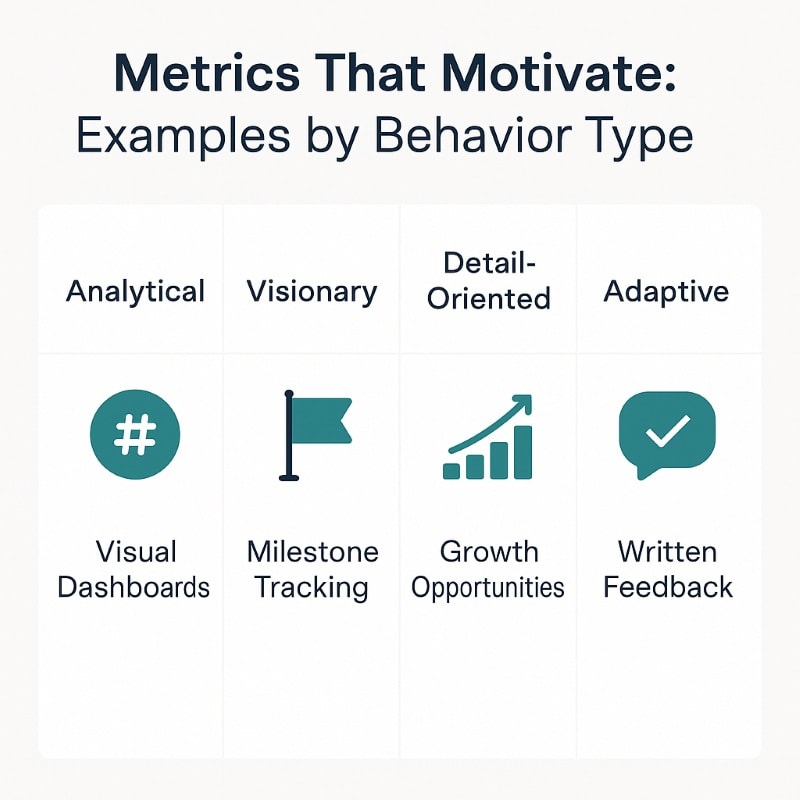
Behavioral insights can also inform how metrics are framed. Some team members are driven by data; others are more motivated by qualitative feedback or milestones. OAD helps leaders understand these differences and use the right motivators for the right people—without defaulting to one-size-fits-all tracking.
Common Team Types—and Why They Matter
High-performing teams aren’t one-size-fits-all. In fact, they come in a variety of structures—each with its own dynamics, development opportunities, and potential stumbling blocks. For leaders in a modern organization, recognizing the common team types is the first step to building systems that unlock consistent performance.
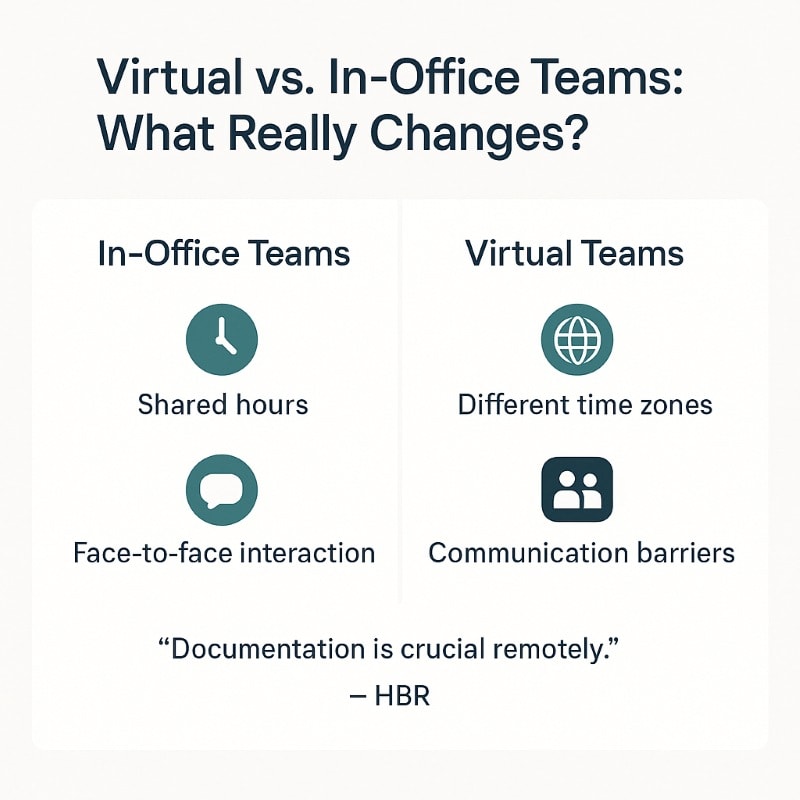
Virtual teams have become standard in today’s workforce, but they require more than just technology. These teams demand intentional strategies to overcome distance, build trust, and ensure that every team member feels valued—even when working across time zones. Communication ground rules, asynchronous collaboration norms, and regular alignment rituals are essential.
Cross-functional teams bring together diverse perspectives from different departments. While this kind of collaboration fuels innovation, it also introduces complexity. Shared goals must be clearly defined, and team dynamics need to be actively managed to avoid confusion or misalignment.
Other common team types include:
- Project-based teams formed around a specific objective or timeline
- Functional teams responsible for ongoing operations within a discipline
Each team type offers different strengths—but also unique risks. Project teams may struggle with clarity under tight deadlines. Functional teams can stagnate without continuous improvement frameworks.
Understanding these variations allows leaders to tailor their approach—whether it’s investing in new collaboration tools for remote groups or strengthening peer accountability in cross-functional environments. When team structures are aligned with clear expectations and behavioral insights, high-performing teams are no longer the exception—they become the standard.

Stay Aligned During Changing Circumstances
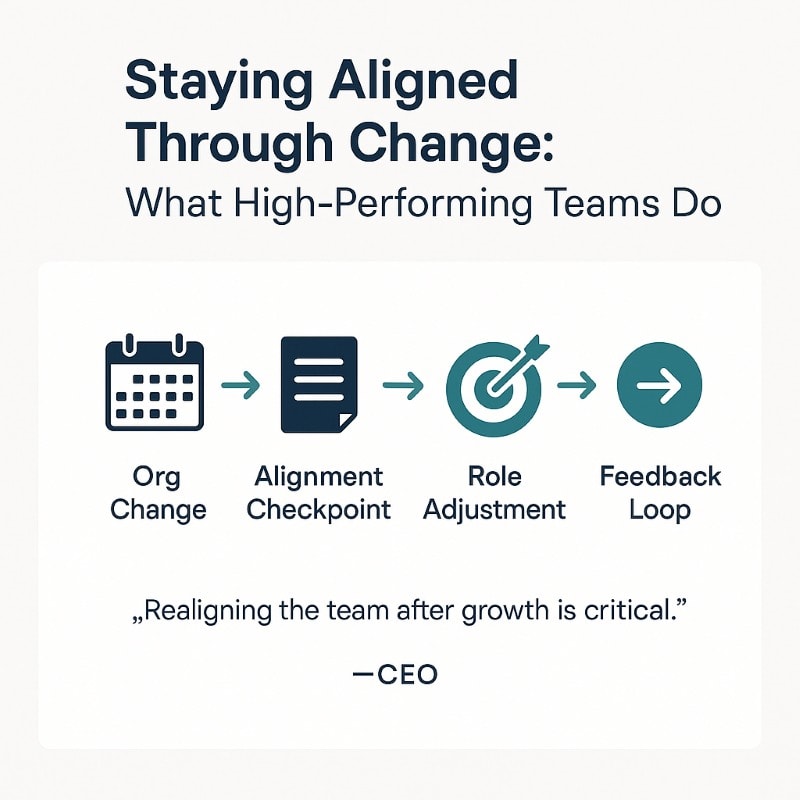
Even the best-aligned teams can lose their edge when the environment shifts. New leadership, market changes, remote transitions—each introduces friction that tests team cohesion. The challenge isn’t avoiding change. It’s staying aligned through it.
In high-performing organizations, alignment isn’t a one-time initiative—it’s a continuous process. Senior leaders set the tone by regularly revisiting team goals, role clarity, and behavioral dynamics as conditions evolve. This creates a delicate balance: enough structure to stay focused, but enough flexibility to adapt.
One common pitfall? Teams that were effective in one stage of growth start to underperform as responsibilities shift—but no one recalibrates expectations. That’s where behavioral diagnostics become critical. OAD allows companies to assess not just if someone is performing, but why—and whether the role or environment is now out of sync with their natural strengths.
Whether you’re onboarding a new department head, launching a new product line, or navigating a merger, regular alignment checkpoints help prevent performance drift. During periods of organizational change, these checkpoints empower teams to drive positive change by adapting quickly and maintaining high performance.
Tactical ways to stay aligned:
- Quarterly role audits tied to business priorities
- Behavioral check-ins during team transitions
- Leadership team recalibrations when strategy shifts
These steps ensure that as your organization changes, your people remain in roles where they can contribute most effectively—without burning out or falling behind.
The Role of Leadership in High-Performing Teams
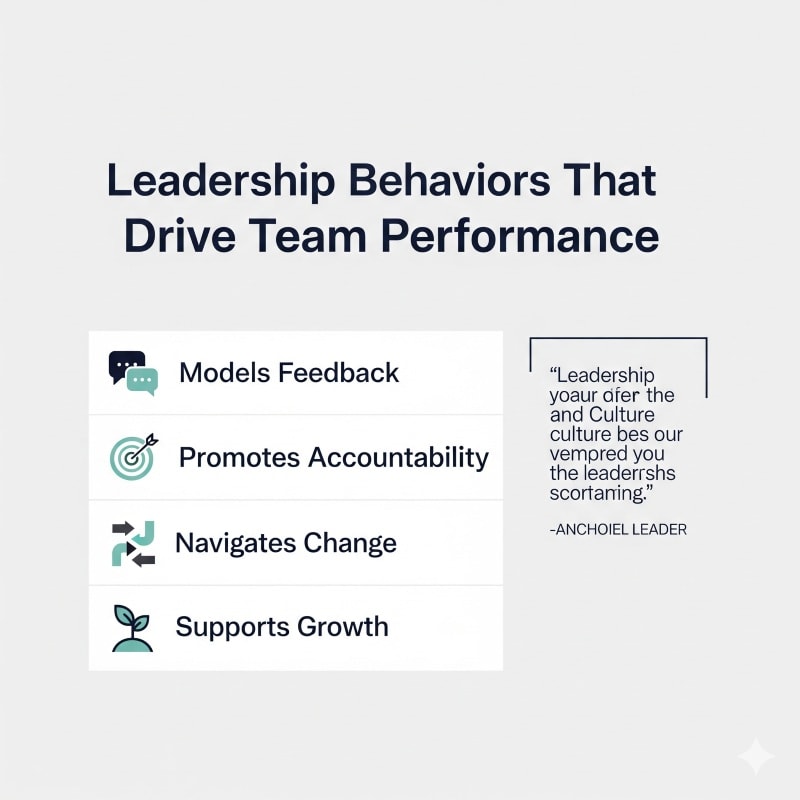
In every high-performing team, leadership isn’t a background function—it’s the driving force. Senior leaders shape team dynamics not just through strategy, but through behavior. They model clarity, resilience, and adaptability in real time—setting the standard for how others show up and contribute.
The most effective leaders go beyond setting team goals. They create an environment where team members feel empowered to adjust team behaviors, share candid feedback, and overcome obstacles together. They understand that during changing circumstances—like growth, restructuring, or market shifts—teams often lack self-awareness. Great leaders proactively close that gap by helping individuals reflect, recalibrate, and realign with broader organizational goals.
Accountability and performance metrics don’t start with the analytics dashboard—they start at the top. Leaders who invite feedback, admit mistakes, and stay committed to continuous improvement send a powerful message: growth isn’t optional—it’s cultural.
As Jeff Bezos once noted, “What we need to do is always lean into the future.” That mindset, when adopted by leadership, creates a ripple effect across the organization. Wins are celebrated, setbacks are examined without blame, and excellence becomes a shared pursuit.
In short: leadership determines whether your team hits a ceiling—or breaks through it.
Team Dynamics: The Invisible Engine of Performance
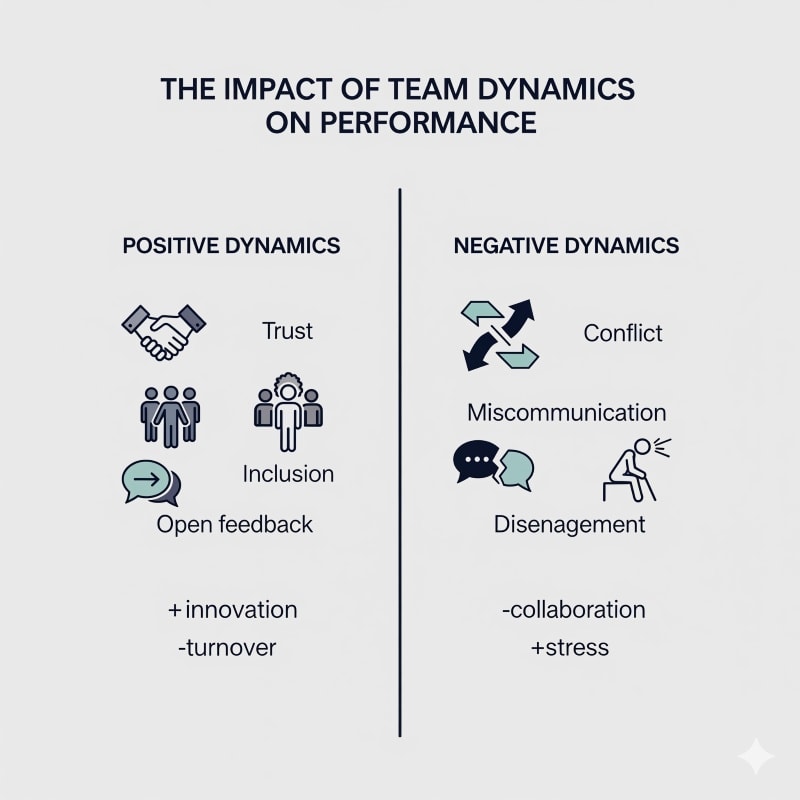
Every high-performing team runs on more than skills and strategy—it runs on team dynamics. These are the often-invisible forces that shape how people interact, communicate, and collaborate. When they’re strong, progress feels seamless. When they’re off, even the best teams stall.
At their best, team dynamics foster trust, psychological safety, and shared commitment. When team members feel valued and supported, they speak up, contribute ideas freely, and align more naturally around shared goals. This isn’t just feel-good culture—it’s a proven driver of team growth and sustained performance.
But the inverse is equally powerful. Teams with unresolved conflict, poor communication, or eroding trust often see performance dip long before the metrics show it. Productivity suffers, innovation slows, and progress gets stuck in interpersonal friction. And in those environments, even top performers struggle to contribute at their full capacity.
Strong leaders recognize that diagnosing team dynamics is just as important as managing outcomes. They pay attention to interaction patterns, surface tensions before they escalate, and model open dialogue. Tools like behavioral assessments can accelerate this process by making invisible dynamics visible—so teams can adjust, realign, and move forward.
Investing in team dynamics doesn’t just prevent problems. It creates the conditions where performing teams become high-performing teams.
Build a Culture of Continuous Growth
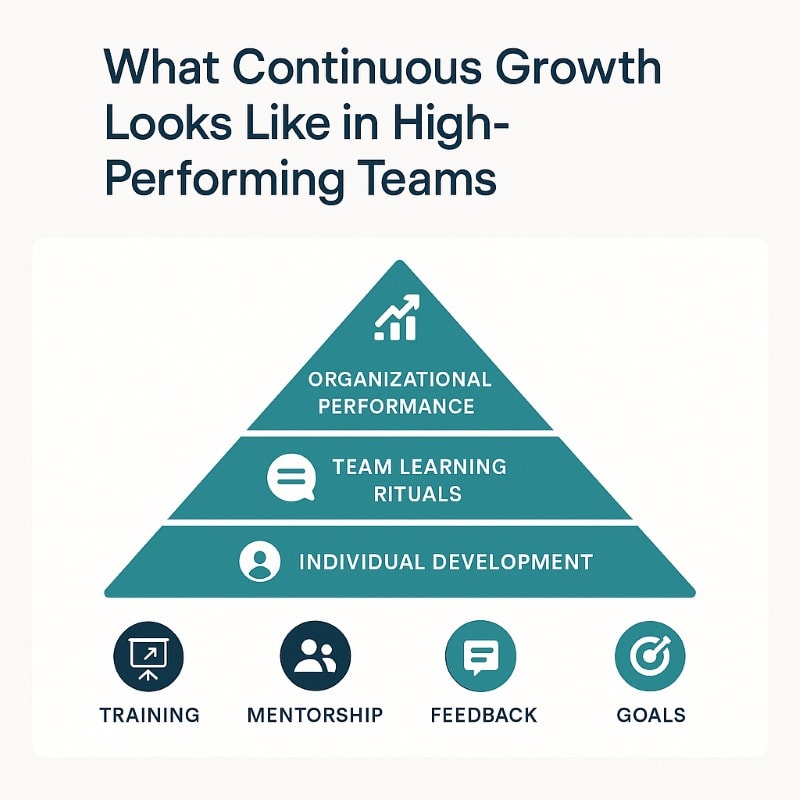
Sustainable high performance isn’t built in bursts—it’s built through continuous growth. Top teams don’t settle after hitting a target. They ask, “What’s next? How can we get better?”
Creating this mindset starts with leadership, but it’s carried by culture. That means growth is expected, supported, and rewarded at every level—from junior roles to senior leadership. And it’s not limited to technical skills. Emotional intelligence, adaptability, communication, and problem-solving are just as essential for scaling excellence.
To build this into your organization:
- Introduce team learning sprints tied to real projects
- Encourage self-directed development plans with clear timelines
- Create pathways for upward mobility (and sideways growth for specialists)
- Reward experimentation and learning from failure—not just results
Netflix famously builds its culture around “freedom and responsibility,” but underlying that is a commitment to development. Employees are expected to push themselves and evolve with the business. That kind of culture attracts top talent—and keeps them.
The behavioral layer is key here, too. OAD data can uncover what kind of learning environment each team member thrives in. Some prefer mentorship and structure. Others want autonomy and room to explore. When you know what drives their development behaviorally, you can build personalized growth plans that actually stick.
Bonus: What High-Performing Virtual Teams Do Differently
Building high-performing virtual teams requires more than great tech—it demands intentional culture design. Without hallway chats or informal feedback loops, remote teams face a unique challenge: maintaining alignment, engagement, and trust across time zones and screens.
Team culture research shows that virtual teams are more prone to miscommunication, slower decision-making, and feelings of isolation. But when done right, distributed teams can actually outperform in-office ones—if the structure supports them.
What high-performing virtual teams do differently:
- Set clear ground rules for communication (response times, async expectations)
- Use shared dashboards for project visibility and accountability
- Create virtual rituals to build connection (e.g., Monday kickoffs, feedback Fridays)
- Invest in onboarding that emphasizes culture, not just logistics
Leaders also need to intentionally model behavior—from camera-on participation to openly recognizing remote contributions. And most importantly, they must check for alignment more often, not less. A 15-minute alignment call can save days of misdirection.
OAD supports virtual teams by helping leaders understand behavioral tendencies that influence how people communicate, manage autonomy, and build trust. When you know which team members need more structure, feedback, or social touchpoints, you can design virtual workflows that keep everyone engaged and productive.
Final Thoughts: From Mediocre to Exceptional
Building a high-performing team isn’t a checklist—it’s a commitment. It takes structure, insight, and a willingness to evolve your approach as your organization grows. But the payoff? A team that not only meets expectations but consistently exceeds them—together.
The difference between average and exceptional teams comes down to alignment. When you understand your people—not just their skills, but their behaviors—you can put them in roles where they thrive, communicate with clarity, and drive impact. That’s what creates lasting performance.
OAD’s behavioral science-backed tools help you build that kind of team. Whether you’re scaling, restructuring, or simply ready to get more out of the talent you already have, the right insights can transform how your team performs.
Ready to Build a High-Performing Team?
Test OAD’s Organizational Alignment Diagnostic for free today and see how behavioral insights can help your team perform at its best—no guesswork, no wasted potential.