You can have the best strategy, cutting-edge tools, and a clear vision—but if your team isn’t performing at its peak, none of it matters.
That’s why top leaders don’t just hire talent—they build high-performing teams with intention, alignment, and trust at the core.
How to Build a High Performing Team: Why They Outperform Strategy Alone
In the early days of Amazon, Jeff Bezos famously left an empty chair at the table during meetings. That chair represented the customer—someone who wasn’t physically present but whose needs had to be prioritized. But behind that symbolic gesture was a more important truth: Bezos didn’t just obsess over customers. He obsessed over teams—the people responsible for serving them.
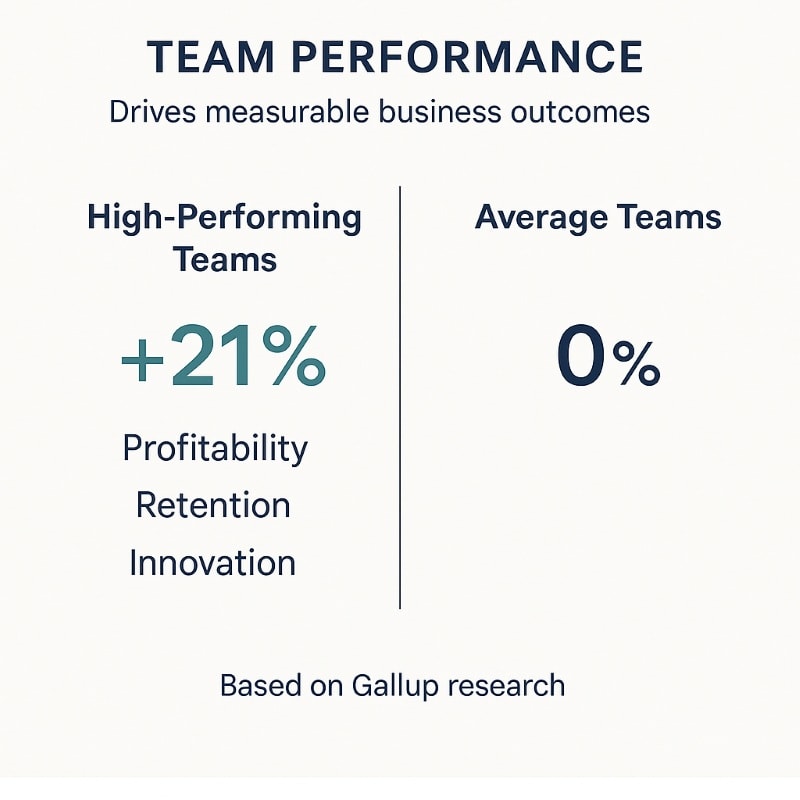
The best leaders understand that team performance is the ultimate multiplier. A great team can rescue a flawed strategy. A misaligned team can derail even the most promising plan. Research shows that, according to a Gallup meta-analysis, highly engaged teams show 21% greater profitability, 17% higher productivity, and significantly lower turnover than disengaged teams.
When high performance teams are aligned, collaborative, and focused on a shared mission, they don’t just execute—they innovate, adapt, and outperform. It’s no longer enough to hire smart people and hope for the best. You need to engineer your team for sustained success, just like you’d refine a product or optimize a sales process.
And that’s exactly what the world’s top leaders get right: they treat team design as a strategic advantage, not an afterthought.
Building high performance teams takes time and effort—it doesn’t happen overnight.
What Defines a High-Performing Team?
A high-performing team isn’t just a group of skilled individuals—it’s a deliberately designed unit where collaboration, trust, and accountability drive outcomes. To build high performing teams, organizations must intentionally focus on team composition, development, and management practices that foster effective collaboration and leverage diverse strengths.
These teams do more than hit their targets. They challenge one another, adapt to change, and consistently raise the bar. As a result of these intentional efforts, the team’s performance is elevated beyond what individual talent alone can achieve.
Key Characteristics of High-Performing Teams
- Shared Goals
Every member understands what success looks like and how their role contributes to it. These aren’t vague aspirations—they’re clearly defined objectives tied to business outcomes. Setting clear expectations for roles and responsibilities ensures everyone knows how they support the team’s goals. - Psychological Safety
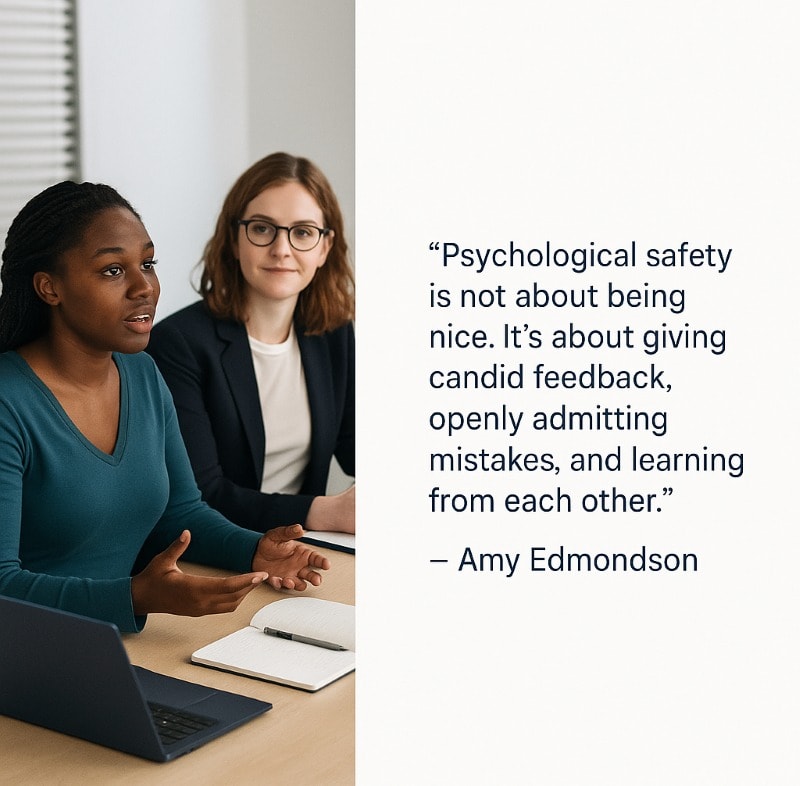
Coined by Harvard professor Amy Edmondson and popularized through Google’s Project Aristotle, psychological safety means team members feel safe to speak up, admit mistakes, and offer bold ideas—without fear of embarrassment or punishment. - Strong Team Dynamics and Cohesion
Members communicate openly, respect each other’s input, and resolve conflicts constructively. This cohesion translates into faster decision-making and more resilient responses to change. - Balanced Accountability
High-performing teams strike a delicate balance: each member is empowered to take initiative, yet everyone remains accountable to the team’s goals. Team leaders play a key role in maintaining this accountability and ensuring alignment with the team’s objectives.
These teams don’t emerge by accident. They’re built through intentional leadership, clear role alignment, and ongoing development. And while they may look effortless on the surface, beneath that calm exterior is a structure designed for excellence.
Why Most Teams Fail to Reach Peak Performance
If high-performing teams are such a competitive advantage, why do so few companies consistently build them?
The truth is: most teams are assembled, not designed. Roles are filled reactively, goals shift mid-project, and interpersonal dynamics are left to chance. Over time, even talented individuals can become misaligned, disengaged, or stuck in silos.
Organizations can increase team effectiveness by proactively designing teams and addressing common pitfalls before they impact performance.
Common Pitfalls That Undermine Team Effectiveness
- Vague or conflicting goals — Teams can’t perform well if they don’t know what “success” means.
- Unclear roles and responsibilities — When people step on each other’s toes—or worse, avoid ownership—progress stalls. Understanding and leveraging individual skills helps clarify roles, prevent overlap, and ensures each team member contributes where they are strongest.
- Lack of open communication — Without trust and psychological safety, feedback gets buried, and issues fester.
- Cultural misalignment — Even one poorly matched hire can throw off the rhythm of an otherwise cohesive team.
The cost? Far more than missed deadlines. According to SHRM, the average cost of a bad hire can reach up to five times the person’s annual salary when you factor in lost productivity, rehiring costs, and team morale.
And the ripple effects are real: disengagement spreads, performance dips, and top performers may quietly exit. Poor team fit doesn’t just hurt output—it erodes your culture from the inside out.
Step 1 – Start With the Right People
Every high-performing team begins with a critical decision: who’s on it. But not just in terms of experience or qualifications—what matters most is how well each individual aligns with the team’s goals, culture, and behavioral needs.
Identifying clear development goals for each team member ensures ongoing alignment with the team’s objectives and supports continuous growth.
The Crucial Role of Behavioral Fit
Warren Buffett once said, “You look for three things in a person: intelligence, energy, and integrity. And if they don’t have the last one, don’t even bother with the first two.”But even when a candidate has all three, the wrong fit can still lead to poor results.
Why? Because traditional hiring often overlooks a fourth dimension: behavioral compatibility. Someone might be a brilliant analyst, but if the role requires constant client interaction and fast decision-making, they could quickly burn out—or frustrate the rest of the team.
That’s why top leaders don’t just ask, “Can they do the job?” They ask, “Will they thrive in this role, on this team, in this environment?” Considering the needs of the larger team ensures that individual fit contributes to overall team cohesion and collective success.
Use Science to Predict Success, Not Just Skills
Gut instinct isn’t scalable. Interviews can be misleading. Resumes only tell part of the story. This is where structured assessments come in.
OAD’s behavioral assessments measure how a candidate is likely to communicate, make decisions, handle pressure, and collaborate—all critical factors for team alignment and long-term performance. By using data at the start of the hiring process, companies can reduce guesswork and dramatically improve team outcomes. Aligning team selection with the organization’s values and objectives ensures that hiring decisions support the organization’s long-term success and culture.
When the right person is in the right role, with the right team, performance doesn’t need to be pushed—it becomes natural.
Step 2 – Align on Shared Goals and Role Clarity
A high-performing team doesn’t just work hard—they work in the same direction. That only happens when goals are shared and roles are clearly defined. Aligning individual roles with the team’s objectives ensures everyone is working toward the same outcomes.
Goal Setting Isn’t Just a Leadership Task
Too often, company goals are set at the executive level and barely trickle down. But if your team doesn’t understand how their day-to-day work connects to larger business objectives, motivation fades fast.
Effective leaders create alignment by:
- Clearly articulating team-level goals that support organizational priorities
- Involving team members in shaping those goals, when appropriate
- Reinforcing those objectives consistently—not just during quarterly reviews
- Maintaining focus on key priorities, which helps teams align their efforts and achieve their goals
This clarity allows teams to stay agile while remaining grounded in purpose. It also fuels cross-functional collaboration, since everyone knows what success looks like—even across departments.
Role Clarity Drives Individual and Team Performance
According to a McKinsey study, teams with clearly defined roles are 25% more effective than those without. When people know what’s expected of them—and what’s expected of their colleagues—they spend less time duplicating work or stepping on toes. Clear roles also make it easier to collaborate with other teams and prevent duplication of effort across groups.
That’s why OAD’s behavioral assessment isn’t just a hiring tool. It also helps define how each person is likely to approach their role, which can inform everything from onboarding to team structure.
Without shared goals and role clarity, even the most talented teams can lose momentum. But when everyone knows their purpose and plays to their strengths, performance becomes scalable.
Step 3 – Build Psychological Safety and Trust
A team can’t perform at its best if its members are constantly holding back. Whether it’s fear of embarrassment, rejection, or conflict, psychological safety is the foundation that allows high-performing teams to actually function. By fostering psychological safety, organizations encourage team effort and collective problem-solving, making it easier for members to collaborate and achieve shared goals.
What Psychological Safety Really Looks Like
It’s not about comfort—it’s about confidence. Confidence that you can speak up, ask questions, or challenge an idea without facing personal consequences.
Google’s landmark study Project Aristotle found that psychological safety was the number one predictor of team success—even more than skill or experience. When people feel safe, they:
- Share ideas more freely
- Take smart risks
- Admit mistakes early
- Offer feedback without defensiveness
It’s not a “nice to have.” It’s a performance multiplier.
Building an Environment Where Team Members Feel Valued
Leaders play a crucial role here. It starts with modeling the behavior you want to see:
- Admit when you don’t know something
- Ask open-ended questions
- Thank people for dissenting views
- Normalize healthy disagreement
Small actions signal that contribution is welcome—and over time, this creates a culture of open communication, mutual respect, and strong cohesion.
OAD’s assessments can help here too, by uncovering how team members naturally respond to conflict, pressure, and collaboration. With that insight, leaders can create space for each individual to thrive—especially those who might otherwise remain quiet or misunderstood.
Trust doesn’t scale overnight. But with the right environment, it compounds—until your team becomes more than the sum of its parts.
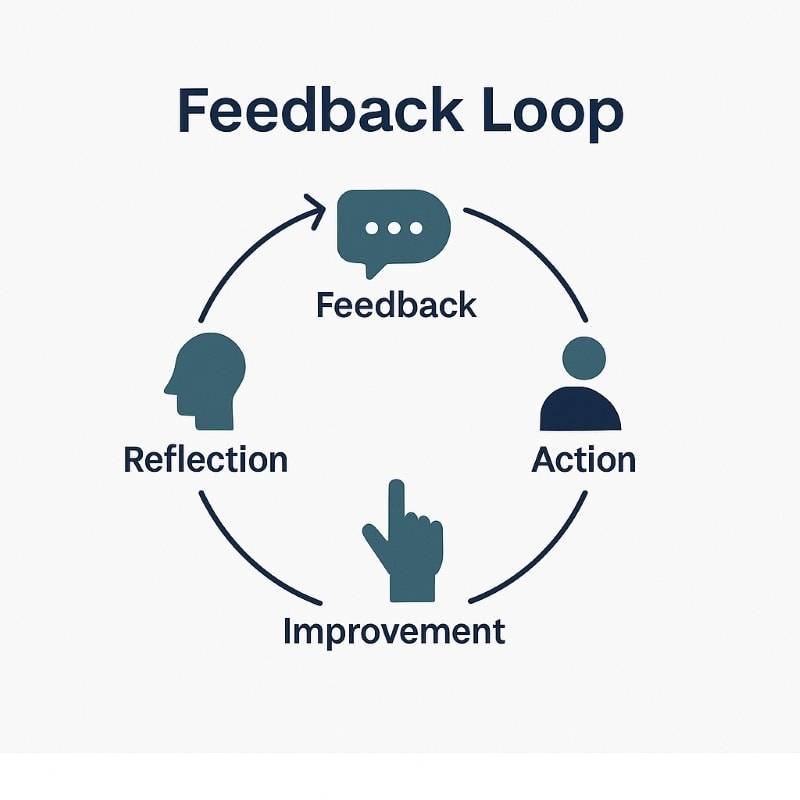
Step 4 – Encourage Continuous Learning and Feedback
Even the best teams stagnate without growth. That’s why high-performing teams treat learning as a habit—not an event.
Professional development is crucial for fostering a culture of continuous learning, enabling teams to adapt, improve, and thrive together.
Structured Feedback Drives Continuous Improvement
According to a study by Zenger Folkman, employees who receive frequent, specific feedback are three times more engaged than those who don’t. But feedback only works when it’s:
- Timely
- Actionable
- Tied to the team’s goals
Too often, feedback is reserved for annual reviews or only given when something goes wrong. High-performing teams, by contrast, build feedback into their operating rhythm. This helps resolve small issues early and reinforces behaviors that drive results.
Create Development Opportunities That Match Team Needs
Top talent wants to grow—and if they don’t see that opportunity within your organization, they’ll find it elsewhere. But not every team member needs the same kind of development. That’s where behavioral insight becomes a powerful advantage.
OAD’s assessments can help leaders identify:
- Who needs more challenge vs. more structure
- Who prefers solo ownership vs. collaborative projects
- Who might benefit from leadership development or role shifts
This allows companies to offer development that’s personalized, not generic—and that speaks directly to both individual and team goals.
When continuous learning becomes part of the culture, performance doesn’t plateau—it evolves.
Step 5 – Foster Team Cohesion in a Changing Environment
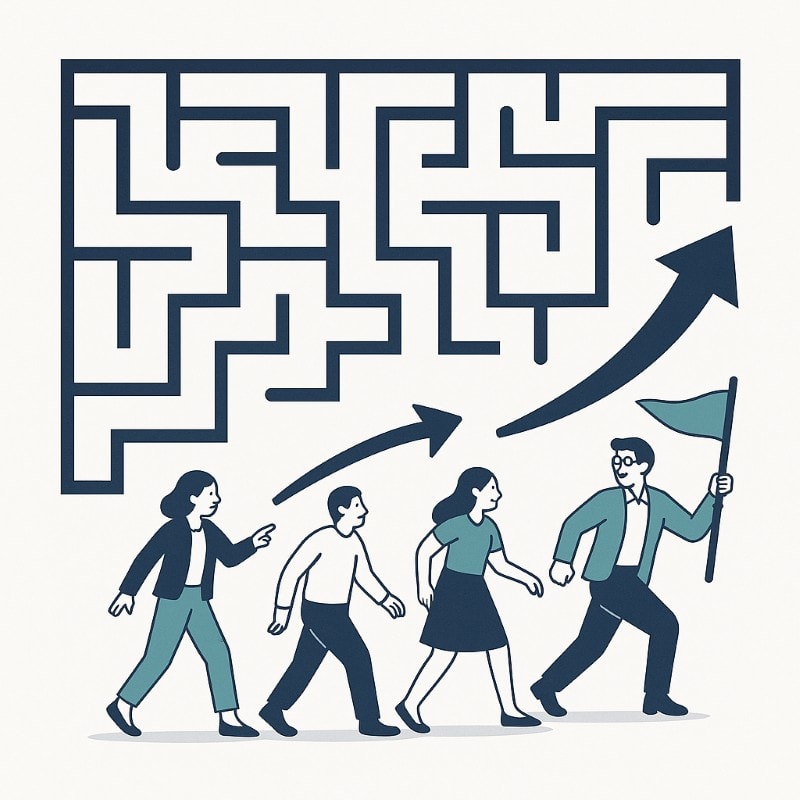
Even the most cohesive team can struggle when conditions shift—new leadership, new tools, remote transitions, or mergers can all create friction. But high-performing teams aren’t defined by how they operate in calm conditions. They’re defined by how well they stay aligned under pressure. These teams remain adaptable and resilient in the face of changing circumstances, ensuring they can respond effectively to evolving challenges.
Managing Diverse Perspectives and Cross-Functional Collaboration
As teams grow, diversity of thought becomes both a strength and a challenge. Collaboration across roles, departments, or even time zones can easily lead to misunderstandings, duplicated efforts, or stalled decisions.
That’s why great leaders actively manage cohesion:
- They encourage open dialogue—even when ideas conflict
- They set clear decision-making processes
- They normalize respectful disagreement, followed by unified execution
It’s not about forcing consensus. It’s about creating clarity in the midst of complexity.
How Great Leaders Keep Teams Aligned Through Change
Howard Schultz, former CEO of Starbucks, often emphasized that culture must be continuously reinforced—especially in times of transition. Cohesion doesn’t mean things never change. It means people understand the why behind those changes and feel equipped to adapt.
Tools like OAD help leaders guide teams through these transitions by:
- Identifying team members who may need more support
- Flagging communication gaps before they become problems
- Adjusting leadership styles to match team needs in real time
Change will always test your team—but with shared goals, trust, and clarity, it doesn’t have to break it.
Step 6 – Decision Making and Accountability
In high-performing teams, decision making and accountability aren’t just operational details—they’re core drivers of team success. The way decisions are made shapes team dynamics: it determines how fast teams move, how aligned they stay, and how confidently they execute. When accountability is shared and clear, performance rises. And when decision making is intentional—not reactive—teams are better equipped to achieve ambitious objectives and sustain high performance over time.
How High-Performing Teams Make Decisions
High-performing teams treat decision making as a strategic, shared responsibility—not a top-down directive. They create space for open dialogue, encourage diverse perspectives, and actively invite constructive feedback. This approach doesn’t just lead to better decisions—it builds trust.
When every team member feels heard and understands how their input connects to the team’s goals, commitment follows. That sense of ownership fuels accountability, accelerates execution, and strengthens team cohesion.
By focusing on shared objectives and leveraging collective expertise, high-performing teams make decisions that are both strategic and actionable—and they do it without sacrificing speed or alignment.
Building a Culture of Shared Responsibility
A defining trait of high-performing teams is a culture of shared responsibility—where every member feels both empowered to contribute and accountable for outcomes. When team members feel valued and included in the decision-making process, they’re more likely to take ownership of the team’s objectives and support one another in achieving them.
This doesn’t happen by accident. Leaders in high-performing teams create an environment where input is expected, not optional—where ideas are welcomed, feedback is part of the rhythm, and accountability is distributed, not siloed.
The result is deeper team cohesion, faster progress, and a stronger foundation for continuous improvement. When responsibility is truly shared, high performance becomes a team habit—not a one-time achievement.
Building a High-Performing Culture
A high-performing culture isn’t defined by motivational posters or company slogans—it’s shaped by how teams actually operate. It’s the lived experience of how people communicate, collaborate, and hold one another to high standards every day.
In top-performing organizations, culture isn’t a side effect of success—it’s the engine behind it. It fuels innovation, reinforces accountability, and aligns daily behaviors with long-term goals. High-performing teams understand that culture drives performance, not the other way around.
And when culture is intentionally built—not left to chance—it becomes a competitive advantage that compounds over time.
Embedding Values and Behaviors for Long-Term Success
High-performing teams don’t leave culture to chance—they intentionally embed values and behaviors that promote collaboration, open communication, and a relentless drive for excellence. These values aren’t written on a slide deck—they’re lived daily, woven into how teams make decisions, solve problems, and support one another.
Trust and community aren’t just soft concepts. They’re essential to team growth, resilience, and performance. When team members feel supported and empowered, they show up with more focus, more creativity, and a stronger commitment to shared success.
The Role of Leadership in Sustaining Culture
Senior leaders play a pivotal role in reinforcing this environment. They model continuous improvement, reward initiative, and create space for feedback and experimentation. They understand that high performance isn’t just about output—it’s about maintaining alignment between individual performance, team dynamics, and organizational goals.
A high-performing culture doesn’t emerge overnight. It’s built through intentional leadership, daily behaviors, and a shared understanding of what success truly looks like.
When psychological safety, team cohesion, and a growth mindset become the norm, teams don’t just hit their goals—they elevate what those goals can be.
How OAD Helps Teams Stay Aligned and Effective
High-performing teams don’t happen by luck—they’re the result of clear hiring, role alignment, and leadership decisions grounded in behavioral insight. That’s where OAD comes in. OAD provides valuable insights for team leaders, enabling them to make informed decisions and guide their teams effectively.
OAD’s proprietary assessments provide leaders with a scientifically validated view of each team member’s natural strengths, communication preferences, decision-making style, and motivational drivers. But what makes it different from standard personality tests is how it applies across the employee lifecycle—not just hiring.
With OAD, you can:
- Hire smarter by identifying role fit before the interview even begins
- Optimize team dynamics by understanding how individuals interact and respond under pressure
- Coach more effectively by tailoring development plans to behavioral needs
- Navigate change with data-driven insight into who needs what support
In other words, OAD helps leaders move from guesswork to precision. Whether you’re assembling a new team, reshaping an existing one, or trying to retain top talent during growth, OAD gives you the clarity to make decisions that actually move the needle.
High-performing teams don’t need more meetings—they need better alignment. OAD gives you the tools to get there.
Final Thoughts: High-Performing Teams Don’t Happen by Accident
Most companies treat high performance like a reward that comes after the right hire. But the most successful organizations know the truth: team performance is engineered from the start.
It’s not just about who you hire—it’s about how well they align with your mission, your culture, and one another. It’s about designing teams where psychological safety fuels innovation, where feedback drives growth, and where everyone knows exactly how to contribute to something bigger than themselves. Investing in alignment and intentional team design directly contributes to the team’s success by ensuring every member is empowered to achieve shared goals.
High-performing teams don’t need micromanagement. They need clarity, trust, and leadership rooted in data—not assumptions.
If you want to outperform competitors, retain top talent, and move faster as an organization, don’t settle for reactive hiring and generic team-building strategies.
Invest in alignment. Engineer your edge. And build the kind of team that top leaders don’t just hope for—they build on purpose.
Test for Free
OAD makes building high-performing teams a science, not a guessing game.
Our behavioral assessments give you deep insight into the people you’re hiring, the teams you’re developing, and the culture you’re scaling—so you can lead with confidence at every stage.
Test OAD today for free and discover how data-driven talent alignment can transform your team’s performance.