What if the real reason your hires don’t work out isn’t the candidate—but your criteria?
Most employers overvalue resumes, gut instinct, and interview polish. But the people who actually succeed in your organization usually share something deeper: traits you can’t spot on paper—but can measure with the right tools.
Growth Mindset: The Hidden Indicator of Long-Term Potential
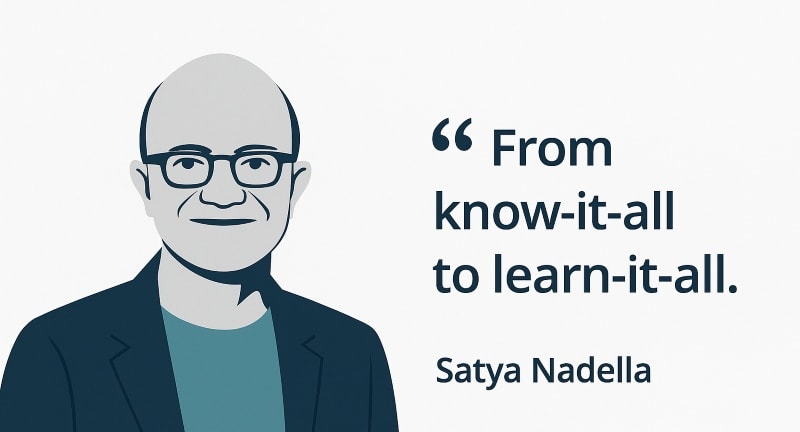
The best candidates aren’t the ones who claim to “know it all.” They’re the ones who are hungry to learn, open to feedback, and quick to adapt.
A growth mindset signals a person’s ability to evolve with your business—something especially critical in fast-moving industries. It’s not just about learning new skills; it’s about how they approach change, setbacks, and long-term challenges. A growth mindset is also essential for ongoing career development and progression, supporting professional growth and long-term job satisfaction. Do they get defensive when challenged, or do they ask better questions? Do they see failure as feedback or as a threat?
Satya Nadella, CEO of Microsoft, famously credited the company’s turnaround to shifting from a “know-it-all” to a “learn-it-all” culture. The same principle applies to hiring.
That mindset can be hard to spot in an interview unless you ask the right behavioral questions. Even better: tools like OAD can identify cognitive flexibility and openness to change—two key predictors of future leadership and adaptability.
Onboarding and Training: Where Potential Becomes Performance
Hiring the right person is only the beginning. What happens after the offer letter determines whether that great hire becomes a high-performing, long-term asset—or a missed opportunity.
A strong onboarding program does more than explain benefits and tools. It sets the tone for how your company communicates, supports, and develops talent. When new hires are given structure, clarity, and meaningful connection from day one, they’re more likely to feel confident, aligned, and motivated to contribute at a high level.
According to a report by Brandon Hall Group, organizations with a strong onboarding process improve new hire retention by 82% and productivity by over 70%.
At OAD, we’ve seen that when behavioral insights from the hiring process are carried into onboarding—such as communication style, motivation triggers, and feedback preferences—leaders can tailor support in ways that accelerate integration and performance.
Onboarding isn’t a formality. It’s your first investment in turning potential into real-world results.
Time Management: The Trait That Separates Busy from Productive
In any fast-paced organization, it’s not enough to “work hard.” What matters is the ability to prioritize, focus, and deliver results without constant hand-holding, and consistently accomplish and achieve their goals.
Employees who manage their time effectively don’t just hit deadlines—they reduce the need for micromanagement, free up their managers’ attention, and keep teams moving forward. The difference? People with strong time discipline are outcome-driven, not just activity-driven.
During interviews, ask candidates for specific examples of how they’ve managed competing deadlines or shifting priorities. Look for language that reflects ownership, not excuses.
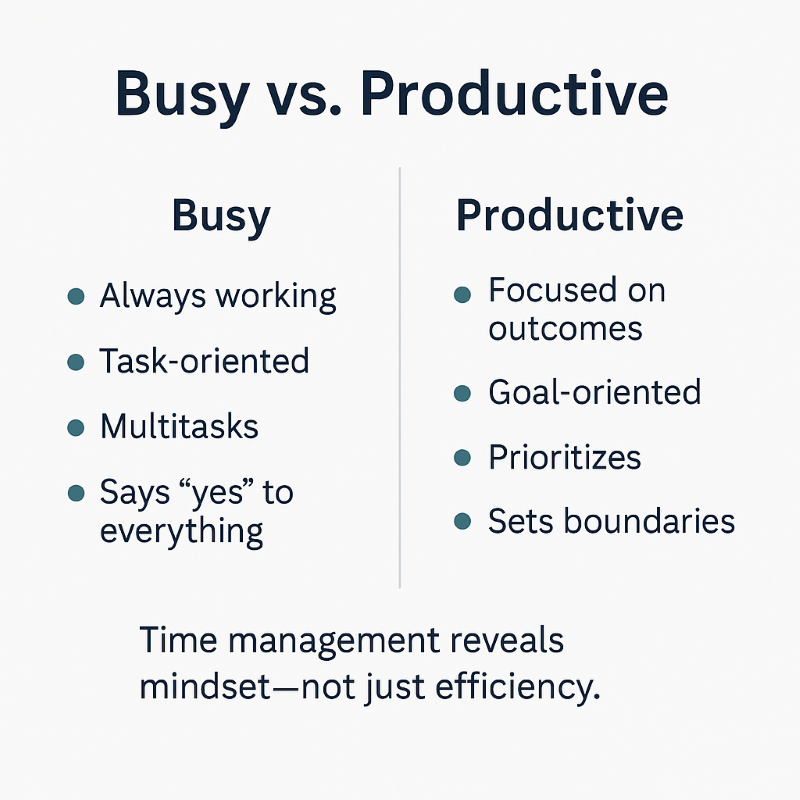
Behavioral assessments can reveal how candidates respond under time pressure. OAD, for example, helps hiring managers see whether someone naturally prefers structure or thrives in flexible environments—insight that can prevent misalignment between the person and the role.
Team Compatibility: Hiring for the System, Not Just the Seat
A candidate may be brilliant on their own—but if they can’t collaborate, align, or communicate with your existing team, the damage can outweigh the benefits.
Team compatibility isn’t about personality type. It’s about how a person’s natural behaviors affect group dynamics, decision-making, and conflict resolution. A diverse team brings different perspectives and problem-solving approaches, which strengthens the organization and enhances innovation and growth. One mismatched hire can throw off an entire workflow, especially in high-stakes, cross-functional teams.
Harvard Business Review reports that “teams with even one low emotional intelligence member perform 30% worse on average” — not because of skill gaps, but because of friction.
This is where traditional hiring methods fall short. Interviews tell you how someone communicates with you—not how they’ll interact with multiple personalities under pressure or how they will contribute as team members who strengthen and contribute positively to the team.
OAD’s behavioral insights allow hiring managers to assess team chemistry before extending an offer. Whether you’re building a sales team or a leadership pod, understanding interpersonal dynamics upfront can mean the difference between high performance and hidden dysfunction.
Resilience Under Pressure: Why Your Best Hire Might Not Be the Calmest in the Room
In today’s workplace, stress isn’t a possibility—it’s a guarantee. The question is: how does your candidate respond when things go wrong?
The ability to remain focused, adaptive, and solution-oriented under pressure is one of the most important predictors of long-term performance. And yet, most interviews never test for it.
Instead of asking, “How do you handle stress?”—which invites a rehearsed answer—ask: “Tell me about a time when everything went sideways. What did you do first?”
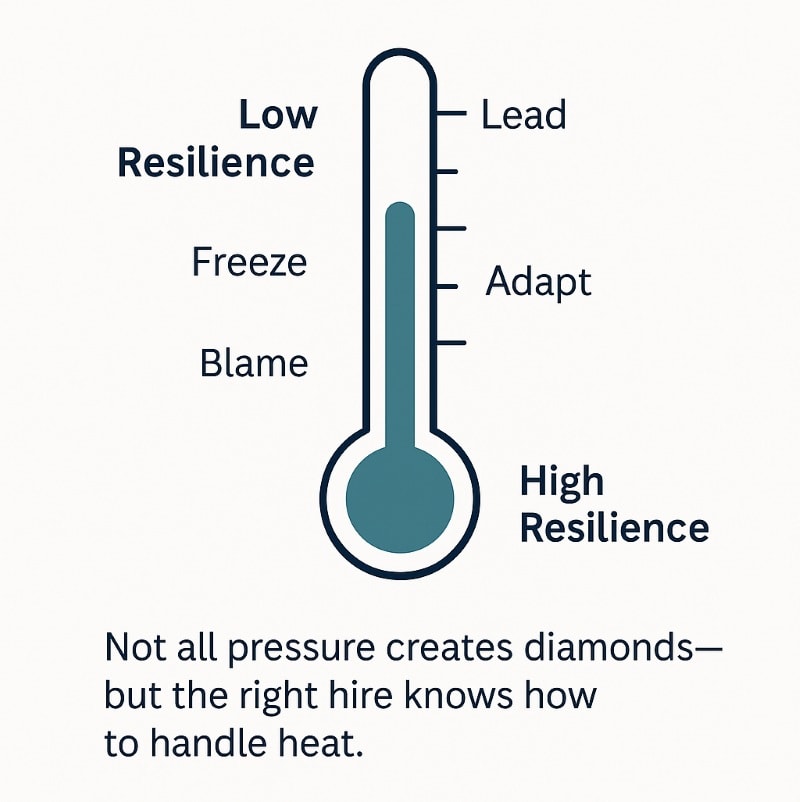
Some candidates sound calm but collapse under pressure. Others may seem intense but are deeply composed when it matters most. Truly resilient employees are confident in their ability to handle unexpected challenges. That’s where behavioral testing becomes essential. Tools like the OAD Survey can assess emotional stability, urgency tolerance, and decision-making tendencies in high-stakes scenarios—before you put someone in a pressure-filled role.
Clarity on Role & Expectations: The Trait That Signals Strategic Thinking
You can spot a high-performing candidate by the questions they ask—not just the answers they give.
Top candidates don’t just show enthusiasm for the job. They show clarity. They want to understand the role, the metrics, the impact, and how their contribution fits into the bigger picture. That mindset reveals more than motivation—it reveals strategic alignment.
The best final interviews, as the concluding stage of the hiring process, often feel like two experts planning a partnership—not one person trying to impress the other. The final interview is your last opportunity to assess candidate fit, gather final impressions, and ask targeted questions about values, culture, and position alignment.
Watch for candidates who ask thoughtful, role-specific questions:
- “What are the key metrics for success in the first 90 days?”
- “What does cross-team collaboration typically look like?”
- “What would success look like one year from now?”
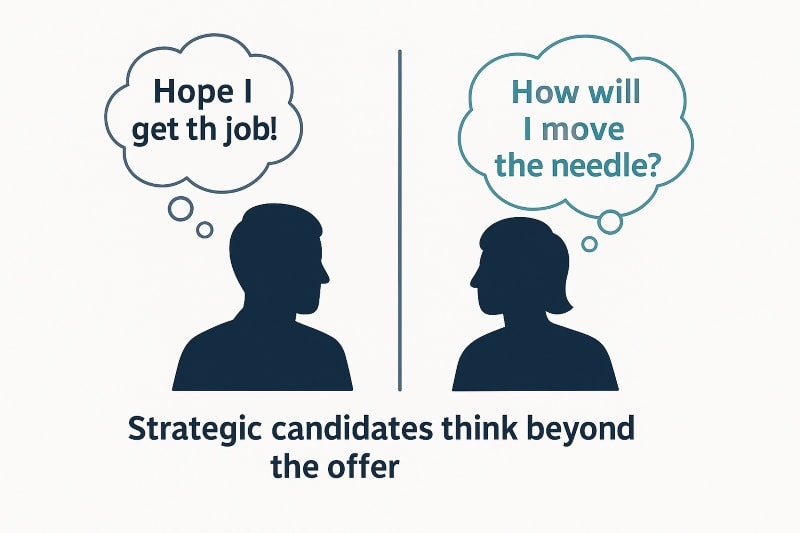
These types of questions signal a candidate who’s already envisioning themselves as a contributor, not just an employee. With behavioral data, OAD helps you distinguish between someone who simply wants the job and someone who is ready to step into the role with purpose.
Setting the Stage: Why Your Job Description Is a Hiring Tool, Not a Task
Before the first resume is reviewed or the first interview scheduled, the hiring process has already begun—with the job description.
A well-crafted job description isn’t just a list of skills and duties. It’s a strategic signal that shapes the entire pipeline. Done right, it helps filter in candidates who align with your company’s expectations, values, and mission—and filter out the ones who don’t.
The strongest job descriptions go beyond responsibilities. They define success in the role, reflect the work environment, and hint at the behavioral traits that thrive inside your culture. That kind of clarity helps job seekers self-select more accurately, saving time, reducing mismatches, and increasing the odds that each applicant is a potential long-term fit.
When expectations are vague, alignment becomes guesswork. But when the target is clear, the right people step forward.
Consistency Between Interview and Reality: Can They Deliver What They Promise?
Interviews show you someone at their best. But what happens after the offer letter is signed? It’s crucial to ensure the person you hired can actually deliver on the promises made during the interview.
Many hiring managers are surprised when a strong interview doesn’t translate to strong performance. The issue? The candidate knew how to interview—but not how to show up consistently.
According to LinkedIn’s Global Talent Trends, 63% of hiring managers say they’ve been “blindsided” by a new hire’s behavior not matching their interview persona.
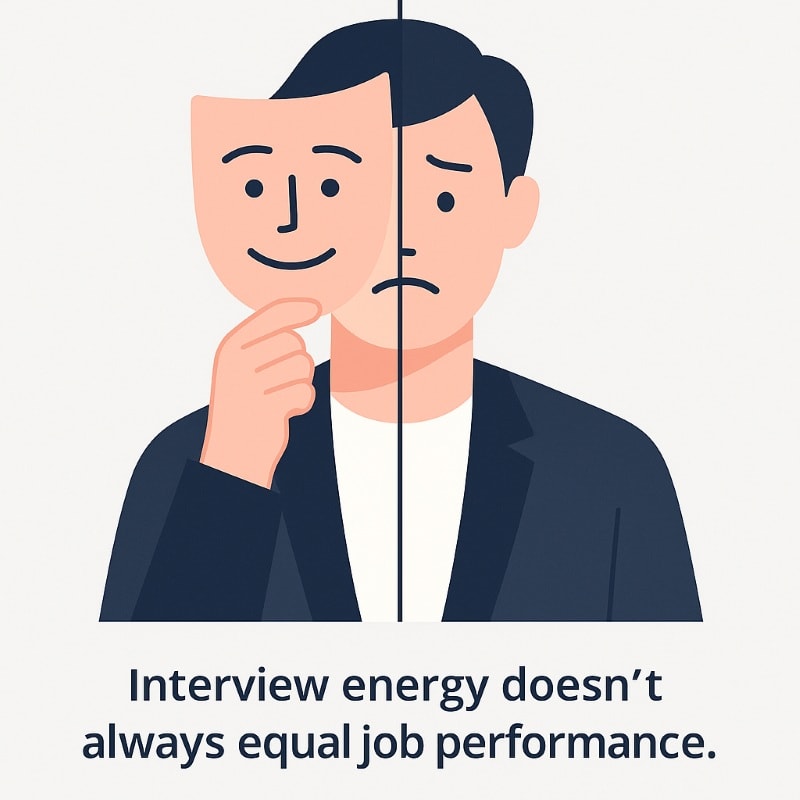
This mismatch often happens when hiring is based on charisma or surface-level traits rather than deeper behavioral indicators. That’s why smart organizations use structured interviews and behavioral assessments to create a baseline they can later validate.
With tools like the OAD Survey, you can measure consistency over time—helping you spot if someone’s showing up the way they said they would. It also gives managers the insight to coach more effectively from day one, minimizing costly surprises.
Smarter Hiring Through Technology: Tools That Reveal More Than a Resume
Technology has quietly redefined what’s possible in the hiring process—and smart companies are using it to gain an edge.
From behavioral assessments to AI-enabled screening tools, today’s platforms help hiring managers move beyond guesswork and into data-informed decision-making. These tools do more than organize applications—they offer insights that reveal whether a candidate will succeed in your specific role, culture, and environment.
Behavioral assessments like OAD, for example, provide objective, pre-interview data that highlights how someone thinks, communicates, and handles pressure—long before a conversation ever begins.
And with tools like structured video interviewing and automated scoring, employers can standardize evaluations, reach more diverse candidates, and reduce unconscious bias at every stage.
Technology doesn’t replace human judgment—it enhances it. When used strategically, it helps organizations spot the right talent faster, more fairly, and with greater confidence.
Accountability: The Trait That Builds Trust Inside the Organization
When something goes wrong, does the candidate point fingers—or take responsibility?
Accountability is a foundational trait in any high-performing culture. It fuels trust, drives follow-through, and reduces management friction. A candidate who owns both wins and mistakes is more likely to integrate seamlessly into fast-moving teams and complex projects, and taking ownership of a project is a key indicator of accountability.
Howard Schultz, former CEO of Starbucks, once said: “Success is empty if you arrive at the finish line alone. The best leaders take people with them—and take ownership of the result.”
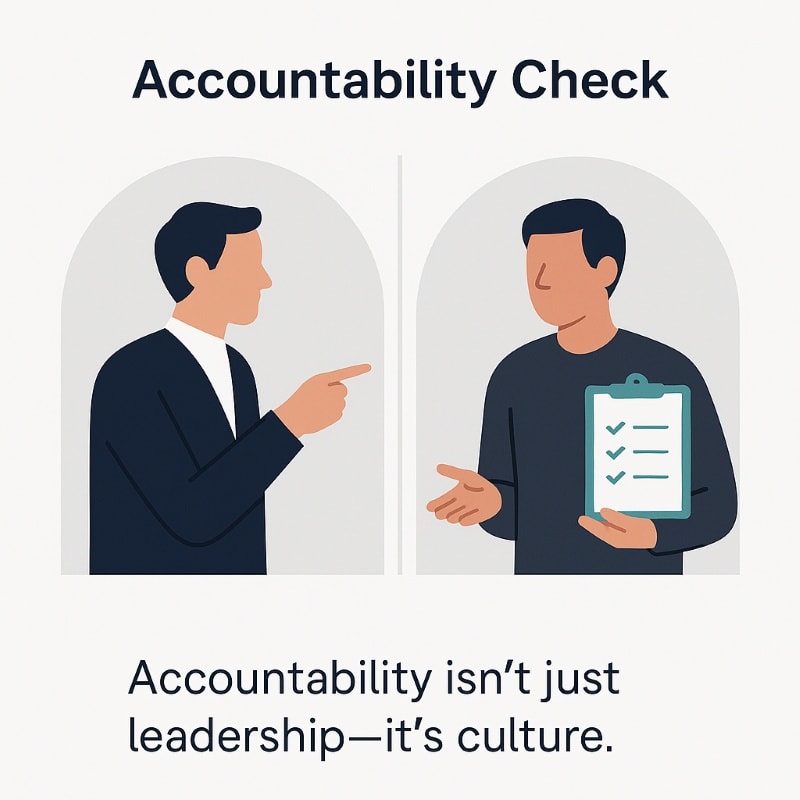
In interviews, pay attention to how candidates talk about setbacks. Do they shift blame to a former employer or colleague? Or do they reflect on what they could have done differently?
Behavioral assessments like OAD help identify tendencies toward proactive vs. reactive behavior, which can reveal how a person is likely to handle pressure, take initiative, and follow through—especially when no one is watching.
Reference Checks: The Overlooked Filter for Fit, Not Just Facts
Resumes can be polished. Interviews can be rehearsed. But reference checks? They offer a rare glimpse into how a candidate actually shows up day after day.
While assessments and structured interviews provide strong predictive data, reference checks offer real-world context—confirming whether someone’s performance, attitude, and collaboration style match what they’ve presented.
Former managers and colleagues can validate more than just responsibilities. They can reveal patterns: Does the candidate follow through? Do they work well under pressure? Do they lift up the team—or create friction?
When approached strategically, reference calls help hiring managers spot red flags early, but more importantly, they highlight behavioral strengths that may not surface in an interview.
This isn’t about checking a box. It’s about making sure your next hire doesn’t just look good on paper—but actually fits your culture, your team, and your expectations when it matters most.
Self-Awareness: The Key to Growth, Coachability, and Communication
Self-awareness isn’t soft—it’s strategic. A candidate who understands their own strengths and blind spots is easier to coach, quicker to integrate, and far more effective in team settings.
Self-aware individuals don’t overpromise or posture. Instead, they demonstrate clarity, humility, and a willingness to grow. They can clearly explain their past experiences, strengths, and areas for growth, showing how they have learned from challenges. That mindset supports better decision-making, smoother communication, and long-term leadership development.
Research from Cornell University found that companies with self-aware leaders consistently outperform those with leaders who lack this trait—largely due to improved communication and lower turnover.
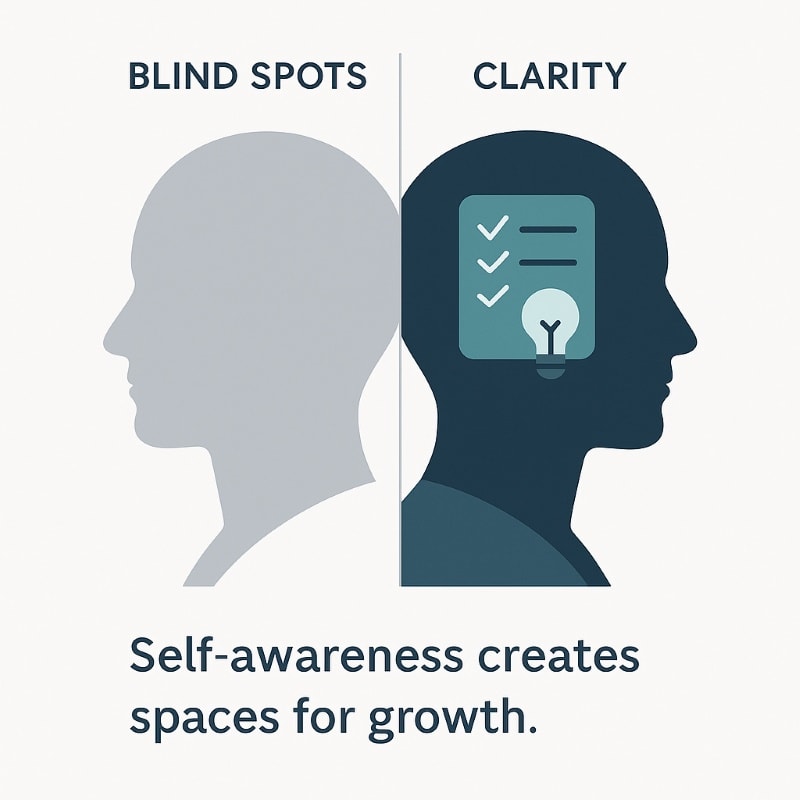
But self-awareness is tricky to measure in an interview. That’s where behavioral tools like OAD shine: they reveal patterns in decision-making, emotional intelligence, and response to feedback—giving you data on what a candidate might not even see in themselves.
In interviews, look for reflective language:
- “Here’s where I’ve struggled in the past—and how I adjusted.”
- “I know I tend to overanalyze. I’m working on decision speed.”
- “I thrive with structure, so I ask for it early in a new role.”
These aren’t weaknesses—they’re signs of emotional maturity. And they’re often what separate steady contributors from future leaders.
Desire to Contribute, Not Just Perform
There’s a big difference between someone who wants to do a good job… and someone who wants to make an impact.
High performers consistently show a desire to contribute beyond their role. They’re not just meeting expectations—they’re asking how their work drives company goals, supports the team, or improves the client experience. They look beyond their qualifications to make a broader impact. These are the hires who help your company evolve, not just operate.
According to a 2023 Gallup study, employees who feel connected to their company’s mission are 54% more likely to stay long term and 33% more likely to be engaged at work.
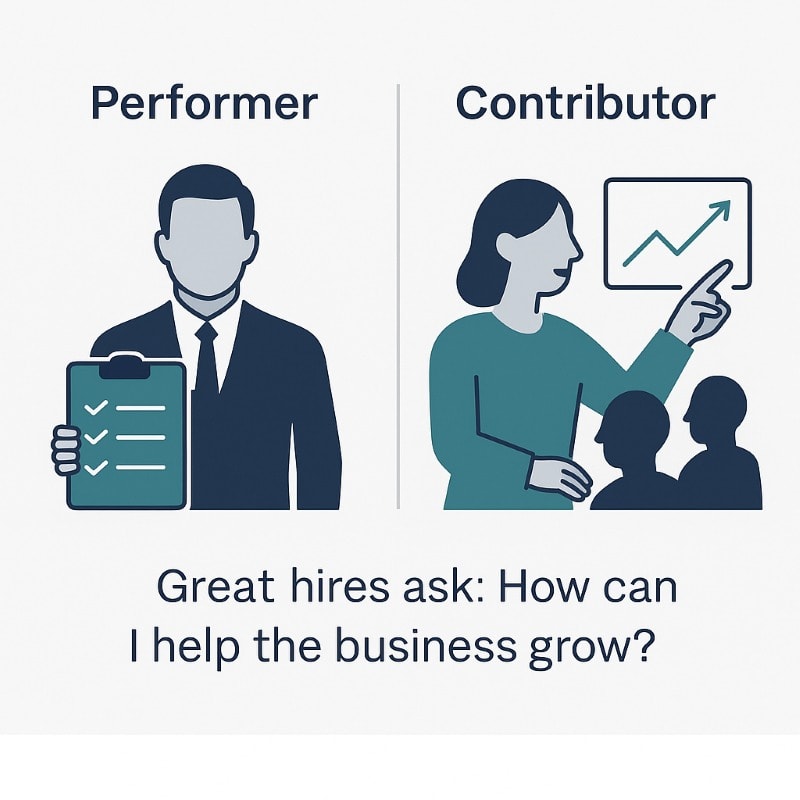
So how do you spot this trait? Look for signs of initiative: candidates who ask about team goals, mention improvements they’ve made in past roles, or suggest ideas unprompted. They’re not just thinking about the job—they’re already thinking about the business.
Behavioral tools like OAD can help you identify internal drivers such as goal orientation, initiative, and mission alignment, giving you a clearer picture of whether someone is a long-term culture contributor—or just checking boxes.
What Makes a Good Hire: Values Alignment as the Foundation
Hiring someone with the right skill set is important. But hiring someone who truly aligns with your company’s values and mission? That’s where long-term success begins.
When new hires share your organization’s core beliefs—whether it’s innovation, integrity, or client obsession—they’re more likely to stay engaged, work collaboratively, and adapt to your goals. In contrast, even the most technically skilled employee will struggle if their values conflict with your company’s culture and may not be the best fit for your organization.
A 2022 SHRM study found that cultural misalignment was a leading cause of early turnover, costing companies tens of thousands in re-hiring and onboarding costs.
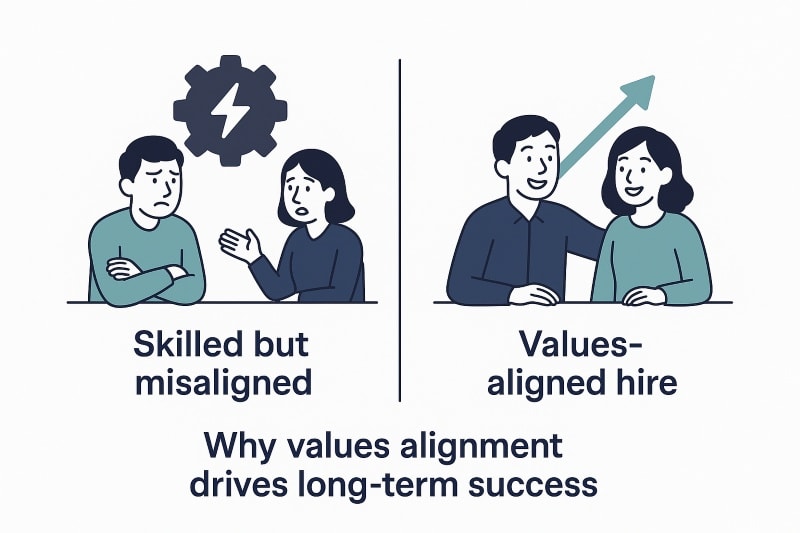
Here’s the challenge: values alignment isn’t easy to spot in a resume or even during a first interview. That’s why top employers use behavioral and personality assessments—like the OAD Survey—to measure alignment before making an offer. These data-backed tools reduce guesswork and help ensure you’re hiring people who believe in what your business stands for.
Bonus Insight: The Most Overlooked Trait by Hiring Managers
In this article, we discuss one trait that quietly predicts performance, loyalty, and team cohesion—yet it almost never shows up on job descriptions:
Ask most hiring managers what they look for in a candidate, and you’ll hear the usual: experience, communication, confidence, technical skill.
But there’s one trait that quietly predicts performance, loyalty, and team cohesion—yet it almost never shows up on job descriptions:
Emotional self-regulation.
In this section, we discuss why emotional self-regulation is often overlooked and how it impacts hiring outcomes.
It’s not flashy. You won’t hear it in a practiced elevator pitch. But candidates who can stay grounded in tough conversations, adapt to changing priorities, and respond to feedback without defensiveness consistently outperform their peers.
A study published in Personnel Psychology found that employees with strong emotional regulation skills experienced 40% fewer interpersonal conflicts and were rated 28% higher in team effectiveness by their managers.
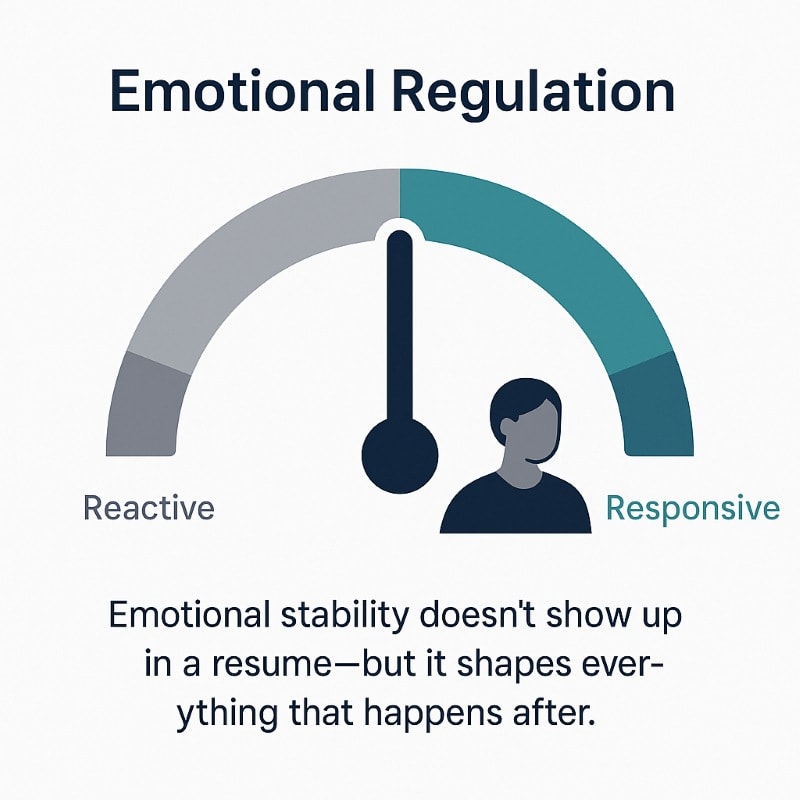
The problem? This trait is nearly invisible in a resume or unstructured interview. It requires behavioral insight. OAD’s tools help measure a candidate’s emotional stability and response tendencies under stress—data that’s especially useful when hiring for leadership, client-facing, or high-pressure roles.
And if you’re not looking for it? You may be hiring volatility dressed as charisma.
Conclusion: Great Hires Aren’t Found — They’re Predicted
The best employees aren’t always the ones with the perfect resume or the most polished interview. They’re the ones who show up consistently, align with your mission, and grow with your company.
Hiring based on traits like values alignment, self-awareness, and resilience isn’t guesswork—it’s strategy. And the companies that understand this are the ones that build stronger teams, reduce turnover, and outperform competitors.
If you’re still relying on gut instinct and surface-level impressions, you’re leaving too much to chance. With behavioral science on your side, you can predict success—before you make the hire.
Ready to Stop Guessing and Start Hiring Smarter?
Start with the Top Performer Profile and see how our data-driven assessments help you identify the right people for the right roles—faster, smarter, and with confidence.