“Hostile work environment” gets thrown around as a synonym for “my workplace sucks.” Sometimes it does. But in HR, the label matters because it changes how you respond, what you document, and how quickly risk escalates.
This article gives you a practical definition you can use globally (with a slight US tilt), plus an HR-focused way to spot early warning signs, handle reports cleanly, and reduce the odds you hire your way into the problem in the first place.
This is not legal advice and it’s not a case-law tour. It’s a decision guide for HR leaders who need to protect employees, reduce disruption, and avoid predictable failure patterns.
Quick Definition: What Is a Hostile Work Environment?
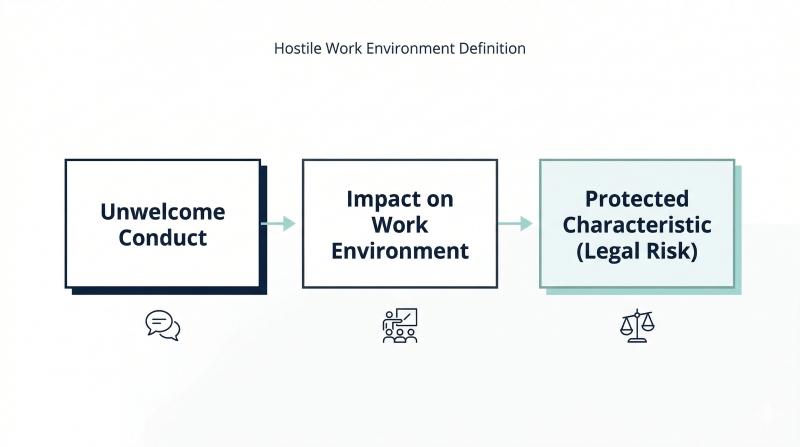
A hostile work environment is when unwelcome conduct makes the workplace feel intimidating, hostile, or abusive to a reasonable person, and it meaningfully affects someone’s ability to work.
US framing (useful even if you operate globally): the EEOC describes unlawful harassment as conduct that becomes a condition of continued employment, or is severe or pervasive enough to create an intimidating, hostile, or abusive work environment from a reasonable person’s perspective.
Outside the US, the same core idea shows up in different words. In the UK, harassment under the Equality Act is “unwanted conduct” tied to a protected characteristic that violates dignity or creates an intimidating, hostile, degrading, humiliating, or offensive environment. In the EU context, official guidance similarly describes harassment as unwanted conduct that leads to a hostile working environment.
The practical takeaway for HR: don’t argue semantics. Focus on three questions:
- Is the conduct unwelcome?
- Is it serious enough or frequent enough that it changes the work experience?
- Is it connected to a protected characteristic (when you’re assessing legal exposure), even if the broader behavior problem goes beyond legal minimums?
The Practical Threshold: When Behavior Becomes a Real Workplace Risk
HR does not need a courtroom-level definition to act. You need a threshold you can apply consistently.
Start here:
1) Pattern beats intent.
Most hostile behavior is defended as “just joking” or “not meant that way.” Intent does not erase impact. If the conduct keeps happening after it is unwelcome, the risk climbs fast.
2) Severe or pervasive, in plain terms.
- Severe means one episode is serious enough to change how safe work feels.
- Pervasive means smaller behaviors repeat until they define the environment.
In practice, repeated “minor” conduct can be more damaging than one loud incident because it becomes normal and unchallenged.
3) Reasonable person, not “tough it out.”
The standard is not the most sensitive person in the room or the most hardened. It’s whether a reasonable person would see the environment as hostile, and whether it interferes with work. That’s why you document specifics: what was said or done, how often, who witnessed it, and what changed in the employee’s ability to do their job.
4) Isolated incidents still matter operationally.
Even when something is not “severe enough” legally, it can still trigger:
- resignations and transfer requests
- retaliation dynamics
- team disengagement
- reputational risk
- repeat behavior if uncorrected
Treat “not illegal” as a risk category, not a permission slip.

What Usually Drives Hostile Workplace Behavior
Hostility rarely appears out of nowhere. It usually follows predictable mechanics.
Power dynamics.
Hostile environments accelerate when the person driving the behavior has authority, influence, or social protection. Employees stay quiet when they believe reporting will backfire or go nowhere.
Group dynamics.
A team can create hostility through exclusion, hazing, or scapegoating without one “villain.” Watch for in-groups and out-groups, cliques, and informal leaders who control belonging.
Stress plus weak leadership.
Under pressure, teams default to their real norms. If managers avoid conflict, reward aggression, or play favorites, hostility becomes a coping strategy.
Role misfit.
Poor role-fit is an underrated contributor. When someone lacks the skill or temperament for the job, they often protect themselves with blame, intimidation, or control. The behavior looks interpersonal, but the root is capability and coping.

Common Examples of a Hostile Workplace Environment
Use examples to calibrate your internal threshold. These are not scripts. They are patterns.
Sexual harassment
This can include unwanted sexual advances, repeated comments about someone’s body, sexual jokes, sharing explicit content, or pressuring someone socially or professionally. It often shows up through “plausible deniability” until it’s chronic.
Key HR signal: the target changes behavior to avoid the person, the space, or the schedule.
Discriminatory harassment
This includes hostile behavior tied to protected characteristics such as race, national origin, religion, disability, sex, sexual orientation, or gender identity. It can be direct (slurs, name calling) or indirect (mocking accents, “jokes,” exclusion from key work loops).
US reference point: Title VII is the core federal framework used in many internal HR policies even in global companies, because it sets a clear baseline for what counts as illegal harassment tied to protected class status, and many teams pair that with behavioral interview questions to assess cultural fit so they screen for culture risk before it becomes a pattern.
Religion-based harassment and pressure around accommodations
This can look like mocking religious beliefs, scheduling tactics that punish religious practices, or “informal penalties” for requesting reasonable accommodations. It also shows up as unequal enforcement: one person’s request is treated as normal, another’s as inconvenient.
In the UK context, the standard explicitly includes unwanted conduct that creates an intimidating or humiliating environment connected to a protected characteristic, which helps HR frame the risk clearly.
Hostile behavior that is not “illegal,” but still damaging
Bullying, intimidation, public shaming, yelling, sabotage, and constant offensive conduct can create an abusive working environment even when it is not linked to a protected characteristic. HR should still treat it as a serious risk because it drives turnover, work performance decline, and safety violations.
The goal is not to win an argument about definitions. The goal is to stop the pattern and protect employees.
Early Warning Signs HR Can Spot
Most hostile work environment claims are not “sudden.” HR just sees them late.
Watch for these patterns, especially when they cluster in one team, manager, or location:
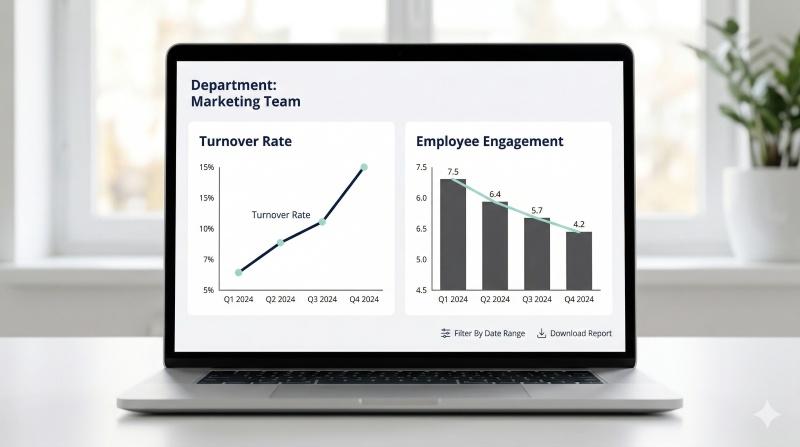
Turnover and transfer pressure
- A spike in resignations from one team.
- Internal transfers framed as “career development” with no real role change.
- New hires leaving fast, often with vague exit reasons.
Attendance and health signals
- Rising sick leave.
- Avoidance patterns: people suddenly work from home only on certain days, avoid specific meetings, or stop traveling to a site.
Engagement and morale drop
- Engagement scores fall sharply in one pocket.
- Employee dissatisfaction shows up in comments like “nothing changes” or “not worth reporting.”
- Psychological safety collapses: early risk alerts around burnout and disengagement are ignored or never captured, and people stop disagreeing, stop speaking up, stop escalating issues.
Conflict hotspots
- Repeated complaints about one individual’s inappropriate behavior.
- “Everybody has a problem with them” becomes a normalized sentence.
- Increased HR time spent mediating the same personalities.
The most useful “early warning sign” is consistency. One complaint can be noise. Three complaints with the same behavioral signature is a pattern.
What HR Should Document and How to Handle Reports
When people report a hostile workplace, they usually bring feelings, not evidence. That’s normal. Your job is to convert it into a clean, defensible record without turning it into an interrogation.
What to document
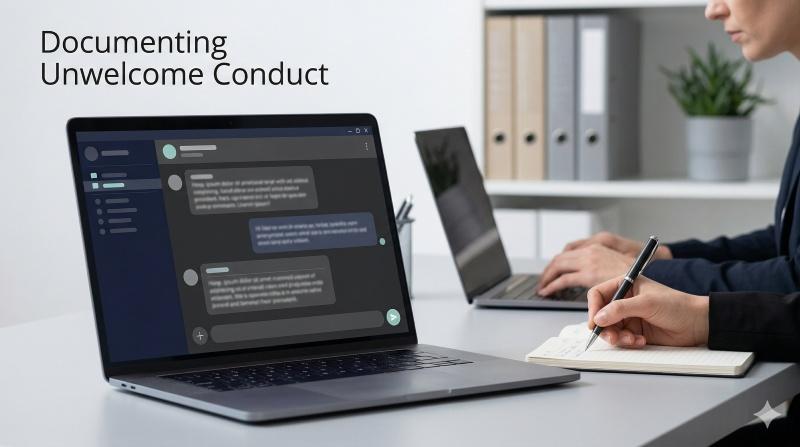
Capture specifics in a repeatable structure:
- What happened: exact words, actions, or offensive behavior (avoid paraphrasing into vague labels)
- When and where: dates, times, channels (in-person, email, chat)
- Who was involved: actor, target, witnesses
- Frequency: isolated incidents vs repeated conduct
- Impact: changes in work performance, ability to participate, continued employment concerns, avoidance behavior
- Prior steps: has the conduct been flagged as unwelcome, and did it continue?
Keep it neutral. “Employee reported X occurred” is stronger than “Manager is abusive,” until you’ve validated facts.
How to interview without contaminating accounts
Order and phrasing matter.
- Start with the reporter to get a clear timeline and list of potential witnesses.
- Interview witnesses early while memory is fresh and before stories spread.
- Interview the subject last so you can test inconsistencies without leading questions.
Use open prompts:
- “Walk me through what you observed.”
- “What happened next?”
- “What did you hear directly vs what you were told?”
Avoid:
- “Did you feel harassed?” (leads the witness)
- “Was it discrimination?” (asks for a conclusion, not facts)
Reporting pathways that reduce silence
People do not “raise concerns” when they think it will harm them.
Minimum viable setup:
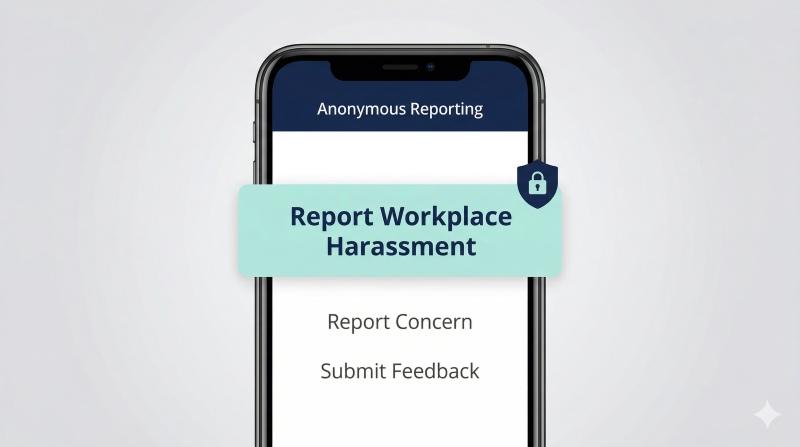
- A clear reporting route outside the direct manager
- An anonymous option (with explicit limits: anonymity is harder if the details are specific)
- A standard response timeline so employees know something will happen
If your reporting system is vague, employees treat it as theater. Then you learn about hostile work environment claims when someone quits or escalates externally.
How Hiring Decisions Create the Conditions for a Hostile Environment
Hostile environments are rarely “just culture.” They are often the downstream result of predictable hiring and promotion mistakes, which is why many teams use a quick pre‑interview behavioral survey tool to see risk patterns before they’re on payroll.
Hiring the wrong manager multiplies risk
For founders and CEOs, precision in leadership hiring decisions is one of the strongest levers you have, because one poorly selected manager can create a hostile environment faster than any policy can fix it. Typical risk patterns:
- low emotional control under pressure
- dominance and public correction as a default
- “results justify everything” mindset
- rule-bending or inconsistent enforcement
This is where many organizations fail: they promote for technical performance, then act surprised when the person manages through fear.
Design teams with data, not gut feel.
Most org-design decisions come down to role fit, leadership style, and team dynamics. OAD reads those signals from a 7-minute behavioral survey, so you can reconfigure roles and teams with evidence instead of guesswork.
“Culture fit” shortcuts create exclusion
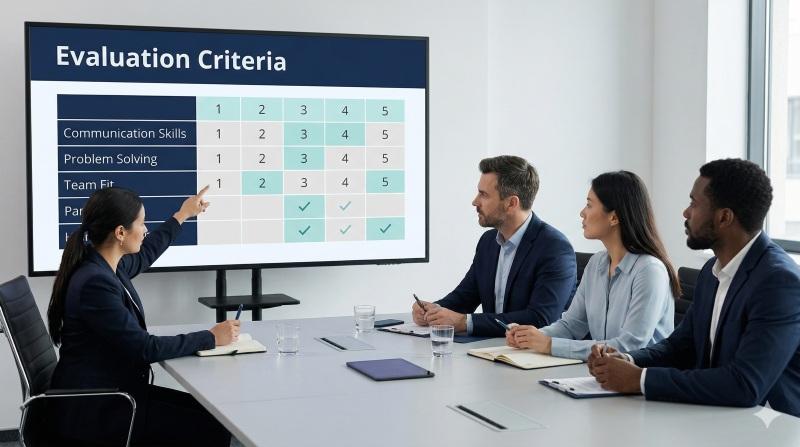
When “culture fit” is vague, it becomes a loophole for preferential treatment. That drives exclusion, especially for people who do not match the dominant group’s style, background, or communication norms. Using structured behavior fit reports that match role to personality gives you a clearer standard than “seems like us.”
Swap the question from:
- “Do they fit our culture?”
To:
- “Can they succeed in this role, with these expectations, while treating people consistently?”
Bias and favoritism poison teams
Bias-driven hiring can create a hostile workplace environment by:
- building homogenous teams that punish difference
- creating “inner circles” and scapegoats
- enabling unfair treatment under the cover of performance narratives, the same people-dynamics that derail post‑acquisition PE hiring strategies when culture clashes surface late
Even when no one intends harm, the outcome is the same: a team where certain people are always defending their right to belong.
How Behavioral Assessments Help Reduce Hiring Risk
Assessments are not a shield and they are not a substitute for management. But they can reduce the odds you hire volatility into roles where it becomes everyone else’s problem.
A practical use case: measure job-relevant behavior signals that correlate with breakdowns like hostile behavior, chronic conflict, or rule-bending, and pair that with motivation insights into what truly drives your hires so you’re not surprised by how they respond under pressure.
What to screen for depends on the role, but common risk signals include:
- conflict style (escalates vs resolves)
- impulse control under stress
- empathy and social awareness
- openness to feedback
- compliance orientation vs “I do what I want” tendencies, which are easier to see with a validated behavioral assessment built for hiring decisions
The goal is not to eliminate “strong personalities.” It’s to identify people who will predictably create an abusive working environment when pressure hits.
If you want to see how this looks in a hiring workflow, you can test OAD and run a pilot on one role family before scaling it across teams. From there, giving people individual application access to their assessment profiles supports ownership and development, managers can lean on behavioral coaching tools built for leaders and executive advisors, and revenue leaders can use the same data to build winning sales teams and avoid toxic promotion mistakes.