Most candidates treat the “Any questions for me?” moment like small talk. Smart candidates use it like an x-ray.
The goal is not to sound “interested.” The goal is to extract signal: what success actually looks like, what the team rewards, what burns people out, and whether this role matches how you work.
Why Questions Matter
Good interview questions do three jobs at once:
- They reveal your core motivators.
Your questions show what you care about: growth, autonomy, clarity, stability, impact, learning, or status. Hiring managers notice this because it predicts performance and retention more than your “I’m passionate about…” speech, and they’re effectively reading your underlying motivators and behavioral needs. - They demonstrate strategic thinking.
When you ask about success metrics, tradeoffs, constraints, and priorities, you show you think like someone who owns outcomes, not tasks. That creates a positive impression fast because it reduces perceived hiring risk and shows you care about behavioral fit between role and personality. - They test whether the job description is real.
Job descriptions are marketing documents. Your questions force operational truth: workload, team dynamic, decision rights, cross-team friction, and what the interviewer avoids saying out loud.
Design teams with data, not gut feel.
Most org-design decisions come down to role fit, leadership style, and team dynamics. OAD reads those signals from a 7-minute behavioral survey, so you can reconfigure roles and teams with evidence instead of guesswork.
Avoid yes/no questions that end the conversation
If the answer can be “yes,” you wasted your turn. Replace binary questions with prompts that require examples, specifics, or comparisons.
Bad:
- “Do you support professional growth?”
Better: - “Can you give an example of how someone in this position grew in the last 12 months?”
Bad:
- “Is work life balance important here?”
Better: - “What does a sustainable week look like on this team during busy periods?”
Bad:
- “Do you have a good culture?”
Better: - “What behaviors get rewarded here, and what behaviors get shut down?”

How to Choose the Right Questions
You do not need 20 interview questions. You need 6–10 that hit different risk categories, based on who you’re talking to.
Use recruiter/HR rounds to clarify process and scope.
Recruiters usually have the cleanest view of timeline, compensation bands, leveling, and how the hiring process works, especially when they’re using a structured pre-interview behavioral survey tool. They often cannot answer deep team details.
Use hiring manager rounds to validate success, expectations, and team reality.
This is where you test what the job description actually means, how performance is judged, and what “good” looks like in that department.
Use a simple mix so you don’t over-index on one theme:
- 2 questions on success and expectations
- 2 questions on team dynamic and manager style
- 1–2 questions on workload and boundaries
- 1–2 questions on growth path
- 1 closing question on next steps
If you only ask culture questions, you can sound vague. If you only ask performance questions, you can sound intense. Balance reads as maturity, especially when the company is already using psychometrically precise hiring tools behind the scenes.

Best Questions to Ask the Hiring Manager
These are designed to get usable answers, not corporate poetry.
1) “How will success be measured in this role?”
What it reveals: clarity, accountability, and whether expectations are reasonable.
Follow-ups that force precision:
- “What are the top three outcomes you’d want from me in the first six months?”
- “What metrics matter most, and which ones are misleading here?”
Red flags:
- Vague answers like “just be proactive.”
- No clear ownership, no clear outcomes, only activity.
2) “What does a top performer do differently here?”
What it reveals: the real performance model (skills, habits, and behaviors that get rewarded), especially in functions like sales where aligning personality with sales roles and growth paths makes or breaks results.
Good signs:
- They describe behaviors tied to outcomes (“prioritizes ruthlessly,” “communicates early,” “pushes back with data”).
- They can name examples without sounding rehearsed.
Red flags:
- “They work long hours” as the main differentiator.
- A focus on personality over output (“they’re just a rockstar”).
3) “What’s your feedback style and cadence?”
What it reveals: manager quality and psychological safety, plus how seriously they take communication skills as a performance driver.
Follow-ups:
- “Do you give feedback in the moment or in scheduled check-ins?”
- “Can you share a recent example of how you coached someone who was struggling?”
Red flags:
- “We don’t really do formal feedback.”
- Feedback framed as punishment, not development.
4) “How are decisions made on this team?”
What it reveals: your autonomy, speed of execution, and political friction.
Follow-ups:
- “What decisions would I own versus need approval on?”
- “Where do projects typically get stuck?”
Red flags:
- Decision-making that depends on one person’s mood.
- “It depends” with no structure.
5) “What does progression look like from this position?”
What it reveals: whether ‘professional growth’ is real or decorative, and whether the company gives people individual access to their own development insights.
Follow-ups:
- “Have internal candidates moved into broader roles from this team recently?”
- “What usually has to be true for someone to get more scope?”
Red flags:
- No examples.
- Growth is framed as waiting for someone to leave.
If you want to connect this to a science-based angle without being weird about it: most hiring mistakes come from misalignment between a candidate’s work style and the job’s real demands. The clearer the manager is about success, feedback, and decision rights, the easier it is to assess fit with evidence instead of vibes.

Questions That Expose Team Dynamics and Risk
These are the questions candidates avoid because they fear sounding “negative.” That’s cute. You’re evaluating a multi-year chunk of your life, including the risk of burnout or misfit that good turnover and burnout risk alerts are designed to catch. Ask anyway.
1) “Can you share a recent team conflict and how it was resolved?”
What it reveals: maturity, accountability, and whether problems get handled or buried.
Follow-ups:
- “What did you change afterward so it didn’t repeat?”
- “How do disagreements get surfaced here, in meetings or 1:1s?”
Red flags:
- “We don’t really have conflict” (translation: it just happens quietly).
- Blame with no learning.
2) “How does the team detect and handle burnout?”
What it reveals: workload reality and whether boundaries exist.
Follow-ups:
- “What happens when priorities collide and deadlines stack up?”
- “How do you decide what gets deprioritized?”
Red flags:
- Pride in permanent urgency.
- No mechanism for tradeoffs, only “we push through.”
3) “What does leadership potential look like here in practice?”
What it reveals: whether leadership is based on results and trust, or politics and visibility.
Follow-ups:
- “Who has been given more scope recently, and why?”
- “What behaviors make you confident someone can lead?”
Red flags:
- Leadership defined as charisma, not capability.
- No real path, only vague encouragement.
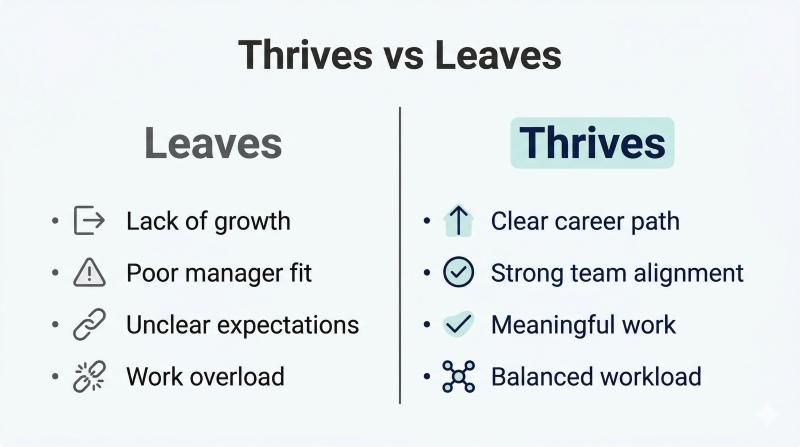
4) “Which behaviors predict long-term retention on this team?”
What it reveals: the hidden compatibility rules for the department.
Follow-ups:
- “What tends to cause good people to leave?”
- “What’s different about the people who stay and thrive?”
Red flags:
- They blame employees as a category (“people don’t want to work anymore”).
- No awareness of patterns.
Questions About the Role Day-to-Day
This section is about catching unrealistic expectations early, before you’re hired into a spreadsheet fire.
1) “What does a typical day or week look like?”
What it reveals: actual duties vs the job description.
Follow-ups:
- “What takes the most time most weeks?”
- “What work do people assume this role does, but actually doesn’t?”
Red flags:
- No one can describe the week.
- Everything is “urgent” and nothing is planned.
2) “How much time is protected for focused work versus meetings?”
What it reveals: whether deep work is possible, especially in roles requiring analytical skills.
Follow-ups:
- “What recurring meetings are truly required?”
- “Are there meeting-free blocks or norms around async updates?”
Red flags:
- Back-to-back meetings as the default.
- “We’re very collaborative” used as an excuse for constant interruption.
3) “What cross-team dependencies shape this role?”
What it reveals: friction points, bottlenecks, and how much politics you’ll inherit.
Follow-ups:
- “Where does work usually get delayed?”
- “What teams do we rely on most, and what’s that relationship like?”
Red flags:
- Chronic dependency problems treated as normal.
- You’ll be the translator between teams with no authority.

Questions About the First 90 Days
This is where you separate real onboarding from “good luck, here’s Slack,” and where smart managers lean on behavioral data for targeted coaching instead of throwing new hires into the deep end.
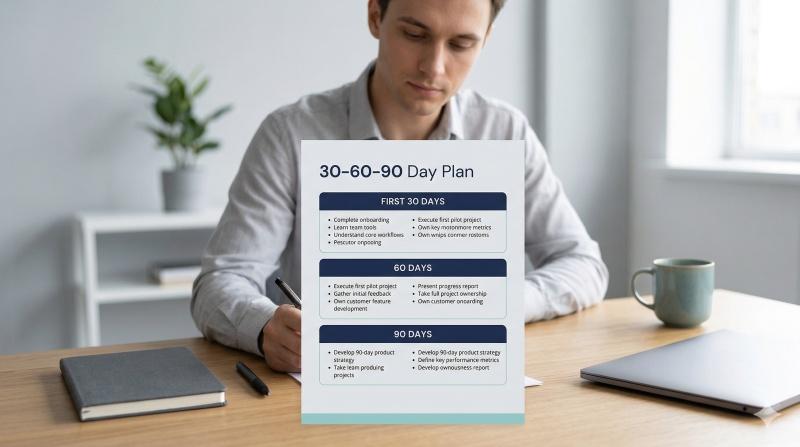
1) “What would I own in the first 30, 60, and 90 days?”
What it reveals: whether they’ve thought through the role and how structured your ramp will be.
Follow-ups:
- “What would success look like by day 30?”
- “What would be a strong outcome by month three?”
Red flags:
- No plan at all.
- Overloaded expectations in the first few weeks.
2) “What onboarding and training should I expect?”
What it reveals: investment and operational maturity.
Follow-ups:
- “Is there documentation, or is it mostly shadowing?”
- “Who is responsible for helping me get unblocked?”
Red flags:
- Training is framed as “you figure it out.”
- No assigned support.
3) “What are the milestones for month three and month six?”
What it reveals: how performance will be judged and whether evaluation is fair.
Follow-ups:
- “What would be an early warning sign I’m not on track?”
- “What resources would I have to hit those milestones?”
Red flags:
- Milestones are vague.
- You’re accountable for outcomes without access to inputs.
Questions About Career Path
This is where you test whether “professional growth” means real opportunities or a motivational poster.
1) “Where is the team headed in the next few years?”
What it reveals: stability, change, and whether your work will matter.
Follow-ups:
- “What’s driving that direction: customers, cost pressure, new products, new leadership?”
- “What capabilities will matter more as the team evolves?”
Red flags:
- No clear direction at all.
- Direction exists, but nobody can explain why.
2) “What growth paths did previous hires in this role follow?”
What it reveals: the real career ladder, including whether internal candidates actually get promoted and whether leadership is using a strategic, long-term fit lens on hiring and promotions.
Follow-ups:
- “What separated the people who progressed fastest?”
- “What skills or results were most important for that next step?”
Red flags:
- “It depends” with zero examples.
- Everyone’s path is external because there’s no internal mobility.
3) “Are strategic priorities likely to shift soon?”
What it reveals: risk of scope drift and whiplash.
Follow-ups:
- “If priorities shift, what usually changes: headcount, responsibilities, timelines?”
- “How does the team decide what to stop doing?”
Red flags:
- Constant shifting treated as a personality trait.
- No mechanism for tradeoffs, only more work.
Closing Questions
You’re finishing strong, not filling time. One or two closing questions is enough.
1) “What prompted you to interview me today?”
What it reveals: what they think your strengths are, and what you should reinforce in your follow-up.
Use it to sharpen positioning:
- If they say “stakeholder management,” your thank-you note should include one sharp example of that.
- If they say “analytical skills,” you mirror that with a measurable outcome you drove.
2) “Who would I collaborate with most closely?”
What it reveals: the real team dynamic and who you’ll depend on to do your job.
Follow-ups:
- “Where do handoffs usually break down?”
- “How do those groups prefer to work: async, meetings, written updates?”
3) “What are the next steps and decision timeline?”
What it reveals: process maturity and whether you should expect to hear back when they say you will.
Follow-ups:
- “Is there anything else you need from me to make a decision?”
- “When should I follow up if I don’t hear by then?”

How to Use Their Answers to Stand Out
This is the part most candidates fail because they hear answers and do nothing with them.
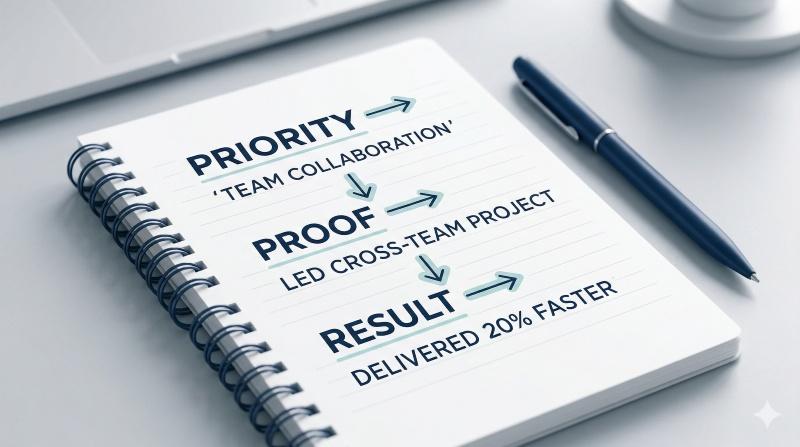
Map their priorities to your past outcomes
If they say success is “shipping faster,” you respond with:
- what you shipped,
- how you reduced cycle time,
- what constraints you worked under.
If they say the challenge is “cross-team alignment,” you respond with:
- a specific example of untangling stakeholders,
- what you changed (process, documentation, cadence),
- the result.
Keep it tight. One proof point beats five vague claims.
Ask one clarifying follow-up when an answer is vague
You’re not interrogating. You’re calibrating.
Examples:
- “When you say ‘fast-paced,’ what does that look like week to week?”
- “When you say ‘ownership,’ which decisions would I own without approval?”
- “When you say ‘collaboration,’ what’s the expected communication cadence?”
Clarity is a competence signal. It also protects you from walking into a role built on ambiguity.
Follow-Up and Thank-You Actions After the Interview
A thank-you email is not a gratitude ritual. It’s a positioning tool.
1) Reference a discussed priority
Pick one priority they mentioned and mirror it back in one sentence:
- “You mentioned the team needs someone who can own X and reduce Y.”
2) Add one concise proof point
One short example, two lines max:
- “In my last role, I did Z, which led to [outcome].”
No long stories. No attachments nobody asked for.
3) Offer one useful artifact if it helps
Only if relevant and lightweight:
- a one-page 30/60/90 plan,
- a short portfolio link,
- a brief outline of how you’d approach a stated challenge.
If you want to nod toward OAD’s world without turning the email into a personality lecture, keep it practical:
- “If it’s helpful, I can also share a short work-style summary of how I operate best in teams (communication, decision-making, execution).”
FAQ (PAA)
What are good questions to ask at the end of an interview?
Ask about next steps, decision timeline, and anything they still need from you. One question about collaboration partners is also useful because it reveals how the role works in practice.
What questions should you not ask in an interview?
Avoid questions you could answer in 30 seconds by reading the website, and avoid questions that force a yes/no answer. Also avoid aggressive compensation questions in early rounds unless the recruiter opens that door.
How many questions should I ask in an interview?
Usually 6–10 total across the full process is enough. In a single interview, 2–4 strong questions beats a long list that feels performative.
What are the best questions to ask the hiring manager?
Ask how success is measured, what top performers do differently, how feedback works, and what the first 90 days should look like. Those questions surface expectations, management style, and role clarity.
If you want to see what “fit” looks like beyond gut feel, OAD’s approach is simple: match candidates to role demands using validated traits and job-relevant patterns, not vibes. That includes using a fast, validated OAD personality survey before interviews, pairing it with behavioral interview questions that assess culture fit, and even stress-testing leadership and culture fit in high-stakes private equity hiring decisions. If you want to see how it performs on your roles and candidates, you can test OAD and compare your next hires with structured data.