Teamwork gets praised constantly and measured almost never. Then leaders act surprised when “strong culture” fails to deliver results.
A teamwork evaluation criteria framework fixes that. It turns vague impressions into observable behaviors, measurable outcomes, and repeatable decisions. The goal is not to grade people for sport. The goal is to understand what drives team effectiveness, what blocks team performance, and what to change to improve overall team performance.
In this guide, you’ll get a practical system to evaluate teamwork using clear metrics, structured scoring, and data collection methods that work in real companies, not just leadership workshops. You’ll also see where a science-based tool like OAD, with scalable pricing for every team can reduce bias in performance reviews and help teams hire and develop in a more consistent way.
Design teams with data, not gut feel.
Most org-design decisions come down to role fit, leadership style, and team dynamics. OAD reads those signals from a 7-minute behavioral survey, so you can reconfigure roles and teams with evidence instead of guesswork.
What is teamwork evaluation, and why it matters
Teamwork evaluation is the process of measuring how well a team works together to achieve the team’s goals, not just whether they hit a target. It looks at both the “what” and the “how”:
- Outcomes: business outcomes, stakeholder satisfaction, quality, customer service skills, delivery.
- Behaviors: communication skills, collaboration, problem solving, time management, constructive feedback, team cohesion, and team dynamics.
A common mistake is treating teamwork like personality. It’s not. Personality traits can influence behavior, but teamwork is a set of observable actions inside a specific environment: role expectations, workload, leadership style, meeting norms, and incentives.
So the purpose of evaluation matters.
The evaluation purpose: performance reviews, development, or team redesign
Before you define criteria, be clear about what the evaluation is for:
- Performance reviews: fairer decisions, clearer expectations, fewer “gut feel” ratings.
- Development: targeted coaching and training based on real gaps.
- Team building: improving team cohesion and open communication using evidence, not guesses.
- Team redesign: changing roles, decision rights, or workflows when the structure is the problem.
If you skip this step, you’ll mix goals and create a system that nobody trusts.
What “good teamwork” looks like in business outcomes
Effective teams tend to look boring from the outside. They complete tasks, share relevant information, resolve conflicts quickly, and make decisions in a timely manner. High performance rarely comes from “team spirit” alone. It comes from clarity, coordination, and consistent execution.
A useful definition is:
A high-performing team is one that reliably produces the required outcomes while maintaining healthy collaboration and sustainable workload patterns.
That definition matters because it prevents the classic trap: a team that gets results through chaos, burnout, or heroics will score well on outcomes but poorly on process. Your framework should capture both.
Align teamwork evaluation with organizational goals
Teamwork evaluation criteria only matter if they connect to organizational goals. Otherwise, you are measuring behavior in a vacuum and calling it “culture.”
Translate organizational goals into team goals and role expectations
Start with the organization’s priorities for the next 6 to 12 months. Examples:
- Faster delivery
- Higher quality
- Stronger customer experience
- Better stakeholder satisfaction
- Innovation and new ideas
- Lower operational risk
Then translate those into team-level definitions. For example:
- “Faster delivery” becomes: fewer handoff delays, clearer task ownership, quicker decisions, better prioritization.
- “Higher quality” becomes: better root-cause analysis, better peer review habits, fewer rework cycles.
- “Innovation” becomes: psychological safety for creative risks, structured experimentation, cross-team input.
Now your teamwork skills are not generic. They are tied to real work.
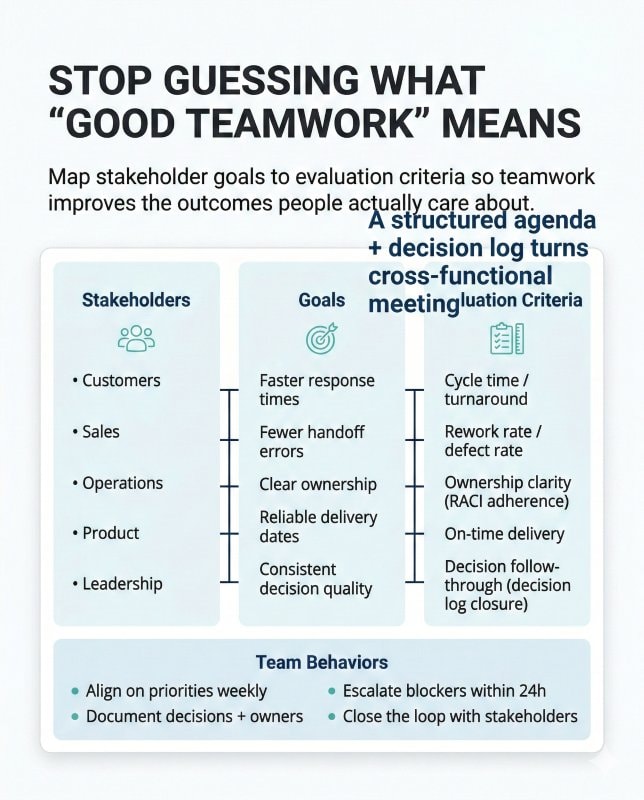
Define what “team success” means for key stakeholders
Different stakeholders judge teams differently:
- Executives often focus on business outcomes and progress.
- Hiring managers focus on task completion and reliability.
- Peer teams care about responsiveness, handoffs, and clarity.
- Customers care about consistency, service quality, and follow-through.
A global framework should capture this without getting political. The simplest move is to define 2 to 4 stakeholder lenses you will measure consistently, then keep them stable over time.
Team performance metrics to measure
If you only measure “teamwork skills,” you get a popularity contest. If you only measure outcomes, you reward heroics, politics, and burnout. You need both.
A clean teamwork evaluation criteria system uses two metric buckets:
- Outcome KPIs: what the team delivered.
- Process KPIs: how the team delivered it.
Outcome KPIs (results, stakeholder satisfaction, quality, customer service skills)
Pick 3 to 6 outcome KPIs that reflect business outcomes the team actually owns. Examples:
- Delivery reliability: percent of committed work completed in the planned window
- Quality: defect rates, rework volume, error rates, audit findings (use what fits your function)
- Stakeholder satisfaction: internal stakeholder score, customer satisfaction, escalation volume
- Throughput: completed tasks, cycle time, resolved tickets (only if volume is truly a goal)
- Financial impact: cost reduction, revenue influenced (when attribution is credible)
Rules:
- Don’t mix individual metrics into the team score unless the work is genuinely individual.
- Don’t measure what you cannot act on. “Morale” without a lever is theater.
- Prefer trends over single-month snapshots.
Process KPIs (how work gets done: cohesion, meeting quality, task completion)
Process KPIs capture team effectiveness drivers. These are the metrics that explain why results happen or don’t.
Useful process KPIs:
- Coordination and workflow:
- Handoff delays between team members or other departments
- Work-in-progress limits respected (or constant overload)
- Dependency aging (how long work sits blocked)
- Execution and time management:
- Deadline adherence on assigned tasks
- Task completion rate by priority tier
- Decision cycle time (time from issue raised to decision made)
- Communication quality:
- Meeting outcomes rate (meetings with clear decisions/actions)
- Responsiveness times for critical requests
- Rework caused by unclear requirements or missing relevant information
- Feedback and learning:
- Frequency of constructive feedback in retrospectives or 1:1s
- Recurrence of the same problems (signals weak root-cause analysis)
Keep it simple. Two to four process KPIs per area is enough.

Benchmarks and targets (what “good” is)
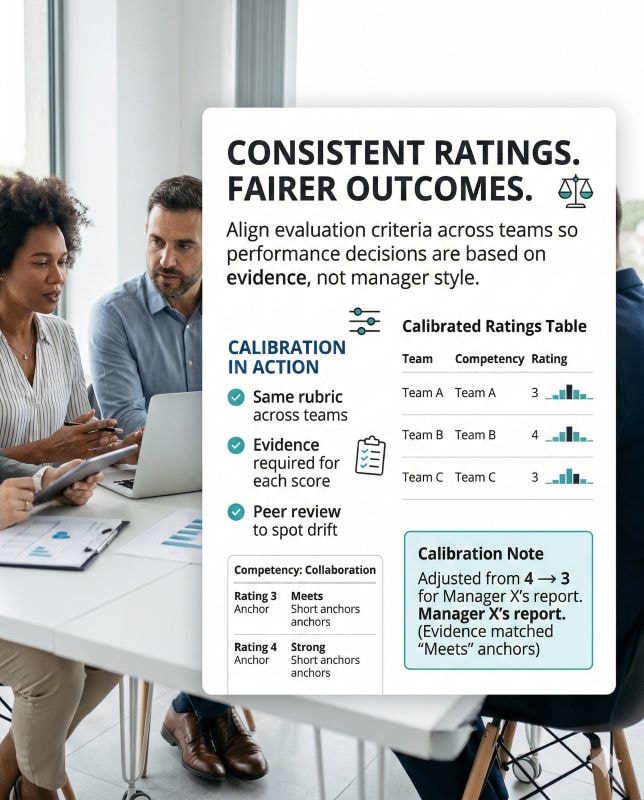
Benchmarks stop score inflation. Without them, every manager’s “4 out of 5” means something different.
Use one of these benchmarking approaches:
- Internal historical baseline: compare the team to its own last quarter and last year.
- Peer comparison: compare similar teams with similar constraints (not fantasy teams with better resourcing).
- Role-based thresholds: define “healthy ranges” (for example, acceptable cycle time bands) based on your operating model.
Avoid fake precision. If you can’t justify an exact threshold, use ranges and directional targets.
Measurement frequency and reporting cadence
Pick a cadence that matches how fast the work changes:
- Monthly: most teams, most metrics, most improvement loops.
- Quarterly: strategic goals, stakeholder satisfaction trends, capability growth.
- Per project: teams with project-based delivery or seasonal cycles.
A workable system uses:
- Monthly tracking for KPIs (outcome + process).
- Quarterly review for the full teamwork evaluation criteria scoring and development planning.
Teamwork skills and competencies to assess
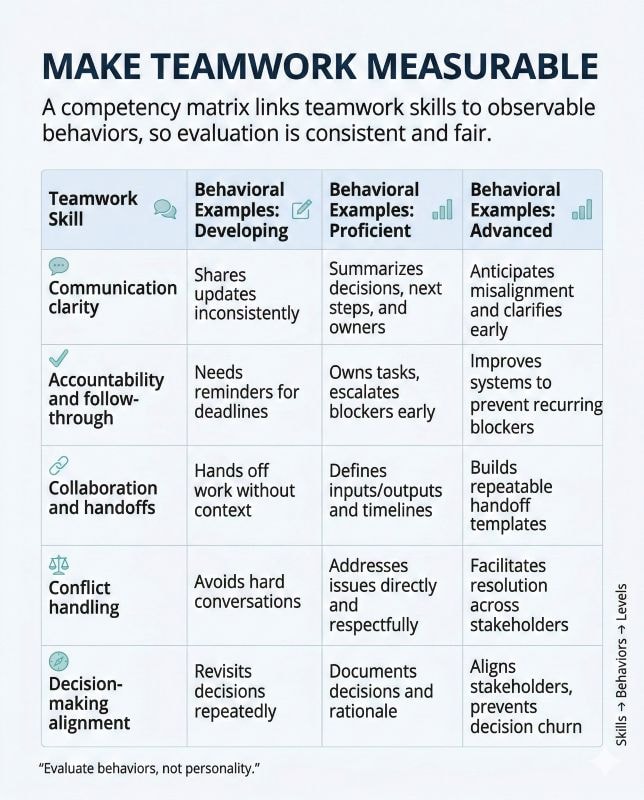
Metrics tell you what happened. Competencies tell you why. This is where most evaluation systems fall apart because they use fuzzy labels like “team player” and pretend everyone interprets that the same way.
Don’t do that. Define teamwork skills as observable behaviors a good team member shows repeatedly, especially under pressure.
Core teamwork competencies (communication, collaboration, accountability, judgment)
For most roles and industries, a solid baseline set of teamwork skills includes:
- Communication skills: clarity, listening, responsiveness, sharing relevant information.
- Collaboration: coordinating work, supporting other team members, integrating different perspectives.
- Accountability: owning outcomes, following through, escalating early, completing tasks.
- Constructive feedback: giving and receiving feedback without defensiveness or avoidance.
- Problem solving: diagnosing issues, proposing solutions, learning from mistakes.
- Sound judgment: prioritizing effectively, making decisions with incomplete data, avoiding chaos.
- Positive contributions: consistent, helpful behavior that improves team productivity (not “positive attitude” as a personality rating).
You can add role-specific competencies, but keep the list short. If you try to assess 18 competencies, you will assess none of them well.
Team dynamics and team spirit, defined in observable terms
“Team spirit” is not a competency. It’s an outcome of predictable conditions.
If you want to evaluate team cohesion or team dynamics, tie them to what people actually do:
- Do people share ideas in team meetings or stay silent?
- Do different viewpoints get explored or punished?
- Does the team resolve conflicts or let them rot?
- Do people ask for help early or hide problems?
- Do team discussions end with decisions or endless looping?
Those behaviors are measurable. “Vibes” are not.
Scoring scale options (simple rating vs behavior-based scoring)
You have two realistic options:
- Simple rating scale (fast, higher bias risk)
Example: 1–5 rating with clear definitions for each level. - Behavior-based scoring (slower, far more consistent)
Example: score against specific behavioral anchors tied to job reality.
For 50+ employee companies that care about consistency across managers, behavior-based scoring is usually worth it. It reduces the “my 4 is your 2” problem, and it holds up better in performance reviews.
Behavioral anchors (what “1 vs 5” looks like in real work)
Behavioral anchors are concrete examples that define each score level. They stop managers from grading based on likability.
Example: Communication skills, “message clarity”
- 1: Messages are often confusing. Missing context forces repeated clarification. Work gets delayed.
- 3: Messages are usually clear. Context is sometimes missing. Clarifications happen but don’t derail delivery.
- 5: Messages are consistently clear and structured. Context, ask, and deadline are explicit. Others can execute without guessing.
Anchors should reference:
- meetings, group meetings, team discussions
- assigned tasks and handoffs
- constructive feedback moments
- decision-making and escalation paths

Who owns the assessment (and why that matters)
If nobody owns the evaluation, it becomes a one-time spreadsheet event.
Assign clear owners:
- Team leader: accountable for running the process and closing loops.
- HR: owns consistency, calibration, and fairness across teams.
- Team members: responsible for self assessment and peer input where used.
- Key stakeholders: optional input for cross-functional teams, especially where stakeholder satisfaction matters.
This is also where a structured tool like the OAD Survey, an industry-leading personality assessment can help, not as a replacement for performance data, but as a way to reduce bias when evaluating how personality traits may show up as teamwork behaviors under different role expectations.
The key dimensions of teamwork
If you want a teamwork evaluation criteria framework that scales, you need a stable set of dimensions. Otherwise every manager invents their own model and calls it “leadership.”
These dimensions cover most teams across industries and geographies. You can tune the examples, but keep the structure.
Communication skills
Communication is not “talking a lot.” It’s transferring meaning without forcing everyone to decode your intent.
What to evaluate:
- Message clarity in team meetings and written updates
- Active listening and whether people actually respond to what was said
- Responsiveness times and follow-through
- Whether relevant information is shared early or hoarded until it’s a crisis
- Feedback quality, including providing constructive feedback without drama
Collaboration and coordination across team members
Collaboration is execution with other people. It’s not “being nice.”
What to evaluate:
- Coordination of tasks and dependencies between team member roles
- Willingness to support other team members when priorities collide
- How the team integrates different perspectives without stalling
- Handoff quality to other groups and other departments
- Whether the team works toward shared goals or protects silos
Role-model behavior, constructive feedback, and psychological safety
Role-model behavior is the standard the team copies, especially from senior individual members and the team leader.
What to evaluate:
- Does the team leader model accountability and openness?
- Are mistakes treated as learning signals or as blame targets?
- Do people speak up with concerns, risks, or new ideas?
- Does feedback happen in a constructive way or only when someone explodes?
You don’t need to call it “psychological safety” if that term annoys your execs. Just measure the behaviors that create it.
Problem solving and creative solutions
Teams that can’t solve problems become escalation factories.
What to evaluate:
- Root-cause analysis vs repeated patchwork
- Use of diverse perspectives to avoid tunnel vision
- Solution effectiveness and whether outcomes improve
- Ability to handle complex problems without paralysis
- Creative solutions and innovative approaches when the role requires it
Time management and prioritization
A team can be friendly and still fail constantly because it can’t prioritize effectively.
What to evaluate:
- Deadline adherence and task completion
- Prioritization discipline (what gets dropped and why)
- Meeting punctuality and meeting usefulness
- Decision timeliness and escalation speed when blocked
Role clarity and shared accountability
Role clarity is the base layer. Without it, your teamwork evaluation becomes a fight about expectations instead of performance.
What to evaluate:
- Are role expectations documented and understood?
- Is task ownership clear for recurring work?
- Are escalation paths known and used early?
- Does the team understand decision rights?
How to evaluate communication skills in a team
Communication is the easiest dimension to complain about and the hardest to evaluate well, because most teams confuse “frequency” with “quality.”
Evaluate it using three angles: clarity, listening, and responsiveness.
Message clarity in meetings and team discussions
Look for evidence in real artifacts:
- Meeting notes: do they show decisions, owners, and deadlines?
- Written updates: are they structured, or are they vague status poetry?
- Rework patterns: do tasks get redone due to misunderstandings?
Behavioral signals of strong clarity:
- States the purpose of the message early
- Shares relevant information before making an ask
- Uses specifics: “by Friday,” “for stakeholder X,” “the final product is Y”
- Summarizes decisions at the end of discussions
Active listening behaviors and open dialogue
Active listening is visible. You can observe it in team meetings:
- People ask clarifying questions before disagreeing
- People reflect back what they heard before proposing alternatives
- Different viewpoints get explored instead of shut down
Weak listening looks like:
- People talk past each other
- Questions are ignored
- Decisions get revisited because people never aligned in the first place
Responsiveness and follow-through in a timely manner
This is not about answering everything instantly. It’s about protecting team flow.
Evaluate:
- Response times to critical requests
- Whether blockers are raised early
- Whether follow-ups happen without chasing
A practical scoring anchor:
- Low score: teammates regularly wait on information, approvals, or updates that stall progress.
- Strong score: teammates maintain predictable response patterns and communicate delays early.
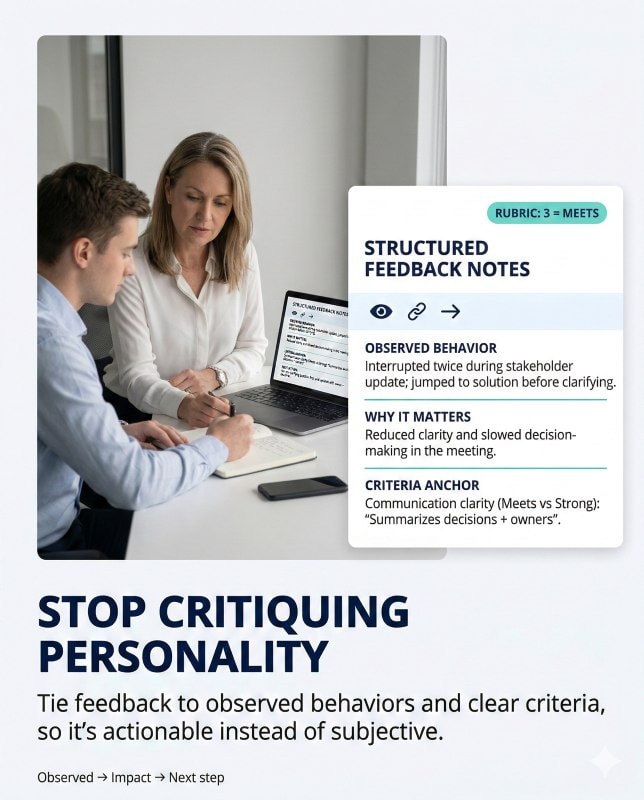
Feedback quality and providing constructive feedback
Feedback is a core teamwork skill because it prevents small problems from becoming expensive ones.
Evaluate:
- Specificity: feedback references behavior and impact, not personality traits
- Timing: feedback happens close to the event, not months later in performance reviews
- Balance: feedback includes both what to continue and what to adjust
- Outcomes: does behavior change, or does feedback just create defensiveness?
How to evaluate collaboration and team cohesion
Collaboration is where “good intentions” go to die. People say they want teamwork, then reward individual speed, private heroics, and territorial control.
So evaluate collaboration based on what actually improves team effectiveness: coordination, inclusion of viewpoints, and reliable handoffs.
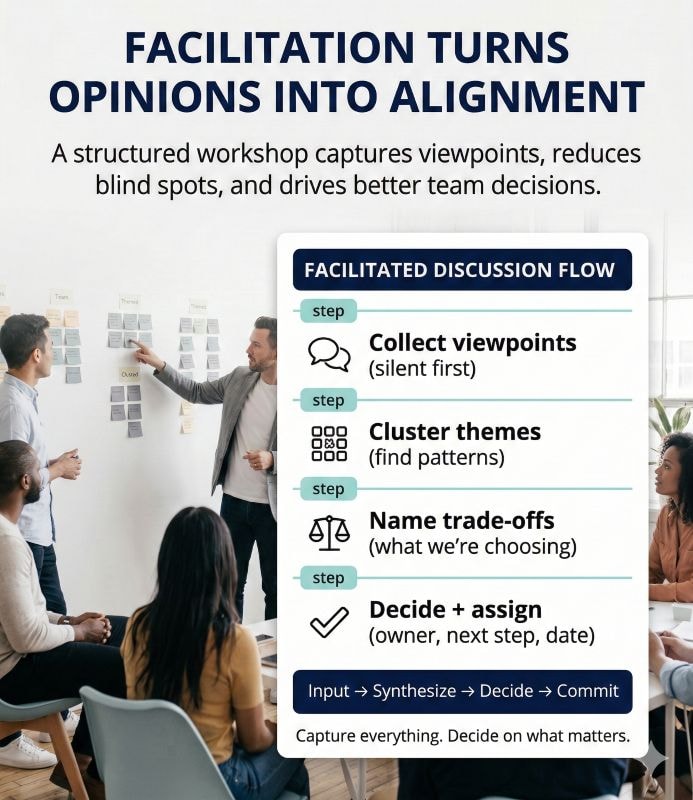
Participation and inclusion of diverse perspectives
You’re not measuring who talks the most. You’re measuring whether the team uses the brains it already pays for.
Look for:
- Participation distribution in team meetings and group meetings
- Whether quieter team members contribute ideas without being steamrolled
- Whether the team actively asks for input from other departments when needed
- Whether different perspectives lead to better decisions or endless debate
Simple evidence sources:
- Meeting facilitation notes
- Retrospectives and project reviews
- Stakeholder feedback on how the team engages
Behavioral anchors can be blunt:
- Low score: the same two people dominate, others disengage, and blind spots repeat.
- Strong score: input is invited, synthesized, and translated into decisions.
Coordination between individual members and other departments
Coordination is collaboration with consequences.
Evaluate:
- Handoff quality: are requirements, context, and timelines clear?
- Ownership clarity: does everyone know who owns which assigned tasks?
- Dependency management: are blockers surfaced and resolved quickly?
- Cross-functional behavior: does the team protect the work or protect the ego?
Signals of strong coordination:
- Tasks have explicit owners and next steps
- Requests include purpose, constraints, and definition of done
- Teams close loops with stakeholders instead of ghosting them
Conflict handling and how the team resolves conflicts
Healthy teams disagree. Weak teams avoid disagreement until it becomes passive aggression.
Evaluate conflict behavior through:
- How disagreements show up: direct and respectful vs side-channel gossip
- Whether conflicts get resolved or linger
- Whether decisions get revisited because conflict was never handled
- Whether the team leader enables open dialogue or shuts it down
Global note with US tilt: directness norms vary across cultures. You’re not scoring “being blunt.” You’re scoring whether conflict gets resolved and work moves forward without relationship damage.
Buy-in, shared goals, and positive contributions
“Buy-in” is not everyone smiling. It’s people committing to decisions even if they didn’t get their first choice.
Evaluate:
- Whether decisions stick after the meeting
- Whether team members support execution or quietly sabotage
- Whether people contribute solutions instead of just critiques
- Whether the team rallies around the team’s goals under pressure
How to assess problem solving and decision-making
Most teams don’t fail because they lack effort. They fail because they solve the wrong problem, too slowly, with too little learning.
Problem solving is a teamwork skill because it’s usually collaborative: multiple viewpoints, shared context, and coordinated execution.
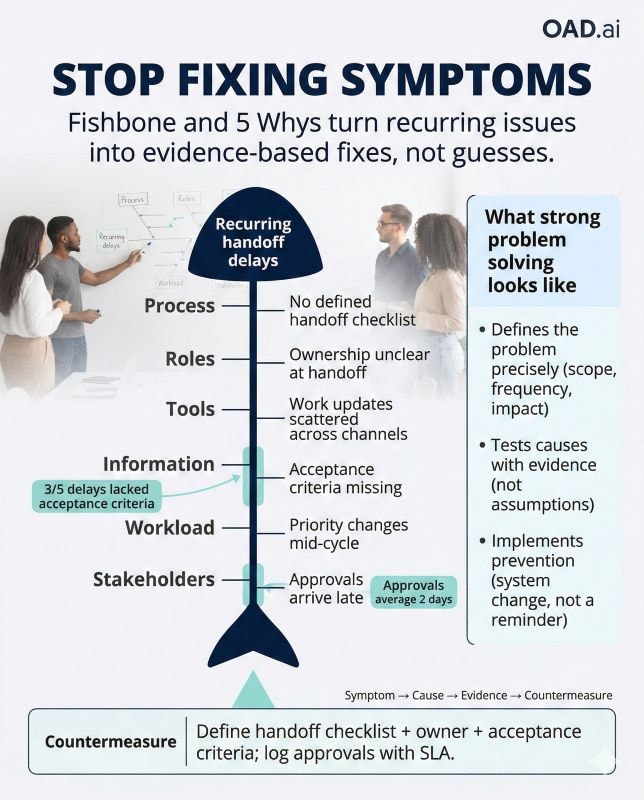
Root-cause analysis vs surface fixes
Evaluate whether the team:
- Identifies patterns instead of treating every issue as a one-off
- Separates symptoms from causes
- Uses data where available instead of narrative certainty
- Documents lessons learned so the same issue doesn’t recur
Evidence sources:
- Post-mortems or incident reviews
- Quality reviews
- Retrospective notes
- Recurring customer complaints or stakeholder escalations
Behavioral anchor idea:
- Low score: the same problems repeat, and fixes are mostly patchwork.
- Strong score: the team diagnoses causes, tests fixes, and prevents recurrence.
Solution effectiveness and learning from mistakes
A team can be fast and still be wrong.
Evaluate:
- Did the solution reduce recurrence?
- Did it improve the KPI it was meant to improve?
- Did it create new problems downstream for other groups?
- Did the team capture the learning and adjust the process?
This also ties to “creative solutions.” Creativity is only useful if it survives contact with reality.
Decision timeliness and sound judgment
Decision timeliness is not rushing. It’s avoiding paralysis and avoiding endless consensus loops.
Evaluate:
- Time from problem raised to decision made
- Whether decisions are made at the right level (not escalated by default)
- Whether the team can act with incomplete information
- Whether decisions include clear owners, next steps, and escalation paths
Sound judgment shows up as:
- Prioritizing effectively under constraint
- Considering stakeholder satisfaction and risk
- Avoiding ego-driven decisions that look smart but hurt execution
Creative risks and innovative approaches (when appropriate)
Not every team should be scored on innovation. Some teams should be scored on reliability.
Use this criterion when the team’s purpose includes improvement, experimentation, or new product work.
Evaluate:
- Does the team propose new ideas with a testable plan?
- Does it learn quickly from small experiments?
- Does it avoid reckless novelty that harms quality or customers?
A good benchmark: creative solutions that measurably improve speed, quality, or stakeholder outcomes, not “interesting ideas” that never ship.
How to evaluate time management and execution
Time management is where teams reveal what they actually value. If everything is urgent, nothing is prioritized, and the team’s ability to execute collapses.
This section focuses on observable execution behaviors: deadlines, prioritization, meeting discipline, and dependency handling. The same behaviors should be front and center when assessing communication skills during hiring so new team members reinforce, not dilute, execution standards.
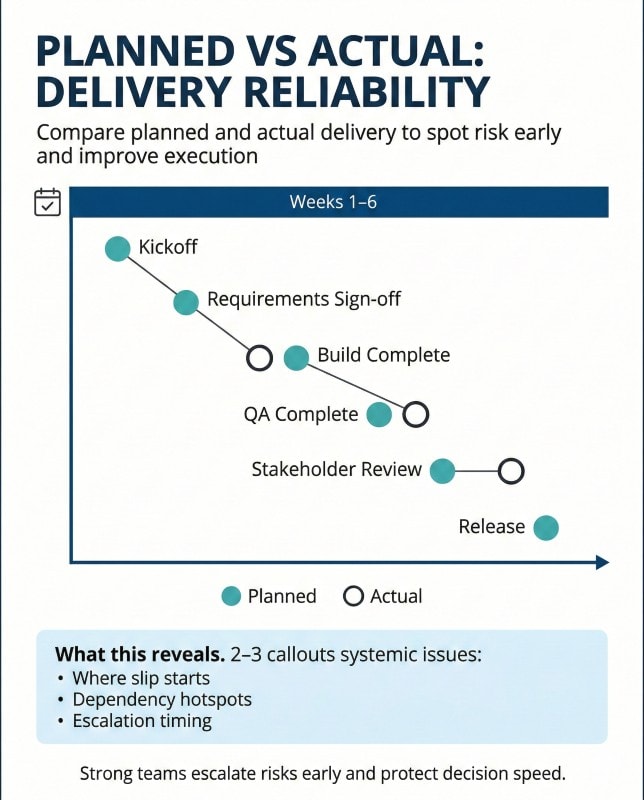
Deadline adherence and task completion
Start with the basics:
- Do teams meet deadlines consistently?
- Do they complete tasks they committed to?
- When they miss, do they communicate early or vanish until it’s too late?
Evaluate using:
- Percent of committed work delivered on time (trend, not one month)
- Volume of carryover work between cycles
- Frequency of last-minute surprises that affect other team members
Important nuance: evaluate reliability, not perfection. A team working on complex problems will miss sometimes. The question is whether misses are predictable, explained, and reduced over time.
Task prioritization and workload visibility
Teams often “prioritize” by doing whatever screams loudest. That’s not prioritization. That’s surrender.
Evaluate:
- Whether the team uses a visible priority system (tiers, swimlanes, sprint goals, whatever fits)
- Whether lower-priority work gets deferred instead of silently added
- Whether the team can explain why a task matters in terms of business outcomes
- Whether people protect focus time or get trapped in constant reactive work
Behavioral signals of strong prioritization:
- Clear “top 3” focus for the week
- Explicit tradeoffs, not hidden overload
- Early escalation when capacity breaks
Meeting hygiene: punctuality, agendas, outcomes
Meetings are a teamwork skill test. Teams that can’t run meetings can’t run work.
Evaluate team meetings and group meetings based on:
- Punctuality and respect for start and end times
- Presence of an agenda or stated purpose
- Decision rate: do meetings end with clear decisions, or just “alignment talk”?
- Action clarity: owners, deadlines, and next steps documented
- Participation quality: relevant input, not performative updates
A practical process KPI many teams use: “percent of meetings that result in documented decisions/actions.” It’s simple and brutal.
Managing dependencies and escalation paths
Execution fails when teams treat dependencies like someone else’s problem.
Evaluate:
- How quickly blockers are raised
- Whether escalation paths are known and used appropriately
- Whether dependencies with other departments are managed proactively
- Whether ownership is clear when a task crosses roles
Strong teams don’t just “work hard.” They manage flow.
Clarify roles and responsibilities before scoring teamwork
This is the part leaders skip, then complain that “accountability is low.”
If roles are unclear, you can’t fairly evaluate teamwork. You’ll end up scoring people for failing expectations they never agreed to.
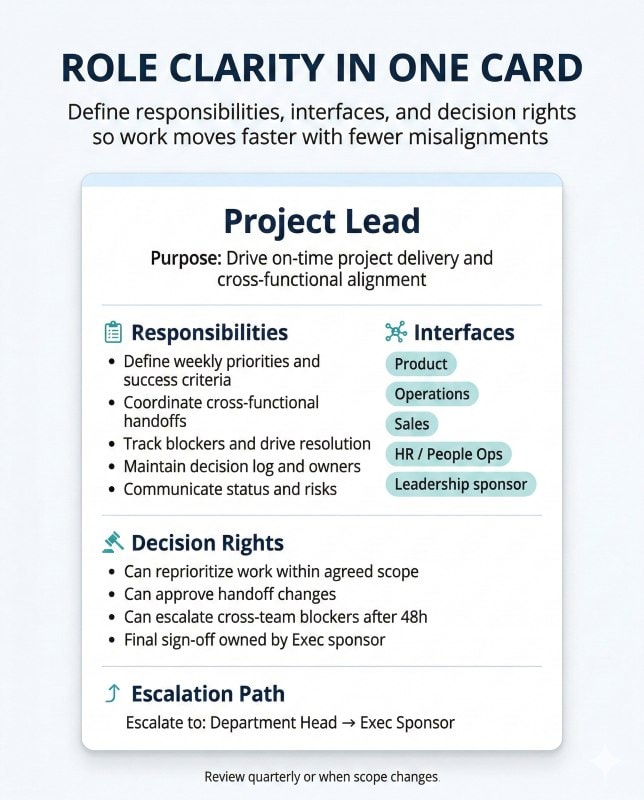
Document role descriptions and role expectations
You don’t need a 12-page job description. You need clarity on:
- Core responsibilities
- Decision rights (what they can decide vs must escalate)
- Key stakeholders and interfaces
- What “good” looks like in this role
This matters in global contexts because role expectations can differ by region, function, and reporting structure. Document the expectation once, then calibrate it.
Map task ownership and assigned tasks
Teams with strong teamwork skills make ownership visible.
Useful tools:
- Ownership map for recurring work (who owns what category)
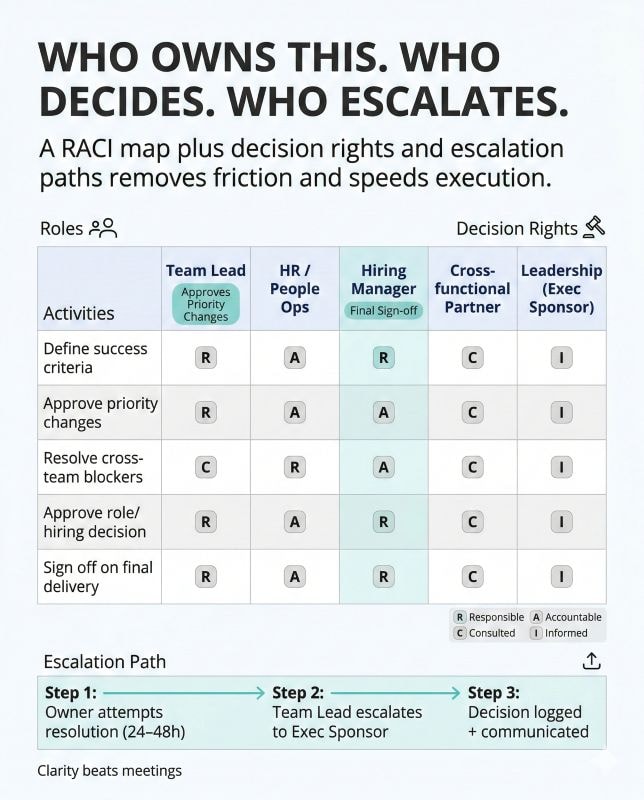
- RACI or lightweight equivalent (Responsible, Accountable, Consulted, Informed)
- Definition of done for critical work types
- Handoff checklists for cross-functional workflows
Ownership does not mean “one person does everything.” It means one person is accountable for making sure it gets done.
Confirm escalation paths and decision rights
Escalation paths are part of time management.
Define:
- What qualifies as a blocker
- When to escalate (time-based and risk-based triggers)
- Who decides what
- How decisions are documented and communicated
When this is clear, teamwork improves because people stop guessing and start executing.
Data collection methods for teamwork evaluation
This is where humans try to be “fair” and accidentally build a bias machine.
One data source is never enough. Manager opinion alone is fragile. Peer ratings alone turn political. Self assessment alone turns optimistic. Objective data alone misses context.
Use multiple methods, keep the system light, and triangulate. Giving each employee secure application access to their own assessment profile also supports ongoing development and self-driven improvement.
Anonymous surveys (self assessment and team assessment)
Surveys are useful for patterns, not precision.
What surveys do well:
- Capture perception gaps between team members
- Surface team dynamics issues people won’t say out loud
- Track trends over time
What surveys do poorly:
- Diagnose root causes by themselves
- Provide a fair rating for any single individual
Best practices:
- Keep to 10 to 20 items max
- Use behavior-based statements (not personality labels)
- Include one open-ended question: “What is one change that would most improve team effectiveness?”
Structured interviews and focus prompts
Interviews give depth and context. The trick is to structure them so you don’t collect random anecdotes and call it insight.
Use consistent prompts, for example:
- “Where do handoffs break down between team members?”
- “What slows decisions down?”
- “What creates rework or missed deadlines?”
- “When does communication fail, and what would have prevented it?”
- “What does a high-performing week look like for this team?”
Global note: in some cultures, people will soften criticism. In others, they’ll over-index on it. Structure helps you compare patterns instead of personalities.
Peer ratings and manager ratings (avoiding popularity scoring)
Peer ratings are powerful and dangerous.
Use them to evaluate behaviors that peers actually observe:
- responsiveness times
- collaboration in group projects
- sharing relevant information
- providing constructive feedback
- supporting other team members under load
Avoid using peers to rate things they can’t see:
- strategic judgment at leadership level
- private stakeholder management
- long-term planning
To reduce bias:
- Use behavioral anchors
- Use forced-choice prompts where possible (example: “most consistently follows through”)
- Calibrate ratings across teams (HR-led)
Objective performance data and team accomplishments
Objective data grounds the evaluation in reality.
Examples:
- delivery reliability
- quality metrics
- cycle time
- escalation volume
- stakeholder satisfaction trends
- task completion rates
Rule: objective data is not “truth.” It’s evidence. Always pair it with context, especially when teams handle complex problems or shifting priorities, as well as with insights into leadership team dynamics like behavioral due diligence for PE-backed organizations.
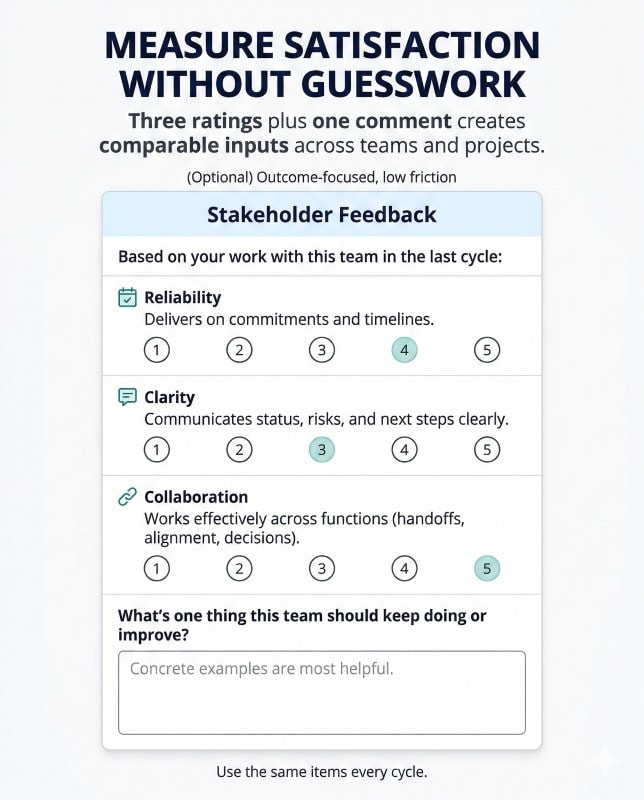
When to include stakeholders outside the team
For cross-functional teams, stakeholder input is often the best signal of team effectiveness.
Include stakeholder feedback when:
- The team serves internal clients (IT, HR, finance, ops, shared services)
- Handoffs to other departments are frequent
- Customer service skills and service quality are part of outcomes
- The team’s work affects multiple viewpoints and competing priorities
Keep stakeholder input structured and short. You want patterns, not essays.
Analyze data and score overall team performance
This step separates useful evaluation from corporate ritual.
Your goal is to identify strengths and gaps, then make decisions. Scoring is a tool, not the outcome.
Aggregate quantitative scores and normalize ratings
If you use 1–5 ratings, you need normalization and calibration. Otherwise “easy graders” inflate team scores and “hard graders” punish their teams.
Basic approach:
- Calculate averages by dimension (communication, collaboration, problem solving, time management, role clarity)
- Compare current scores to previous quarters
- Compare to peer teams only when contexts are comparable
If your organization has multiple regions, normalize carefully. Cultural response patterns differ. You’re looking for deltas and trends more than absolute perfection.
Code qualitative feedback into themes
Open-ended comments are gold if you can synthesize them.
Process:
- Group comments into themes (communication gaps, role confusion, meeting issues, decision delays, conflict avoidance)
- Count frequency and intensity (not as “stats,” as weight of evidence)
- Pull 2 to 4 representative examples per theme (paraphrased for privacy)
Avoid quoting people verbatim in internal reports unless confidentiality is guaranteed. Humans love retaliation.
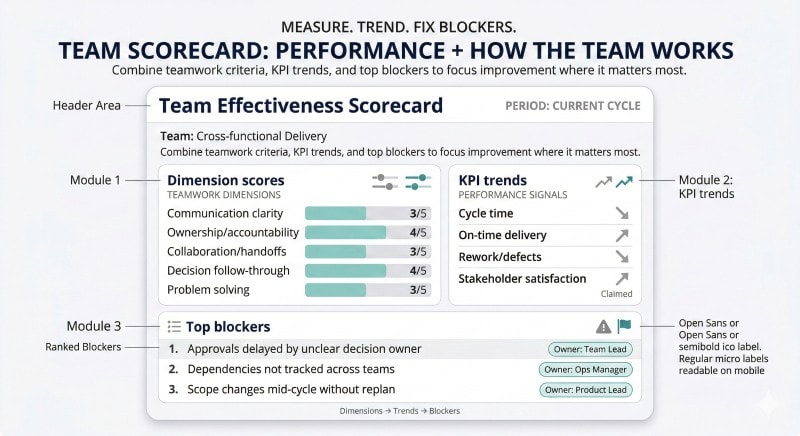
Identify strengths, gaps, and team productivity blockers
A useful output is:
- Top 3 strengths that drive team success
- Top 3 blockers that reduce team performance
- One “system” issue (structure/process) vs one “skill” issue (behavior)
This prevents the common failure mode: blaming individuals for problems created by unclear roles, overloaded capacity, or broken handoffs.
Create a composite team score (and what not to do with it)
Composite scores can help with tracking progress and executive reporting. They can also become an obsession that destroys trust.
If you use a composite team score:
- Keep it simple: average of dimension scores plus outcome KPI trend indicator
- Show confidence: “strong evidence” vs “mixed evidence” based on data sources used
- Use it to prioritize improvement actions, not to shame teams
What not to do:
- Tie compensation directly to one composite score without strong controls
- Rank teams publicly
- Pretend the score is more accurate than the data supports
Turn evaluation into decisions and improvement actions
Collecting data is the easy part. Doing something with it is where most organizations mysteriously “run out of time.”
This step turns teamwork evaluation criteria into actual change.
Run a decision workshop (what to fix first)
Hold a structured workshop with:
- team leader
- a few representative team members
- HR or an objective facilitator (recommended)
- optional: one key stakeholder for cross-functional teams
Agenda:
- Confirm the top 3 strengths to protect
- Confirm the top 3 gaps that reduce team effectiveness
- Identify root causes for each gap
- Choose 1 to 2 improvement actions per gap
- Assign owners and define success measures
Keep it short. Ninety minutes is usually enough if the data is organized.
Prioritize improvement actions tied to business outcomes
Teams drown when everything becomes an “initiative.” Prioritize based on impact and feasibility.
A practical filter:
- Does this change improve business outcomes within 30 to 90 days?
- Does it reduce friction for other team members?
- Will it improve stakeholder satisfaction?
- Can the team actually control it without needing three layers of approval?
Examples of high-leverage actions that directly support building high-performing units, like designing and coaching winning sales teams:
- Role and task ownership map for recurring work
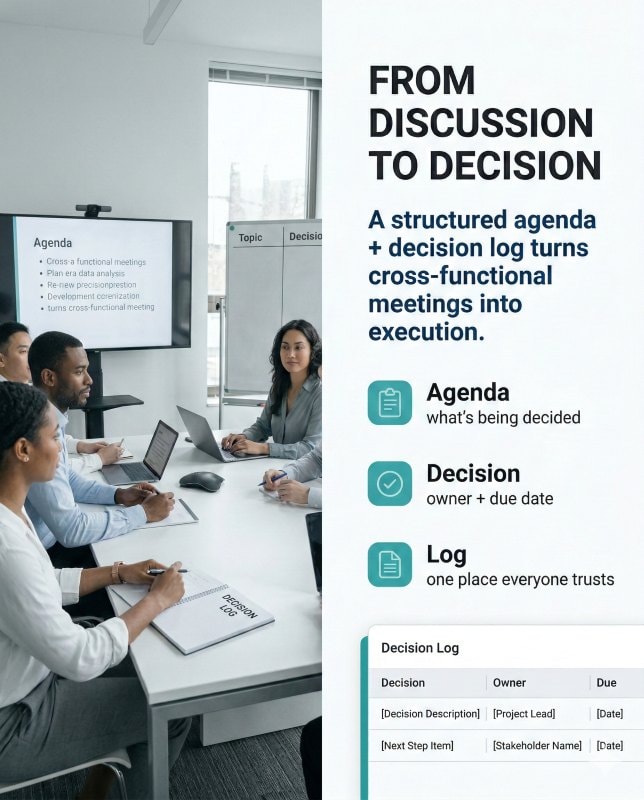
- Meeting reset: agenda template, decision log, action owner tracking
- Dependency workflow with other departments: handoff checklist + escalation triggers
- Feedback cadence: monthly team feedback session with behavior anchors
Assign owners, deadlines, and accountability check-ins
Improvement actions need the same structure as delivery work:
- Owner (one person accountable)
- Deadline (real date)
- Definition of done (observable, not aspirational)
- Check-in cadence (biweekly or monthly)
If you want execution, treat teamwork improvement like project work.
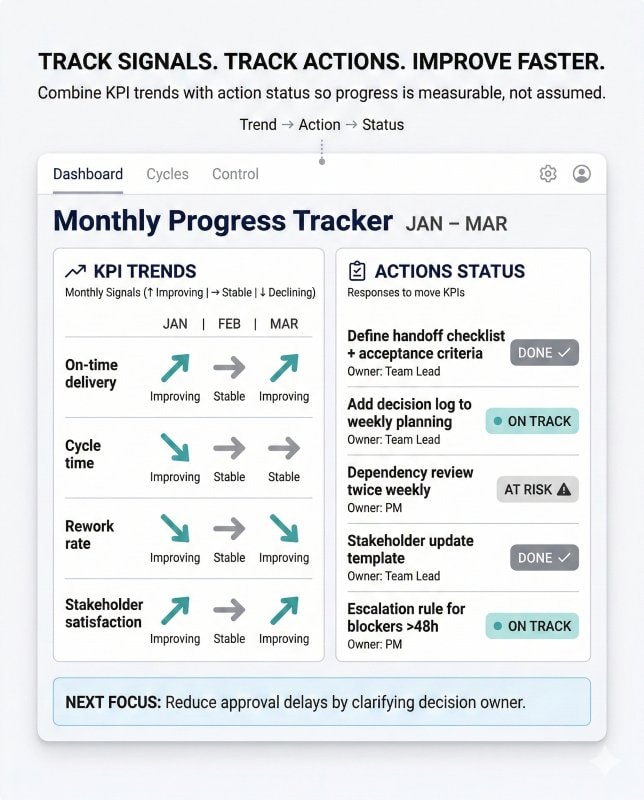
Measure progress monthly and adjust
Use a lightweight monthly pulse:
- One outcome KPI trend check (did delivery/quality/stakeholder satisfaction improve?)
- One process KPI check (did meeting outcomes rate, responsiveness, or handoffs improve?)
- One qualitative check (what got easier, what’s still stuck?)
Do not wait a full year to “re-evaluate.” That’s how teams learn nothing.
Feedback and development plans
If evaluation ends in a report, it’s useless. If it ends in a plan that changes behavior, it’s valuable.
This section covers how to deliver feedback without turning it into a blame festival.
Deliver team feedback sessions that drive behavior change
A strong team feedback session is:
- specific (uses observed behaviors and real examples)
- balanced (strengths and gaps)
- action-oriented (clear decisions and next steps)
Structure:
- Restate the team’s purpose and goals
- Share the top strengths (what to keep doing)
- Share the top gaps with examples (what to change)
- Agree on improvement actions and owners
- Confirm how progress will be tracked
Avoid vague language like “we need better communication.” Replace it with: “meeting decisions aren’t documented, so ownership gets fuzzy, and tasks slip.”
Create individual development plans tied to skill gaps
Not every gap is a team gap. Some are individual patterns that hurt the team’s ability to execute.
Examples:
- A team member consistently misses deadlines due to poor prioritization.
- Someone hoards relevant information and creates bottlenecks.
- A senior person shuts down different viewpoints and kills open dialogue.
- A manager avoids conflict, so issues fester.
Development plans should be short and practical:
- One behavior to start
- One behavior to stop
- One behavior to continue
- One measurable commitment for the next 30 days
Align training, coaching, and team building to the data
Team building without diagnosis is entertainment.
Use training only when it matches the gaps, and consider augmenting it with data-driven coaching tools that give leaders behavioral insight:
- If conflict handling is weak: conflict and feedback skills training with role-play.
- If time management is weak: prioritization and workflow discipline training.
- If role clarity is weak: decision rights and task ownership workshops.
- If problem solving is weak: root-cause analysis training with real cases.
This is also a natural place for structured assessments. When organizations use tools like the OAD Survey tool to reveal fit before the interview, the value is not “labeling people.” It’s helping leaders understand how personality traits may affect teamwork behaviors under specific role expectations, so coaching and hiring become less random.
Design teams with data, not gut feel.
Most org-design decisions come down to role fit, leadership style, and team dynamics. OAD reads those signals from a 7-minute behavioral survey, so you can reconfigure roles and teams with evidence instead of guesswork.
Reporting and continuous improvement
Teams change, goals change, and people change. Your criteria should evolve, but slowly and intentionally.
Executive summary reporting for leaders
Leaders don’t need a 20-page report. They need:
- the team’s purpose and goals
- outcome KPI trends
- top strengths and top blockers
- top 3 improvement actions and owners
- any resourcing or structural constraints leadership must fix
Keep it outcome-linked. Executives care about business outcomes, risk, and throughput, not your internal scoring philosophy.
[Image: One-page executive summary with KPI trends and top actions. Alt: “Executive summary report for team performance evaluation”]
Share findings with stakeholders without blame
Stakeholders should see what will change that affects them:
- handoff improvements
- communication norms
- responsiveness expectations
- escalation paths
Do not dump raw internal comments on stakeholders. Summarize themes and commitments.
Review and update criteria annually
Update criteria when:
- the team’s goals change materially
- the operating model changes (new structure, new dependencies)
- the role expectations change (new tools, new process)
- the organization expands into new regions or markets
Keep the core framework stable. Change the examples and weights as needed.
FAQ: Teamwork evaluation criteria
What are the criteria for team performance evaluation?
Team performance evaluation criteria usually fall into two groups:
- Outcome criteria: results, quality, stakeholder satisfaction, delivery reliability.
- Process criteria: communication skills, collaboration, problem solving, time management, role clarity, constructive feedback.
The best frameworks score both, so you don’t reward chaos or punish teams handling complex work.
How do you evaluate teamwork?
You evaluate teamwork by combining:
- clear teamwork skills dimensions (observable behaviors)
- outcome and process KPIs
- multiple data sources (manager input, peer ratings, surveys, stakeholder feedback, objective data)
- behavior-based scoring with anchors
- a structured decision process that turns findings into improvement actions
What are the 5 C’s of teamwork?
Different sources define the “5 C’s” differently, which is the problem. A practical, business-usable version is:
- Communication
- Coordination
- Commitment
- Contribution
- Conflict handling
If your organization already uses a specific 5 C model, align the definitions to observable behaviors and avoid vague slogans.
What are the 7 C’s of effective teamwork?
Like the 5 C’s, the 7 C’s vary by source. A clean version that maps to real team effectiveness:
- Clear purpose
- Communication
- Collaboration
- Commitment
- Competence
- Conflict resolution
- Continuous improvement
The point is not the letter C. The point is whether your criteria lead to measurable behavior change and better outcomes.
Conclusion: A repeatable system for high-performing teams
Teamwork evaluation criteria work when they stop being abstract. Define the purpose. Align to organizational goals. Measure outcomes and process. Score behaviors with anchors. Triangulate data. Then make decisions and follow through.
A framework like this helps teams improve without turning evaluation into opinion warfare. It also makes performance reviews more consistent by tying ratings to observable behaviors and business outcomes.
If you’re serious about improving team performance, don’t just talk about “better teamwork.” Start with the free Top Performer Profile: 7 minutes, results in 24 hours, no credit card.