In an era where strategy can be copied overnight, the real differentiator isn’t innovation — it’s the invisible rhythm of how teams work together under pressure.. Think of two companies launching the same product: one where departments compete for credit, and another where cross-functional teams share wins. The latter consistently adapts faster and outperforms the market. While individual achievement still matters, the real competitive edge lies in how effectively teams collaborate, communicate, and adapt to new challenges. At OAD, we help organizations uncover the science behind performance teamwork—so leaders can build stronger, more aligned teams that deliver measurable results.
What Is Performance Teamwork?
Teamwork performance isn’t just about how well individuals do their jobs — it’s about how effectively they work together toward a shared goal. Establishing clear team goals is essential, as these well-defined, measurable objectives guide team efforts, enhance communication, foster accountability, and ensure all members are aligned and working towards shared success. A high-performing team balances individual talent with collective intelligence, leveraging each member’s strengths to achieve results no one could reach alone. When an engineer’s data-driven mindset meets a marketer’s creative risk-taking, tension sparks — but in high-performing teams, that tension becomes innovation. In this sense, teamwork performance reflects both what a team achieves and how it operates — through communication, trust, and mutual accountability.
Many organizations confuse teamwork performance with team performance, but there’s a subtle difference. Team performance often measures outcomes — such as revenue, productivity, or project completion — while teamwork performance looks deeper at the underlying behaviors that drive those outcomes. Strong teamwork means team members understand each other’s roles, communicate openly, and operate with a shared sense of purpose. Having a defined purpose helps align team efforts, boost motivation, and improve overall performance. In a product launch team, this might mean marketing adjusts timelines after hearing from engineering, instead of pushing deadlines that create burnout.
At OAD, we see this distinction clearly in the data: teams that focus solely on output often plateau, while those that invest in teamwork performance experience continuous improvement and higher engagement. Focusing on teamwork performance leads to improving performance, as teams become more effective and achieve higher reliability.

The Science Behind Effective Teamwork
Behind every high-performing team lies a combination of psychology, communication, and data. Research from Harvard Business Review shows that the most effective teams don’t just have skilled individuals — they have clear structures for collaboration and trust. Key characteristics of effective teams include clear roles, trust, accountability, and well-defined feedback mechanisms that support collaboration and reliability. Gallup found that employees who feel connected to their teams are 41% less likely to miss work and deliver nearly double the engagement of those who don’t. Yet connection alone isn’t enough. At OAD, our research shows that when connection is combined with alignment of behavioral strengths, engagement rises even higher — because teams where members feel ‘understood’ — not just connected — show up to 30% higher retention, according to our internal OAD data.
This connection isn’t accidental. Effective teamwork depends on shared goals, open communication, and a sense of mutual support that keeps team members motivated even under pressure. When these elements align, the result is not just better output — it’s resilience, innovation, and sustained performance.
At OAD, our assessments are built on decades of behavioral science, helping organizations measure the human factors that shape teamwork performance — from decision-making and stress patterns to communication styles. By combining these insights with leadership coaching, companies can turn group dynamics into a real strategic advantage. Understanding and optimizing the team process—including communication, coordination, and feedback—is essential for achieving high reliability and safety in complex environments.
The Key Elements of a High-Performing Team
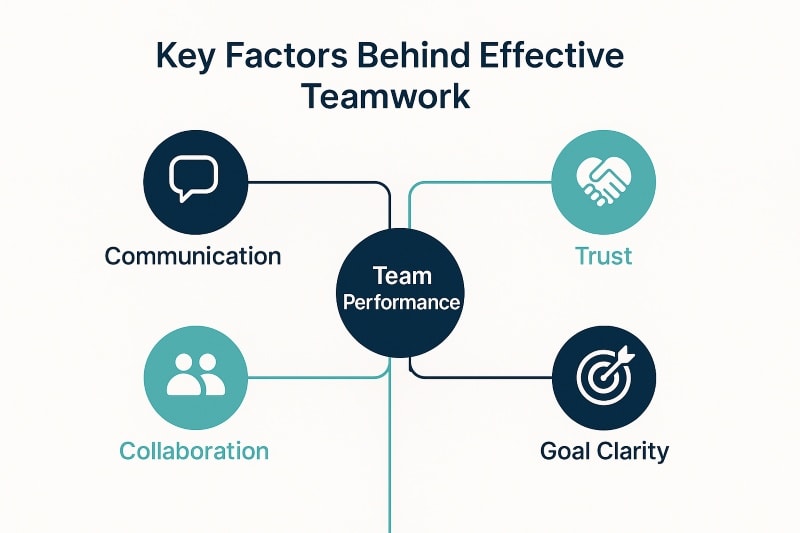
Every high-performing team shares a few defining characteristics — and they go far beyond technical skill. The best teams combine structure with empathy, creating an environment where individuals feel both supported and accountable. Shared responsibility and clear objectives are essential for the team’s success, ensuring that everyone is working toward common goals and understands their role in achieving them.
Clear goals and shared purpose: Teams perform best when everyone understands the “why” behind their work. Defined team goals align efforts, minimize confusion, and keep focus on what truly drives success. Jeff Bezos famously insisted on starting every Amazon project with a ‘future press release’ to ensure everyone knew exactly why the work mattered — a practice that kept teams aligned through rapid growth. The knowledge, skills, and abilities that team members possess are also critical, as these individual competencies directly contribute to overall team effectiveness.
Mutual support and trust: When team members feel connected and supported, they’re more willing to take calculated risks, share ideas, and admit mistakes — all crucial behaviors for continuous improvement.
Effective communication: Open and honest communication prevents misunderstandings and builds alignment. Whether it’s a weekly check-in or a quick Slack message, consistent communication keeps projects and people moving in the same direction. In remote teams, that might mean calling out potential confusion early in a Slack thread instead of letting silence create friction.
Constructive feedback: Feedback isn’t criticism — it’s a catalyst for growth. High-performing teams normalize feedback as part of their rhythm, ensuring every team member can learn and adapt.
Commitment to improvement: The best teams see performance as a process, not a milestone. They reflect, adjust, and refine their approach — turning challenges into opportunities for growth.
When these elements come together, teamwork becomes a force multiplier — amplifying not only results, but also engagement and satisfaction across the organization.

Benefits of Teamwork
Effective teamwork delivers far-reaching benefits—fueling both organizational performance and individual growth. When team members collaborate toward a shared goal, they combine diverse perspectives, skills, and experiences to create solutions that are more innovative and robust than any one person could achieve alone. High-performing teams thrive on this synergy, transforming collaboration into a true competitive advantage.
One of the most powerful outcomes of teamwork is its impact on job satisfaction. In environments where trust and mutual support are the norm, people feel valued, connected, and motivated to contribute their best work. This sense of belonging not only enhances engagement but also inspires team members to go the extra mile for each other and the organization as a whole.
Teamwork also helps close skill gaps through ongoing, organic cross-training. As team members learn from one another, they expand their capabilities, strengthen collective expertise, and build greater adaptability. This continuous exchange of knowledge ensures that teams can respond effectively to new challenges and evolving business demands.
Ultimately, organizations that cultivate strong teamwork gain more than productivity—they build resilience. Teams that collaborate effectively make smarter decisions, recover faster from setbacks, and consistently deliver high-quality outcomes. In short, teamwork is the foundation of sustained organizational success.
Team Leadership: The Crucial Role of Managers
Behind every successful team stands a leader who knows how to bring out the best in others. Team performance doesn’t happen by chance — it’s shaped daily by how leaders communicate, coach, and create clarity. When managers lead with intention, they don’t just manage tasks; they inspire alignment and accountability. At OAD, we see this reflected in our assessments — leaders who communicate with clarity and empathy consistently create teams that outperform peers, even in high-pressure environments. In high-reliability organizations, managers must operate with a high degree of accountability and precision to prevent failures and ensure critical decisions are made effectively.
Great team leaders understand that motivation is personal. They take time to learn what drives each team member — whether it’s recognition, growth, or autonomy — and use that insight to motivate team members in meaningful ways. Research from Gallup shows that employees who receive regular, personalized feedback are three times more engaged than those who don’t.
Professional development also plays a crucial role. High-performing managers invest in continuous learning — both for themselves and their teams. Techniques like cross training not only close skill gaps but also build flexibility, allowing teams to operate effectively even under pressure.
Finally, effective leaders prioritize psychological safety. They create an environment where team members can share honest feedback, admit mistakes, and collaborate on solutions without fear of blame. At OAD, we help organizations identify leadership styles that naturally foster this kind of trust, ensuring every team operates with confidence and cohesion.

Building and Managing Effective Teams
Even the best strategy fails without the right team to execute it. Steve Jobs once said, ‘Great things in business are never done by one person.’ That’s the reality behind execution — the best ideas mean little without the right mix of people to bring them to life. Building a successful team begins with intentional selection — not just for skill, but for how individuals complement one another. A great mix of skill sets, working styles, and personalities helps a team adapt, innovate, and maintain high performance over time. Forming new teams can also foster innovation and bring fresh perspectives to problem-solving, often leading to creative breakthroughs that established teams may overlook.
Team management starts long before the first project kickoff. The onboarding process plays a crucial role in setting expectations and establishing trust. When new team members feel welcomed, informed, and supported, they integrate faster and contribute sooner to the team’s success. Onboarding also creates development opportunities for each individual member, supporting personal growth and skill enhancement as they become valuable contributors.
But maintaining performance requires ongoing care. Interpersonal conflicts, unclear roles, and communication breakdowns can quietly erode even the strongest team. Effective team leaders address these challenges early through open dialogue, defined responsibilities, and consistent feedback.
True team building isn’t built in offsites — it’s coded in micro-interactions. Every quick Slack reply and meeting cue reinforces (or erodes) trust. At OAD, we see this through behavioral data: teams that understand each member’s unique communication style and motivators resolve conflict faster and perform better under stress.

Communication: The Lifeblood of Team Performance
Every successful team operates on one essential principle: It’s not communication that drives connection — it’s shared mental models. When people interpret the same message differently, no amount of talking fixes the gap. Without open communication, even the most talented teams struggle to collaborate effectively, align priorities, or maintain trust. Effective communication is critical to the team’s ability to solve problems and achieve high performance.
High-performing teams create intentional habits that keep information flowing. Regular check-ins, clear agendas, and transparent updates help ensure that every team member understands both the big picture and their specific role within it. These moments also give space for honest feedback — turning potential friction into opportunities for learning and improvement.
Technology plays a powerful role here, but it’s not a substitute for connection. A recent MIT study found that teams communicating frequently — not just digitally — outperformed peers by up to 20%. Technology supports that flow, but it’s human rapport that sustains it. Tools like Slack, Asana, or Microsoft Teams streamline collaboration, but it’s the how that matters: tone, timing, and clarity. Leveraging technology well means using it to enhance human communication, not replace it.
Encouraging people to share ideas freely — whether in brainstorming sessions or casual discussions — keeps creativity alive and prevents groupthink. At OAD, we’ve seen that teams who master communication aren’t just more efficient; they’re more resilient, adaptable, and confident in tackling difficult tasks together. Workplace teamwork thrives when communication strategies are prioritized, directly impacting productivity and innovation across all types of organizations.

Motivation and Engagement: Keeping Teams Energized
A team’s success depends not just on what its members do — but on why they do it. Motivation fuels consistency, creativity, and collaboration, yet many organizations overlook how deeply engagement shapes teamwork performance. When team members feel connected to a shared goal, their sense of purpose transforms ordinary work into meaningful contribution.
To motivate team members effectively, leaders must understand individual drivers. For some, it’s recognition or achievement; for others, it’s autonomy, growth, or mastery. The key is to link those personal motivators to the team’s larger mission. When people see how their individual efforts contribute to something bigger, their commitment naturally deepens. For instance, a manager who knows one team member values growth might assign them to lead the next client pitch — turning personal ambition into team progress. A culture that values individual achievement alongside team goals fosters excellence, innovation, and adaptability, encouraging continuous learning and high performance.
Engagement also thrives on feedback and trust. Team members who receive consistent, supportive feedback are more likely to feel valued — and stay engaged even when challenges arise. In turn, this leads to higher job satisfaction, stronger retention, and better performance outcomes.
At OAD, we’ve found that teams with a shared sense of purpose not only complete tasks more effectively, but also experience fewer mistakes and interpersonal conflicts. Engagement, when sustained, becomes a competitive advantage — driving both productivity and long-term organizational health. We frequently see this pattern emerge in behavioral data — where mismatched communication styles, not capability gaps, drive most team breakdowns.
Problem Solving and Innovation in Teams
The most successful teams aren’t just efficient — they’re innovative. They know how to turn obstacles into opportunities and disagreements into creative solutions. In high-performing teams, collaboration isn’t a checkbox; it’s a mindset that fuels continuous improvement.
Collaborative problem solving begins with psychological safety — the confidence to voice unconventional ideas without fear of judgment. When team members operate in a space where all perspectives are valued, they’re far more likely to experiment, adapt, and push boundaries.
Brainstorming sessions are especially powerful when structured around clarity and inclusivity. Encourage every team member to contribute, rotate facilitators to ensure diverse viewpoints, and capture insights in real time. This approach helps transform discussion into action — producing not just new ideas, but implementable strategies.
Innovation doesn’t emerge from chaos; it grows from trust, process, and shared understanding. Google’s famous ‘Project Aristotle’ proved this point — psychological safety, not raw talent, was the biggest predictor of team innovation. At OAD, we often see that teams combining strong communication with clear purpose solve complex problems faster and deliver more consistent results — even under pressure.

Overcoming Common Obstacles in Teamwork
Even the strongest teams face obstacles — what separates the good from the great is how they respond. Ineffective communication, skill gaps, and unclear expectations are among the most common issues that quietly undermine team performance. Left unchecked, they lead to frustration, delays, and disengagement.
The first step to overcoming these obstacles is awareness. Leaders should regularly assess how the team operates — from communication flow to workload balance. Clear expectations must be reinforced through consistent check-ins and transparent decision-making. When everyone knows what’s expected and why, accountability becomes natural, not forced.
Skill gaps are another frequent challenge, especially in fast-growing organizations. Cross-training and mentorship can turn these gaps into growth opportunities. Encouraging team members to learn from one another builds flexibility and ensures that the team can continue functioning smoothly even when roles shift.
Finally, continuous improvement should be part of the team’s DNA. Reflecting after each project, gathering feedback, and applying lessons learned keeps teams evolving. At OAD, we often see that organizations that embed this reflective culture sustain higher levels of engagement and performance over time.
Measuring and Improving Teamwork Performance
You can’t improve what you don’t measure. Yet many organizations still assess teamwork performance based solely on outcomes — deadlines met, projects completed, revenue achieved. While these metrics matter, they often overlook the underlying behaviors that make teams effective in the first place. By leveraging measurement insights, organizations can implement practical strategies to improve teamwork, such as targeted team training, leadership development, and structured communication protocols.
Truly effective measurement starts with a mix of quantitative and qualitative insights. For example, one company might pair engagement survey results with OAD communication data to uncover why one department thrives while another struggles. Quantitative metrics might include engagement scores, retention rates, or peer feedback frequencies. Qualitative insights — such as communication quality, trust levels, or collaboration habits — provide the context that numbers alone can’t capture.
Constructive feedback is the bridge between measurement and growth. When delivered regularly and thoughtfully, it helps team members adjust behaviors before small issues become major barriers. This culture of feedback fosters continuous growth and improvement at both individual and team levels.
Recent research in organizational psychology confirms that teams who routinely reflect on their performance perform up to 25% better in subsequent projects. At OAD, we help companies make that reflection data-driven — using behavioral assessments to reveal hidden patterns that impact collaboration, communication, and overall team effectiveness. Many organizations have reported positive results from these targeted teamwork interventions, including improved safety attitudes, better decision-making, and enhanced error management skills.

The Role of Technology in Modern Teamwork
Technology has transformed how teams collaborate — but it’s not a silver bullet. The right tools can enhance communication, improve transparency, and streamline workflows, yet too much technology can overwhelm and fragment teamwork. The goal isn’t to use more tools; it’s to use them better.
When leveraged thoughtfully, technology helps teams collaborate effectively, track progress, and maintain clear expectations. Platforms like Asana or Trello support accountability by making responsibilities visible, while tools like Slack or Microsoft Teams keep conversations organized and accessible. Used strategically, these systems reduce confusion and help teams complete tasks faster and with fewer mistakes.
But digital tools can’t replace the human element. Effective teamwork still relies on empathy, trust, and active listening — things no software can automate. Even Elon Musk, known for automation, emphasizes direct communication at Tesla — famously banning group emails in favor of one-to-one problem solving. Leaders should ensure that technology complements, not replaces, open dialogue and personal connection.
At OAD, we’ve seen that teams using behavioral data alongside collaboration tools achieve stronger alignment and better results. When technology and human insight work together, teams operate with precision, clarity, and purpose — creating a foundation for continuous improvement.

Remote and Virtual Teams
In today’s digital workplace, remote and virtual teams are no longer the exception—they’re the foundation of how modern organizations operate. While these teams face unique challenges, they can achieve exceptional performance when guided by clear structure and strong leadership. Team leaders play a pivotal role in defining expectations, setting communication standards, and ensuring accountability, so every team member understands their responsibilities and how to contribute effectively.
Regular virtual meetings and check-ins are essential for keeping remote team members engaged, aligned, and connected. These touchpoints help sustain trust and a shared sense of purpose, even when employees are dispersed across time zones. Leveraging collaboration technology—from video conferencing and project management platforms to instant messaging tools—enables seamless coordination and real-time information sharing across virtual teams.
Research continues to show that remote teams, when supported with the right systems, can be just as productive—or even more productive—than traditional in-office teams. Many remote employees also report higher job satisfaction, driven by increased autonomy, flexibility, and work-life balance.
By combining clear communication protocols with data-driven management practices, organizations can transform their remote and virtual teams into cohesive, high-performing units. The key lies in equipping them with the right tools, maintaining consistent alignment, and fostering a culture where connection and collaboration thrive—regardless of distance.
Team Training and Development
Investing in team training and development is one of the most effective ways to strengthen teamwork and elevate team performance. When organizations equip team members with the right skills, knowledge, and tools to collaborate effectively, they build a foundation for stronger communication, problem-solving, and collective success.
Effective team training programs come in many forms—from interactive workshops and experiential seminars to online learning modules focused on specific teamwork skills. What matters most is application. Providing opportunities for employees to practice what they learn—through brainstorming sessions, simulations, and collaborative projects—reinforces new behaviors and encourages creative, solution-oriented thinking.
Continuous improvement should sit at the core of every team development strategy. Team leaders play a crucial role by delivering regular feedback, coaching, and guidance to help members identify growth areas and build confidence. This commitment to professional development not only enhances individual capability but also strengthens trust, adaptability, and cohesion across the entire team.
By prioritizing team training and development, organizations foster a culture of learning where improving teamwork becomes a shared goal. The result is a workforce that communicates better, adapts faster, and performs at consistently higher levels—laying the groundwork for sustainable, long-term success.
Recognizing and Rewarding Team Achievements
Recognizing and rewarding team achievements is one of the most effective ways to motivate team members and reinforce the behaviors that drive high performance. When team leaders take the time to acknowledge accomplishments, it sends a powerful message that every contribution matters—and that success is a shared effort.
Recognition can take many forms: from public praise in meetings to performance bonuses, awards, or special privileges. Celebrating milestones and collective wins not only boosts morale but also strengthens the sense of camaraderie, trust, and shared purpose within the team. These moments of appreciation remind employees that their hard work is seen and valued, which in turn deepens engagement and long-term commitment to organizational goals.
Making recognition and rewards an intentional, ongoing part of team management fosters a positive team culture where collaboration, creativity, and accountability thrive. Teams that feel appreciated consistently perform better, adapt faster, and sustain higher levels of motivation—driving lasting success for the organization as a whole.
Creating a Culture of Effective Teamwork
Sustainable teamwork performance isn’t built through one project or initiative — it’s built through culture. A culture that promotes teamwork creates an environment where collaboration, trust, and shared commitment become second nature. In such organizations, teamwork isn’t something people do; it’s how the team works.
Leaders play a crucial role in shaping this environment. By modeling open communication, mutual respect, and continuous learning, they set the tone for how others collaborate. Recognition systems that reward team-based achievement — not just individual performance — reinforce the value of collective success. For instance, a software firm we worked with shifted its bonus structure from individual quotas to shared milestones — and saw collaboration scores rise within one quarter.
A strong team culture also depends on inclusion and psychological safety. When employees feel respected and free to share their perspectives, they engage more fully and contribute more creatively. This sense of belonging transforms collaboration from a process into a shared identity.
At OAD, we often see that organizations with strong team cultures experience lower turnover and higher engagement. Their teams adapt faster to change, maintain alignment under pressure, and achieve long-term success through consistent, effective collaboration.

Teamwork in Action: Real-World Examples
Successful teamwork isn’t just a concept—it’s a proven driver of innovation and performance across industries. Leading organizations like Google and Amazon have built their reputations on creating environments where team members are empowered to share ideas, take calculated risks, and collaborate across functions. Their commitment to promoting teamwork has fueled groundbreaking innovations and products that have reshaped entire markets.
Outside the corporate world, sports teams provide some of the most visible examples of successful teamwork in action. On the field or court, players rely on trust, communication, and mutual support to reach shared goals. Each member contributes unique strengths, and together, they achieve outcomes that no individual could accomplish alone—a perfect reflection of what strong collaboration looks like in practice.
In healthcare, teamwork is not just beneficial—it’s critical. Physicians, nurses, and specialists must work in sync, drawing on one another’s expertise to diagnose, treat, and manage complex patient cases. This level of collaboration ensures efficiency, accuracy, and the highest standards of care.
By studying these real-world examples of teamwork, organizations can uncover practical ways to encourage collaboration, foster open idea sharing, and build cultures rooted in mutual support and shared success. The lesson is clear: teams that work together with purpose consistently deliver superior results—no matter the industry.
From Good to Great: Sustaining Long-Term Team Performance
Building a strong team is one thing — sustaining its performance over time is another. Even high-performing teams can lose momentum without continuous improvement and renewal. The best organizations treat teamwork performance as a living system that evolves through feedback, learning, and adaptation.
Professional development is central to that process. When team members see opportunities to grow their skills, take on new challenges, and expand their impact, they stay engaged and motivated. Investing in leadership training, mentoring, and cross-functional projects helps teams stretch beyond their comfort zones while maintaining alignment.
Sustaining success also means encouraging calculated risks. Netflix’s culture of ‘freedom and responsibility’ embodies this — empowering teams to experiment freely within clear strategic guardrails. Teams that experiment, iterate, and learn from failure develop resilience — a crucial trait in fast-changing markets. This mindset of continuous growth keeps teams creative and adaptable long after their initial success.
At OAD, we help organizations make this sustainable by turning team insights into long-term strategies. Our behavioral data doesn’t just describe a team’s strengths; it helps predict how they’ll respond to change — empowering leaders to guide performance that lasts.
The OAD Advantage: Turning Data into High-Performance Teams
What separates a good team from a great one often comes down to insight — knowing not just what your team does well, but why it works. That’s where OAD stands apart. Our behavioral assessments give leaders a scientific view of each team’s ability, communication style, and motivational drivers — the key elements behind truly effective teams.
Unlike surface-level engagement surveys, OAD reveals how personality patterns influence collaboration, stress response, and decision-making. A national retailer used OAD data to identify why two equally skilled regional teams performed differently — discovering that contrasting stress patterns were disrupting collaboration. With these insights, organizations can tailor coaching, improve communication, and align roles with natural strengths. The result? Stronger cohesion, fewer conflicts, and measurable improvement in team effectiveness.
We’ve seen this transformation firsthand. When leaders understand their teams through data, they move from reacting to problems to proactively shaping performance. It’s a shift from guesswork to precision — and it changes everything.
Start with the Top Performer Profile and see how science-backed insights can help your organization build high-performing teams that last.
Conclusion
Teamwork performance isn’t just another HR metric — it’s a reflection of how well your organization learns, adapts, and grows together. The most successful companies don’t rely on individual excellence alone; they build systems that empower collaboration, trust, and shared achievement.
From communication and leadership to data-driven insight, teamwork performance is what turns ordinary groups into exceptional teams. And with the right tools, those results aren’t random — they’re repeatable.
At OAD, we help organizations unlock that potential through science-backed assessments that transform teamwork from intuition into strategy. Because when every member is aligned, every goal becomes achievable. As Jim Collins wrote in Good to Great, getting the right people ‘on the bus’ is only step one — keeping them aligned is what turns motion into momentum.