Hiring the right people doesn’t happen by chance — it happens through Talent HR. Think of the rushed hire made to fill a gap — three months later, the employee is disengaged and the team is frustrated. By combining smart processes, data-driven insights, and a clear talent management strategy, businesses can attract top candidates, boost employee satisfaction, and build stronger teams. In today’s competitive market, Talent HR is no longer optional — it’s the difference between growth and stagnation.
What Is Talent HR?
Talent HR goes beyond the traditional scope of a human resources department. While HR has long managed payroll, compliance, and employee relations, Talent HR zeroes in on building and sustaining a high-performing workforce. It integrates talent management strategy with everyday HR processes — from identifying the best candidates to developing employees for long-term success. A strong relationship between talent management and HR is essential, as it ensures that talent strategies are fully aligned with HR functions to drive organizational success.
The goal isn’t just filling a position. It’s about aligning the right talent with the right position to maximize each employee’s ability and ensure optimal workforce effectiveness, ultimately fueling company growth rather than simply maintaining operations. At OAD, we see too many companies confuse speed with fit — they fill seats quickly but end up draining time and money when the match is wrong. Talent HR strategies are designed to enhance employees’ ability to perform their roles effectively, directly contributing to overall company success.

Why Talent HR Matters for Growing Companies
For companies in growth mode, every hire matters. A single bad hire can cost up to 30% of that employee’s first-year earnings (U.S. Department of Labor) — not to mention the impact on team morale and productivity. Talent HR minimizes these risks by focusing on smarter recruitment, clearer role alignment, and stronger retention strategies.
That stat explains the cost — but what it doesn’t show is the hidden ripple effect: lost trust, declining morale, and slower innovation. That’s why data-driven tools like OAD assessments matter.

Beyond cost savings, Talent HR directly influences employee satisfaction and performance. Gallup found that highly engaged teams are 21% more productive — Talent HR helps leaders achieve that by aligning skills with strategy. When employees feel their skills are recognized and developed, engagement rises, turnover drops, and managers can focus on scaling the business instead of constantly backfilling roles. Talent HR also helps motivate employees by providing development opportunities and recognition, which leads to higher productivity and retention.
Identifying HR Needs
Before a company can build a strong talent management strategy, it must first understand its HR needs. This means evaluating what the organization requires to achieve its objectives — from recruiting the right talent to developing current employees, ensuring compliance, and managing benefits or workers’ compensation. Without this assessment, HR departments risk applying generic solutions that don’t address real business challenges. For example, rolling out a one-size-fits-all training program only to find it doesn’t address the real issue — misaligned roles.
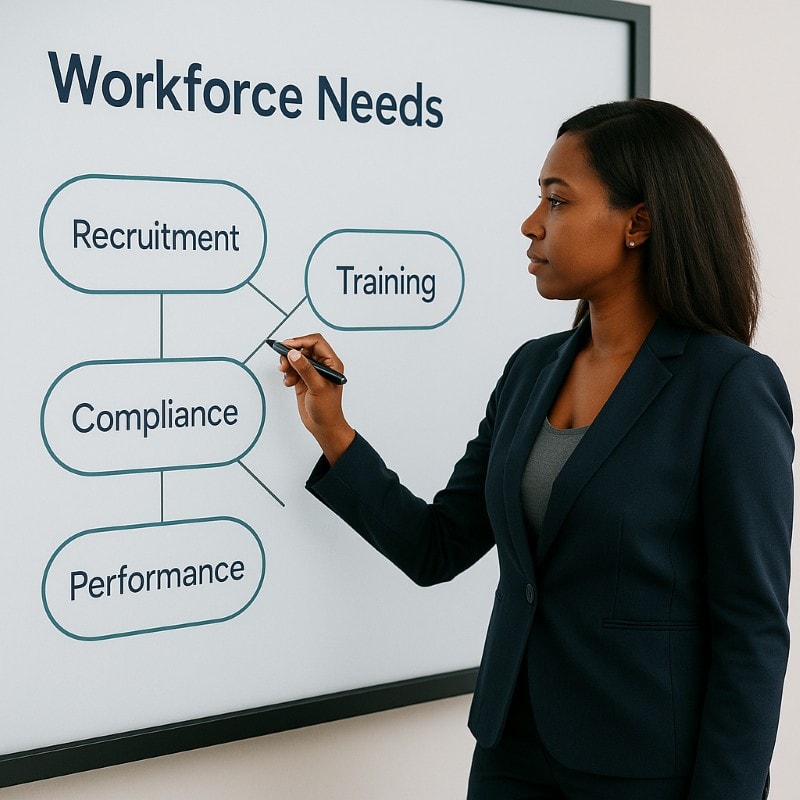
A structured approach to identifying HR needs allows HR teams to create targeted recruitment and development plans, streamline processes, and minimize repetitive tasks. By pinpointing where support is most critical, companies can focus resources on initiatives that truly drive high performance and long-term growth.
Core Elements of Talent HR Solutions
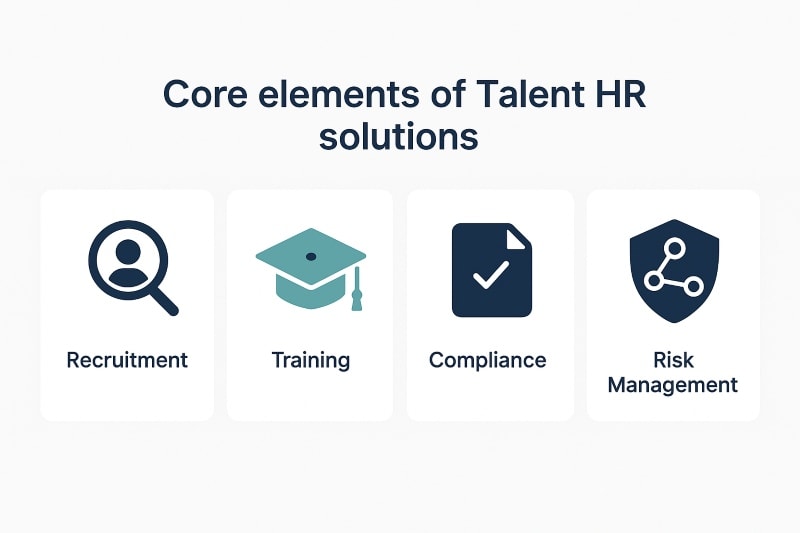
Talent HR isn’t just about hiring and compliance — it’s about preventing the quiet disengagement that creeps in when top performers feel underused or misaligned. The following four elements form the foundation of effective Talent HR: talent acquisition, employee engagement, performance management, and learning & development. Together, these elements create a culture that attracts top talent, fosters growth, and develops a resilient, high-performing workforce. Engaging and supporting team members is essential for organizational success.
Recruitment and Selection
Attracting and identifying the right talent is the first step toward building a high-performing workforce. With structured processes, clear job descriptions, and data-backed assessments, HR teams can reduce guesswork and hire candidates who fit both the role and the company culture.
Jeff Bezos once said he’d rather interview 50 people and hire none than hire the wrong one. Data-backed assessments give leaders that same discipline without slowing growth.
The responsibilities of HR teams in recruitment and selection include managing the end-to-end hiring process, coordinating interviews, evaluating candidates, and ensuring that each step aligns with organizational goals and compliance standards.
Training and Development
Hiring the right people is only the beginning. Talent HR ensures employees continue to grow by providing learning opportunities, mentorship, and leadership development. This creates a pipeline of future leaders while improving overall job performance.
Performance and Compliance
A comprehensive HR service also includes managing payroll, benefits, and compliance with labor laws. During onboarding, HR teams collect pay information such as tax and banking details to ensure accurate payroll processing. Talent HR solutions help organizations track performance, reward achievements fairly, and reduce the risks of legal or operational setbacks.
Risk and Workforce Management
From workers’ compensation to attendance tracking, Talent HR supports the systems that keep workplaces safe and efficient. By maintaining strong procedures, businesses can protect employees, save time, and ensure continuity across teams and departments.
Creating a Positive Work Environment
Talent HR isn’t just about hiring and compliance — it’s also about building a workplace where employees can thrive. A positive work environment is one of the strongest drivers of employee satisfaction, job performance, and retention. When people feel valued, motivated, and supported, they’re more likely to stay engaged and contribute at a high level.
We often remind leaders: engagement isn’t just about perks — the data shows it’s about clarity in role fit and growth pathways.
The HR department plays a central role in shaping this environment. From effective recruitment processes and comprehensive training programs to competitive benefits and payroll management, HR services create the conditions where employees feel secure and empowered. By reducing administrative burdens and focusing on strategic initiatives, HR teams can foster a culture that attracts top talent and sustains high performance.
Ultimately, a positive work environment isn’t just a perk — it’s a strategic advantage that strengthens both employees and the business as a whole.

The Role of the HR Department in Talent Management

An effective HR department does more than process payroll and paperwork — it acts as a strategic partner in building organizational success. Talent HR empowers HR teams to collaborate with managers, identify skill gaps, and ensure that the right people are in the right roles.
When HR departments align closely with other departments, they create a seamless flow of information and support. This collaboration helps managers focus on leading teams while HR experts handle recruitment, compliance, and development. HR also provides essential assistance to managers and departments, easing administrative burdens and supporting complex HR functions. The result is a stronger workforce that drives both performance and retention.
Tools and Technology in Talent HR
Modern HR teams can’t rely on spreadsheets and manual processes alone. Picture an HR leader buried in spreadsheets, spending hours reconciling turnover data — versus one click on a dashboard showing who’s thriving and who’s at risk.
Advanced HR systems streamline recruitment, payroll, and compliance while giving managers real-time access to workforce data. These tools save time, reduce errors, and free HR experts to focus on strategic initiatives rather than repetitive tasks.

Technology also makes talent management more measurable. With data-driven insights, companies can identify high performers, track development progress, and adjust strategies quickly. The right tools turn HR into a proactive force that drives growth rather than reacting to problems.
Strategic Benefits of Talent HR for Organizations
Talent HR delivers value far beyond administrative efficiency. When done right, it becomes a driver of long-term organizational success. Companies that invest in Talent HR consistently see stronger performance across their workforce.

First, effective Talent HR helps attract top candidates who are not only qualified but also aligned with company culture. Second, it creates the conditions for high performance by supporting employee growth and ensuring managers have the data to lead effectively. Finally, it strengthens retention — reducing costly turnover and preserving institutional knowledge that’s critical for scaling.
Measuring Talent Management Success
A talent management strategy is only as strong as the results it delivers. To ensure impact, HR departments must measure success with clear, actionable metrics. Key performance indicators (KPIs) such as employee satisfaction scores, job performance ratings, and turnover rates reveal whether recruitment, retention, and development initiatives are working as intended.
Gallup’s research shows only 21% of employees are engaged worldwide — OAD helps leaders measure not just engagement, but the behavioral drivers behind it.

By tracking and analyzing these metrics, organizations can identify strengths, uncover gaps, and adjust strategies in real time. The result is a talent HR approach that continuously evolves to meet business objectives. Companies that measure success effectively don’t just react to workforce challenges — they proactively build high-performing teams for the future.
Common Challenges in Talent HR — And How to Overcome Them
Even the most well-resourced HR teams face challenges when managing talent. Three of the most common are:
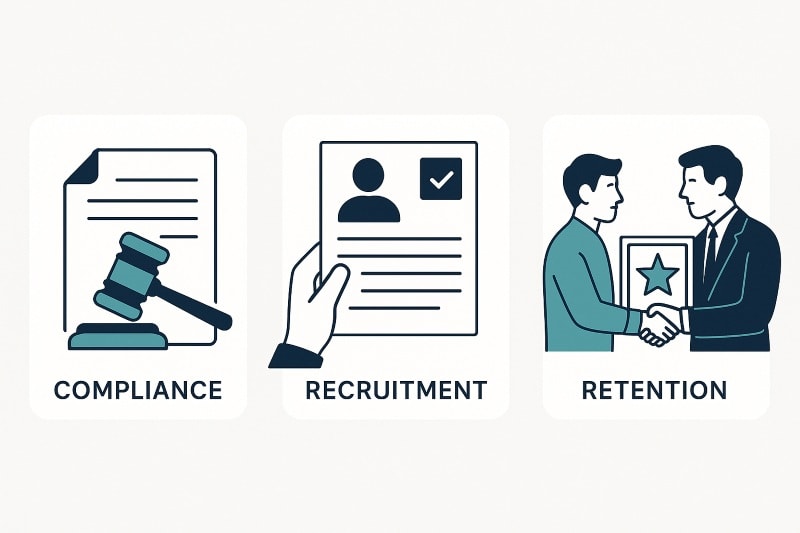
Compliance and Legal Risks
Labor laws, benefits requirements, and workplace safety standards are constantly evolving. Without the right systems, HR departments risk costly mistakes. Solution: Invest in compliance-focused HR technology and ongoing training to ensure procedures remain up to date.
Recruitment Speed vs. Quality
In fast-growing companies, the pressure to fill roles quickly can lead to hiring mistakes. Solution: Use structured recruitment processes and assessments to balance efficiency with accuracy, ensuring that the right talent is selected from the start.
Retention in Competitive Markets
Even with great hiring, employees may leave if they don’t see long-term opportunities. Solution: Build clear development paths, recognize performance, and maintain a strong workplace culture to keep top talent engaged.
Best Practices for Talent Management
High-performing workforces often aren’t built on ‘best practices’ at all — they’re built on uncovering blind spots leaders didn’t even know were shaping turnover and performance. For HR departments, this means focusing on three key areas: creating a positive work environment, offering ongoing training and development, and fostering a culture of engagement and recognition. A tailored strategy that addresses core HR needs — from recruitment and retention to compliance — provides the foundation for long-term success.
Technology plays a critical role in scaling these practices. Modern HR systems streamline processes, provide easy access to expert insights, and free up time for HR teams to focus on strategic initiatives. At the same time, recognizing employee achievements, building strong relationships, and offering opportunities for growth are essential for motivation and loyalty.
By adopting these best practices, organizations can not only attract and retain top talent but also stay agile and competitive in today’s fast-changing business landscape.

The OAD Advantage: Science-Backed HR Solutions
Traditional HR often relies on intuition — but intuition alone can’t predict performance. OAD gives HR teams and managers the data they need to identify, develop, and retain top talent with precision. By analyzing how candidates think, communicate, and respond under pressure, OAD assessments remove the guesswork from hiring and talent management.
Design teams with data, not gut feel.
Most org-design decisions come down to role fit, leadership style, and team dynamics. OAD reads those signals from a 7-minute behavioral survey, so you can reconfigure roles and teams with evidence instead of guesswork.
For organizations, this means smarter recruitment, stronger teams, and higher long-term performance. For HR departments, it means saving time, improving alignment with business objectives, and building a measurable path to growth. Talent HR becomes not just a process, but a strategic advantage.

Conclusion
Talent HR is more than a set of processes — it’s the foundation for smarter hiring, stronger teams, and sustainable growth. By focusing on recruitment, development, compliance, and retention, organizations can turn HR from an administrative function into a strategic driver of performance.
As Warren Buffett puts it, ‘You can’t make a good deal with a bad person.’ Talent HR ensures you’re never in that position.
With OAD’s science-backed assessments, you gain the clarity to align the right people with the right roles, reduce costly turnover, and create a culture where employees thrive.
Start with the Top Performer Profile — and see how data-driven insights can transform your HR strategy into a true competitive advantage.