When a key employee leaves, the pressure to fill the role quickly can feel overwhelming. But in the race to hire fast, many companies overlook what matters most—fit, alignment, and long-term performance. If you want to hire smart, not just fast, it’s time to rethink your approach.
Why Rushed Hires Are Expensive Mistakes: The Smart Hire Solution
It’s easy to think that any warm body in an empty seat is better than none. But time and again, rushed hiring leads to mismatches, lower productivity, and costly turnover. According to a study by the Society for Human Resource Management (SHRM), the average cost of a bad hire can reach $240,000 when factoring in hiring costs, salary, disruption, and team morale. Smart talent acquisition strategies are essential for assisting organizations in avoiding these expensive mistakes.

That’s not just a budget hit — it’s a leadership failure. When the wrong person joins your team, they slow down your top performers, dilute your culture, and can even damage client relationships. And when that person leaves (or is let go), you’re back to square one — only now with more stress and less trust in the process.
This is especially dangerous in high-impact roles across departments like finance and accounting, legal, sales, and IT, where one poor performer can stall critical decisions or trigger cascading problems.
Hiring smart means acknowledging that the cost of waiting is rarely higher than the cost of hiring wrong.
How to Hire Smart—Not Just Fast
Hiring smart means shifting from a reactive scramble to a strategic system. Instead of filling gaps, you’re building a team that performs, sticks around, and strengthens your culture. It starts with clarity—knowing exactly who you need and why.
Step 1 – Build a Fit-First Candidate Profile
Many hiring managers make the mistake of defining a role based solely on technical skills or credentials. But real performance depends on far more than what’s listed on a resume. A truly smart hire fits your culture, complements your team dynamic, and aligns with your long-term goals.
Start by asking:
- What soft skills are non-negotiable in this role?
- What personality traits thrive in our environment?
- How will this person support—not just fill—our mission and values?
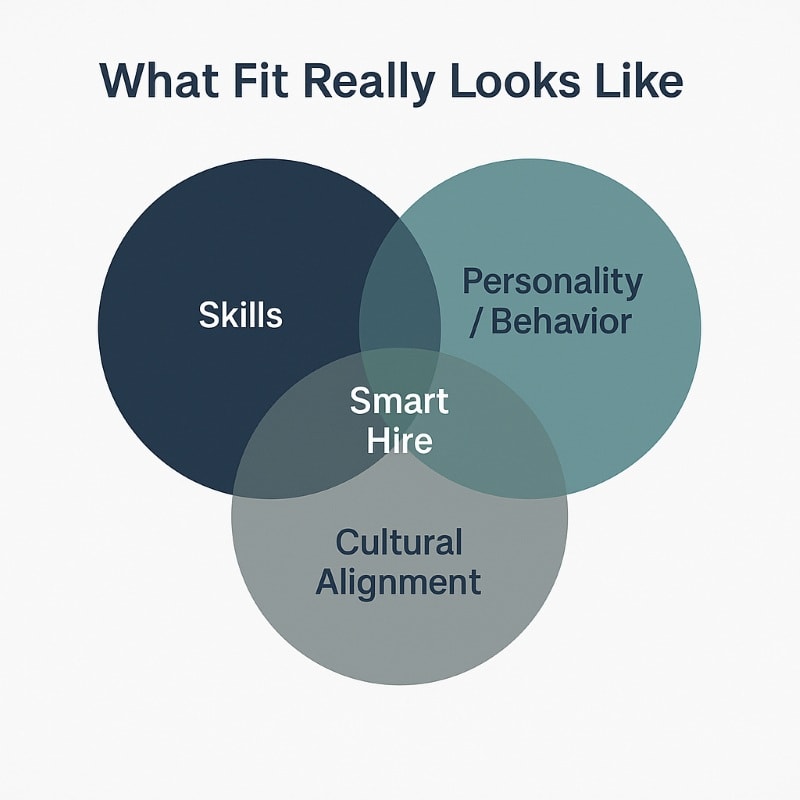
This isn’t just a feel-good exercise. Research by Harvard Business Review shows that 89% of hiring failures are due to poor cultural fit, not technical incompetence.
Tools like OAD’s behavioral assessments help uncover whether someone is wired to succeed in your specific environment. Instead of guessing, you’ll have science-backed data to support every decision.
Don’t Skip Deep Screening
In today’s hiring climate, speed often takes priority over substance. But cutting corners during the screen process is one of the fastest ways to end up with a poor fit.
Resumes are polished. Interviews can be rehearsed. But deep screening—through structured interviews, behavioral assessments, and background checks—reveals what surface-level evaluations often miss. It’s not just about catching red flags like criminal records or civil records; it’s about uncovering how a candidate thinks, behaves, and collaborates. A thorough background check will reveal any criminal record, including felonies, misdemeanors, and outstanding warrants, so you know exactly what appears on a candidate’s record.
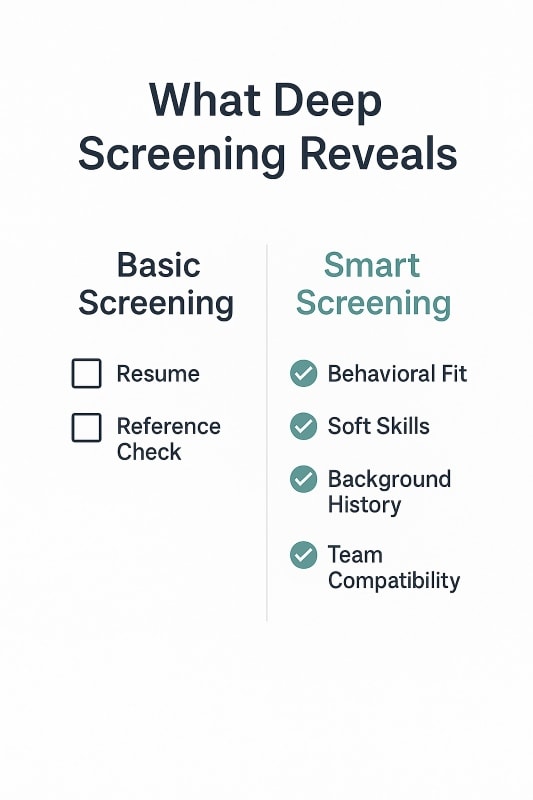
Think of it this way: would you buy a car without a test drive? Hiring without screening is no different. Deep screening helps companies find trustworthy and skilled employees. That’s why background screening companies, combined with tools like OAD’s psychological assessments, are essential in the smart hiring toolkit.
These companies can efficiently screen thousands of applicants, making it easy to process both small and large applicant pools. They give the hiring manager the confidence to move forward—not based on instinct, but on insight.
Promote from Within When Possible
When a role opens up, most companies default to external searches. But your strongest candidate might already be on your payroll.
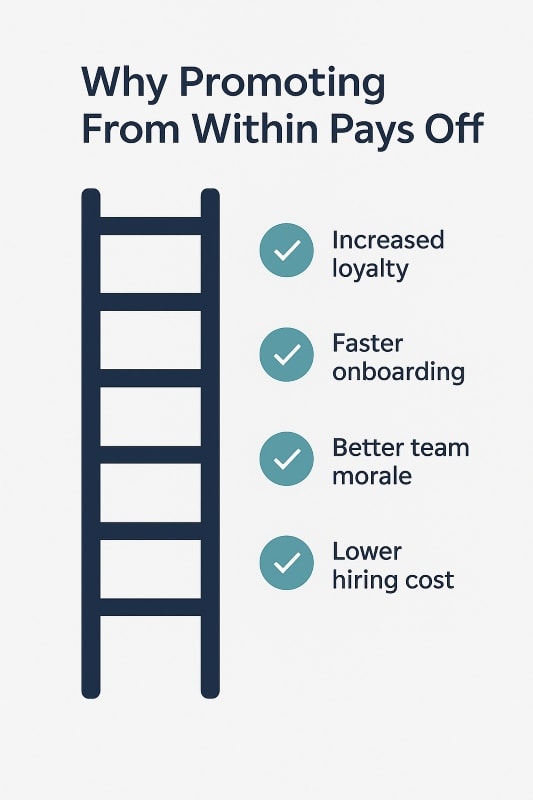
Internal candidates understand your culture, your expectations, and your customers. They’ve demonstrated their work ethic, absorbed your company’s vision, and often require less ramp-up time. Promoting from within strengthens loyalty and sends a clear message: growth is possible here.
In fact, companies that prioritize internal mobility experience up to 41% longer employee tenure, according to LinkedIn’s Workforce Learning Report. That’s a massive advantage in industries like sales, finance, and IT, where retention is critical and onboarding is costly.
Before posting that job online, take a moment to review your current bench. Who’s ready for the next step? Who has untapped potential? A smart hiring strategy doesn’t just fill gaps — it develops people already aligned with your mission.
Use Behavioral & AI Tools for Smart Hiring
Gut instinct has its place—but it’s not a hiring strategy. The best hiring managers don’t guess. They use data to make confident, repeatable decisions.
That’s where behavioral assessments and AI-powered recruiting tools come in. These solutions help you evaluate a candidate’s deeper traits: how they solve problems, handle feedback, respond to pressure, and communicate with others. This is especially critical for roles in information technology, sales, accounting, and account management—including positions like Account Executive or Senior Accountant—where collaboration and adaptability matter as much as hard skills.

Take OAD’s assessments, for example. Our tools go beyond resumes and references to map how a candidate’s core traits align with your team dynamics. Instead of relying on surface impressions or unconscious bias, you’ll be working with science-backed insights—and reducing the risk of a costly mismatch.
And when paired with AI that flags top matches and screens for keyword alignment, you gain a complete, modern hiring process that’s fast, fair, and far more effective.
Always Be Recruiting Talent
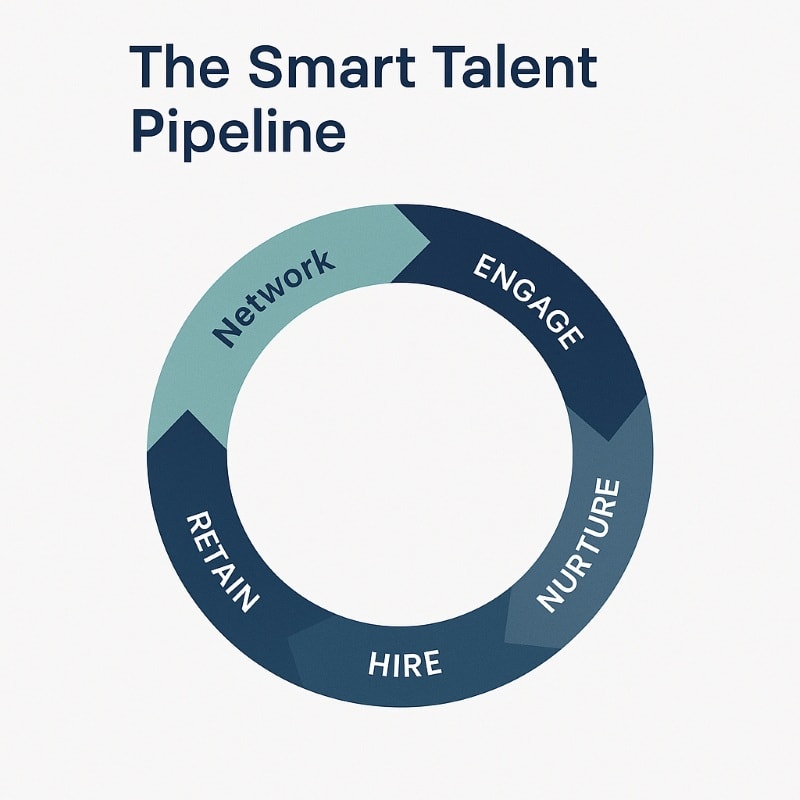
The smartest companies don’t wait for a vacancy to start looking. They’re always recruiting—quietly building relationships, engaging passive candidates, and keeping their pipeline warm.
This doesn’t mean flooding your inbox with resumes. It means being intentional:
- Attend industry events
- Stay active on platforms like LinkedIn
- Keep in touch with former candidates and high-potential contacts
- Post job opportunities on social media and job boards to reach a wider audience
Remember to share job postings and company updates across your networks to increase visibility and engagement.
By nurturing your network in advance, you’re less likely to make rushed decisions when someone unexpectedly leaves.
This approach is especially valuable in competitive fields like life sciences, legal, finance, marketing, and healthcare, where top talent moves quickly—and usually isn’t looking when you are. When you build your pipeline proactively, you’ll always have talented professionals on your radar, not just applicants in your inbox, and you won’t miss out on future opportunities by keeping your pipeline warm.
Hiring isn’t a one-time event. It’s a continuous process. Smart hiring means staying ready—not scrambling.
How Information Technology Supports Smarter Hiring
Modern hiring isn’t just about people—it’s also about systems. Information technology has transformed the recruitment landscape, helping companies streamline their process, reduce manual work, and make better decisions at scale.
From recruitment process outsourcing (RPO) to background screening companies, leading providers like SmartHire are using advanced tools to source candidates, assess qualifications, and accelerate onboarding. In high-stakes fields like life sciences, where speed and precision matter, direct hire recruiting is now powered by smart filters and automation that flag candidates with exactly the right expertise.
But it’s not just about speed. IT solutions—from automated screening and digital interviews to analytics dashboards—free up human resources teams to focus on what really matters: evaluating cultural fit and long-term potential. Instead of drowning in admin, hiring managers can stay strategic.
Companies that combine tech-powered efficiency with human insight create a complete staffing solution—one that’s not only faster, but also far more accurate. That’s how organizations grow confidently: by putting the right people in the right roles, backed by both data and experience.
Technology makes hiring faster—but quality assurance ensures it’s done right.
Why Quality Assurance in Hiring Still Matters
In the rush to fill roles, quality is often the first thing to slip. But smart hiring requires more than speed or surface-level evaluations—it demands consistency, accuracy, and attention to detail at every stage.
That’s where quality assurance comes in. From structured interviews to thorough background screenings that review both criminal and civil records, a quality-focused hiring process protects your organization from avoidable mistakes—especially in high-stakes scenarios like executive search or sensitive roles in finance, sales, or accounting.
But quality assurance isn’t just about reducing risk. It’s about alignment. When every step—from sourcing to onboarding—is handled with clarity and care, your hires are more likely to succeed and stay.
Whether you’re using internal teams or outside support, make sure your hiring systems don’t just move fast—they move right. Because in today’s market, getting it right every time isn’t a luxury. It’s a necessity.
Best Practices for Employee Onboarding
Hiring the right person is only half the battle. What happens next—how you onboard them—often determines whether that great hire turns into a long-term asset.
Effective onboarding does more than check boxes. It creates clarity, builds connection, and accelerates performance. New employees need more than a welcome email and a login—they need structure, support, and context. A clear onboarding roadmap helps them understand expectations, feel part of the culture, and ramp up with confidence.
Whether handled in-house or via recruitment process outsourcing, a smart onboarding strategy includes:
- A dedicated point of contact for questions and guidance
- Training tailored to the role and the individual’s background
- Early feedback loops to surface and solve roadblocks
When companies view onboarding as part of a complete staffing solution—not a separate afterthought—they reduce early turnover, boost engagement, and set new hires up for long-term success.
Because even the smartest hire can stumble without a strong start.
Measuring Recruitment Success: Metrics That Matter
Smart hiring isn’t just about the process—it’s about the outcome. That’s why successful companies track metrics that go beyond resumes and interviews to measure what really works.
Common indicators like time-to-hire, cost-per-hire, and source-of-hire offer a clear view of how efficiently your team is filling roles and where your top candidates are coming from. In fast-moving industries like life sciences, cutting even a few days off your hiring cycle can be the difference between seizing an opportunity and missing it.
But speed and cost aren’t enough. To truly optimize your hiring strategy, you also need to track quality metrics—like new hire retention, performance in the first 90 days, and even candidate satisfaction. These numbers reveal whether your hiring process is not only fast, but effective.
For teams using tools like direct hire recruiting, behavioral assessments, or structured screening systems, these metrics become even more powerful. They give hiring managers a feedback loop—so they can refine strategy, reduce friction, and continuously improve outcomes.
Because in the end, smart hiring isn’t just about who you bring in. It’s about what they help you build.
What Elon Musk and Jeff Bezos Get Right About Hiring
When Jeff Bezos launched Amazon, he famously said, “I’d rather interview 50 people and not hire anyone than hire the wrong person.” Elon Musk takes it even further, insisting on hiring only “A players” because “A players hire A players. B players hire C players.”
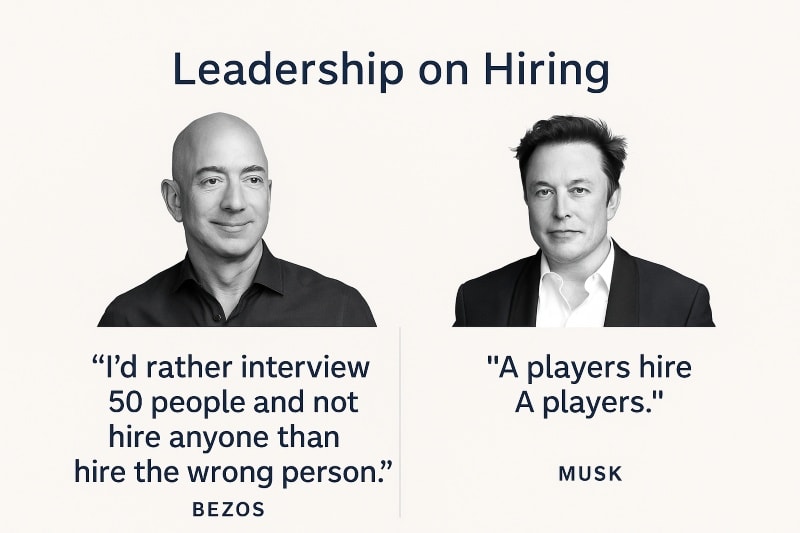
These aren’t just philosophies—they’re operating systems. And while most companies can’t interview at billionaire scale, the principle still applies: never compromise on fit.
Both leaders understand that hiring is the highest-leverage decision any business makes. It doesn’t just fill a seat—it sets the tone for culture, quality, and future growth.
That’s why smart hiring isn’t just about talent. It’s about alignment. With the right tools and frameworks, you don’t need to rely on instinct or charisma. You can bring structure, science, and consistency to every hire—just like the best do.
Smart Hiring Is a Strategy—Not a Reaction
An open role can feel like a setback. But it’s also an opportunity. The difference lies in how you respond.
Will you rush to fill the gap—or take the time to hire smart?
When you lead with clarity, use behavioral data, and focus on long-term alignment, every new hire strengthens your culture and your results. That’s what separates top-performing teams from the ones constantly restarting.
Test OAD — And Hire Smarter Starting Today
SmartHire Inc.’s behavioral assessment platform gives you the insights you need to hire with confidence. From cultural fit to long-term potential, we help hiring managers, HR teams, and executives make better decisions—faster.
SmartHire specializes in talent acquisition across industries such as finance and accounting, healthcare, marketing, and more. We offer unique benefits like money-back guarantees and ongoing monitoring to ensure your satisfaction. SmartHire Inc. can also offer retained search services as part of our recruitment solutions. Clients love the confidence and results they get from using SmartHire’s services.
Start with the Top Performer Profile or book your live demo to see how smart hiring starts with science.